
Side-by-Side Cognitive Profile: The Cosmic Pet Pet IQ Lab Scores
First, let's examine the individual cognitive profiles as assessed by The Cosmic Pet Pet IQ Lab, providing a detailed breakdown of each breed's mental attributes.
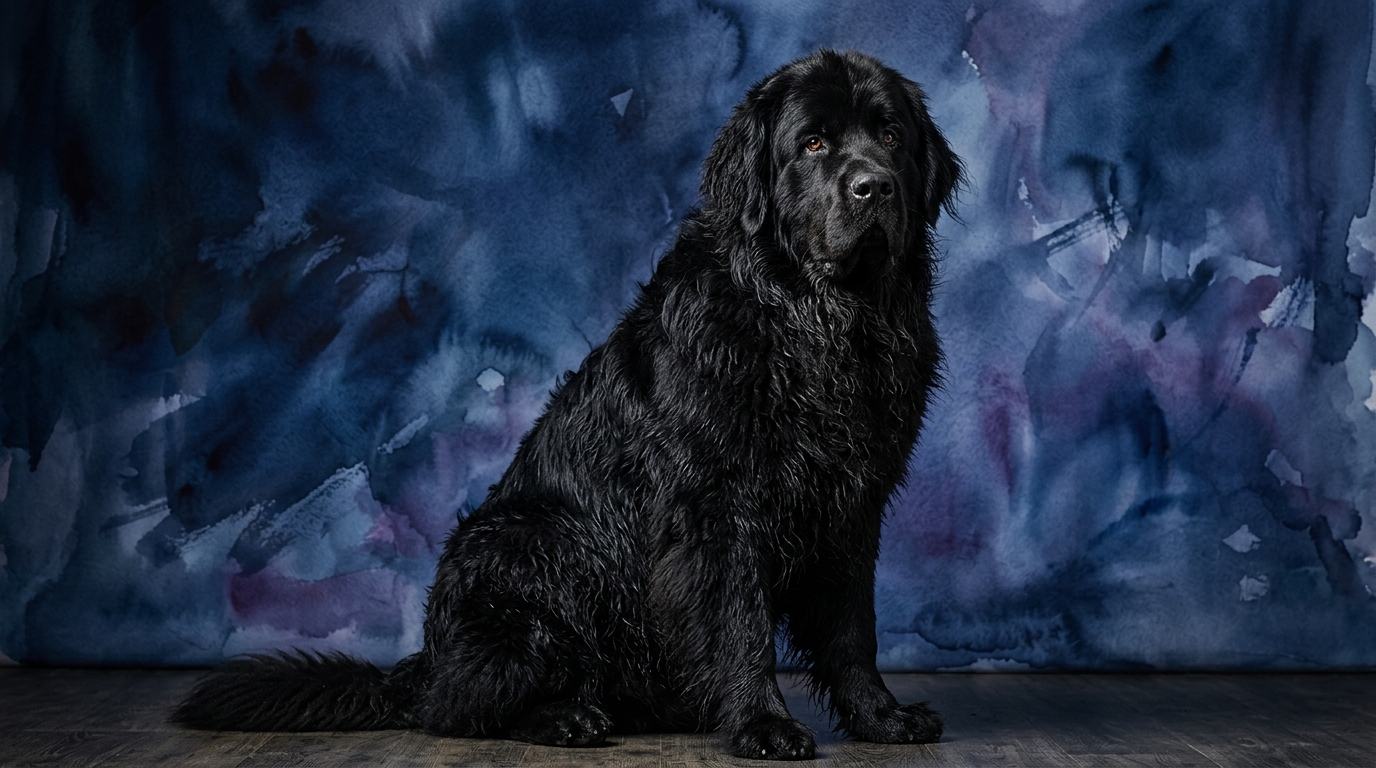
The Newfoundland, a majestic dog from the Working Group, is Coren-ranked #34, indicating a robust capacity for learning and obedience. Their Problem Solving is rated 3/5, suggesting they can navigate challenges and learn solutions, though perhaps not always with immediate, innovative leaps. Training Speed shines at 4/5, reflecting their willingness and ability to absorb new commands efficiently, often driven by an eagerness to please. Social Intelligence is a remarkable 5/5, showcasing an extraordinary attunement to human emotions and social dynamics, making them inherently empathetic and responsive companions. An Instinctive Drive of 5/5 underscores their powerful innate urges, particularly for water rescue and guarding, which profoundly shape their behavior and engagement with the world. Their Memory stands strong at 4/5, enabling them to retain complex routines and past experiences with considerable accuracy.
The French Bulldog, a delightful member of the Non-Sporting Group, does not appear on Coren's traditional ranking, but our IQ metrics provide insight into their unique cognitive makeup. Their Problem Solving, also at 3/5, indicates a capability for overcoming obstacles or figuring out how to get what they want, often through persistence or trial and error rather than abstract reasoning. Training Speed is rated 3/5; while capable of learning, they can sometimes require more repetition and patience, occasionally displaying an independent streak. Like the Newfoundland, their Social Intelligence is a perfect 5/5, highlighting their profound connection to human companionship and their acute perception of owner moods and cues. In stark contrast to the Newfoundland, their Instinctive Drive is a low 2/5, meaning they possess minimal inherent urges for activities like hunting, herding, or guarding, aligning with their primary role as companions. Memory is assessed at 3/5, sufficient for daily routines and basic commands, though perhaps not for exceptionally intricate sequences.
Where the Newfoundland Wins Cognitively
The Newfoundland's cognitive strengths distinctly outshine the French Bulldog in several critical areas. Their superior Instinctive Drive (5/5 vs. 2/5) means they possess an inherent, powerful motivation for purposeful activities, particularly water rescue and carting. This deep-seated drive translates into a natural inclination for tasks that require focus and endurance, making them more predisposed to engaging in structured work or demanding physical challenges. For instance, a Newfoundland's instinct to pull or retrieve from water is a deeply ingrained cognitive program that the French Bulldog lacks.
Furthermore, their higher Training Speed (4/5 vs. 3/5) indicates a quicker grasp of new commands and a greater responsiveness to instruction. This cognitive advantage means Newfoundlands typically require fewer repetitions to master a skill, and their natural biddability makes training sessions more efficient and rewarding. Finally, their stronger Memory (4/5 vs. 3/5) enables them to retain complex sequences and past learning experiences with greater accuracy and for longer durations. This allows them to build upon previous training more effectively and recall intricate routines, which is invaluable for advanced obedience or specialized working roles. For example, a Newfoundland is more likely to remember a multi-step retrieve sequence or the specific locations of hidden objects after initial training, leveraging their robust recall capacity.
Where the French Bulldog Wins Cognitively
While the French Bulldog's overall scores might not numerically surpass the Newfoundland's, their cognitive profile presents distinct advantages tailored to their companionship role. Their Problem Solving at 3/5, combined with their strong Social Intelligence (5/5), allows them to excel at navigating their immediate environment to achieve personal comfort or gain human attention. They are adept at figuring out how to position themselves for optimal cuddles, how to solicit playtime from a busy owner, or how to locate a dropped treat with surprising persistence, often using charming manipulation.
Their low Instinctive Drive (2/5), unlike the Newfoundland's powerful working instincts, can be a significant cognitive "win" for owners seeking a low-maintenance companion. This reduced drive means they are less compelled by strong urges to chase, dig, herd, or guard territory aggressively, leading to a calmer, more predictable demeanor within a home environment. Owners are less likely to contend with intense prey drives or territorial behaviors that require significant management. Instead, their cognitive focus is almost entirely directed towards social engagement and comfort, making them masters of endearing interaction and relaxed coexistence. Their equivalent 5/5 Social Intelligence, while shared, manifests as an almost singular devotion to human connection, making them exceptionally perceptive and responsive to the subtle nuances of family life without the overlay of a demanding work ethic.
Which Is Easier to Train and Why
When it comes to ease of training, the Newfoundland generally presents a more straightforward experience due to several behavioral and cognitive factors. Their Training Speed of 4/5, coupled with their exceptional Social Intelligence (5/5) and strong Memory (4/5), creates a highly receptive learner. Newfoundlands possess an inherent desire to cooperate and please their human companions, making them naturally inclined to pay attention and respond to cues. Their robust memory allows them to quickly establish associations between commands and actions, retaining this knowledge over time. For example, a Newfoundland will likely pick up "sit" or "stay" with fewer repetitions and recall it more consistently because they are motivated by positive reinforcement and understand their role in the human-dog partnership, often eager to participate in structured learning.
In contrast, the French Bulldog, with a Training Speed of 3/5 and Memory of 3/5, can be more challenging. While equally socially intelligent (5/5), their cognitive process often involves a degree of independent thought or occasional "selective hearing" that can be interpreted as stubbornness. They are not as driven by a strong working ethic; instead, their motivation often stems from personal comfort, treats, or direct social interaction rather than an inherent desire to perform a task for its own sake. Training a French Bulldog often requires more patience, consistency, and a highly engaging approach, leveraging their love for attention and food. While they learn, they may take longer to generalize commands to new environments or may test boundaries more frequently. For instance, a French Bulldog might understand "come" perfectly in the living room but choose to ignore it if something more interesting catches their eye in the park, requiring more focused proofing and higher-value rewards to overcome their independent streak.
Suitability for Active vs. Relaxed Owners
The contrasting cognitive and physical needs of these breeds make them suitable for vastly different owner lifestyles. The Newfoundland, with its towering presence and powerful Instinctive Drive of 5/5, thrives with active owners who can provide ample physical exercise and mental stimulation. Their innate desire for purposeful work, whether it’s swimming, pulling, or engaging in scent work, means they require more than just daily walks. Owners who enjoy outdoor adventures, live near water, or are interested in canine sports or therapy work will find a Newfie a rewarding partner. Their strong memory and biddability also make them excellent candidates for advanced obedience and specialized training, requiring an owner willing to invest time in consistent engagement. A Newfoundland needs a "job" to feel fulfilled, even if that job is a rigorous play session or a long hike, engaging their robust cognitive and physical capacities.
Conversely, the French Bulldog, characterized by its low Instinctive Drive (2/5) and smaller stature, is an ideal match for relaxed owners. Their primary cognitive focus is companionship and comfort, making them content with moderate daily exercise—short walks and indoor play are usually sufficient. They are not built for endurance or intense physical activity, and their brachycephalic (short-nosed) structure makes them prone to overheating, further limiting their physical demands. Owners living in apartments, those with a more sedentary lifestyle, or individuals seeking a constant, affectionate presence without the need for extensive outdoor adventures will find the French Bulldog perfectly suited. Their social intelligence ensures they are happy simply being near their human, observing and participating in quiet domestic life, embodying the role of a charming, low-key companion.
The Verdict
For those seeking a large, empathetic companion with a strong working drive and a desire to engage in meaningful activities, who appreciates a dog that learns quickly, remembers well, and thrives with consistent mental and physical engagement, the Newfoundland is an excellent choice.
For individuals or families desiring a compact, charming, and highly social companion whose primary goal is to be close and offer affection, and who appreciates a dog with lower physical demands and a focus on relaxed domestic life, the French Bulldog is an ideal match.
🧠 Find Your Pet's IQ Score
Our Pet IQ Lab assessment covers 25+ tests across 5 cognitive dimensions — personalized to your breed.
Take the Full IQ Test →Frequently Asked Questions
Do Newfoundlands and French Bulldogs share any cognitive strengths?
Yes, both breeds share a perfect 5/5 score in Social Intelligence, meaning they are exceptionally attuned to human emotions and social cues. This makes both Newfoundlands and French Bulldogs profoundly empathetic and highly responsive companions, albeit expressing this social connection in different lifestyle contexts and for different purposes.
How does the Coren ranking apply to these breeds?
The Newfoundland is Coren-ranked #34, placing it among breeds with above-average working intelligence and obedience, reflecting its capacity for structured learning and task execution. The French Bulldog is not included in Coren's traditional ranking, as his methodology primarily focused on working and obedience intelligence, which aligns less with the French Bulldog's primary role as a companion dog whose cognitive strengths lie elsewhere.
Are French Bulldogs 'stubborn' or just less eager to train?
French Bulldogs can sometimes appear 'stubborn' due to their 3/5 Training Speed and an independent streak, but it's more accurate to say they are less inherently driven to perform tasks for their own sake compared to working breeds. Their training response is often highly dependent on motivation like treats or play, and they may require more patience and consistency to generalize commands beyond initial learning environments.