Side-by-Side Cognitive Profiles: Newfoundland vs. Gordon Setter
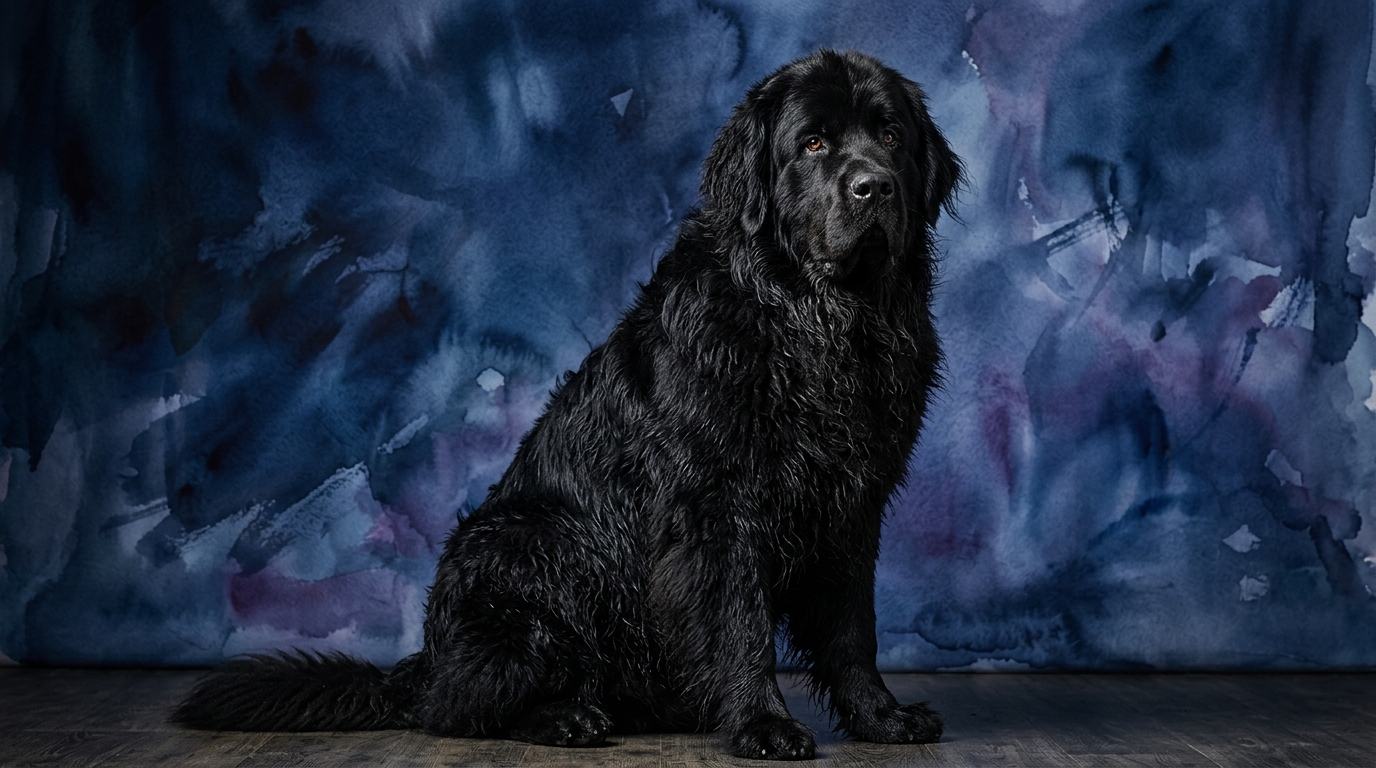
The Newfoundland, a stalwart member of the Working Group, registers a Coren rank of #34, indicating a respectable capacity for understanding and obeying new commands. In our Pet IQ Lab assessment, its Problem Solving ability scores a 3 out of 5, suggesting it navigates moderately complex challenges but might not devise intricate solutions with lightning speed. Its Training Speed, at 4 out of 5, reflects a good aptitude for learning and retaining information. Where the Newfoundland truly shines is its Social Intelligence, earning a perfect 5 out of 5, highlighting its exceptional ability to interpret human cues, empathize, and form deep bonds. Its Instinctive Drive also scores a high 5 out of 5, primarily manifesting as a powerful desire to rescue and assist, a remnant of its water rescue heritage. Lastly, its Memory, at 4 out of 5, indicates a strong capacity to recall learned behaviors and past experiences.
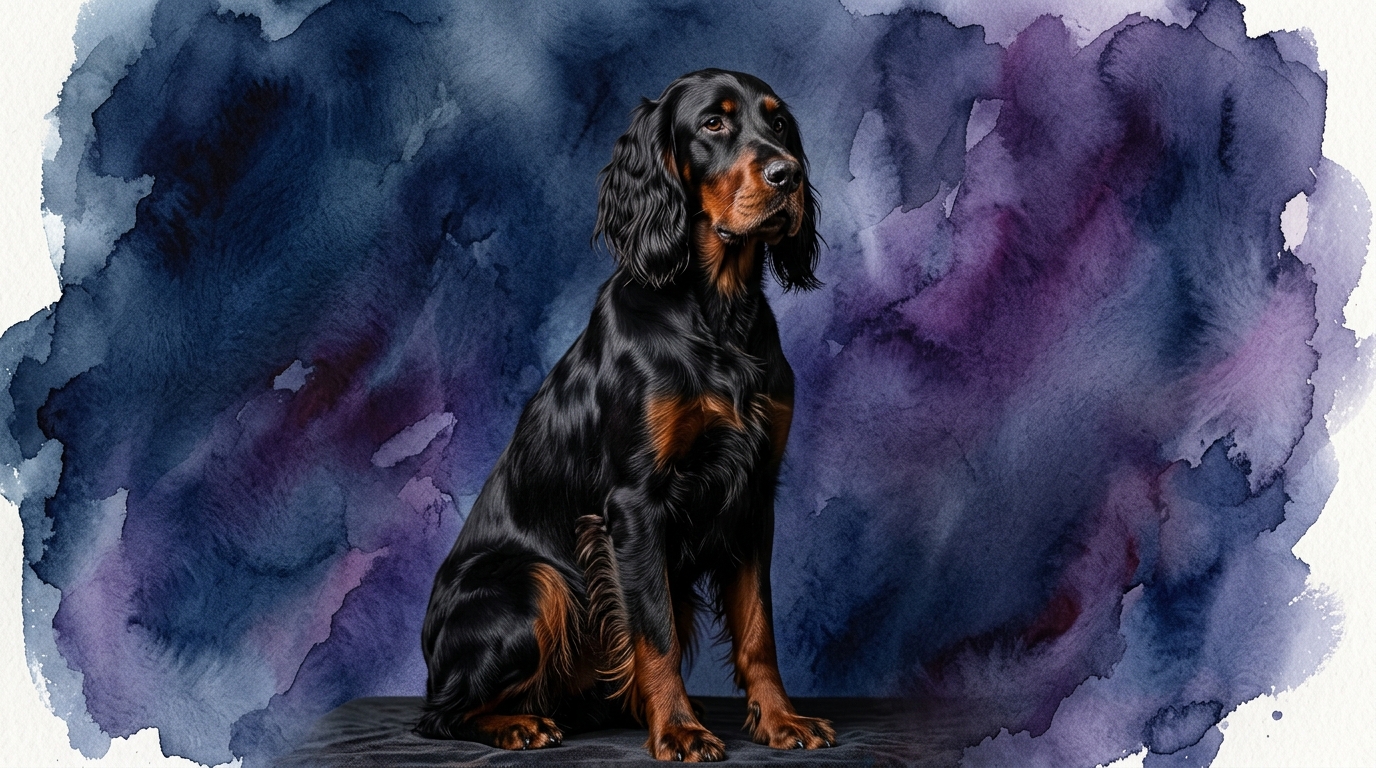
In contrast, the Gordon Setter, a refined Sporting Group breed, holds a Coren rank of #39, placing it slightly below the Newfoundland in terms of obedience and working intelligence. Its Problem Solving skills are rated at 4 out of 5, suggesting a more agile mind capable of figuring out novel situations and puzzles with greater independence. Like the Newfoundland, its Training Speed is a solid 4 out of 5, indicating a keen ability to grasp new concepts efficiently. However, the Gordon Setter's Social Intelligence is a more moderate 3 out of 5; while it forms strong attachments, it might not always be as attuned to subtle human emotional shifts or as eager to please in a social context. Its Instinctive Drive, at 3 out of 5, is focused on its hunting heritage – scenting, pointing, and retrieving – rather than social assistance. Its Memory also matches the Newfoundland at 4 out of 5, ensuring it remembers commands, routines, and past training effectively.
Where the Newfoundland Cognitively Excels
The Newfoundland's foremost cognitive advantage lies in its unparalleled Social Intelligence (5/5). This isn't just about being friendly; it's a deep-seated capacity for understanding human emotions, intentions, and social dynamics. This breed is exceptionally empathetic, often anticipating needs or reacting to distress with remarkable sensitivity. This high social acumen translates into a dog that integrates seamlessly into family life, often acting as a gentle, intuitive companion, and is particularly adept at interacting with children or vulnerable individuals. Their strong instinctual drive (5/5) is intrinsically linked to this, as their historical role involved life-saving water rescues, requiring them to make rapid, context-dependent decisions to assist humans in peril. This drive isn't just about physical action; it involves a cognitive component of assessing danger and responding appropriately to human distress.
Furthermore, while its Problem Solving score is 3/5, the Newfoundland's approach to challenges is often rooted in its social and instinctive strengths. They might not solve a puzzle box with the analytical speed of a Gordon Setter, but they excel at 'people problems' – understanding complex household routines, responding to nuanced vocal tones, or sensing impending changes in mood. Their Coren rank of #34, combined with a 4/5 Training Speed, indicates a dog that, once motivated by its desire to please and bond, will readily learn and retain commands, particularly those that align with its cooperative nature. This combination makes them highly responsive to guidance, favoring methods that leverage positive reinforcement and foster a strong human-animal partnership.
Where the Gordon Setter Cognitively Shines
The Gordon Setter's cognitive edge is most apparent in its superior Problem Solving ability (4/5). This breed demonstrates a more independent and analytical approach to novel situations. They are more likely to experiment with different solutions to an obstacle, quickly learning from trial and error. This aptitude is a direct reflection of their heritage as hunting dogs, where they needed to independently track game, navigate varied terrain, and make quick decisions in the field without constant human direction. Their cognitive processes are geared towards observation, analysis, and adaptation to the environment, making them particularly adept at tasks requiring ingenuity and strategic thinking, such as complex obedience routines or scent work.
While its Social Intelligence is a modest 3/5, this doesn't imply a lack of affection but rather a distinct cognitive focus. Gordon Setters are devoted but often less overtly 'clingy' than Newfoundlands, valuing their independence. Their Instinctive Drive (3/5) is finely tuned for hunting, manifesting as intense focus on scent and prey drive. This drive, while numerically lower than the Newfoundland's, is highly specialized and cognitively demanding, requiring continuous processing of sensory input and strategic movement. Paired with a 4/5 Training Speed and 4/5 Memory, the Gordon Setter can master intricate commands and sequences, especially when those tasks engage their natural sporting instincts or present a puzzle to be solved. They thrive on mental stimulation that challenges their intellect and allows them to utilize their innate problem-solving prowess.
Training Aptitude: Which is Easier to Train and Why?
Both the Newfoundland and the Gordon Setter share an identical Training Speed score of 4 out of 5, suggesting they both learn new commands at a good pace. However, the *ease* of training can differ significantly based on their other cognitive traits. The Newfoundland's exceptional Social Intelligence (5/5) often makes it *feel* easier to train for compliance and general household manners. They possess a strong desire to please their human companions and are highly sensitive to social cues, making them responsive to praise and gentle correction. Their high Instinctive Drive, focused on cooperation and assistance, means they naturally lean towards working *with* their owner, often requiring less intrinsic motivation for tasks that involve partnership. Training a Newfoundland often involves leveraging this deep bond and their inherent willingness to be a cooperative family member.
The Gordon Setter, while equally quick to learn new commands (Training Speed 4/5), might present different training dynamics. Its lower Social Intelligence (3/5) means it may not be as inherently driven by the desire to please or as attuned to subtle human emotional states. Instead, its higher Problem Solving ability (4/5) and specialized Instinctive Drive (3/5, focused on hunting) mean training is most effective when it engages their intellect and natural predispositions. Gordon Setters thrive on consistency, clear expectations, and tasks that offer a mental challenge or tap into their prey drive in a controlled manner, such as retrieve games or scent work. They might be quicker to grasp complex sequences or find creative ways to complete a task, but an owner needs to provide compelling reasons and engaging methods to maintain their focus, rather than relying solely on social connection.
Suiting Active vs. Relaxed Lifestyles
When considering lifestyle compatibility, the Newfoundland generally aligns well with owners seeking a more relaxed, yet still engaged, companion. While Newfoundlands are large and require regular exercise, their energy expenditure is typically moderate compared to many working breeds. Their high Social Intelligence and cooperative Instinctive Drive make them content with being integral family members, often preferring companionship over strenuous, independent activity. A relaxed owner who enjoys consistent, calm walks, gentle play, and appreciates a dog deeply connected to their family will find the Newfoundland a fitting match. Their cognitive profile suggests they excel in environments where social interaction and a sense of purpose within the family unit are prioritized, rather than constant high-intensity physical demands.
Conversely, the Gordon Setter is better suited for active owners who can provide consistent outlets for their higher Problem Solving aptitude and sporting Instinctive Drive. While their Instinctive Drive is numerically lower than the Newfoundland's, it is channeled into persistent, high-energy activities like long runs, vigorous fetching, or participation in dog sports such as agility, obedience, or field trials. Their cognitive need for mental stimulation, stemming from their problem-solving prowess, means they require tasks that challenge them beyond simple obedience. An active owner who enjoys outdoor adventures, has time for regular, structured training, and can engage their dog's mind with varied activities will find the Gordon Setter a rewarding partner. Their independence also means they can handle periods of self-directed exploration, provided they have sufficient mental and physical enrichment.
The Verdict
Choose a Newfoundland if you prioritize a deeply empathetic, highly social companion who thrives on partnership and integrates seamlessly into family life, offering gentle presence and a cooperative spirit.
Opt for a Gordon Setter if you seek an intelligent, independent problem-solver who excels in mentally stimulating activities and can keep pace with an active, outdoor-oriented lifestyle.
🧠 Find Your Pet's IQ Score
Our Pet IQ Lab assessment covers 25+ tests across 5 cognitive dimensions — personalized to your breed.
Take the Full IQ Test →Frequently Asked Questions
Are Newfoundlands good at learning tricks?
Yes, Newfoundlands have a Training Speed of 4/5 and strong memory, making them capable learners. Their high social intelligence also means they enjoy engaging in activities that involve interaction with their owners, including learning tricks and complex routines.
Do Gordon Setters need a lot of mental stimulation?
Absolutely. With a Problem Solving score of 4/5, Gordon Setters thrive on mental challenges. They benefit greatly from puzzle toys, advanced obedience training, scent work, and activities that allow them to use their intellect and independent thinking.
Which breed is better with children?
The Newfoundland's exceptional Social Intelligence (5/5) and gentle nature generally make it an outstanding choice for families with children, often displaying remarkable patience and empathy. While Gordon Setters can be good with children, their lower social intelligence and higher energy might require more supervision to ensure harmonious interactions.