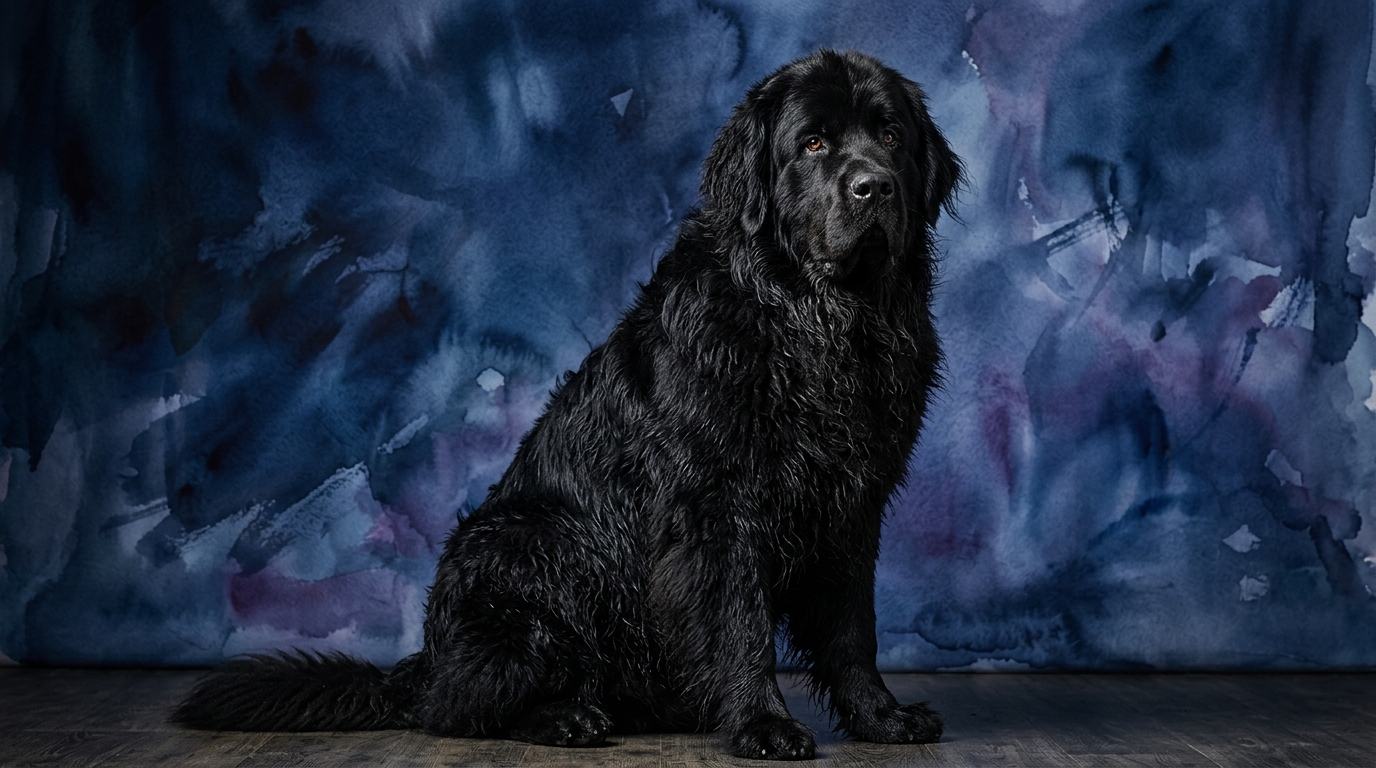

Side-by-Side Cognitive Profile: Newfoundlands vs. Jack Russell Terriers
The Cosmic Pet Pet IQ Lab employs a five-dimensional framework to assess canine intelligence, moving beyond simple obedience to understand the nuances of a breed's mental landscape. For the Newfoundland, a Working breed ranked #34 by Coren, their cognitive strengths lean heavily into social and instinctive domains. Their Problem Solving is rated at 3/5, indicating an aptitude for practical, task-oriented solutions rather than abstract puzzles. Training Speed is 4/5, reflecting a reasonable pace for grasping commands, often driven by their desire to please. Social Intelligence is a standout 5/5, demonstrating exceptional empathy and understanding of human cues. Their Instinctive Drive is also 5/5, powerfully geared towards rescue and nurturing, while Memory stands at 4/5, ensuring good retention of learned behaviors and routines.
In contrast, the Jack Russell Terrier, a feisty Terrier breed without a Coren ranking, presents a different cognitive blueprint. Their Problem Solving ability is a remarkable 5/5, showcasing a tenacious and inventive approach to overcoming obstacles. Training Speed is 3/5, suggesting they learn, but often on their own terms due to their independent streak. Social Intelligence is 3/5, indicating awareness but often a greater focus on their environment or personal agenda than nuanced human emotions. Their Instinctive Drive is a powerful 5/5, intensely focused on hunting, digging, and chasing. Memory for the Jack Russell Terrier is rated 4/5, enabling them to retain commands and successful problem-solving strategies effectively.
Where the Newfoundland's Cognition Shines Brightest
The Newfoundland's cognitive prowess is most evident in its unparalleled social intelligence. At a perfect 5/5, they possess an extraordinary capacity to read and respond to human emotions, making them exceptionally intuitive companions. This isn't merely friendliness; it's a deep cognitive processing of subtle social cues that allows them to anticipate needs, offer comfort, and form profound empathetic bonds. This makes them superb therapy animals and gentle family protectors, understanding and participating in the emotional fabric of their human household. Their innate desire to connect and be a benevolent presence is a driving force in their interactions.
Furthermore, while both breeds boast a 5/5 Instinctive Drive, the Newfoundland's instincts are channeled towards cooperative and nurturing roles. Their powerful drive manifests as a desire to protect, to rescue in water, and to be a devoted, gentle guardian. This specific cognitive channeling makes their strong instincts highly compatible with family life, fostering a sense of security and care. Their Coren ranking of #34 for working and obedience intelligence further underscores their capacity for reliable learning and compliance, a practical cognitive advantage for integration into human society.
The Jack Russell Terrier's Unmatched Cognitive Strengths
The Jack Russell Terrier's cognitive advantages are squarely rooted in their exceptional problem-solving abilities, rated at a perfect 5/5. These dogs are master strategists, demonstrating remarkable ingenuity when faced with a challenge, whether it’s figuring out how to bypass a fence or retrieve a hidden treat. This isn't just random trial-and-error; it involves a degree of adaptive thinking and persistence, reflecting a high level of cognitive flexibility. Their tenacity fuels their inventive solutions, making them incredibly adept at navigating complex physical spaces and intricate puzzle toys.
Linked closely to their problem-solving acumen is their intense focus and persistence. When their powerful instinctive drive for hunting and exploration is engaged, a Jack Russell can maintain concentration on a task for extended periods. This sustained attention, combined with their cognitive drive to overcome obstacles, makes them formidable at achieving their objectives. Their ability to quickly assess novel situations and devise immediate, effective solutions is a hallmark of their intelligence, allowing them to adapt and innovate in challenging environments with impressive speed.
Training Dynamics: Which Breed Learns with Greater Ease?
When considering ease of training, the Newfoundland (Training Speed 4/5) generally presents a more straightforward experience for cooperative obedience. Their high social intelligence means they are deeply attuned to their handler's desires and emotional state, fostering a strong desire to please. This makes them highly receptive to positive reinforcement and eager to form a collaborative bond. While their learning might not be lightning-fast for every single command, their consistency and willingness to work alongside their human make them dependable learners. However, their considerable size mandates early and consistent training to manage their strength and ensure polite manners.
The Jack Russell Terrier (Training Speed 3/5), despite their high problem-solving capacity, can be more challenging for traditional obedience. Their robust independent nature and intense instinctive drives often lead them to prioritize their own agenda – be it chasing a scent or exploring a burrow – over immediate compliance. Training a Jack Russell demands immense patience, unwavering consistency, and an approach that makes learning feel like an engaging game or a puzzle they are motivated to solve. They excel in activities that channel their natural drives, like agility or earthdog trials, where their problem-solving and persistence are rewarded. Rote obedience can be a constant negotiation against their innate willfulness, requiring an understanding of their unique cognitive motivations.
Matching Canine Cognition to Lifestyle: Active vs. Relaxed Owners
The Newfoundland is generally better suited for owners who appreciate a calm, steady presence and are prepared for their significant grooming and feeding requirements. While they require regular, moderate exercise, such as swimming or leisurely walks, they are not typically high-energy dogs that demand constant, intense mental and physical stimulation in the same way a terrier does. Their activity often revolves around being a gentle, watchful companion during family outings or a serene presence in the home. They thrive with owners who provide consistent routines, a predictable environment, and ample affection, allowing their social intelligence and nurturing instincts to flourish in a relaxed setting.
Conversely, the Jack Russell Terrier demands owners who are equally active and deeply committed to providing extensive mental and physical stimulation. Their high problem-solving IQ, combined with an intense instinctive drive, means they require outlets for chasing, digging, and exploring. They excel in dog sports like agility, flyball, or earthdog trials, which engage both their bodies and their sharp minds. A more relaxed owner might quickly find their Jack Russell engaging in destructive behaviors, such as incessant digging or chewing, due to boredom or under-stimulation. They need an owner who can match their zest for life and channel their formidable cognitive energy into constructive, engaging activities.
The Verdict
Choose a Newfoundland if you seek a deeply empathetic, gentle giant who thrives on companionship and cooperative tasks, offering a calming presence and dependable obedience with consistent training.
Opt for a Jack Russell Terrier if you're an active, experienced owner ready to channel boundless problem-solving energy and tenacious instincts into engaging activities and structured challenges.
🧠 Find Your Pet's IQ Score
Our Pet IQ Lab assessment covers 25+ tests across 5 cognitive dimensions — personalized to your breed.
Take the Full IQ Test →Frequently Asked Questions
Is the Newfoundland truly less capable at problem-solving than a Jack Russell Terrier?
Not necessarily 'less capable' overall, but their cognitive strengths are different. Newfoundlands excel at practical, cooperative problem-solving related to their working heritage, like water rescue. Jack Russells, however, demonstrate superior independent problem-solving skills for novel, often self-serving tasks, driven by their terrier instincts.
Why is a Jack Russell Terrier's training speed rated lower despite its high problem-solving ability?
A Jack Russell's lower training speed rating reflects their independent nature and strong prey drive. While they grasp concepts quickly, their inclination to follow their own instincts or solve problems their way can make consistent obedience a challenge, requiring more persuasive and engaging training methods.
How does social intelligence impact the daily life of these two breeds?
A Newfoundland's high social intelligence means they are acutely aware of human emotions, making them exceptionally intuitive companions and therapy dogs. A Jack Russell's moderate social intelligence, while allowing for connection, means they might be more focused on their immediate environment or personal drives than subtle human cues, requiring owners to understand their independent nature.