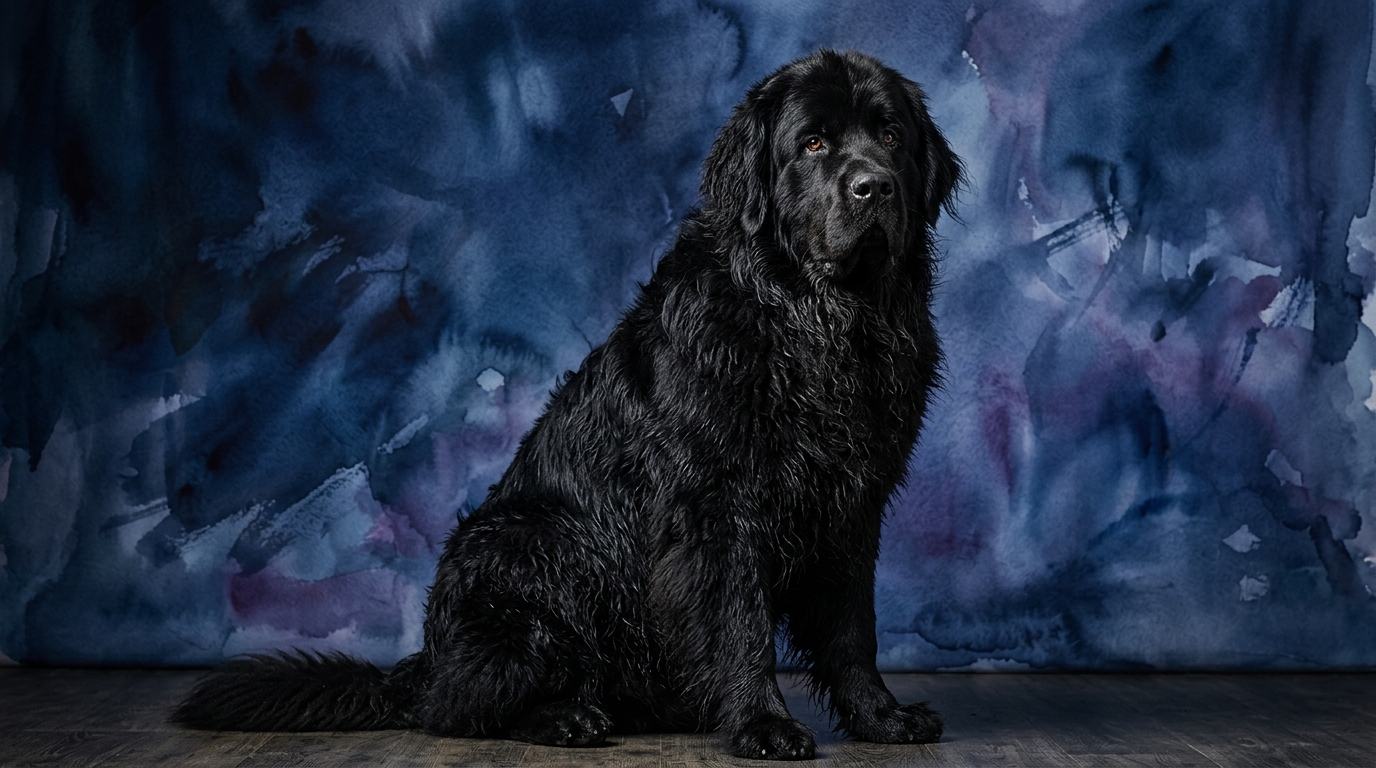

Side-by-Side Cognitive Profile
At The Cosmic Pet Pet IQ Lab, we evaluate canine intelligence across five key dimensions, providing a granular view of each breed's cognitive landscape. For the Newfoundland, a Working group dog, we observe a Coren rank of #34, indicating a respectable capacity for learning and obedience. Their Problem Solving is rated 3/5, suggesting a practical, but not overly complex, approach to challenges. Training Speed stands at 4/5, highlighting a relatively quick grasp of new commands, while their Social Intelligence is an exceptional 5/5, reflecting deep empathy and understanding of human cues. Instinctive Drive is also 5/5, pointing to powerful innate behaviors, and Memory is a solid 4/5, aiding in retention.
The Leonberger, also a Working group dog, is not Coren-ranked, but our proprietary IQ assessment reveals a consistent profile across several dimensions. Their Problem Solving is 3/5, similar to the Newfoundland, indicating a moderate ability to navigate novel situations. Training Speed is 3/5, suggesting they may take a bit longer to master new skills. Social Intelligence is 3/5, indicating a connected but perhaps more independent nature compared to the Newfoundland. Instinctive Drive is 3/5, meaning their natural predispositions are present but less intense, and their Memory is 3/5, suggesting a reliable but not outstanding recall of experiences.
Where the Newfoundland Excels Cognitively
The Newfoundland's cognitive profile showcases several standout strengths, particularly in areas concerning human interaction and natural predisposition. Their Social Intelligence, rated at an exemplary 5/5, means these dogs possess a profound capacity to understand and respond to human emotions and intentions. They are highly attuned to their family's mood, often preempting needs or offering comfort, making them incredibly empathetic companions. This deep social awareness contributes significantly to their role as a 'nanny dog' and explains their gentle, patient demeanor with children.
Equally impressive is their Instinctive Drive, also rated 5/5. This manifests powerfully in their innate water rescue abilities, a historical hallmark of the breed. Newfoundlands often display an overwhelming urge to 'save' individuals perceived to be in distress, even if it's just a child splashing in a pool. This drive also extends to a strong nurturing instinct, making them highly protective and caring members of a household. Furthermore, their Training Speed (4/5) and Memory (4/5) collectively mean they grasp and retain new commands and routines with relative ease, making early socialization and obedience training a more fluid process. Their ability to quickly associate actions with outcomes and remember complex sequences of commands gives them a distinct advantage in structured learning environments.
Where the Leonberger's Cognitive Profile Shines
While the Leonberger's scores may be generally moderate compared to the Newfoundland's peaks, their cognitive profile offers distinct advantages for specific lifestyles and owner preferences. Their Social Intelligence, rated 3/5, suggests a balanced independence. This means they are deeply devoted to their families but are not typically prone to excessive clinginess or separation anxiety. They are capable of contentedly observing family activities without constant personal interaction, making them suitable for households where a self-assured, present but not overly demanding companion is preferred. This independence also underpins their effectiveness as watchdogs, as they can assess situations calmly and react appropriately without needing constant human direction.
The Leonberger's Instinctive Drive, also 3/5, is similarly balanced. While not possessing the intense rescue drive of a Newfoundland, they exhibit a strong, steady protective instinct for their home and family. This drive is often expressed as a calm, watchful presence, making them discerning guardians rather than overtly reactive. Their Problem Solving ability, rated 3/5, is practical and often applied to navigating their environment and understanding household routines. They are capable of figuring out how to access preferred resting spots or manage interactions with other pets, demonstrating a consistent and reliable understanding of their immediate world. This combination of traits culminates in a dog that is steady, reliable, and capable of independent thought, providing a stable and reassuring presence.
Which is Easier to Train and Why
When it comes to ease of training, the Newfoundland generally presents a more straightforward experience for most owners. Their Training Speed of 4/5 means they are quicker to pick up new commands and behaviors compared to the Leonberger's 3/5. This is significantly bolstered by their exceptional Social Intelligence (5/5); Newfoundlands are often highly motivated by pleasing their human companions and keenly interpret subtle cues, making them eager participants in training sessions. Their strong memory (4/5) further ensures that once a lesson is learned, it is retained effectively, leading to consistent performance.
The Leonberger, with a Training Speed of 3/5 and Social Intelligence of 3/5, typically requires more patience and consistency. While they are capable learners, they may not exhibit the same eagerness to please or rapid understanding of nuanced commands. Their balanced independence means they might be less driven purely by human approval and more by their own assessment of a situation. Effective training for a Leonberger often involves clear, consistent methods, positive reinforcement, and understanding that they may process information at a slightly slower pace. Owners should be prepared for a more deliberate training journey, focusing on building a strong, trust-based relationship.
Which Suits Active Owners vs. Relaxed Owners
The Newfoundland, with its robust instinctive drives and deep social intelligence, thrives with owners who are prepared for active engagement, both physically and emotionally. While their physical activity needs are moderate, they require consistent mental stimulation that taps into their nurturing and 'rescue' predispositions. Owners who enjoy long walks, water activities, or simply having a highly interactive and empathetic companion deeply integrated into all family activities will find a Newfoundland a perfect match. They are not suited for owners seeking an independent 'backyard dog' but rather a constant, devoted presence.
The Leonberger, conversely, can be a better fit for owners who appreciate a more relaxed yet engaged companionship. Their moderate instinctive drive and social intelligence mean they are content with regular, but not necessarily intense, exercise and mental engagement. They enjoy being part of family life but often appreciate having their own space and making independent decisions. Owners who lead a moderately active lifestyle, value a steady and self-assured presence, and are capable of providing calm, consistent leadership will find the Leonberger an excellent companion. They are adaptable to various home environments, provided they receive sufficient attention and mental enrichment.
The Verdict: When to Choose Each
The Verdict
Choose the Newfoundland if you seek a deeply empathetic, highly trainable companion with strong natural instincts for connection, nurturing, and 'soft' protection, thriving on deep family integration.
Opt for the Leonberger if you desire a steady, self-assured family guardian with a balanced temperament, who offers a devoted presence alongside a notable degree of independence.
🧠 Find Your Pet's IQ Score
Our Pet IQ Lab assessment covers 25+ tests across 5 cognitive dimensions — personalized to your breed.
Take the Full IQ Test →Frequently Asked Questions
Are Newfoundlands better family dogs than Leonbergers?
Newfoundlands often exhibit a higher degree of social intelligence and nurturing instincts, making them exceptionally empathetic and patient with families, especially children. Leonbergers are devoted family dogs too, but their approach is often more self-assured and less overtly 'nanny-like', offering a steady, protective presence.
Do Leonbergers need more exercise than Newfoundlands?
Both breeds require regular exercise, but their needs differ slightly. Newfoundlands, with their strong water rescue instincts, benefit from activities that engage these drives, while Leonbergers, with a more moderate instinctive drive, are often content with consistent walks and playtime, adapting well to varied activity levels.
Which breed is more prone to separation anxiety?
Newfoundlands, with their higher social intelligence and desire for deep connection, may be more prone to separation anxiety if left alone for extended periods. Leonbergers, possessing a more balanced independence, tend to handle solitude better, though neither breed should be left isolated for long durations.