
Side-by-side IQ profile
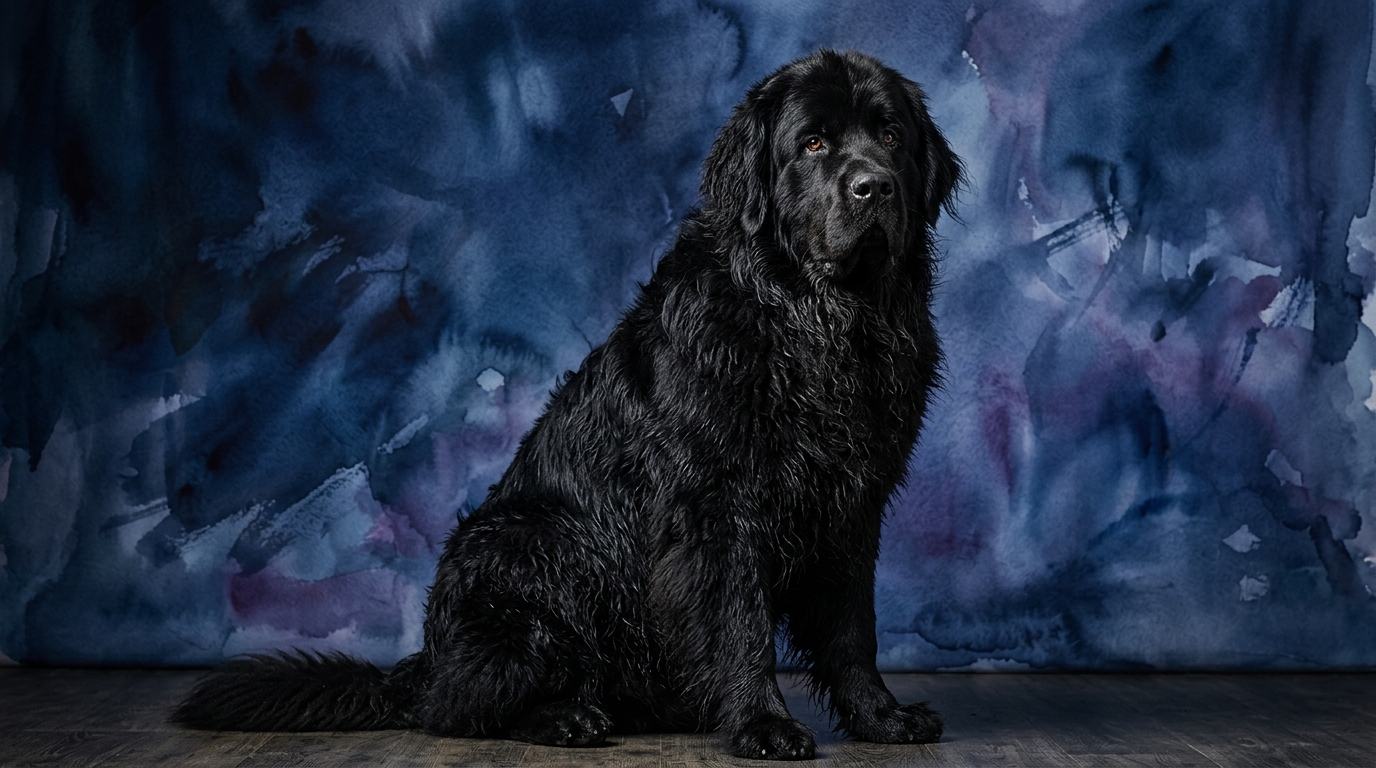
The Cosmic Pet Pet IQ Lab's framework reveals the Newfoundland, a Working breed ranked #34, possesses a distinct cognitive profile. With a Problem Solving score of 3/5, they demonstrate practical intellect for everyday challenges. Their 4/5 Training Speed indicates an efficient grasp of new commands, often driven by their exceptional 5/5 Social Intelligence, which allows them to deeply understand human emotions and intentions. A robust 5/5 Instinctive Drive underscores their natural inclination for purposeful tasks, historically including water rescue. Finally, their 4/5 Memory ensures they retain learned behaviors and social cues over time, making them highly responsive and adaptable companions.
In contrast, the Mastiff, another Working breed ranked #72, presents a more deliberate cognitive landscape. Sharing a 3/5 in Problem Solving, they approach their environment with practical, self-reliant assessment. Their 3/5 Training Speed suggests a steady, patient learning process, requiring consistent instruction. A 3/5 Social Intelligence means Mastiffs are aware of their humans but typically less overtly demonstrative or intertwined with human emotional states. Their 3/5 Instinctive Drive points to a focused set of innate behaviors, primarily centered on their protective role. Similarly, a 3/5 Memory indicates adequate retention of information, though perhaps without the rapid recall or precision seen in the Newfoundland.
Where Newfoundland wins cognitively
The Newfoundland distinguishes itself with several cognitive advantages, making it a particularly responsive and empathetic companion. Its Training Speed score of 4/5, compared to the Mastiff's 3/5, indicates a quicker assimilation of commands and routines. This difference isn't just about speed; it reflects a greater eagerness to engage in cooperative learning, often driven by its exceptional Social Intelligence (5/5). This profound social acumen allows Newfoundlands to deeply read human cues, anticipate needs, and form robust emotional bonds, making training a collaborative dance rather than a directive. Their high Instinctive Drive (5/5) also provides a strong foundation for task-oriented learning, as they naturally seek to fulfill roles and engage in purposeful activities, whether it's retrieving, pulling, or comforting. This drive, coupled with their 4/5 Memory, means they not only learn quickly but also retain complex sequences and social lessons, adapting readily to new situations based on past experiences and human feedback. For instance, a Newfoundland might more readily generalize a "stay" command from the living room to a bustling park due to its blend of memory, social attunement, and cooperative drive.
Where Mastiff wins cognitively
While the Mastiff's scores may appear lower in comparison, its cognitive profile offers distinct advantages, particularly for owners seeking a specific type of companion. Both breeds share a 3/5 in Problem Solving, but the Mastiff's approach is often characterized by a stoic independence. This isn't about solving complex puzzles quickly, but rather about a practical, self-reliant assessment of its environment. A Mastiff's "win" here lies in its ability to calmly observe and react to situations with a measured demeanor, often making its own decisions without needing constant human input, a valuable trait for a guardian breed. Furthermore, its 3/5 Instinctive Drive, while lower than the Newfoundland's, signifies a more focused and less demanding set of innate behaviors. This means a Mastiff's cognitive energy is primarily channeled towards its protective role, rather than a broad spectrum of "jobs." Owners might find this less intense drive to be a "win" as it translates to a more placid home presence, requiring less constant mental stimulation or structured activities to prevent boredom. The Mastiff’s lower Social Intelligence (3/5) can also be seen as a cognitive advantage for certain owners, as it implies a dog less prone to separation anxiety or over-reliance on human emotional states, fostering a sense of dignified self-possession.
Which is easier to train and why
Based on the Cosmic Pet Pet IQ Lab's metrics, the Newfoundland is generally easier to train compared to the Mastiff, primarily due to significant differences in Training Speed and Social Intelligence. The Newfoundland's 4/5 Training Speed indicates a quicker grasp of new commands and a greater willingness to engage in the learning process. This is amplified by its 5/5 Social Intelligence, which means Newfoundlands are highly attuned to human emotions and intentions, often motivated by the desire to please their owners and maintain harmony within their social group. They tend to respond well to positive reinforcement, interpreting human approval as a strong reward. Their 5/5 Instinctive Drive also means they often seek purpose and appreciate having a "job," making them eager participants in training sessions.
In contrast, the Mastiff's 3/5 Training Speed suggests a more deliberate, sometimes stubborn, learning pace. While capable of learning, they may require more repetition and patience, often needing a clear understanding of "what's in it for them" rather than simply pleasing their human. Their 3/5 Social Intelligence means they are less inherently driven by human approval and may not interpret subtle cues as readily as a Newfoundland. This isn't a deficit in their capacity but rather a difference in their social motivation. Training a Mastiff often benefits from short, engaging sessions that appeal to their inherent practicality and strong bond with their owner, rather than relying on their eagerness to perform complex tricks. Real behavioral differences include a Newfoundland's propensity to mirror human moods and actively seek interaction during training, whereas a Mastiff might prefer to observe and process information at its own pace before offering a response.
Which suits active owners vs relaxed owners
The choice between a Newfoundland and a Mastiff also hinges significantly on an owner's lifestyle, particularly their activity level and desired level of canine engagement. The Newfoundland, with its robust 5/5 Instinctive Drive and 5/5 Social Intelligence, thrives with active owners who can channel its natural inclinations. These dogs often enjoy purposeful activities like swimming, carting, or even regular, extended walks that provide both physical and mental stimulation. Their high social intelligence means they genuinely enjoy being an integral part of family activities, making them ideal for owners who want a dog deeply involved in their daily routines and adventures. They require consistent mental engagement and social interaction to prevent boredom and harness their cooperative spirit.
The Mastiff, on the other hand, with its 3/5 Instinctive Drive and 3/5 Social Intelligence, often suits more relaxed owners. While they still require regular, moderate exercise to maintain health, their needs are typically less demanding than a Newfoundland’s. Their lower drive means they are generally content with a calm home environment, often preferring to observe from a comfortable spot rather than constantly seeking a task. They appreciate companionship but are not as overtly demonstrative or demanding of constant interaction, making them suitable for owners who enjoy a majestic, protective presence without the need for intense, daily structured activities. For a relaxed owner, a Mastiff offers a serene, loyal companion whose primary "job" is often simply to be present and watchful, requiring less active management of their cognitive and physical energy.
The Verdict
For those seeking a highly trainable, socially perceptive, and driven companion eager to participate in family life and purposeful activities, the Newfoundland is an exceptional choice.
If you value a calm, independent, and protective presence that requires less active cognitive management and is content with a more relaxed pace of life, the Mastiff will be a profoundly loyal and dignified addition.
🧠 Find Your Pet's IQ Score
Our Pet IQ Lab assessment covers 25+ tests across 5 cognitive dimensions — personalized to your breed.
Take the Full IQ Test →Frequently Asked Questions
Does a Mastiff's lower training speed mean it cannot be well-behaved?
Not at all. A Mastiff's 3/5 Training Speed simply indicates it may learn at a slower, more deliberate pace, requiring greater patience and consistency from its owner. With positive reinforcement and engaging methods, Mastiffs can become well-mannered and obedient companions, excelling in their foundational behaviors.
How does a Newfoundland's high instinctive drive manifest in daily life?
A Newfoundland's 5/5 Instinctive Drive often translates to a natural inclination for specific tasks, such as retrieving, pulling, or even 'rescuing' family members, especially near water. Owners might observe them seeking out "jobs" or showing a strong desire for purposeful engagement, requiring outlets like structured play, walks, or even dog sports.
Is a Mastiff less affectionate due to its 3/5 social intelligence?
A 3/5 Social Intelligence score for a Mastiff doesn't mean they lack affection; rather, their expression of it tends to be more reserved and dignified compared to the overtly demonstrative Newfoundland. Mastiffs form deep bonds with their families but often show their devotion through calm presence, protective instincts, and subtle gestures, valuing quiet companionship over constant interaction.