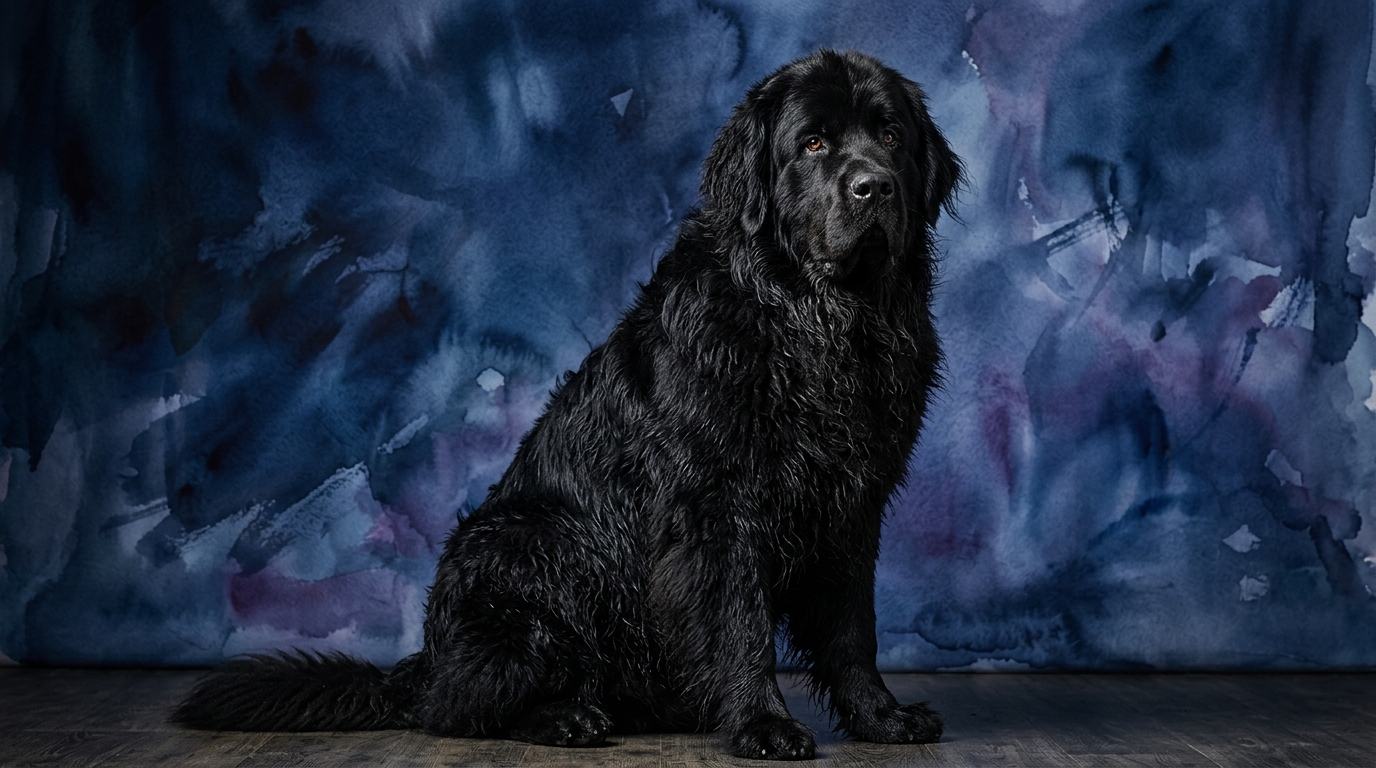

Side-by-Side IQ Profile: Newfoundland vs. Neapolitan Mastiff
The Cosmic Pet IQ Lab assesses canine intelligence across five key dimensions, providing a nuanced view beyond simple obedience. For the Newfoundland, a breed ranked #34 by Coren, their profile indicates a balanced intellect with particular strengths in social interaction and innate purpose. Their Problem Solving ability is rated at 3/5, meaning they are moderately adept at independent thought to overcome obstacles, often thriving with clear guidance. Training Speed is strong at 4/5, indicating they respond readily to cues and learn new commands with relative swiftness, enjoying the process of cooperative learning. Social Intelligence is exceptionally high at 5/5, making them profoundly perceptive of human emotions and social dynamics, fostering deep empathetic connections. Their Instinctive Drive, also 5/5, reflects a powerful, inherent impulse for specific tasks, particularly water rescue and guardianship, which isn't merely learned but deeply ingrained. Lastly, their Memory stands at 4/5, allowing them to retain learned behaviors and associations effectively over time, recalling past experiences and training well.
In contrast, the Neapolitan Mastiff, while not Coren-ranked, presents a distinct cognitive blueprint focused on protection and vigilance. Their Problem Solving skill is rated 3/5, similar to the Newfoundland, suggesting they are capable of independent thought but may require strong motivation to apply it consistently. Training Speed is rated 3/5, indicating they learn at a steady pace but may require more repetition and consistent motivation compared to faster learners; patience is a virtue when training this breed. Social Intelligence is 3/5, meaning that while they are immensely loyal and protective of their family, their social perception is generally more focused on discerning potential threats than on nuanced emotional states. Their Instinctive Drive is also 3/5, primarily driven by a powerful protective instinct for their home and family, rather than a broad range of working tasks. Finally, their Memory is 3/5, providing a functional recall for commands and routines, though they might not retain complex sequences or past events with the same detail or speed as a Newfoundland.
Where the Newfoundland Wins Cognitively
The Newfoundland demonstrates distinct cognitive advantages, particularly in the realms of social intelligence and cooperative learning. Their exceptional 5/5 Social Intelligence means they are not only attuned to human emotions but actively seek to understand and respond to them. This makes them incredibly empathetic companions, often anticipating their owner's needs or mood. This keen social perception also translates directly into their 4/5 Training Speed; they are quicker to grasp new concepts because they are motivated by the desire to please and collaborate, making the training process a more fluid and rewarding interaction. Furthermore, the Newfoundland's 5/5 Instinctive Drive is not merely a physical attribute, but a complex cognitive specialization. Their inherent drive for water rescue, for example, requires sophisticated problem-solving in dynamic environments, rapid assessment of situations, and the ability to execute complex behaviors without direct command. This reflects a unique cognitive architecture geared towards purposeful, life-saving action, demonstrating a deep understanding of their role. Their 4/5 Memory supports this by ensuring learned skills and critical associations are retained with high fidelity.
Where the Neapolitan Mastiff Wins Cognitively
While the Neapolitan Mastiff's scores might appear lower in some categories, their cognitive strengths lie in a specialized, unwavering focus on guardianship and discernment. Their 3/5 Instinctive Drive, though numerically lower than the Newfoundland's, is intensely concentrated on protection, a role where their intellect shines. This breed excels in a quiet, watchful intelligence, constantly assessing their environment for potential threats. This requires a unique form of problem-solving (rated 3/5) focused on identifying anomalies, evaluating intentions, and making independent decisions about security. Their cognitive process in this context is about vigilance and measured response, rather than broad adaptability. They exhibit a profound capacity for discerning who belongs and who doesn't, relying on subtle cues and their inherent understanding of their territory. This isn't about rapid obedience but about profound loyalty and a deeply ingrained, independent judgment in matters of safety. Their moderate memory supports the consistent application of these protective behaviors and routines, solidifying their role as steadfast guardians.
Training Dynamics: Which is Easier to Train and Why
When it comes to ease of training, the Newfoundland generally presents a smoother journey for owners. Their 4/5 Training Speed, coupled with their exceptional 5/5 Social Intelligence, means they are typically more eager to engage and quicker to understand new commands. Newfoundlands thrive on positive reinforcement and the collaborative aspect of training; they are motivated by interaction and seek to understand and fulfill their handler's expectations. This makes them highly responsive and adaptable to various training methods, from basic obedience to complex tasks. Their strong memory (4/5) also ensures that once a behavior is learned, it is retained effectively, reducing the need for constant repetition.
In contrast, the Neapolitan Mastiff, with a 3/5 Training Speed, requires a more patient, consistent, and confident approach. They are not as inherently motivated by pleasing their handler and often possess an independent streak that may lead them to question commands or require stronger, more consistent motivation to comply. Their training is less about eager collaboration and more about establishing clear boundaries, routines, and a respectful hierarchy. Owners must be prepared for more repetition and a slower learning curve, understanding that the Neapolitan Mastiff's intellect is geared towards independent thought and discernment, rather than rapid obedience. Their training journey is often longer and more demanding, necessitating an owner who can consistently provide firm, fair leadership.
Matching Breeds to Lifestyles: Active vs. Relaxed Owners
The Newfoundland is an ideal companion for owners who appreciate a blend of activity and companionship. While not requiring marathon runs, their 5/5 Instinctive Drive and 4/5 Training Speed mean they thrive on purposeful engagement and mental stimulation. Owners who enjoy activities like canine sports, water activities, or even just consistent, engaging training sessions will find the Newfoundland a rewarding partner. They need a 'job' or a sense of purpose to channel their intelligence, whether it's carrying groceries, participating in therapy work, or simply being an active, involved family member. Their social nature means they want to be part of the action, making them suitable for owners who lead an active, inclusive lifestyle and can provide consistent interaction.
The Neapolitan Mastiff, on the other hand, is better suited for more relaxed owners who appreciate a calm, watchful presence and understand the nuances of a protective breed. Their moderate instinctive drive (3/5) is primarily focused on guarding, meaning they are generally more sedentary within their secure territory but require careful socialization and consistent, firm guidance. They do not demand constant physical exertion but rather a strong, confident leader who can manage their independent and protective nature. Owners who prefer a less physically demanding companion but are prepared for the significant responsibility of training and socializing a dog with a powerful guarding instinct will find the Neapolitan Mastiff a loyal and devoted family member. They need a secure environment and an owner who respects their inherent vigilance.
The Verdict
Choose a Newfoundland if you seek a highly empathetic, cooperative companion eager to learn and participate in family activities, especially those involving water or purposeful tasks. Their social intelligence and trainability make them ideal for owners who enjoy a deep, interactive bond and consistent engagement.
Opt for a Neapolitan Mastiff if you are a confident, experienced owner seeking a steadfast, protective guardian with a calm demeanor and a profound loyalty to their family. Be prepared for a patient, consistent training approach that respects their independent, watchful intellect.
🧠 Find Your Pet's IQ Score
Our Pet IQ Lab assessment covers 25+ tests across 5 cognitive dimensions — personalized to your breed.
Take the Full IQ Test →Frequently Asked Questions
Are Newfoundlands good at learning tricks?
Yes, Newfoundlands generally enjoy learning new tricks due to their 4/5 training speed and high social intelligence. They are motivated by interaction and praise, making trick training a rewarding bonding experience for both dog and owner.
How do Neapolitan Mastiffs use their problem-solving skills?
Neapolitan Mastiffs primarily apply their 3/5 problem-solving skills to assessing their environment and discerning threats. This involves evaluating unfamiliar situations or individuals to determine if their family or territory is at risk, demonstrating a practical, protective form of intelligence.
Which breed is more adaptable to new environments?
The Newfoundland, with its higher social intelligence (5/5) and memory (4/5), typically adapts more readily to new environments and routines. Their cooperative nature allows them to adjust more smoothly, whereas the Neapolitan Mastiff's focus on security might make new places more initially challenging.