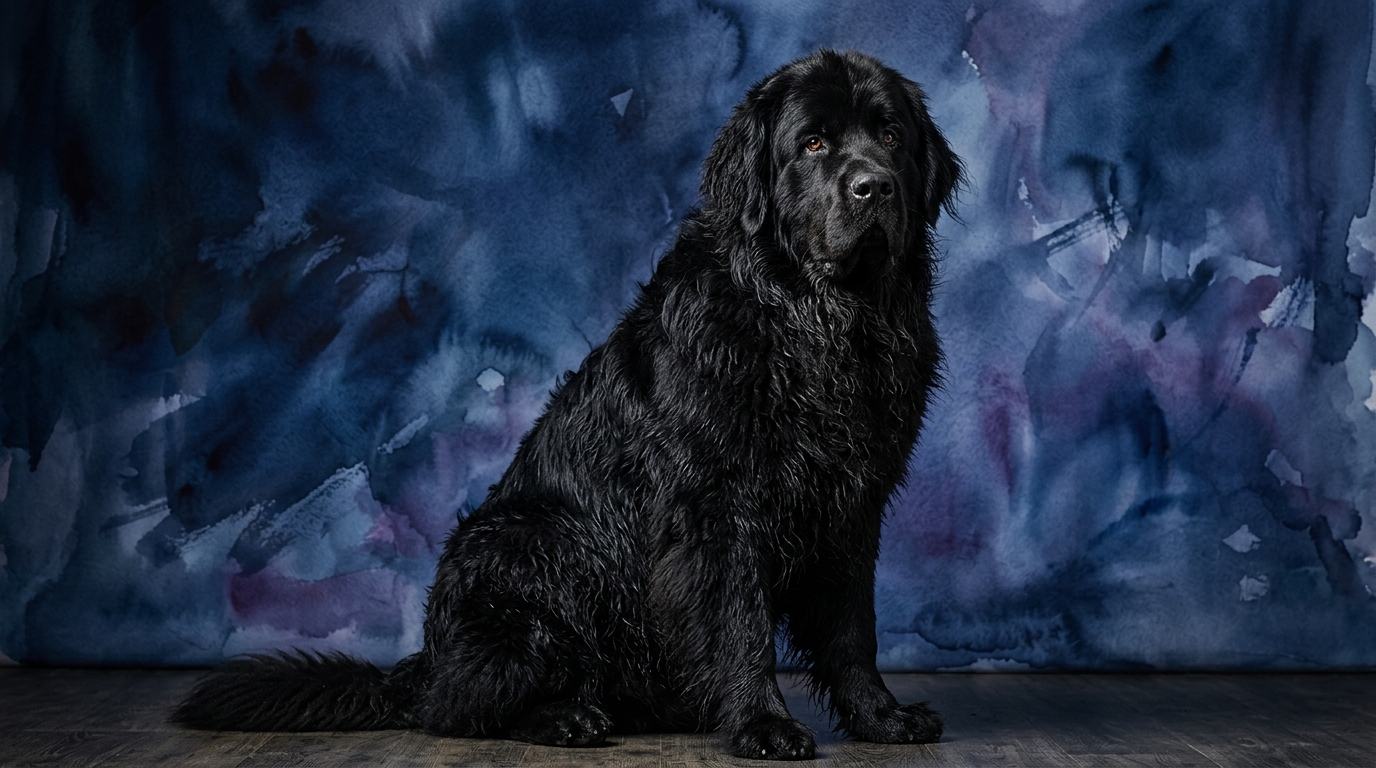

Side-by-Side Cognitive Profiles: The Cosmic Pet Pet IQ Lab's View
At The Cosmic Pet Pet IQ Lab, we evaluate canine intelligence across five key dimensions, offering a nuanced perspective beyond simple rankings. While the Newfoundland ranks #34 and the Old English Sheepdog #44 in traditional obedience intelligence according to Coren's research, our framework illuminates the specific cognitive skills that define each breed's mental aptitude.
The Newfoundland, a majestic working breed, displays a Problem Solving score of 3/5, indicating a practical, often human-centric approach to challenges. Their Training Speed excels at 4/5, reflecting an eagerness to cooperate and absorb instruction swiftly. Where they truly shine is in Social Intelligence, earning a perfect 5/5 for their profound empathy and ability to form deep, understanding bonds. Their Instinctive Drive is also top-tier at 5/5, fueled by their historical role in water rescue and companionship, while their Memory stands strong at 4/5, allowing them to retain complex commands and social cues.
In contrast, the Old English Sheepdog, a dedicated herding dog, also scores 3/5 in Problem Solving, though their approach is often more independent and less directly collaborative than the Newfoundland's. Their Training Speed is a moderate 3/5, suggesting they learn at a steady pace but might require more consistent motivation. Social Intelligence for the OES is 3/5; they are devoted to their family but can be more reserved with strangers, lacking the universal affability of the Newfoundland. Their Instinctive Drive, primarily focused on herding, is 3/5, and their Memory is a commendable 4/5, enabling them to recall routines and individuals with impressive accuracy.
Where the Newfoundland's Cognition Excels
The Newfoundland's cognitive superiority primarily resides in its exceptional Social Intelligence and powerful Instinctive Drive. A perfect 5/5 in social intelligence means these dogs possess an unparalleled ability to read human emotions, respond empathetically, and integrate seamlessly into family dynamics. They are inherently tuned into their human companions, often anticipating needs and offering comfort without direct prompting, a trait invaluable in a companion animal.
Their 5/5 Instinctive Drive is not merely about physical prowess; it's a deeply ingrained desire to work alongside humans, particularly in roles involving protection and rescue. This drive translates into a profound willingness to engage in collaborative tasks and a natural inclination towards heroism, making them highly motivated by opportunities to 'help' their family. This combination of social acuity and strong work ethic makes them highly responsive to training that leverages their bond with their owner.
Where the Old English Sheepdog's Cognition Shines
The Old English Sheepdog's cognitive strengths, while different from the Newfoundland's, are equally impressive within their specific domain. Their 3/5 Problem Solving score, though numerically similar, manifests as a distinct form of independent thought. Bred to manage flocks autonomously, OES often exhibit a self-reliant approach to challenges, capable of assessing situations and making decisions without constant human direction. This isn't about solving complex puzzles for treats, but rather about practical, on-the-spot judgments in dynamic environments.
Their 4/5 Memory is a significant asset, allowing them to remember intricate routines, the layout of their territory, and the specific behaviors of family members. This strong recall, combined with their instinctive drive for order and protection (even if rated 3/5 for general drive, it's highly focused), enables them to be reliable guardians of their home and family. They thrive on consistency and excel in environments where their memory for established patterns can be fully utilized, making them excellent at adhering to household rules once learned.
Training Dynamics: Newfoundland's Eagerness vs. OES's Independence
When it comes to trainability, the Newfoundland generally presents a smoother path for most owners, largely due to its superior Training Speed (4/5) and Social Intelligence (5/5). Their innate desire to please and deep connection with their human partners makes them highly receptive to positive reinforcement and eager to learn new commands. They view training as a collaborative activity, strengthening the bond, and their quick uptake means they often master tasks efficiently.
The Old English Sheepdog, with a Training Speed of 3/5, requires a different approach. Their independent problem-solving and herding instincts can sometimes be perceived as stubbornness. They are not less capable of learning, but they may need more compelling motivation and consistent, patient guidance. Training an OES often involves understanding their intrinsic motivations, making tasks feel like a 'job' they are managing, rather than simply obeying commands. Owners must be prepared for a more deliberate process, focusing on making training engaging and rewarding their independent thought when it aligns with desired behavior.
Matching Breeds to Lifestyles: Active Collaborators vs. Steady Guardians
Choosing between these magnificent breeds often comes down to an owner's lifestyle and what they seek in a canine companion. The Newfoundland, with its high Instinctive Drive (5/5) and collaborative spirit, is an ideal fit for active owners who enjoy engaging in outdoor pursuits, especially those involving water. They thrive on having a 'job' to do, whether it's accompanying you on hikes, participating in canine sports, or simply being a devoted, empathetic presence during family activities. Their sheer size and strength also require an owner confident in handling a powerful dog.
The Old English Sheepdog, while also needing regular exercise to stay healthy, often suits owners who appreciate a more self-reliant companion with a strong sense of duty to its family. Their independent problem-solving and memory make them excellent at maintaining household routines and acting as watchful, albeit sometimes reserved, guardians. Owners who are prepared for significant grooming demands, enjoy a steady, devoted presence, and can appreciate a dog that thinks for itself will find the OES a rewarding companion. They are less about intense, collaborative 'work' and more about consistent, watchful presence.
The Verdict: When to Choose Each Breed
The choice between a Newfoundland and an Old English Sheepdog hinges on the specific blend of cognitive traits and companionship style that best aligns with your home and heart. Both are large, loving dogs, but their mental makeups steer them towards different ideal environments.
If you desire a deeply empathetic, highly trainable, and collaborative companion eager to participate actively in family life and outdoor adventures, the Newfoundland's exceptional social intelligence and instinctive drive make it an outstanding choice. They thrive on strong human connection and respond beautifully to positive, bond-focused training.
Conversely, if you appreciate an independent thinker, a steady guardian with a strong memory for routines, and are prepared to engage in patient, consistent training that respects their self-reliant nature, the Old English Sheepdog could be your perfect match. They offer a unique blend of affectionate loyalty and a distinct, intelligent perspective on the world.
The Verdict
Choose the Newfoundland if you seek an exceptionally empathetic, highly cooperative, and eager-to-please companion who thrives on active, collaborative engagement and deep human connection. Their desire to work alongside you and their intuitive understanding of emotions are unparalleled.
Opt for the Old English Sheepdog if you value an independent problem-solver and a vigilant, devoted guardian with a strong memory for routines, appreciating a companion who thinks for itself while still being deeply loyal to its family. Be prepared for a training approach that respects their self-reliant nature.
🧠 Find Your Pet's IQ Score
Our Pet IQ Lab assessment covers 25+ tests across 5 cognitive dimensions — personalized to your breed.
Take the Full IQ Test →Frequently Asked Questions
Are Newfoundlands good with children?
Yes, Newfoundlands are renowned for their gentle and patient temperament with children, earning them the nickname 'nanny dog.' Their high social intelligence and protective instincts make them excellent, watchful companions for young family members.
Do Old English Sheepdogs require a lot of grooming?
Old English Sheepdogs have a dense, shaggy double coat that requires significant grooming to prevent matting and maintain skin health. Owners should be prepared for daily brushing and professional grooming every 6-8 weeks.
Which breed is better for apartment living?
Neither breed is ideally suited for small apartment living due to their large size and need for space to move comfortably. However, if sufficient daily exercise and mental stimulation are provided, a Newfoundland might adapt slightly better due to its calmer indoor demeanor, while an OES also needs space for its active bursts.