Side-by-Side Cognitive Profiles: Newfoundland vs. Portuguese Water Dog
At The Cosmic Pet Pet IQ Lab, we delve beyond superficial observations to compare the intricate cognitive dimensions of these two working breeds. Understanding their specific strengths across five key areas – Problem Solving, Training Speed, Social Intelligence, Instinctive Drive, and Memory – provides a clearer picture of their minds.
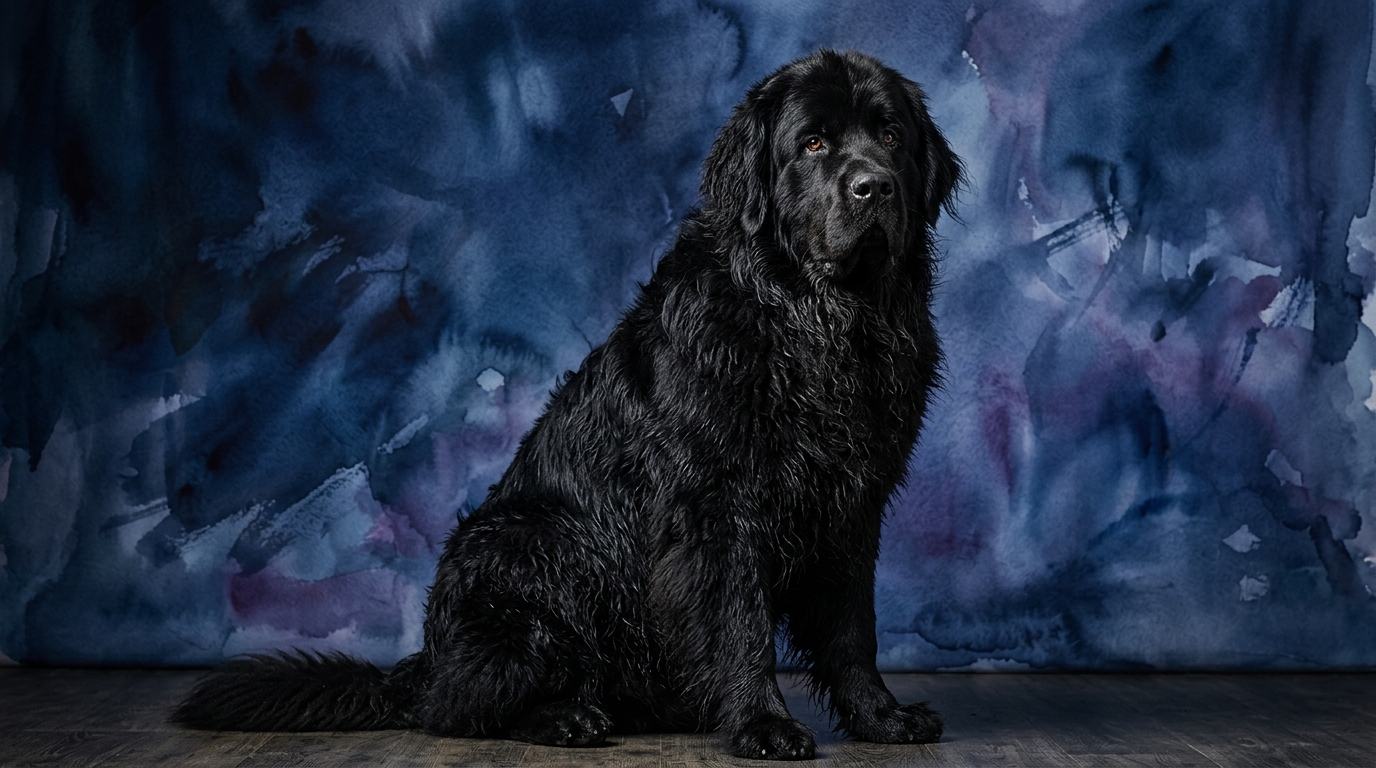
The Newfoundland, ranked #34 by Coren, exhibits a Problem Solving score of 3/5, indicating a steady, thoughtful approach to challenges rather than rapid, novel solutions. Their Training Speed is a robust 4/5, suggesting they absorb information efficiently and retain it well. Where they truly excel is Social Intelligence, scoring a perfect 5/5, demonstrating profound empathy and an ability to read human cues. Their Instinctive Drive also stands at 5/5, reflecting their deep-seated water rescue heritage, while Memory registers a strong 4/5, enabling consistent recall of commands and experiences.
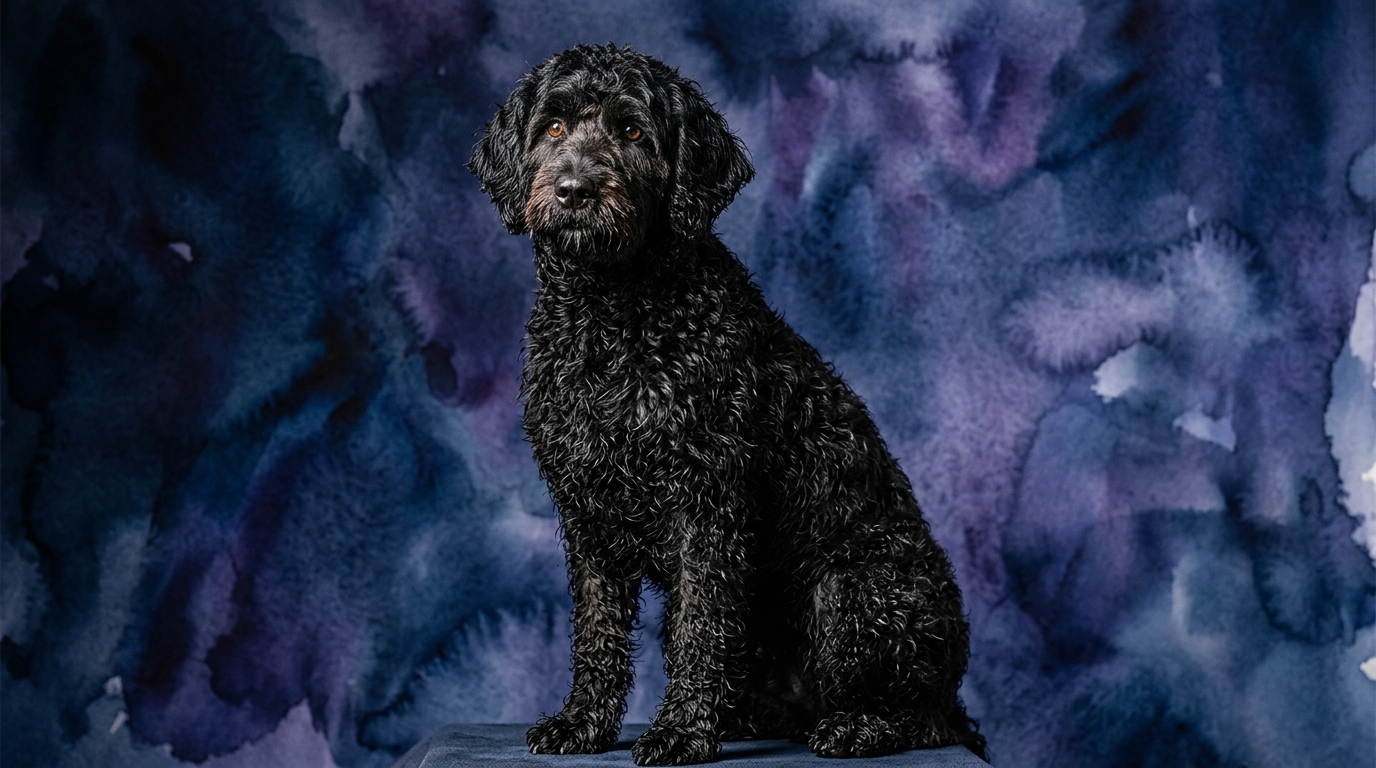
The Portuguese Water Dog, while not Coren-ranked, presents a distinct cognitive profile. They share the Newfoundland’s Problem Solving score of 3/5, indicating a capable but not groundbreaking ability to navigate new situations. Their Training Speed is 3/5, suggesting a solid but perhaps less immediate grasp of new commands compared to the Newfoundland. Social Intelligence for the PWD is 3/5, indicating good family bonds but perhaps less overt emotional attunement. Their Instinctive Drive is also 3/5, focused on active work and retrieving rather than broad protective instincts, and their Memory is rated at 3/5, providing reliable recall for learned tasks.
Where the Newfoundland Shines Cognitively
The Newfoundland's cognitive strengths distinctly outshine the Portuguese Water Dog in several key areas, primarily due to their exceptional social intelligence and profound instinctive drives. With a perfect 5/5 in social intelligence, Newfoundlands exhibit an unparalleled ability to read and respond to human emotions, making them incredibly empathetic and intuitive companions. This manifests in their well-documented historical role as 'nanny dogs,' where their calm demeanor and inherent understanding of vulnerability allows them to gently interact with children and other animals, offering comfort and subtle guidance.
Their 5/5 instinctive drive for water rescue is not just about retrieving; it's a deep-seated compulsion to act selflessly in perceived emergencies, showcasing a complex blend of observation, decision-making, and unwavering dedication that goes beyond simple learned behaviors. Furthermore, their 4/5 training speed, combined with their strong desire to please and bond, means they absorb new commands and routines with a cooperative spirit, often requiring fewer repetitions and less intense motivation than more independent breeds. This combination of empathy, innate life-saving drive, and cooperative learning makes the Newfoundland a uniquely perceptive and devoted working companion.
Where the Portuguese Water Dog Excels Cognitively
While the Newfoundland excels in social nuances, the Portuguese Water Dog's cognitive advantages lie in their persistent, task-oriented approach and agile physical problem-solving. Scoring 3/5 in problem-solving, similar to the Newfoundland, the PWD often applies this skill with a distinct physical tenacity and independent spirit. Their solutions tend to be more hands-on, involving manipulating objects or navigating complex environments to achieve a goal, reflecting their history as active aquatic workers rather than passive guardians.
Their 3/5 instinctive drive, though numerically lower than the Newfoundland's, is characterized by an intense focus on active participation and retrieving specific items, making them highly effective in tasks requiring sustained engagement and precision. This drive fuels their enthusiasm for dog sports like agility, dock diving, and obedience, where their physical prowess and mental acuity combine for impressive performances. The PWD's lower social intelligence (3/5) compared to the Newfoundland can be an advantage for owners seeking a dog with a robust sense of self-reliance; while deeply bonded, they are often less dependent on constant human emotional cues and are capable of occupying themselves with tasks when not directly interacting. This independent streak, coupled with their physical intelligence, makes them adept at figuring out practical challenges with a determined, self-starting attitude.
Training Dynamics: Which Breed is Easier to Train?
When evaluating ease of training, the Newfoundland generally presents a more straightforward experience for most owners, primarily due to their superior social intelligence and higher training speed. Newfoundlands score an impressive 5/5 in social intelligence and 4/5 in training speed, indicating a natural inclination towards cooperation and a quick grasp of commands. Their inherent desire to please their human companions, coupled with their calm and patient temperament, makes them highly receptive to positive reinforcement. A Newfoundland is more likely to view training as a bonding activity, readily offering attention and effort to gain approval and affection. They thrive on consistency and gentle guidance, forming strong, lasting associations with learned behaviors.
In contrast, the Portuguese Water Dog, with a 3/5 for both social intelligence and training speed, can be more challenging. While capable of learning complex tasks, their independent streak and high energy levels require a more dynamic and engaging training approach. PWDs can become bored or distracted if training is repetitive or lacks novelty, meaning trainers must be creative and persistent to maintain their focus. Their drive often needs to be channeled into specific tasks rather than relying solely on a desire to please, making them better suited for owners who enjoy interactive, activity-based training sessions.
Matching Breeds to Lifestyles: Active vs. Relaxed Owners
The lifestyle fit between these two magnificent breeds varies significantly based on their cognitive profiles and inherent drives. The Newfoundland, with its unparalleled social intelligence (5/5) and profound, albeit less physically demanding, instinctive drive (5/5), is an ideal companion for relaxed owners. While they require regular exercise to maintain their formidable physique, their energy levels are generally moderate, and they are content with a good daily walk, a swim, and ample time lounging with their family. Their deep empathy and calm demeanor mean they thrive in stable, loving home environments where their primary 'job' is companionship and gentle guardianship. They integrate seamlessly into family life, often acting as patient, watchful presences.
Conversely, the Portuguese Water Dog, with its moderate social intelligence (3/5) and a more active, task-oriented instinctive drive (3/5), is perfectly suited for highly active owners. PWDs possess a boundless enthusiasm for life and a strong need for mental and physical stimulation. They excel in activities like dock diving, agility, obedience, and extensive hikes, requiring daily, engaging outlets for their energy and problem-solving skills. An owner who can provide consistent training, varied tasks, and ample opportunities for vigorous play and swimming will find the PWD an incredibly rewarding and devoted partner, thriving on shared adventures and purposeful work.
The Verdict
Choose a Newfoundland if you seek a deeply empathetic, calm, and cooperative companion who thrives on close family bonds and offers unwavering, gentle guardianship.
Opt for a Portuguese Water Dog if you desire an energetic, persistent, and task-oriented partner eager for daily physical and mental challenges, especially those involving water and active engagement.
🧠 Find Your Pet's IQ Score
Our Pet IQ Lab assessment covers 25+ tests across 5 cognitive dimensions — personalized to your breed.
Take the Full IQ Test →Frequently Asked Questions
Do Newfoundlands enjoy training?
Yes, their strong social intelligence and inherent desire to please make Newfoundlands generally enjoy training sessions. They view learning as a cooperative activity that strengthens their bond with their human, responding well to positive reinforcement and patient guidance.
Are Portuguese Water Dogs good for first-time owners?
While intelligent and eager, Portuguese Water Dogs can be challenging for first-time owners due to their high energy levels and strong need for consistent mental and physical stimulation. They thrive with experienced individuals who understand how to channel their working drive effectively and provide varied training.
How do their problem-solving skills differ in real-world scenarios?
Both breeds score 3/5, but Newfoundlands might approach problems with more deliberation and social awareness, often seeking human input or applying learned solutions. Portuguese Water Dogs tend to be more physically persistent and independent in their problem-solving, especially when manipulating objects or navigating obstacles, relying on trial-and-error to achieve their goal.