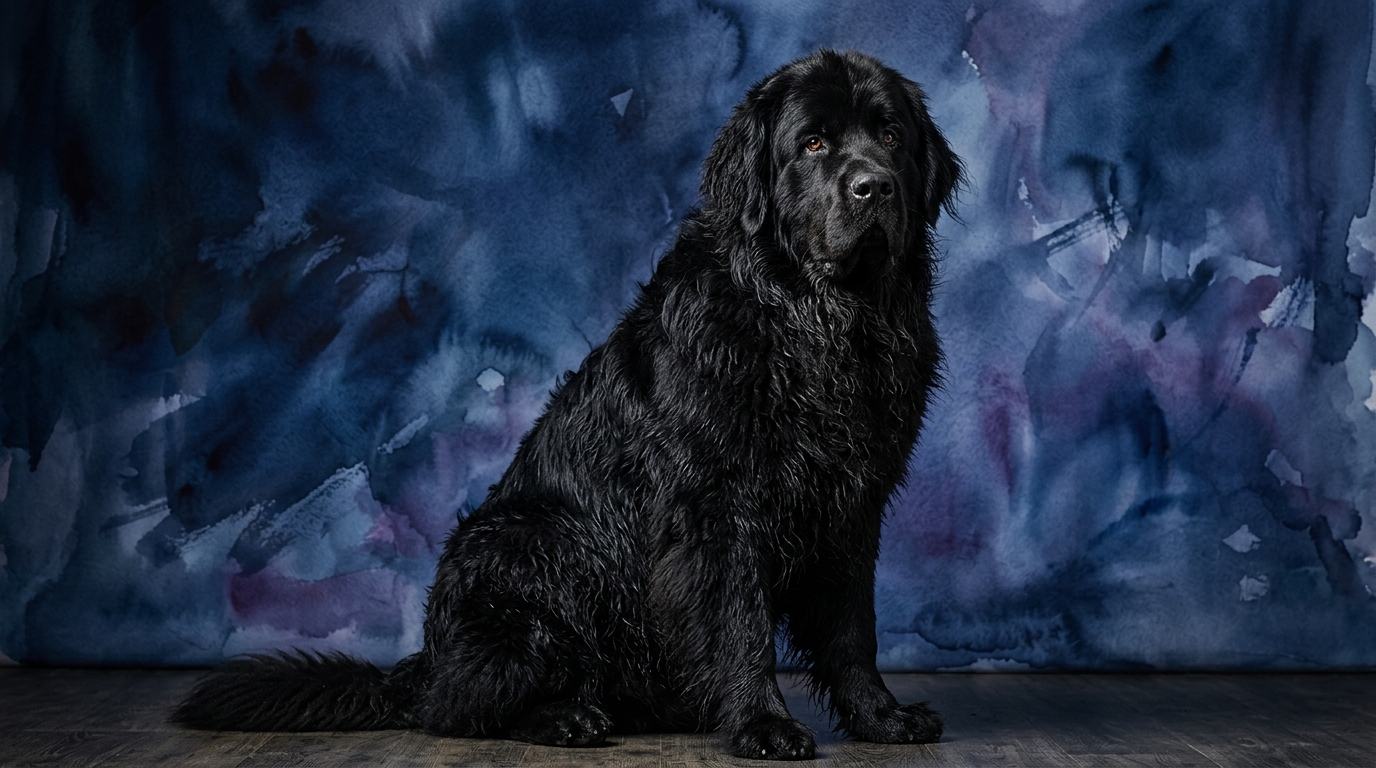

Side-by-Side Cognitive Profile
The Newfoundland, ranked #34 by Dr. Stanley Coren, presents a cognitive makeup designed for cooperative work and deep companionship. Their Problem Solving is rated 3/5, indicating an ability to navigate complex situations, particularly those involving helping or rescuing. Training Speed stands at 4/5, reflecting an eagerness to learn and respond to human cues. Exceptional Social Intelligence, rated 5/5, highlights their profound capacity to understand and respond to human emotions and intentions. Their Instinctive Drive, also 5/5, is powerfully channeled towards protection and water rescue, a specific and strong impulse to assist. Memory at 4/5 ensures they retain learned commands and experiences reliably, contributing to their consistent performance.
In contrast, the Rhodesian Ridgeback, with a Coren rank of #52, showcases an intelligence profile honed for independence and self-sufficiency. Their Problem Solving, rated 3/5, is geared towards autonomous decision-making in hunting and tracking scenarios, often without direct human guidance. Training Speed is 3/5, suggesting they can learn but often require more patience and motivation, as their compliance is less about pleasing and more about understanding the task's benefit. Social Intelligence at 3/5 means they form deep bonds with their family but are typically reserved with strangers, interpreting social cues with a focus on their immediate pack. Instinctive Drive, 3/5, is a focused intensity rooted in their hunting heritage—tracking, chasing, and guarding—a different kind of drive than collaborative rescue. Memory at 3/5 indicates they retain information, especially regarding their environment and routines, though perhaps less consistently for arbitrary commands than more biddable breeds.
Where Newfoundland Excels Cognitively
The Newfoundland's superior Social Intelligence (5/5) is a standout cognitive strength, allowing them to excel at understanding human nuances and intentions. This deep empathy makes them exceptional therapy animals and intuitive family companions, often anticipating needs before they are expressed. Their powerful Instinctive Drive (5/5) is not just a generic urge, but a specific, highly developed impulse for cooperative, life-saving work, particularly in water. This drive requires significant cognitive processing to assess danger, locate individuals, and execute complex rescue maneuvers, making it a profound mental asset. Furthermore, their combined Training Speed (4/5) and Memory (4/5) ensure they are highly reliable partners, quick to grasp and consistently recall intricate sequences of commands, which is crucial for their historical working roles and modern-day activities like obedience or assistance work.
Where Rhodesian Ridgeback Holds Unique Strengths
While their numerical scores might appear lower, the Rhodesian Ridgeback's cognitive strengths are rooted in their self-reliance and independent decision-making, essential for their original role as a hunter of large game. Their Problem Solving (3/5) is not about pleasing a handler but about assessing situations autonomously and acting decisively in complex environments. This requires a unique form of intelligence focused on strategic thinking and resourcefulness without constant human direction. Their Instinctive Drive (3/5), while less collaborative than a Newfoundland's, is a powerful, focused intensity for tracking and pursuit, demanding sustained concentration and mental stamina to follow scents and navigate varied terrain. This drive is a cognitive asset for independent fieldwork. Moreover, their Social Intelligence (3/5), while selective, is highly attuned to their immediate family and territory, contributing to their discerning guardianship. This allows them to differentiate between familiar and unfamiliar, making them effective and watchful protectors who assess situations carefully before reacting.
Training Dynamics: Newfoundland vs. Rhodesian Ridgeback
The Newfoundland, with its 4/5 Training Speed and 5/5 Social Intelligence, is generally more straightforward to train. They possess an innate desire to cooperate and please their human companions, making them highly responsive to positive reinforcement and clear communication. Their strong Memory (4/5) ensures that learned behaviors are retained with consistency, contributing to their reputation as eager and reliable students in various disciplines, from basic obedience to advanced water rescue techniques. Their cooperative nature means they often seek to understand and comply, making training a collaborative and rewarding experience for both dog and handler.
The Rhodesian Ridgeback, with a 3/5 Training Speed and 3/5 Social Intelligence, presents a different training challenge. Their independent nature and historical role requiring self-sufficiency mean they are less inherently driven to comply simply to please. Training a Ridgeback demands immense patience, creativity, and a deep understanding of their motivations. They respond best to clear, consistent, and reward-based methods that appeal to their problem-solving intellect and demonstrate the utility or benefit of the command, rather than relying solely on their desire for human approval. Their training is more about negotiation, building a strong partnership based on mutual respect, and convincing them that cooperation is their best interest, often requiring more nuanced strategies to maintain engagement.
Lifestyle Suitability: Active vs. Relaxed Owners
The Newfoundland, despite its calm and often relaxed demeanor indoors, requires regular, moderate exercise and significant mental stimulation. Owners must be prepared for consistent walks, grooming, and opportunities for swimming or other 'work' that engages their instinctive drive for purpose and cooperation. While they can adapt to a more relaxed indoor existence, they are not naturally sedentary and thrive when given a role and consistent engagement that satisfies their cooperative nature and love for activity, particularly in water. They are well-suited for owners who appreciate a gentle, loyal companion but are prepared to commit to their physical and mental well-being.
The Rhodesian Ridgeback is definitively suited for active owners. Their history as a robust hunting dog means they possess significant stamina, endurance, and a powerful prey drive, requiring extensive daily exercise to remain balanced and content. This includes long runs, vigorous play, and structured mental challenges to channel their independent problem-solving and strong physical capabilities. A relaxed owner who cannot provide this level of consistent physical and mental engagement may find a Ridgeback prone to boredom, leading to destructive behaviors, excessive barking, or an inability to settle. They thrive with owners who understand and can meet their high energy demands and provide consistent leadership.
The Verdict
Choose a Newfoundland if you seek a deeply empathetic, cooperative companion eager to work alongside you, particularly in family-oriented or water-based activities that leverage their natural instincts.
Choose a Rhodesian Ridgeback if you are an active, experienced owner who values an independent, discerning companion with a strong will and are prepared for a significant commitment to exercise and nuanced, respectful training.
🧠 Find Your Pet's IQ Score
Our Pet IQ Lab assessment covers 25+ tests across 5 cognitive dimensions — personalized to your breed.
Take the Full IQ Test →Frequently Asked Questions
Are Newfoundlands good with children?
Yes, their exceptional social intelligence and gentle nature make them remarkably patient and protective companions for children, often displaying a watchful and nurturing demeanor within the family unit.
Do Rhodesian Ridgebacks bark a lot?
Rhodesian Ridgebacks are not typically excessive barkers; they tend to be reserved and will usually only bark when they perceive a real threat, an unusual situation, or to alert their family.
Which breed is more protective?
Both breeds are protective of their families, but in different ways; Newfoundlands protect through their watchful presence and gentle intervention, while Rhodesian Ridgebacks exhibit a more discerning and territorial guardianship rooted in their hunting heritage.