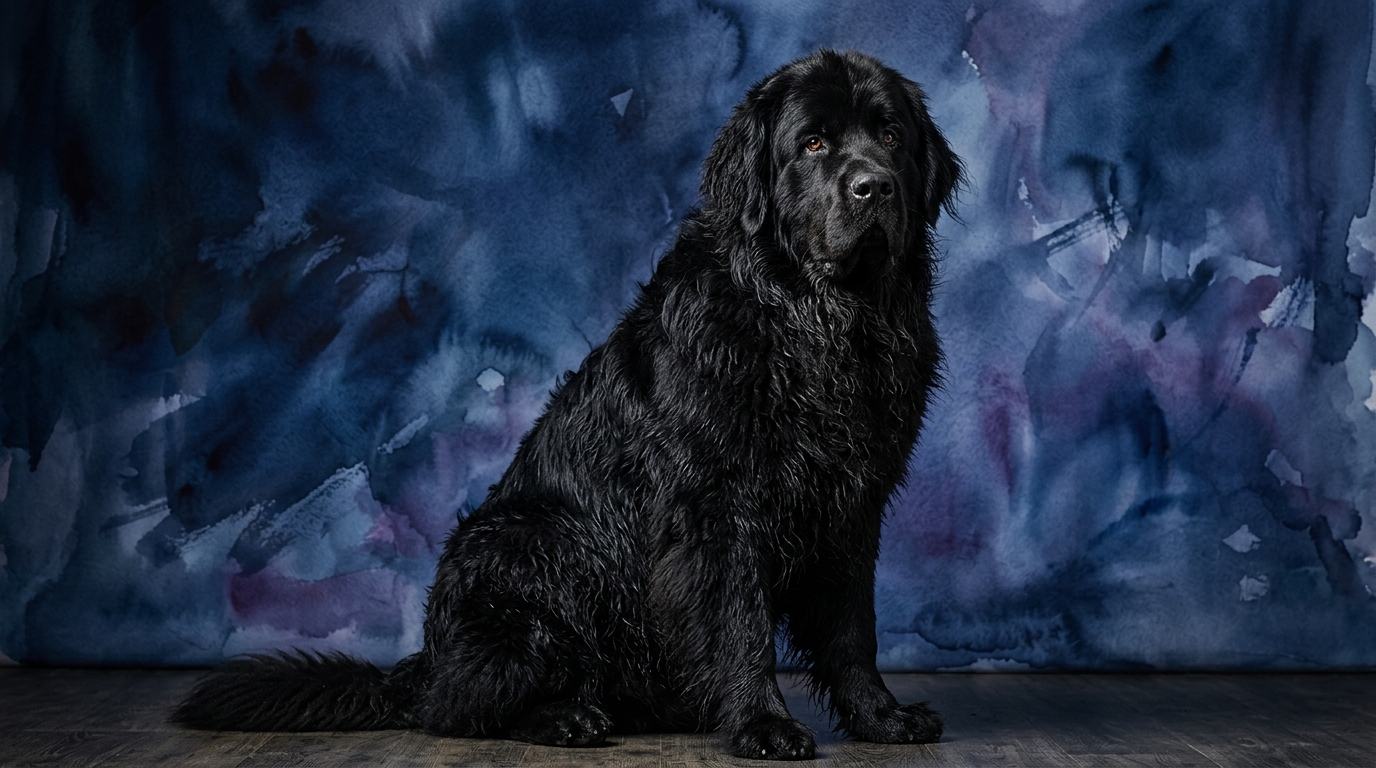
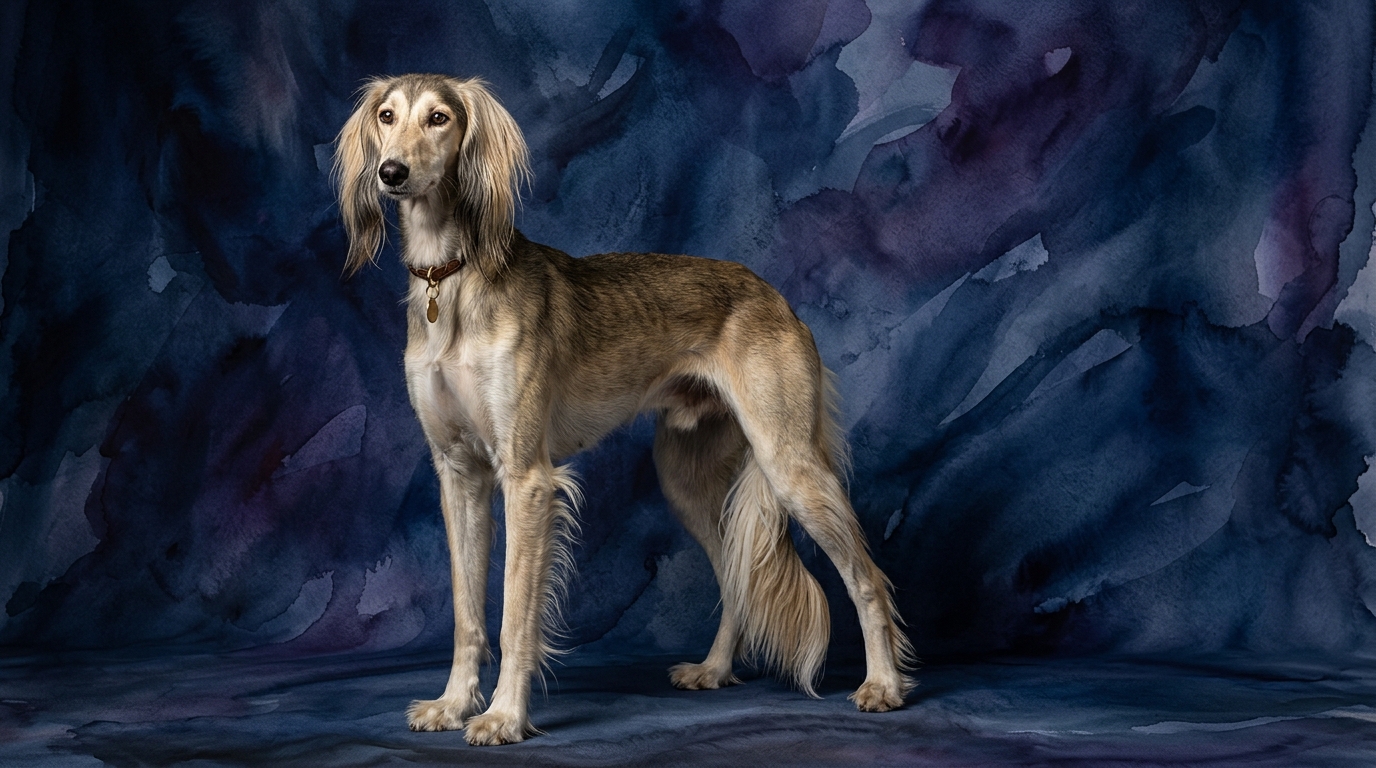
Side-by-Side IQ Profile: Newfoundland vs. Saluki
The Cosmic Pet Pet IQ Lab employs five key dimensions to evaluate canine intelligence, offering a nuanced perspective on how different breeds think and learn. Understanding these profiles is crucial for appreciating the distinct cognitive architecture of the Newfoundland and the Saluki.
For the **Newfoundland**, a breed historically tasked with water rescue and companionship, their cognitive strengths are deeply rooted in cooperation and empathy. Their Problem Solving score of 3/5 reflects an ability to navigate complex environmental challenges, particularly those involving physical rescue or obstacle negotiation, rather than abstract puzzles. Training Speed at 4/5 signifies their readiness and eagerness to learn human-directed tasks and commands, often picking up new skills with relative ease and consistency. Social Intelligence, a standout at 5/5, highlights their exceptional capacity to read human emotions, understand social cues, and form profound, empathetic bonds, making them highly attuned companions. An Instinctive Drive of 5/5 underscores their powerful, innate desire to assist and protect, especially in water, translating into a strong work ethic when given a purpose. Finally, their Memory at 4/5 indicates a solid ability to recall learned commands, routines, and specific individuals, which is vital for their rescue and companionship roles.
The **Saluki**, an ancient sighthound bred for hunting in vast desert landscapes, presents a different cognitive blueprint, prioritizing independence and sensory acuity. Their Problem Solving score of 3/5 is geared towards real-time, dynamic situations like strategizing a chase or navigating complex terrain during a hunt, rather than collaborative problem-solving with humans. Training Speed at 3/5 suggests they can learn, but often require more patience and creative motivation due to their independent nature and less inherent desire to please. Social Intelligence at 3/5 means they form deep, loyal bonds with their immediate family but tend to be reserved or aloof with strangers, less overtly expressive of their social awareness compared to more gregarious breeds. An Instinctive Drive of 3/5 is predominantly focused on their prey drive and the thrill of the chase, less on human-directed 'work' or collaborative tasks. Their Memory at 3/5 is efficient for retaining information critical to hunting, such as terrain features or prey patterns, but might be less focused on human-centric commands without consistent reinforcement, indicating a more selective recall based on intrinsic motivation.
Where the Newfoundland Wins Cognitively
The Newfoundland undeniably excels in domains that demand deep social connection and a cooperative spirit. Their Social Intelligence score of 5/5 is a prime example; these dogs possess an extraordinary capacity for empathy, often appearing to anticipate human needs or emotional states. This manifests in their gentle nature with children, their comforting presence, and their ability to read subtle body language and vocal tones, fostering an unparalleled bond with their human families. This high social cognition underpins their effectiveness as therapy and assistance animals, where understanding and responding to human nuance is paramount.
Furthermore, the Newfoundland's Training Speed (4/5) and Instinctive Drive (5/5), particularly for human-directed tasks, give them an edge in structured learning environments. Their strong desire to please and inherent drive to assist others means they typically absorb new commands and complex sequences rapidly. For instance, their proficiency in water rescue isn't just about physical capability; it's a testament to their ability to quickly learn and execute multi-step commands under pressure, demonstrating a practical application of their cognitive strengths in real-world, life-saving scenarios. Their robust memory (4/5) ensures that these learned behaviors and social interactions are retained over time, making them reliable partners.
Where the Saluki Wins Cognitively
The Saluki's cognitive strengths lie in areas demanding independent thought, acute sensory perception, and rapid, self-directed decision-making, honed over centuries of solitary hunting. While their scores may appear modest in a human-centric comparison, their Problem Solving (3/5) is highly specialized for dynamic, unpredictable environments. They excel at quickly assessing a moving target's trajectory, calculating intercept paths, and adapting their strategy on the fly during a high-speed chase, all without direct human instruction. This form of intelligence is less about following commands and more about autonomous, instinct-driven problem-solving in pursuit.
Their cognitive edge also manifests in their incredible visual acuity and spatial awareness over vast distances, crucial for spotting prey in open landscapes. This isn't reflected in a simple 'memory' score, but rather in their ability to map and recall expansive territories, identifying optimal routes and potential hiding spots for prey. Their Instinctive Drive (3/5), though not geared towards human collaboration, is a powerful cognitive force, enabling sustained focus and determination in their specialized hunting role. Owners often observe their Saluki 'thinking' like a hunter, constantly scanning, analyzing, and processing their environment for potential movement, showcasing a unique and highly refined form of observational intelligence.
Which is Easier to Train and Why?
When it comes to ease of training, the Newfoundland generally presents a more straightforward experience due to their higher scores in Social Intelligence and Training Speed. Their innate desire to please, coupled with a strong cooperative drive, means they are often eager students who respond well to positive reinforcement and clear instruction. They thrive on human interaction and the satisfaction of performing tasks for their beloved family members, making them relatively quick to grasp and retain commands. Their natural inclination to work alongside humans simplifies the training process significantly, as they view it as a collaborative effort.
The Saluki, conversely, can be more challenging to train due to their independent nature and lower scores in Training Speed and Social Intelligence. Bred to make autonomous decisions during a hunt, they are less inclined to blindly follow commands and may perceive human directives as suggestions rather than absolute rules. Their primary motivation often stems from their strong prey drive, making recall or obedience difficult in the presence of tempting distractions. Training a Saluki requires immense patience, creativity, and an understanding that their motivation often needs to be intrinsically linked to their interests, rather than a strong desire to please a human. Consistency and short, engaging sessions are key to success with this graceful, but often headstrong, breed.
Which Suits Active Owners vs. Relaxed Owners?
The Newfoundland, despite its calm demeanor indoors, is best suited for active owners who enjoy engaging in outdoor activities, especially those involving water. Their high instinctive drive and robust build mean they require regular, substantial exercise to remain content and physically healthy. They thrive on opportunities to swim, hike, or participate in dog sports that leverage their strength and cooperative spirit. Owners who appreciate a dog deeply involved in family adventures and who can provide consistent mental stimulation through training and varied activities will find a Newfoundland a truly fulfilling companion. Their need for social interaction also means they prefer to be part of the family's daily life, not left alone for extended periods.
The Saluki, while requiring bursts of intense exercise, can paradoxically appeal to owners who might be considered 'relaxed' in terms of constant, high-impact activity. They need secure spaces for vigorous sprinting sessions, allowing them to fully express their sighthound instincts, but are often remarkably calm and quiet indoors, preferring to lounge elegantly. This breed is ideal for owners who understand and respect their independent nature, who can provide safe outlets for their prey drive, and who appreciate a companion that is not constantly demanding attention. Their exercise needs are specific – short, high-speed runs – rather than continuous, endurance-based activities, making them suitable for owners who can facilitate these bursts but also enjoy a serene indoor presence. Owners must also be prepared for their powerful prey drive, which necessitates secure leashing and fenced areas.
The Verdict
Choose the Newfoundland if you seek a deeply empathetic, highly trainable companion eager for family involvement and outdoor adventures, especially those involving water. They thrive on cooperation and provide unwavering loyalty and affection.
Choose the Saluki if you appreciate an independent, graceful companion with a subtle affection, and you can provide specific outlets for their ancient hunting instincts and need for intense, focused exercise.
🧠 Find Your Pet's IQ Score
Our Pet IQ Lab assessment covers 25+ tests across 5 cognitive dimensions — personalized to your breed.
Take the Full IQ Test →Frequently Asked Questions
Do Newfoundlands make good apartment dogs?
While Newfoundlands are calm indoors, their large size, need for exercise, and strong social intelligence mean they generally thrive best in homes with ample space and access to a yard. Apartment living can work if owners are committed to daily, substantial outdoor activities and consistent mental engagement.
Are Salukis good with children and other pets?
Salukis can be good with older, respectful children, forming deep bonds with their immediate family, but their reserved nature means they may not be as overtly playful as other breeds. Due to their strong prey drive, they are generally not recommended for homes with small, non-canine pets unless introduced carefully from a very young age and constantly supervised.
What kind of mental stimulation do Salukis need?
Salukis benefit from activities that engage their keen senses and independent problem-solving skills, such as lure coursing, secure off-leash running in large, fenced areas, or scent work. Puzzle toys can also offer some mental engagement, but their primary cognitive stimulation often comes from satisfying their instinctual drive to observe and chase.