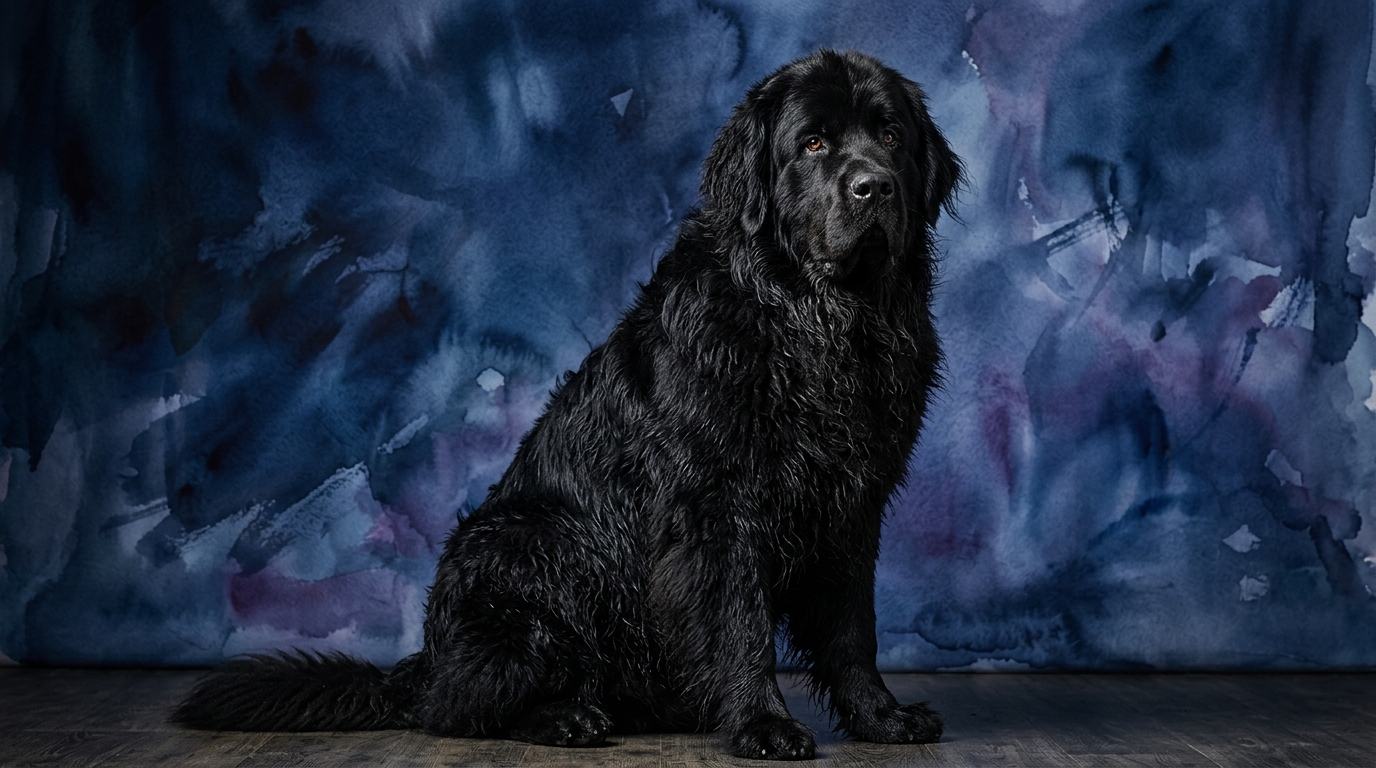

Side-by-Side Cognitive Profile: Newfoundland vs. Smooth Fox Terrier
The Newfoundland, a member of the Working Group and ranked #34 by Coren, presents a cognitive profile built for partnership and purpose. Its Problem Solving score of 3/5 indicates an ability to learn and execute complex tasks, though it might not independently devise solutions to abstract, novel challenges. A Training Speed of 4/5 means they generally grasp new commands and routines with enthusiasm, eager to please their human companions. Their Social Intelligence is exceptional at 5/5, reflecting a profound ability to understand and respond to human emotions and intentions, making them highly intuitive partners. With an Instinctive Drive of 5/5, Newfoundlands possess a powerful, inherent motivation for water rescue, companionship, and guarding, deeply rooted in their historical roles. Finally, their Memory score of 4/5 ensures good retention of learned behaviors, commands, and experiences, contributing to their consistent reliability.
In contrast, the Smooth Fox Terrier, a Terrier Group member not ranked by Coren, showcases a different set of cognitive strengths. Its Problem Solving at 3/5 is highly effective in practical, real-world situations, particularly those involving hunting and navigating physical obstacles, rather than abstract puzzles. A Training Speed of 3/5 suggests a moderate learning pace, often requiring more engaging methods due to their independent streak. Their Social Intelligence at 3/5 means they interact with humans, but often on their own terms, prioritizing their interests over constant human appeasement. The breed’s Instinctive Drive, also 3/5, is characterized by a strong prey drive, digging instincts, and a relentless desire for exploration, typical of terriers bred for vermin control. Their Memory, rated 3/5, allows for adequate retention of daily routines and commands, though consistent application may depend on their level of motivation.
Where the Newfoundland Wins Cognitively
Newfoundlands truly shine in social intelligence, scoring a perfect 5/5, which is a significant cognitive advantage. This translates into an unparalleled ability to read human cues, anticipate needs, and form deep, cooperative bonds, making them intuitive therapy dogs and dedicated family members. Their 5/5 instinctive drive is another powerful cognitive asset, manifesting as an innate desire to "work" alongside humans, particularly in tasks involving water rescue or companionship, where their natural empathy and strength combine for heroic efforts. This profound connection means they are often thinking *with* their owner, rather than simply *for* themselves, demonstrating a collaborative cognitive style. Their 4/5 memory ensures they remember past lessons and positive interactions, building a foundation of trust and reliability over time. For instance, a Newfoundland quickly learns the routine for helping a child into a pool or patiently waits for a specific family member, demonstrating both recall and social understanding within a cooperative context.
Where the Smooth Fox Terrier Wins Cognitively
While their scores might appear lower, Smooth Fox Terriers exhibit cognitive strengths uniquely suited to their heritage. Their 3/5 problem-solving, though not abstract, is highly effective in practical, real-world scenarios, particularly those involving independent decision-making to achieve a goal, like navigating complex terrain or outsmarting small prey. This isn't about solving a puzzle box for treats, but about persistent, quick-thinking action in a dynamic environment. Their instinctive drive, also 3/5, fuels a tireless curiosity and determination, pushing them to explore and investigate, which requires a specific type of cognitive engagement to map their environment and track scents. This tenacity means they won't give up easily on a task they deem important, even if it's digging up a perceived rodent. This breed's specific cognitive niche lies in its self-reliance and quick, decisive action, representing a different kind of "win" compared to the Newfoundland's collaborative approach.
Which is Easier to Train and Why
The Newfoundland, with its 4/5 training speed and exceptional 5/5 social intelligence, generally proves far easier to train. Their innate desire to please and profound attunement to human companionship mean they are highly motivated by positive reinforcement and respond eagerly to direction. They quickly understand what is expected of them and are keen to comply, often anticipating commands. This strong social bond translates directly into biddability and a willingness to work collaboratively, making training a relatively smooth and rewarding experience. In contrast, the Smooth Fox Terrier, scoring 3/5 in both training speed and social intelligence, presents a greater training challenge. Their independent nature and strong instinctive drives mean they are less inclined to simply obey; they often question commands or prioritize their own interests, such as chasing a squirrel. Training requires more consistency, patience, and creative motivation to capture their attention and channel their energetic, self-reliant personality, making them less inherently "biddable" than the Newfoundland.
Which Suits Active Owners vs. Relaxed Owners
For owners seeking a more relaxed pace but still desiring deep engagement, the Newfoundland is an excellent fit. While they require regular, moderate exercise to maintain their physical health, their primary cognitive and emotional needs revolve around companionship and a sense of purpose within the family unit. Their high social intelligence means they thrive on interaction and being part of daily activities, rather than constant high-intensity physical exertion. They are content to be near their people, offering a calm, comforting presence. Conversely, the Smooth Fox Terrier is better suited for active owners who can provide consistent mental and physical stimulation. Their strong instinctive drive and moderate problem-solving require outlets for their curiosity and terrier tenacity. Daily vigorous exercise, structured play, and engaging training sessions are crucial to prevent boredom and destructive behaviors, making them a match for individuals who enjoy an energetic, on-the-go lifestyle and can commit to consistent mental challenges.
The Verdict
Choose a Newfoundland if you seek an extraordinarily gentle, socially perceptive companion eager to participate collaboratively in family life and tasks, thriving on deep emotional bonds and offering calm reliability.
Opt for a Smooth Fox Terrier if you appreciate a spirited, independent, and tenacious partner, capable of quick-witted action and requiring an owner committed to channeling its energetic, curious nature through consistent engagement.
🧠 Find Your Pet's IQ Score
Our Pet IQ Lab assessment covers 25+ tests across 5 cognitive dimensions — personalized to your breed.
Take the Full IQ Test →Frequently Asked Questions
Is the Newfoundland's calm demeanor a sign of lower intelligence?
Not at all; the Newfoundland's calm reflects its high social intelligence and strong desire for companionship, allowing it to process information and react thoughtfully rather than impulsively. Their cognitive strengths lie in their empathy and cooperative nature, not in frantic activity, showcasing a different type of mental acuity.
Do Smooth Fox Terriers require different training methods due to their independence?
Yes, Smooth Fox Terriers often benefit from highly engaging, positive reinforcement-based training that makes learning fun and rewarding, appealing to their independent and sometimes stubborn nature. Short, varied sessions and incorporating their natural prey drive into games can be very effective, as they respond best when mentally challenged and entertained.
How does 'instinctive drive' differ between these two breeds?
The Newfoundland's 5/5 instinctive drive is geared towards cooperative working roles like water rescue and guardianship, fostering a strong bond with humans and a desire to aid, while the Smooth Fox Terrier's 3/5 drive is primarily focused on independent hunting, digging, and exploration, often with less direct human interaction as its primary goal. This reflects their distinct historical purposes and cognitive priorities.