Side-by-Side Cognitive Profiles: A Deeper Look
To truly understand the cognitive makeup of the Newfoundland and the Spanish Water Dog, we examine five key dimensions: problem-solving, training speed, social intelligence, instinctive drive, and memory. Each score, ranging from 1 to 5, paints a picture of their inherent capabilities and tendencies.
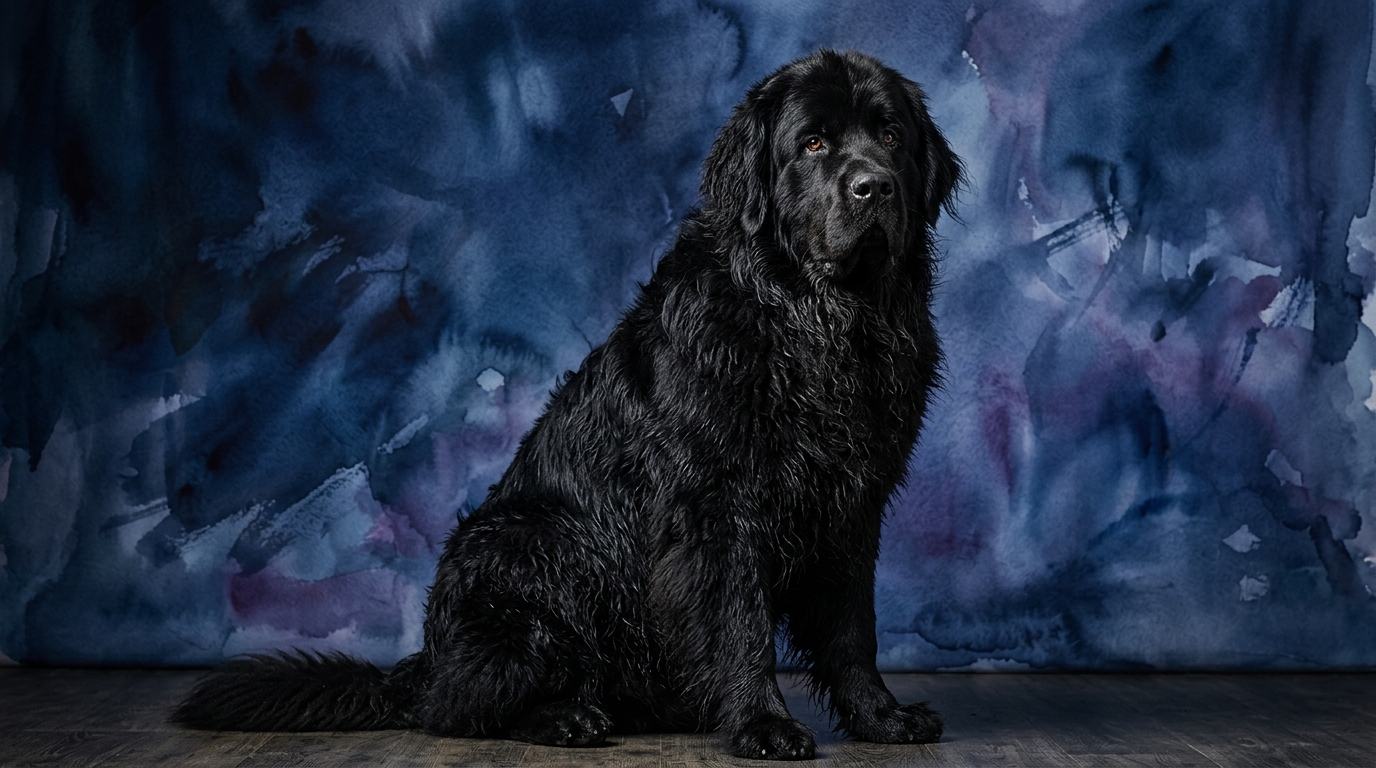
The Newfoundland, a member of the Working Group and ranking #34 in Coren's intelligence list, presents a profile marked by profound social aptitude and strong instinctive purpose. Its problem-solving ability scores a respectable 3/5, indicating a capacity to navigate novel situations and figure out solutions independently, though not always with lightning speed. Training speed is rated at 4/5, suggesting a breed that picks up new commands and routines with relative ease and consistency. Where the Newfoundland truly shines is in social intelligence, earning a perfect 5/5; this reflects an exceptional ability to understand human cues, empathize, and form deep, cooperative bonds. Its instinctive drive also stands at 5/5, a clear nod to its historical role in water rescue and companionship, showing a powerful innate motivation for purposeful work. Finally, its memory registers at 4/5, meaning it retains learned behaviors and experiences effectively over time.
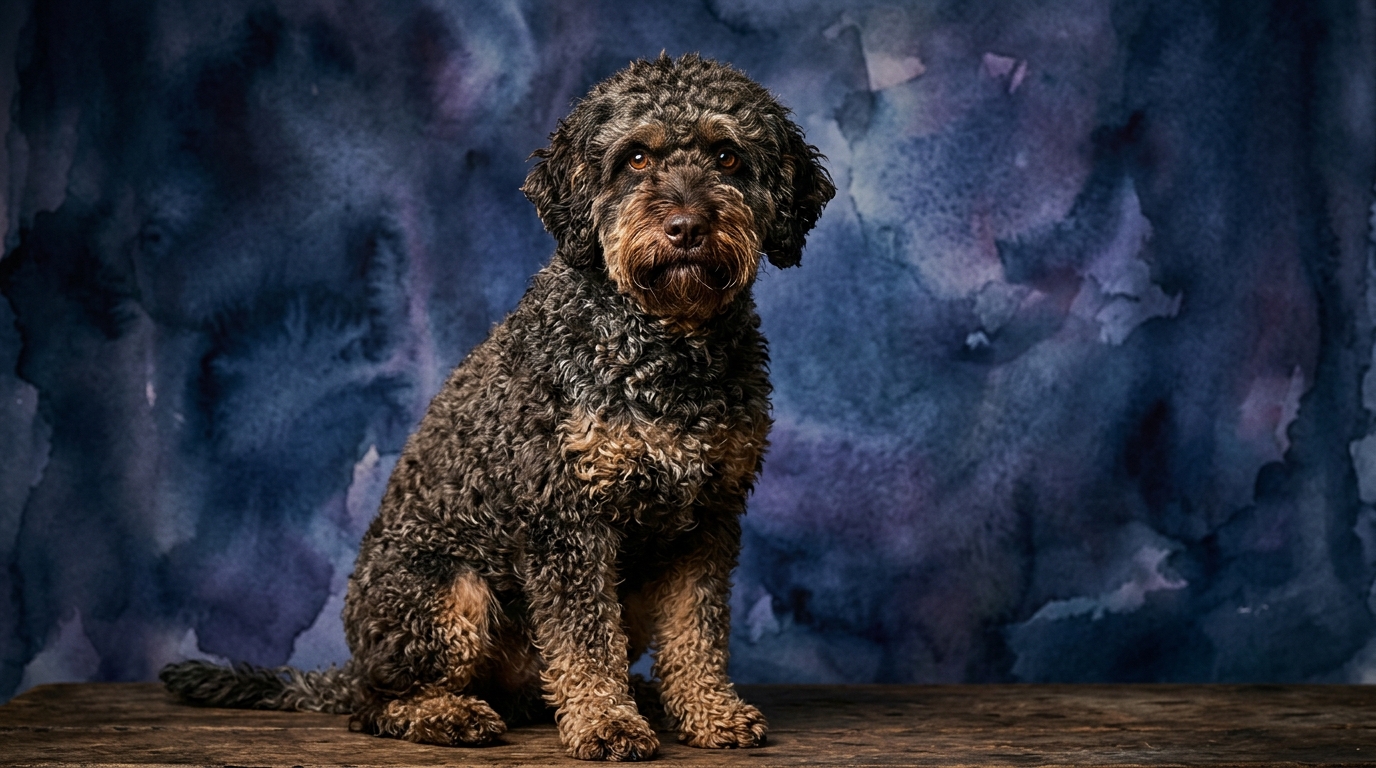
In contrast, the Spanish Water Dog, categorized within the Herding Group and not specifically ranked on Coren's list, exhibits a more balanced, albeit slightly less specialized, cognitive profile across the board. Its problem-solving skills are rated 3/5, demonstrating a competent ability to tackle challenges, often employing ingenuity derived from its herding background. Training speed for the Spanish Water Dog is 3/5, indicating that while trainable, it may require more patience, consistency, and engaging methods to master new commands compared to breeds with higher scores. Social intelligence also sits at 3/5; this suggests a dog that connects with its human companions but may exhibit more independence or a less overt desire to please than the Newfoundland. Its instinctive drive is 3/5, reflecting a solid, but not overwhelming, impulse for its herding tasks, which often involve autonomous decision-making. Lastly, memory for the Spanish Water Dog is also 3/5, implying it retains information adequately but might benefit from regular reinforcement to keep lessons fresh.
Where the Newfoundland's Cognition Excels
The Newfoundland's cognitive strengths are profoundly rooted in its history as a working companion and rescuer. Its 5/5 social intelligence means it possesses a remarkable capacity for reading human emotion and intent, making it an extraordinarily intuitive partner. This manifests as a deep understanding of household routines, an ability to offer comfort when a family member is distressed, and a keen awareness of its role within the family unit.
Coupled with its 5/5 instinctive drive, particularly for water work and guardianship, the Newfoundland is predisposed to purposeful collaboration. This drive isn't just about physical action; it's a cognitive inclination to engage in tasks that benefit its human counterparts, often with minimal explicit instruction once the behavior is established. For instance, a Newfie might instinctively guide a child away from perceived danger or demonstrate a persistent desire to 'help' with tasks around the home, driven by its innate sense of responsibility. Its 4/5 memory allows it to reliably recall complex sequences of behaviors vital for rescue work or therapy roles, retaining intricate patterns of interaction and command over long periods.
Where the Spanish Water Dog's Cognition Shines
While the Spanish Water Dog's individual scores are generally lower than the Newfoundland's, its cognitive makeup is precisely tuned for its herding role, emphasizing adaptability and independent thought. Its 3/5 problem-solving ability, when viewed through the lens of herding, translates into a quick assessment of dynamic situations, such as maneuvering livestock or navigating varied terrain. This isn't about solving abstract puzzles, but rather about practical, in-the-moment decision-making required to manage a flock effectively without constant human directives.
The Spanish Water Dog's 3/5 social intelligence, while not as overtly empathetic as the Newfoundland's, fosters a relationship built on mutual respect and observation rather than absolute deference. This allows it to work at a distance, making independent judgments crucial for herding, where a dog must often react to the environment and the animals without waiting for a direct command. Its instinctive drive of 3/5 supports a persistent, self-starting approach to tasks, meaning it often possesses an intrinsic motivation to engage in activities that mimic its ancestral work, even if it's not a full-time working dog.
Training Dynamics: Effort and Engagement
When considering ease of training, the Newfoundland holds a distinct advantage, primarily due to its 4/5 training speed and exceptional 5/5 social intelligence. This breed generally exhibits a strong desire to please its human companions and is highly attuned to their emotional state and vocal cues. They often respond well to positive reinforcement, eager to engage in cooperative learning experiences. Behavioral differences include their calm demeanor and focused attention during training sessions, making them less prone to distraction and more receptive to consistent instruction. Their memory of 4/5 also means lessons are retained efficiently, requiring less frequent refreshers.
The Spanish Water Dog, with its 3/5 training speed and 3/5 social intelligence, presents a different training landscape. While certainly capable of learning, they often require a more creative and engaging approach. Their independent herding nature means they may not always prioritize human direction over their own assessment of a situation. Training success often hinges on making activities feel like a game or a puzzle, tapping into their problem-solving skills and preventing boredom. Owners might observe a tendency for the Spanish Water Dog to offer its own 'solutions' to commands or to test boundaries more frequently, necessitating clear, consistent, and patient guidance. Their instinct to survey their environment can also lead to more distractions during training, demanding a highly focused trainer.
Lifestyle Fit: Active Owners vs. Relaxed Companionship
The Newfoundland's cognitive profile and physical disposition make it an ideal companion for owners who appreciate a more relaxed, yet deeply connected, lifestyle. While they are large dogs and require regular exercise, their energy levels are generally moderate, favoring leisurely walks, swimming, and family companionship over intense, high-octane activities. Their high social intelligence means they thrive on being an integral part of family life, content to observe and participate in daily routines. They are well-suited for owners who enjoy a dog that is present, calm, and deeply affectionate, providing a steady, comforting presence.
Conversely, the Spanish Water Dog's cognitive makeup, particularly its problem-solving and instinctive drive scores of 3/5, coupled with its herding heritage, demands a more active and engaged owner. This breed needs significant mental and physical stimulation to prevent boredom and potential behavioral issues. They excel in dog sports like agility, obedience, and herding trials, where their quick wit and independent thinking can be channeled constructively. Owners who lead an active outdoor lifestyle, enjoy training challenges, and can provide consistent opportunities for their dog to 'work' or solve problems will find the Spanish Water Dog to be an engaging and rewarding partner. Their independence means they appreciate having a role and purpose, even if it's not traditional herding.
The Verdict
Choose the Newfoundland if you seek a deeply empathetic, cooperative, and calm companion who thrives on close family bonds and gentle, purposeful activities. This breed offers a steady, intuitive presence and is highly receptive to training for companionship or assistance roles.
Opt for the Spanish Water Dog if you are an active owner looking for an independent, clever, and energetic partner who excels with mental challenges and consistent physical engagement. This breed thrives when given a 'job' and can make quick, autonomous decisions, perfect for dynamic activities.
🧠 Find Your Pet's IQ Score
Our Pet IQ Lab assessment covers 25+ tests across 5 cognitive dimensions — personalized to your breed.
Take the Full IQ Test →Frequently Asked Questions
Which breed is better for first-time dog owners?
The Newfoundland's higher social intelligence and training speed generally make it a more forgiving and straightforward choice for first-time dog owners. Their desire to please and calm demeanor can simplify the learning process for both dog and owner, fostering a strong bond from the outset.
Do Spanish Water Dogs require professional training due to their independence?
While not strictly necessary, many Spanish Water Dog owners find professional training beneficial to help channel their independence and strong drives effectively. A trainer experienced with herding breeds can provide valuable guidance on motivation and engagement techniques that resonate with their specific cognitive style.
Which breed is more prone to separation anxiety?
Given the Newfoundland's exceptionally high social intelligence and strong desire for companionship, they can be more prone to separation anxiety if not properly acclimated to alone time. The Spanish Water Dog, with its more independent nature, may tolerate solitude better, provided its needs for exercise and mental stimulation are met before being left alone.