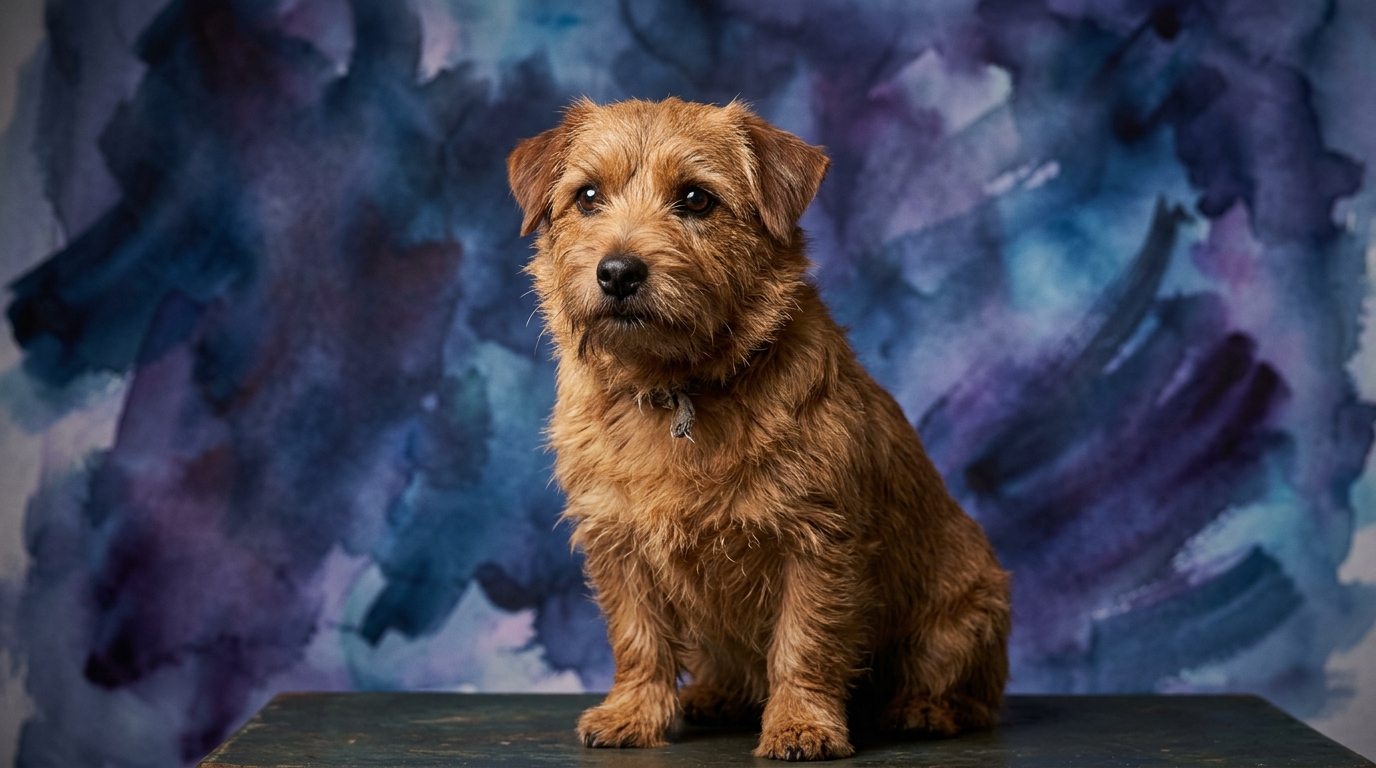

Side-by-Side IQ Profile: Unpacking Their Cognitive Scores
At The Cosmic Pet Pet IQ Lab, we assess canine intelligence across five key dimensions. For both the Norfolk Terrier and the Dandie Dinmont Terrier, each dimension scores a solid 3 out of 5, indicating capable and balanced cognitive abilities, though their expression varies significantly. Let's break down what a 3/5 truly signifies for each breed.
Problem Solving (3/5): The Norfolk Terrier exhibits practical problem-solving, often using their compact size and agility to navigate obstacles or retrieve desired items. They are resourceful in their environment, quickly assessing physical challenges and finding direct solutions. The Dandie Dinmont Terrier, conversely, approaches problem-solving with a more methodical, persistent style. Their independent nature often means they will dedicate sustained effort to unraveling a puzzle or accessing a hidden reward, demonstrating a determined, rather than overtly quick, intellectual approach.
Training Speed (3/5): Norfolk Terriers generally respond well to consistent, positive reinforcement, showing a willingness to engage and learn new commands at a steady pace. Their eagerness to participate in family activities aids in making training a cooperative endeavor, though their terrier independence still requires engaging methods. Dandie Dinmont Terriers also possess a 3/5 in training speed, but their inherent self-reliance means they often require more patience and creative motivation. They learn effectively, but their strong will necessitates making training sessions highly rewarding and clearly beneficial from their perspective.
Social Intelligence (3/5): Norfolk Terriers are typically outgoing and adaptable, adept at reading human cues and generally comfortable in various social settings. They form strong bonds with their families and are responsive to emotional shifts within their immediate circle, often seeking interaction. Dandie Dinmont Terriers, while equally socially intelligent (3/5), tend to be more reserved and discerning, forming deep, devoted attachments with their chosen people. Their social acumen is evident in their nuanced understanding of their inner circle's moods and intentions, often expressed through quiet companionship rather than boisterous interaction.
Instinctive Drive (3/5): The Norfolk Terrier carries a robust prey drive, typical of their terrier heritage, manifesting as an an alert nature, a love for digging, and keen interest in small, quick movements. This drive fuels their curiosity and desire to explore their surroundings. The Dandie Dinmont Terrier’s instinctive drive (3/5) is deeply rooted in their history as dedicated hunters of badger and otter, resulting in a pronounced focus on scent work and a determined pursuit of anything they perceive as 'prey.' This drive often translates into a singular focus when engaged in an activity that taps into their historical purpose.
Memory (3/5): Norfolk Terriers retain learned commands, routines, and experiences effectively, demonstrating good recall for both positive and negative associations. They remember familiar faces and places, contributing to their adaptability and ease in establishing routines. Dandie Dinmont Terriers also exhibit strong memory (3/5), particularly for locations of interest, learned tasks, and the habits of their family. Their memory is often linked to practical outcomes, such as recalling where a favorite toy was left or the specific sequence of events leading to a reward.
Where the Norfolk Terrier Wins Cognitively
Despite identical scores, the Norfolk Terrier’s cognitive strengths often shine through their energetic adaptability and engaging demeanor. Their problem-solving (3/5) is frequently characterized by a nimble, physical approach; a Norfolk might more spontaneously devise a way to retrieve a dropped item or navigate a tricky path thanks to their compact build and inherent zest for action. This quick, hands-on problem-solving often appears more immediate. Furthermore, their social intelligence (3/5) manifests as a more universally outgoing disposition, making them particularly adept at forming rapid rapport and understanding a wider variety of social cues across diverse human interactions, leading to quicker integration into new social settings.
Where the Dandie Dinmont Terrier Wins Cognitively
Conversely, the Dandie Dinmont Terrier’s cognitive advantages are often rooted in their deliberate persistence and profound focus. Their problem-solving (3/5) is typically observed in their sustained, unwavering effort to conquer a challenge, such as systematically working through a complex puzzle toy or tenaciously following a scent trail over varied terrain. This methodical approach highlights a deep capacity for concentration. Coupled with their powerful instinctive drive (3/5), which stems from their hunting heritage, Dandies can exhibit an unparalleled, enduring focus on a task they deem significant, often demonstrating a 'never give up' attitude that can outlast many other breeds in specific pursuits.
Which is Easier to Train and Why
While both breeds are rated 3/5 for training speed, the 'ease' of training can be a subjective experience influenced by the owner's approach and the dog's inherent personality. The Norfolk Terrier often appears slightly more straightforward to train due to their generally more enthusiastic and eager-to-please nature. Their outgoing social intelligence (3/5) makes them keen observers of human intention and they typically respond well to upbeat, consistent positive reinforcement, viewing training as an engaging, shared activity. However, their independent terrier spirit means sessions must remain interesting and short to maintain their focus and avoid boredom. The Dandie Dinmont Terrier, while equally capable of learning (3/5 training speed), often demands a more patient, creative, and highly motivating approach. Their independent streak and strong instinctive drive (3/5) mean they are more likely to prioritize an interesting environmental scent or their own agenda over a handler's request if not sufficiently enticed. Owners must establish clear, consistent boundaries and make training exceptionally rewarding and relevant to the Dandie's intrinsic motivations to effectively harness their self-reliant intellect.
Which Suits Active Owners vs. Relaxed Owners
Both the Norfolk Terrier and the Dandie Dinmont Terrier require regular exercise and mental stimulation, making neither truly suited for entirely sedentary lifestyles. For active owners who enjoy varied outdoor activities, short hikes, interactive games, and social outings, the Norfolk Terrier often makes a more versatile companion. Their adaptability and outgoing social intelligence (3/5) mean they thrive in dynamic environments and are typically enthusiastic participants in new adventures, readily adjusting to different schedules and activities. They are always ready for action but are also content to relax after their needs are met.
The Dandie Dinmont Terrier suits active owners who appreciate consistent, moderate exercise, perhaps with a focus on scent work, structured walks, or engaging puzzle play. Their strong instinctive drive (3/5) means they benefit greatly from activities that tap into their historical hunting purpose, providing a focused outlet for their energy. While they enjoy their outdoor time, Dandies are often described as 'a big dog in a small package' and are typically more content with quiet companionship indoors after their exercise requirements are met. Their reserved social intelligence (3/5) makes them devoted but calm indoor companions, appealing to owners who prefer a less boisterous presence at home while still providing ample outdoor engagement.
The Verdict
Choose a Norfolk Terrier if you seek an adaptable, outgoing terrier companion who is eager to engage in varied activities and readily integrates into diverse social settings with their family.
Opt for a Dandie Dinmont Terrier if you appreciate a more independent, persistent, and deeply focused terrier with a strong sense of purpose, and are prepared for a patient, consistent approach to training and engagement.
🧠 Find Your Pet's IQ Score
Our Pet IQ Lab assessment covers 25+ tests across 5 cognitive dimensions — personalized to your breed.
Take the Full IQ Test →Frequently Asked Questions
Are Norfolk Terriers generally good with children?
Norfolk Terriers can be good with respectful, well-behaved children, especially if raised with them. Their outgoing social intelligence (3/5) often makes them tolerant, but supervision is always crucial to ensure positive interactions for both dog and child.
Do Dandie Dinmont Terriers typically get along with other pets?
Dandie Dinmont Terriers can coexist peacefully with other pets, particularly if introduced early and properly socialized. However, their strong instinctive drive (3/5) may mean a higher prey drive towards very small, fast-moving animals, requiring careful management.
How much daily exercise do both Norfolk and Dandie Dinmont Terriers need?
Both breeds require at least 30-60 minutes of moderate daily exercise, including walks and playtime, to keep them mentally and physically stimulated. This helps channel their instinctive drives and maintains their cognitive sharpness.