
Side-by-Side IQ Profile: Unpacking Identical Scores
At first glance, the Norwegian Buhund and Brussels Griffon appear to share an identical cognitive blueprint, each scoring 3/5 across all five dimensions of our Pet IQ Lab assessment. However, these scores represent a functional capacity that manifests uniquely within each breed's historical role and inherent temperament. Understanding these nuances is key to appreciating their distinct mental landscapes.
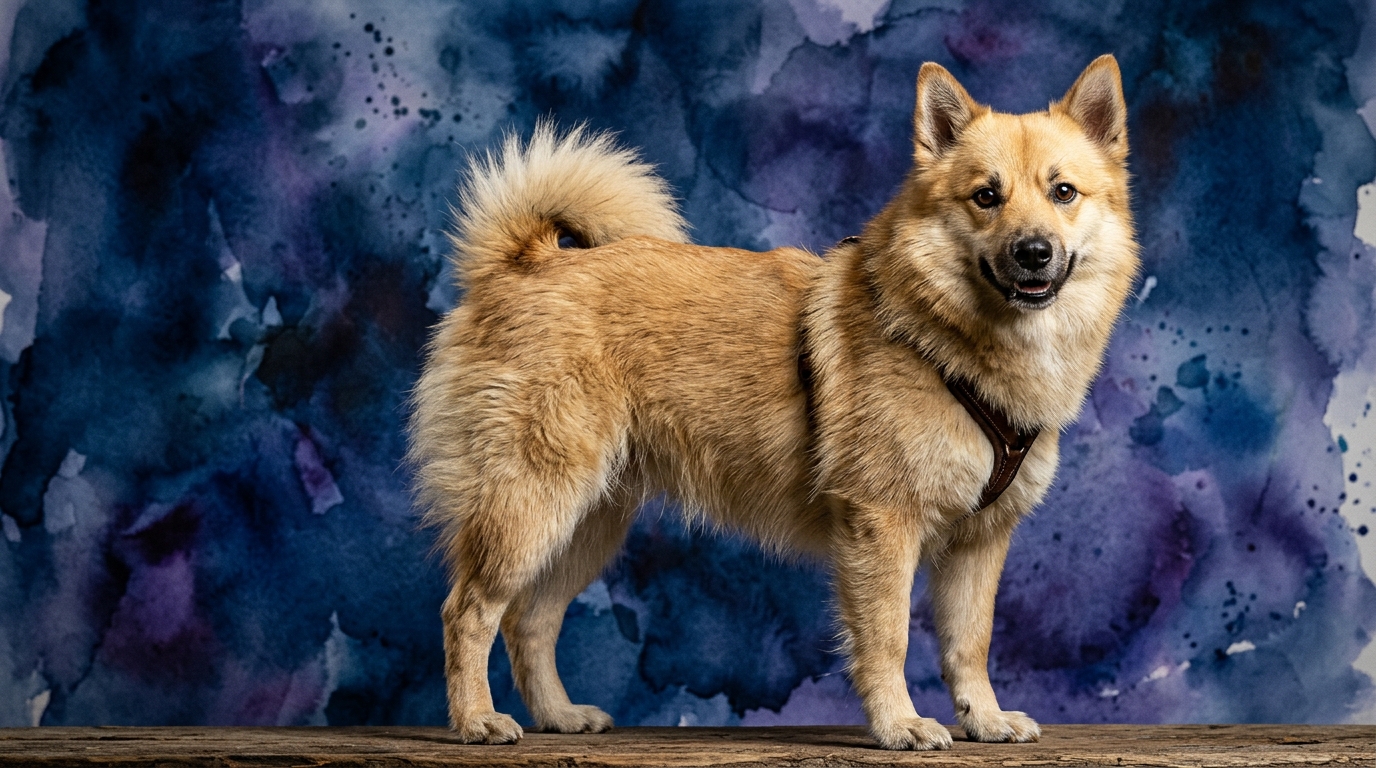
For the **Norwegian Buhund**, a dog bred for herding livestock, a Problem Solving score of 3/5 signifies an ability to assess and react to dynamic environmental situations, such as managing a flock or navigating varied terrain. Their 3/5 Training Speed reflects a willingness to learn and work, often motivated by purpose and activity, though they can also exhibit independent thinking that requires consistent, engaging methods. Social Intelligence at 3/5 means they are attuned to their family's dynamics and communicate effectively with their handler, often with a more reserved approach to strangers. The 3/5 Instinctive Drive is strongly rooted in their herding heritage, manifesting as a desire to monitor and organize their surroundings, while their 3/5 Memory allows them to recall complex routines, commands, and the layout of their territory, essential for their working role.
The **Brussels Griffon**, a Toy breed originally developed for companionship and ratting, interprets the same scores through a different lens. Their 3/5 Problem Solving capacity is often applied to more domestic challenges, such as figuring out how to gain attention, manipulate objects to reach a desired item, or navigate intricate household spaces. A 3/5 Training Speed indicates they are capable learners, eager to please their primary person for rewards, but their enthusiasm can sometimes be overshadowed by a stubborn streak or a preference for social interaction over task completion. Social Intelligence at 3/5 is a hallmark of the Griffon, demonstrating a profound ability to read human emotions, anticipate needs, and leverage their charm for interaction. Their 3/5 Instinctive Drive is channeled into companionship, guarding their human, and playful pursuit of small objects. Finally, their 3/5 Memory allows them to vividly recall routines, specific interactions, and the intricacies of their social environment, including who provides the best treats and cuddles.
Where the Norwegian Buhund Excels Cognitively
The Norwegian Buhund's cognitive strengths lie in their capacity for independent action and broad environmental awareness, a direct legacy of their herding origins. Their 3/5 Problem Solving, when paired with their 3/5 Instinctive Drive, gives them an edge in tasks requiring initiative and spatial reasoning over a larger domain. They are adept at assessing situations involving movement, making quick decisions without constant human intervention, and understanding the 'flow' of their surroundings. This translates into a natural aptitude for activities like agility, scent work, or even simply maintaining a watchful eye over their property, where their ability to process and react to a wider range of stimuli is a distinct advantage. They are thinkers who appreciate a 'job' and thrive on opportunities to apply their mental faculties to purposeful tasks.
Where the Brussels Griffon Excels Cognitively
Conversely, the Brussels Griffon shines in the realm of social cognition and intimate domestic problem-solving. Their 3/5 Social Intelligence is extraordinarily refined, allowing them to read subtle human expressions, moods, and intentions with remarkable accuracy. They excel at understanding the intricate dynamics of a household and leveraging their charm to achieve their desires, whether it's more lap time or a specific treat. Their 3/5 Problem Solving, while not geared towards large-scale environmental management, is highly effective at devising strategies for social engagement or navigating small-scale challenges within the home. They demonstrate a keen understanding of cause and effect in human interaction, often using vocalizations or specific behaviors to communicate their needs or solicit attention. This makes them masters of their immediate social environment, deeply attuned to the nuances of human-canine relationships.
Training Dynamics: A Question of Motivation, Not Capacity
Given their identical 3/5 Training Speed scores, neither the Norwegian Buhund nor the Brussels Griffon is inherently 'easier' to train; rather, the success of training depends significantly on understanding their distinct motivations and applying appropriate methods. The Buhund, with its Herding background, responds best to training that is engaging, consistent, and taps into its working drive. They thrive on purpose-driven exercises and may offer alternative solutions or test boundaries if not adequately stimulated, requiring a handler who can make training feel like a collaborative task or an exciting game. Their independence means they might not always seek constant affirmation but value clear direction and a sense of accomplishment.
The Brussels Griffon, on the other hand, is often motivated by social reward, praise, and palatable treats. Their 3/5 Training Speed is best harnessed through positive reinforcement, short sessions, and making the experience fun and highly interactive. They can be sensitive to harsh methods and may become stubborn or easily distracted if bored or if a more interesting human interaction presents itself. For a Griffon, training is often an extension of their bond with their owner, and they excel when the process strengthens that connection. Therefore, an owner's training style—whether task-oriented and structured for the Buhund, or relationship-focused and playful for the Griffon—will dictate which breed feels more receptive to learning.
Matching Lifestyles: Active Explorers vs. Domestic Connoisseurs
The choice between a Norwegian Buhund and a Brussels Griffon also hinges significantly on an owner's lifestyle and activity levels. The Buhund is an ideal companion for active owners who relish outdoor adventures, dog sports, and consistent mental engagement. Their 3/5 Instinctive Drive, combined with their problem-solving acumen, means they thrive on purpose and require ample physical and mental stimulation. A relaxed owner might find their inherent need for activity manifesting in self-appointed 'jobs' around the house, such as herding children or furniture, or developing boredom-induced behaviors if their energy and cognitive needs are not met. They are partners for exploration and purposeful activity.
Conversely, the Brussels Griffon is well-suited for more relaxed owners who prioritize companionship and intimate domestic life. While playful and enjoying moderate activity, their needs are largely met through shorter walks, indoor games, and extensive cuddle time. Their cognitive strengths are best appreciated in a home where they can be a central part of the family's social fabric, observing and participating in daily routines. A very active owner might find the Griffon's stamina less suited for intense, prolonged activities, while a relaxed owner will find their adaptable nature and profound social intelligence a perfect fit for a quieter, yet deeply engaging, home environment. They are connoisseurs of comfort and connection.
The Verdict
Choose the Norwegian Buhund if you seek a proactive companion who thrives on purpose-driven activities and offers a unique blend of independence and loyalty in a dynamic, active household.
Opt for the Brussels Griffon if your lifestyle values intense companionship, subtle social interactions, and a charming, adaptable presence that excels in a more intimate domestic setting.
🧠 Find Your Pet's IQ Score
Our Pet IQ Lab assessment covers 25+ tests across 5 cognitive dimensions — personalized to your breed.
Take the Full IQ Test →Frequently Asked Questions
Do similar IQ scores mean Norwegian Buhunds and Brussels Griffons learn identically?
No, similar scores indicate a comparable *capacity* for learning, but their *application* of these capacities differs significantly due to breed purpose. A Buhund's learning might be geared towards environmental manipulation, while a Griffon's could be focused on social cues and domestic problem-solving.
How does a Buhund's herding background influence its problem-solving abilities?
The Buhund's 3/5 problem-solving often manifests in dynamic situations, requiring quick assessment of moving targets and spatial reasoning to direct or gather. This contrasts with a Griffon's problem-solving, which is typically more focused on navigating social situations or small household challenges to achieve comfort or attention.
Can a Brussels Griffon be trained for complex tasks like a Herding dog?
While a Brussels Griffon possesses a 3/5 training speed, their inherent drives and physical capabilities are not aligned with complex herding tasks. They can learn many commands, but their motivation and application of problem-solving lean more towards social interaction and engaging with their human companions rather than large-scale environmental management.