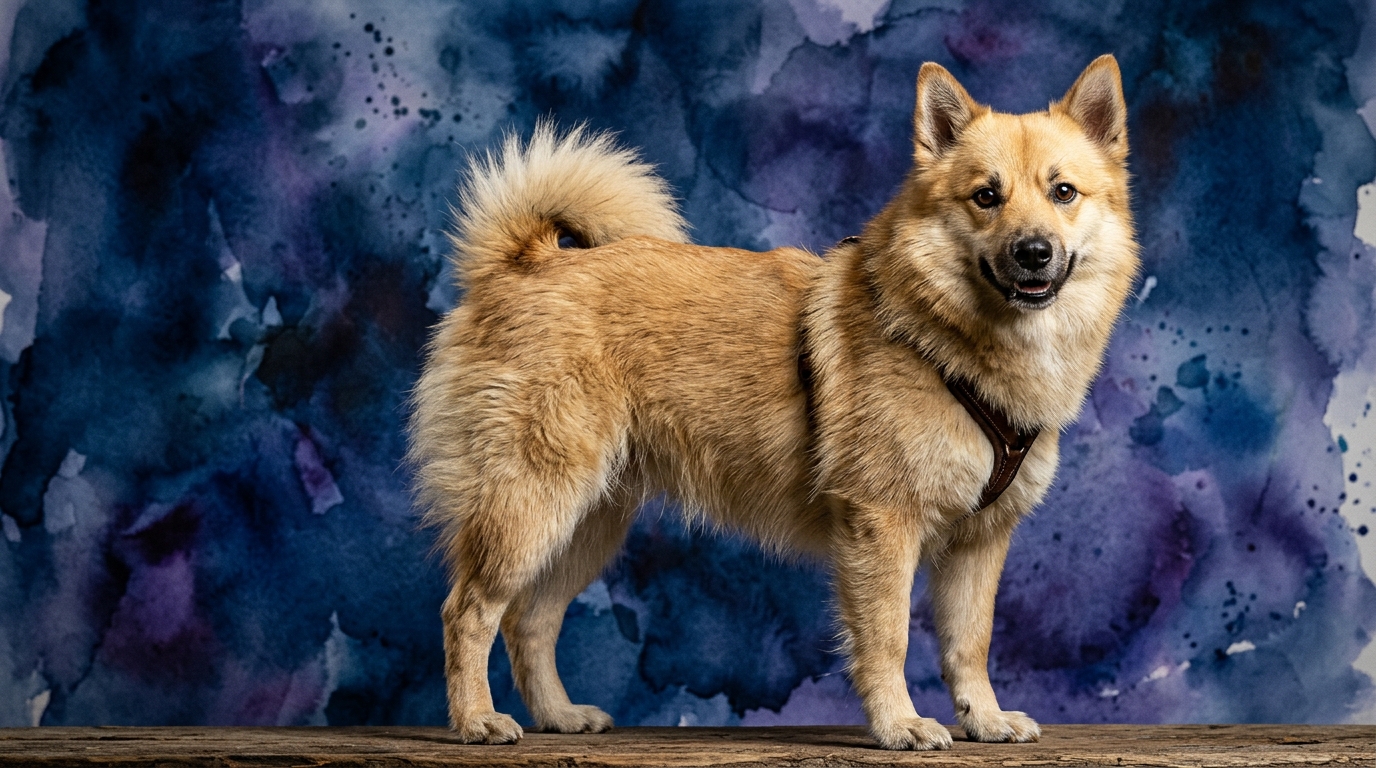
Norwegian Buhund at a glance
| IQ Rank / Score | 16/25 |
|---|---|
| Trainability | ★★★☆☆ (3/5) |
| Social Intelligence | ★★★★☆ (4/5) |
| Lifespan | 11-14 years |
| Shedding | Low to moderate |
| Exercise Needs | High (60+ min/day + training) |
| Origin | Norway |
The Buhund's Core Cognitive Edge: Proactive Herding & Communicative Intelligence
The Norwegian Buhund's cognitive uniqueness stems from its dual mastery: proactive, adaptable herding intelligence coupled with an extraordinary capacity for family-centric communication. Unlike breeds whose herding style is primarily based on intense stare or boundary setting, the Buhund operates with an almost entrepreneurial spirit, observing its environment, anticipating needs, and making independent decisions to manage livestock or alert its human companions. This isn't passive intelligence; it's a dynamic, problem-solving mindset forged in the challenging Nordic landscapes where quick thinking was paramount for survival and utility, making them exceptional at complex, real-world tasks.
Their intelligence is also deeply intertwined with their historical role as a vocal, watchful farm dog. They aren't just 'barkers'; they are active communicators, using a repertoire of barks, yips, and distinctive 'singing' to convey information, express desires, and engage profoundly with their human family. This high level of communicative intelligence enables a rich, interactive relationship, where the Buhund actively participates in the family unit, often attempting to 'herd' children or round up toys, demonstrating their innate drive in a domestic context. Their cognitive framework supports a collaborative partnership, making them incredibly intuitive and responsive to human cues, even as they retain a strong sense of self and purpose.
Echoes of the Vikings: A Multi-Purpose Mind
A surprising historical fact illuminating the Buhund's cognitive depth is its deep roots as an all-purpose farm and homestead dog, extending far beyond the typical herding role, dating back to Viking times. Archaeological digs have uncovered Buhund-like dog skeletons alongside Viking remains, suggesting their crucial role on longships and settlements across vast regions. These weren't just herders confined to fields; they were guards, companions, and essential members of the expedition, capable of adapting to vastly different environments and tasks, from protecting livestock on a remote farm to serving as vigilant watchdogs on a perilous sea voyage or within a bustling settlement.
This ancient, multi-faceted role points to a profound level of cognitive adaptability and generalized intelligence that few breeds possess. A Buhund had to quickly assess diverse situations, understand varied commands (or act independently in their absence), and seamlessly switch between tasks that demanded different cognitive skills – from the precision and strategic thinking of herding to the alertness of guarding or the patience and empathy of companionship. This historical context reveals a breed whose cognitive architecture was shaped by a pressing need for versatile problem-solving and an innate ability to integrate seamlessly into diverse human endeavors, a testament to their enduring and flexible intelligence that continues to shine today.
The Buhund's Cognitive Profile: Beyond Instinct
The Norwegian Buhund's intelligence is a compelling blend of instinct, adaptability, and high social cognition. Their problem-solving ability (rated 4/5) is evident in their capacity to independently assess and navigate complex situations, a trait honed by centuries of working autonomously on farms. This extends beyond herding to include figuring out puzzle toys, escaping enclosures, or devising strategies to get what they want. They learn new concepts quickly, often requiring fewer repetitions than many other breeds, though their independent streak can sometimes influence their perceived training speed.
Their social intelligence (rated 4/5) is particularly pronounced within their family unit. Buhunds are deeply attuned to human emotions and intentions, often anticipating their owner's needs or moods. They thrive on interaction and communication, making them excellent partners in training and daily life. This social acumen, combined with their strong memory (rated 4/5) for commands, routines, and individuals, allows them to build incredibly strong, nuanced relationships. However, their strong instinctive drive (rated 5/5) for herding, guarding, and vocalizing means this intelligence needs consistent guidance and appropriate outlets to be channeled productively.
Training a Buhund: Nurturing a Brilliant Mind
Training a Norwegian Buhund is a rewarding experience that demands an understanding of their unique cognitive makeup. While their training speed is rated 3/5, this isn't due to a lack of intelligence, but rather their discerning and independent nature. Buhunds learn quickly but require engaging, varied, and positive reinforcement-based training methods. Repetitive, harsh, or boring training will quickly lead to disengagement, as their intelligent minds seek more stimulating challenges. They thrive on understanding the 'why' behind a command and are motivated by partnership rather than mere submission. Early socialization is crucial to channel their natural watchfulness into appropriate responses.
To truly tap into a Buhund's potential, owners must embrace their desire for mental stimulation. Incorporating puzzle toys, scent work, agility, and advanced trick training can keep their minds sharp and prevent boredom-induced behaviors. Their strong memory and problem-solving skills make them excel at complex tasks, and they love having a 'job' to do, even if it's just helping with household chores like fetching specific items. Consistent, patient, and fun training builds a solid foundation, fostering a well-adjusted and highly responsive companion who is eager to learn and please their beloved family.
Instinctive Drives: The Heart of Buhund Intelligence
The Norwegian Buhund's intelligence is inseparable from its powerful instinctive drives, which have been honed over centuries of working alongside humans in demanding environments. Rated a perfect 5/5 for instinctive drive, these dogs possess a profound herding instinct, often manifesting as a desire to gather family members or even objects. This isn't just a simple chase; it involves strategic circling, monitoring, and proactive intervention, showcasing their innate understanding of group dynamics and control. They are keen observers of movement and react with precision and purpose.
Beyond herding, Buhunds exhibit strong guarding instincts, acting as vigilant watchdogs for their home and family. Their keen senses and vocal nature make them excellent alarm systems, alerting their owners to anything unusual with a characteristic array of barks and vocalizations. This protective drive, combined with their high social intelligence, means they take their role as family guardians seriously. Understanding and channeling these powerful instincts through appropriate training and activities is key to managing a Buhund, providing them with constructive outlets that fulfill their inherent cognitive needs and prevent frustration.
3 At-Home Tests to Measure Your Norwegian Buhund's IQ
These tests are adapted from peer-reviewed ethology research. No equipment is needed beyond items you have at home. Run each test 5–10 times for reliable results.
The Myth: "The most common myth surrounding Norwegian Buhund intelligence is that they are overly stubborn and difficult to train due to their independent nature."
✅ In reality, Norwegian Buhunds are exceptionally smart, eager to please their loved ones, and highly trainable, particularly with positive reinforcement and engaging, varied methods. Their 'stubbornness' is often an expression of their cognitive ability to assess situations, their need for mental stimulation, or a signal that the training method is not resonating with their intelligent and discerning minds. With consistent, fair, and fun training that challenges them intellectually, a Buhund excels, quickly learning complex commands and tricks, proving their intelligence far outweighs any perceived obstinacy. They thrive on mental challenges and understanding the 'why' behind tasks, making them deeply rewarding students.
Norwegian Buhund vs. Similar Breeds
🧠 What's Your Dog's IQ Score?
Our full Pet IQ Lab assessment includes 12+ tests across 5 cognitive dimensions, calibrated for Norwegian Buhunds specifically.
Take the Full IQ Test →Frequently Asked Questions
How smart is a Norwegian Buhund?
Our Pet IQ Lab framework scores cognition across five dimensions (max 25). The Norwegian Buhund totals 16/25 — high for a domestic dog. The full article breaks down each dimension with at-home tests.
Are Norwegian Buhunds easy to train?
Norwegian Buhunds can learn most cues, but expect to repeat lessons and keep sessions short. They score 3/5 on Training Speed in our breed profile.
Are Norwegian Buhunds good with children and other pets?
Yes — their Social Intelligence rates 4/5 in our Pet IQ Lab framework. With early socialization and supervised play, most Norwegian Buhunds integrate well into families with respectful children and other pets.
Do Norwegian Buhunds need a lot of mental stimulation?
Absolutely. With Problem Solving 2/5 and Instinctive Drive 4/5, Norwegian Buhunds need daily mental work — puzzle feeders, scent games, training sessions, or nose-work — to avoid boredom.
How much exercise does a Norwegian Buhund need?
Norwegian Buhunds need active engagement. Plan for 45-60 minutes of exercise and training per day, plus mental stimulation.
How good is a Norwegian Buhund's memory?
Norwegian Buhunds score 3/5 on memory. They remember high-value associations well; less-used cues fade without refresher sessions.
What is the typical lifespan of a Norwegian Buhund?
Expect a lifespan of 11-14 years for a healthy Norwegian Buhund.
The Norwegian Buhund stands as a testament to ancient canine intelligence, a breed whose cognitive makeup is as robust and adaptable as the Nordic lands from which it hails. With its unique blend of proactive herding wisdom, communicative prowess, and an eager spirit for learning, the Buhund offers a deeply rewarding and intellectually stimulating partnership for those ready to embrace its brilliant and versatile mind.