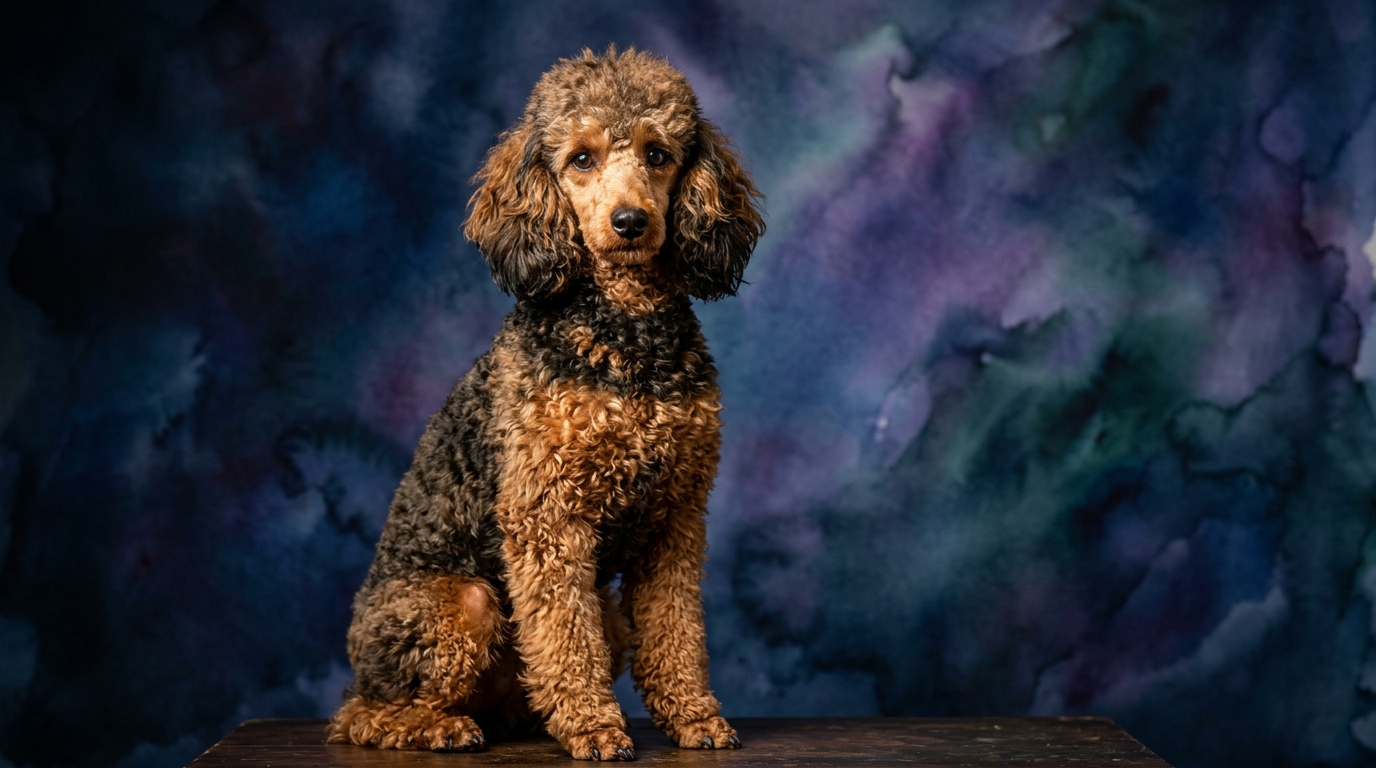
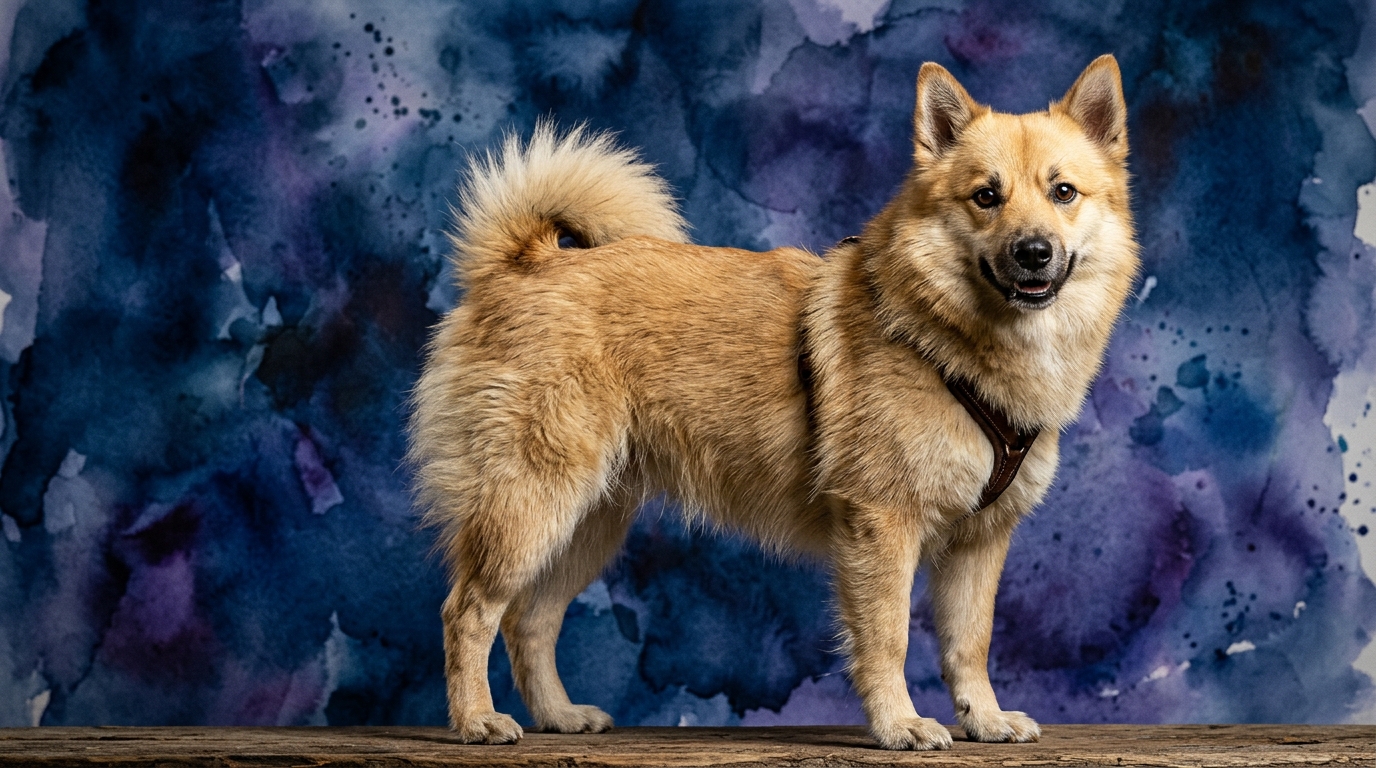
Side-by-Side IQ Profile: Poodle (Standard) vs. Norwegian Buhund
The Standard Poodle, a prominent member of the Non-Sporting Group, consistently demonstrates a broad spectrum of cognitive prowess, placing it at a remarkable Coren rank of #2 among all dog breeds. Its IQ profile highlights exceptional capabilities across the board. For Problem Solving, the Standard Poodle scores a perfect 5/5, indicating an exceptional capacity to analyze novel situations, adapt strategies, and devise innovative solutions to complex challenges. Its Training Speed also stands at an impressive 5/5, meaning it grasps new commands and concepts with minimal repetitions, forming strong associations and retaining learned behaviors with remarkable efficiency.
Social Intelligence for the Standard Poodle is rated 5/5, reflecting an acute sensitivity to human emotions, intentions, and subtle cues, making them highly attuned and responsive companions. Its Instinctive Drive, while not as singularly focused as some working breeds, scores a robust 4/5, manifesting as a strong desire for engagement, retrieving, and participation in various activities. Finally, Memory for the Standard Poodle is a flawless 5/5, ensuring long-term retention of vast repertoires of commands, routines, and experiences, even after extended periods without practice.
In contrast, the Norwegian Buhund, a dedicated Herding Group member, though not Coren-ranked, presents a more specialized cognitive profile aligned with its historical role. Its Problem Solving ability is rated 3/5, indicating competence in familiar, task-specific challenges, but potentially requiring more guidance or repetition for entirely novel or abstract problems. Training Speed for the Norwegian Buhund also sits at 3/5, suggesting it learns at a moderate pace, benefiting from consistent, positive reinforcement and a structured approach to skill acquisition.
The Norwegian Buhund's Social Intelligence is a solid 3/5, meaning it generally understands human communication and intentions, but may not interpret the most subtle emotional nuances with the same precision as a Poodle. Its Instinctive Drive is rated 3/5, primarily centered around its inherent herding and guarding tendencies, manifesting as a watchful nature and a desire to keep its 'flock' (family) together. Memory for the Norwegian Buhund is also 3/5, allowing it to retain basic commands and routines adequately, but perhaps requiring more frequent refreshers for complex or infrequently practiced tasks compared to a breed with higher memory scores.
Where the Standard Poodle Wins Cognitively
The Standard Poodle's cognitive strengths are particularly evident in its exceptional capacity for abstract reasoning and rapid learning across diverse domains. Its 5/5 Problem Solving score means it doesn't just learn tasks, but often understands the underlying principles, allowing it to generalize solutions to new, unencountered challenges with remarkable ease. This makes it a standout performer in complex multi-step tasks, from intricate obedience routines to advanced service dog work.
Its 5/5 Training Speed allows for unparalleled efficiency in skill acquisition, meaning fewer repetitions are required to master new commands, freeing up training time for more advanced concepts and a wider variety of activities. This rapid comprehension, combined with a 5/5 Social Intelligence, creates a dog that is not only quick to learn but also deeply responsive to its handler's subtle cues, intentions, and emotional states, fostering an incredibly fluid and intuitive training partnership.
The Poodle's perfect 5/5 Memory further solidifies its cognitive advantage, ensuring that once a behavior or concept is learned, it is retained with impressive fidelity over extended periods. This enduring retention allows for the layering of complex skills, building a vast behavioral repertoire that remains accessible, making the Standard Poodle an exceptionally versatile and reliable companion for a multitude of roles beyond traditional pet ownership.
Where the Norwegian Buhund's Cognitive Profile Shines
While the Norwegian Buhund's scores are generally lower than the Standard Poodle's, its cognitive profile is specifically engineered for its ancestral purpose, where its strengths truly shine. Its combination of 3/5 Problem Solving and 3/5 Instinctive Drive creates a dog adept at practical, consistent application within a defined working context. The Buhund’s problem-solving is geared towards real-world, often repetitive, challenges found in herding and guarding, where reliability and persistence are paramount over abstract novelty.
The Buhund's 3/5 Instinctive Drive, though moderate, is a focused energy that manifests as a dedicated work ethic in its intended domain. This isn't a drive for constant novelty, but rather for consistent, purposeful engagement in patrolling, monitoring, or 'gathering' its family group. For owners seeking a dog with a clear, practical purpose that can be channeled into structured activities like farm work, agility, or even simply being a watchful family companion, this focused drive is a significant asset.
Furthermore, the Buhund's 3/5 Social Intelligence, while not as nuanced as the Poodle's, can be seen as a strength for owners who prefer a more straightforward and less emotionally reactive companion. This temperament allows the Buhund to maintain a degree of independent thought and action, a valuable trait in a herding dog that might need to make decisions without constant human oversight. Its cognitive make-up fosters a resilient, self-reliant nature that can be highly appealing to those who appreciate a dog with clear boundaries and a strong sense of purpose.
Which is Easier to Train and Why?
Based on The Cosmic Pet Pet IQ Lab's data, the Standard Poodle is demonstrably easier to train due to its exceptional cognitive architecture. Its 5/5 Training Speed means it requires significantly fewer repetitions to understand and execute new commands, making the learning process remarkably efficient. This is further amplified by its 5/5 Social Intelligence, which allows the Poodle to keenly interpret handler cues, intentions, and even subtle shifts in body language or tone, leading to a highly responsive and cooperative training experience. They possess an inherent desire to engage and understand, actively seeking to please their human companions, which streamlines the entire training journey.
The Norwegian Buhund, with its 3/5 Training Speed, requires a more patient and consistent approach. While certainly trainable, it will typically need more repetitions and a more structured environment to solidify new behaviors. Its 3/5 Problem Solving means it might take longer to generalize concepts or adapt to variations in training scenarios, necessitating clear, step-by-step instruction. The Buhund's 3/5 Instinctive Drive, while valuable for its specific purpose, means that training often involves channeling and motivating this innate herding energy rather than simply directing it. Trainers must understand and work with this drive, as the Buhund's independent nature, a hallmark of many herding breeds, means it may not always default to immediate human instruction without clear motivation and consistent reinforcement.
Which Suits Active Owners vs. Relaxed Owners?
The Standard Poodle thrives with engaged and active owners who are prepared to provide consistent and significant mental stimulation, beyond just physical exercise. Their high cognitive scores across problem-solving, social intelligence, and memory mean they require intellectual challenges to prevent boredom and destructive behaviors. Owners who enjoy advanced obedience, dog sports like agility, rally, or retrieving, or those who can integrate their Poodle into complex daily routines or even service work, will find an exceptionally rewarding partnership. While physically active owners are a bonus, the Poodle's primary need is for a mind that is consistently challenged and engaged.
The Norwegian Buhund, conversely, suits moderately active owners who appreciate a dog with a clear sense of purpose and a degree of self-reliance. They require regular physical exercise to satisfy their herding and guarding instincts, such as daily walks, hikes, or secure yard access for patrolling. Owners who enjoy structured outdoor activities, or those with a lifestyle that allows for channeling their moderate instinctive drive into appropriate outlets, will find the Buhund a fulfilling companion. They are not typically suited for a purely sedentary lifestyle, but also do not demand the constant, intricate intellectual engagement that a Standard Poodle's mind craves, making them a good fit for those who value consistency and a more straightforward relationship over constant mental gymnastics.
The Verdict
Choose the Standard Poodle if you seek a highly adaptable, rapidly learning companion capable of mastering complex tasks, excelling in dog sports or service work, and if you can provide consistent, high-level mental engagement.
Choose the Norwegian Buhund if you appreciate a self-reliant, moderately active dog with a practical working heritage, capable of consistent performance in structured environments, and who values a straightforward, loyal companion.
🧠 Find Your Pet's IQ Score
Our Pet IQ Lab assessment covers 25+ tests across 5 cognitive dimensions — personalized to your breed.
Take the Full IQ Test →Frequently Asked Questions
Is the Standard Poodle really as cognitively adept as its reputation suggests?
Yes, The Cosmic Pet IQ Lab data confirms Standard Poodles excel in problem-solving (5/5), training speed (5/5), social intelligence (5/5), and memory (5/5). This makes them adept at diverse tasks and exceptionally responsive, intuitive companions for a variety of roles.
Can a Norwegian Buhund be trained for advanced tasks despite its moderate IQ scores?
While a Norwegian Buhund's training speed and problem-solving scores are moderate (3/5), consistent, positive reinforcement and a structured approach can certainly lead to proficiency in a range of tasks. They particularly excel in activities that align with their herding instincts, demonstrating reliability and persistence once a behavior is established.
How do their instinctive drives differ in daily life and what does this mean for owners?
The Standard Poodle's 4/5 instinctive drive often manifests as a strong desire for active engagement, such as retrieving, agility, or problem-solving games, making them eager participants in family activities. The Norwegian Buhund's 3/5 drive is more rooted in its herding and guarding heritage, prompting behaviors like patrolling the yard or 'gathering' family members, requiring owners to provide outlets for these specific, purposeful instincts.