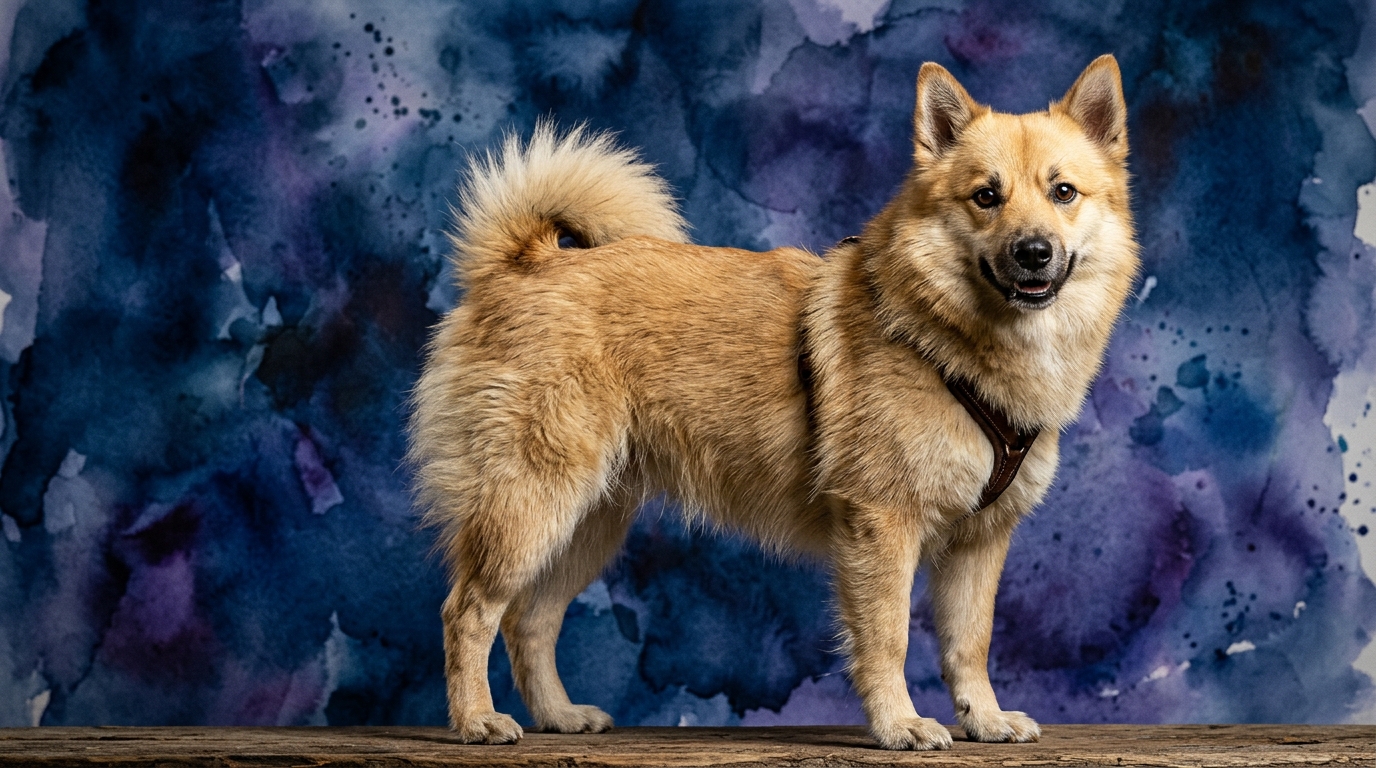
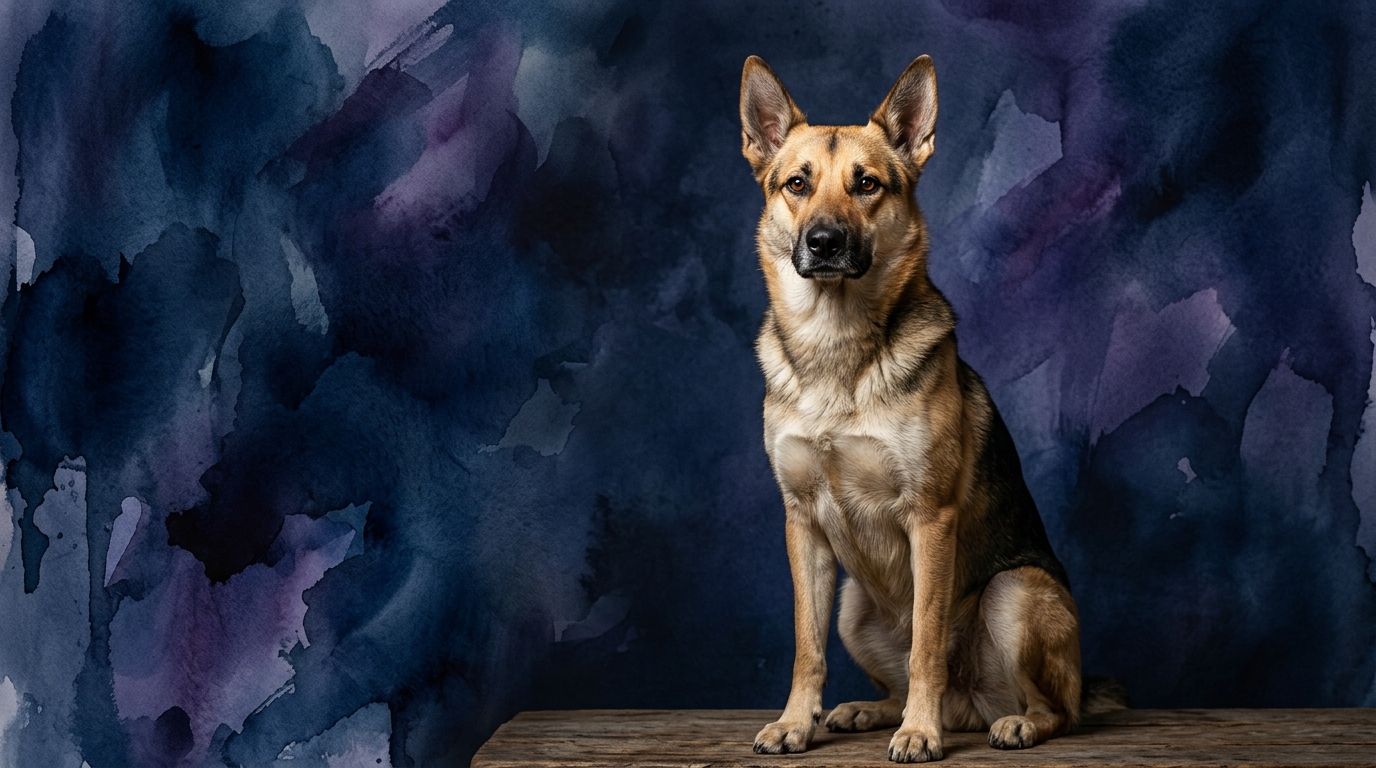
Side-by-Side Cognitive Profile: Norwegian Buhund vs. Canaan Dog
The Norwegian Buhund, a spirited Nordic herder, demonstrates a balanced cognitive toolkit across various dimensions. Their Problem Solving is rated 3/5, indicating an ability to navigate moderately complex tasks and learn from experience, often applying clever solutions to everyday challenges like opening latches or figuring out puzzle toys after some trial and error. Training Speed also sits at 3/5, meaning they grasp new commands and routines with reasonable efficiency, responding well to consistent, engaging instruction, though they may require more repetition than breeds at the peak of trainability.
In Social Intelligence, the Buhund scores 3/5, showing a good capacity to understand human cues and integrate into family dynamics, often displaying a communicative nature through barks and body language. Their Instinctive Drive, also 3/5, reflects their inherent herding tendencies, which can manifest as a desire to gather family members or manage household 'flocks,' but is generally manageable and can be channeled into appropriate activities. Finally, their Memory is rated 3/5, suggesting a reliable recall for learned behaviors, established routines, and familiar individuals, contributing to their overall dependability.
The Canaan Dog, a primitive desert pariah breed, shares several cognitive similarities with the Buhund but boasts a distinct strength. Like the Buhund, their Problem Solving is 3/5, showcasing a strong capacity for independent thought and resourcefulness, honed by centuries of survival where self-reliance was key to overcoming environmental obstacles. Their Training Speed is also 3/5, indicating they can learn new commands at a comparable pace, but their inherent wariness and independent nature mean building trust and ensuring clear, fair communication are crucial for effective instruction.
Social Intelligence for the Canaan Dog is 3/5, reflecting a keen awareness of their surroundings and social dynamics, often expressed as a reserved loyalty to their family and a cautious approach to strangers. Their Instinctive Drive, also 3/5, is deeply rooted in their ancient roles as guardians and herders, resulting in a pronounced territoriality and a natural vigilance that requires careful management in a domestic setting. Where the Canaan Dog truly stands apart is in Memory, earning a 4/5, signifying a superior ability to retain lessons, experiences, and associations, both positive and negative, over extended periods, making their learning deeply ingrained.
Where the Norwegian Buhund Excels Cognitively
While many cognitive scores are similar, the Norwegian Buhund's distinct advantage lies in its more outwardly cooperative and less reserved approach to social learning. Their 3/5 Social Intelligence often manifests as a greater eagerness to engage directly with their human companions in learning situations, making them generally more amenable to novel experiences and less prone to initial skepticism than the more cautious Canaan Dog. This open disposition can accelerate early social integration and make them appear more readily trainable in diverse environments.
Furthermore, the Buhund's 3/5 Instinctive Drive, while certainly present for herding, tends to be more balanced and less intensely tied to territorial guarding than the Canaan Dog's. This means their drive often translates into a spirited enthusiasm for activity and participation rather than a deep-seated need to patrol or protect, making them potentially more adaptable to a wider range of household dynamics without requiring the same level of management for guarding behaviors. Their cognitive profile, therefore, often results in a more straightforward and less complex social interaction pattern.
Where the Canaan Dog Demonstrates Cognitive Superiority
The Canaan Dog's most pronounced cognitive strength is undoubtedly its exceptional Memory, rated 4/5. This superior recall means they retain information, learned behaviors, and environmental details with remarkable tenacity. Once a lesson is truly absorbed, it is deeply ingrained, making them incredibly reliable in remembering complex routines or navigating familiar territories. This strong memory underpins their survival instincts, allowing them to learn from past experiences and adapt strategy in challenging situations, a trait honed by their ancient desert existence.
This elevated memory, combined with their 3/5 Problem Solving ability, grants the Canaan Dog an impressive capacity for independent thought and self-sufficiency. They are adept at evaluating situations and recalling past solutions, which, while sometimes leading to a perceived stubbornness, is actually a reflection of their robust cognitive processing. Their 3/5 Social Intelligence, though often manifesting as wariness towards strangers, also signifies an acute awareness of their environment and a profound, discerning loyalty to their chosen family, making them highly attuned to subtle shifts in their surroundings and the emotional states of their inner circle.
Training Dynamics: Which Breed is More Accessible?
When considering ease of training, the Norwegian Buhund generally presents a more accessible experience for the average owner. Both breeds share a 3/5 Training Speed, but the Buhund’s more overtly communicative and less independent social intelligence (3/5) means they are often more eager to please and readily accept direction from their human partners. They tend to form strong bonds quickly and are typically motivated by positive reinforcement and shared activities, making the training process feel more collaborative and less like a negotiation.
The Canaan Dog, despite the same 3/5 Training Speed, requires a nuanced approach due to its profound memory (4/5) and deeply ingrained independent spirit. While they learn quickly, their exceptional memory means they vividly recall both positive and negative experiences, making inconsistent or harsh training methods particularly detrimental and difficult to overcome. Their ancient guarding instincts (3/5) also mean they often question commands, especially if they perceive them as unnecessary or conflicting with their own judgment. Training a Canaan Dog demands immense patience, unwavering consistency, and a foundation built on mutual trust and respect, often requiring an owner experienced in working with primitive breeds.
Lifestyle Compatibility: Active vs. Relaxed Owners
Both the Norwegian Buhund and the Canaan Dog, as herding breeds, inherently possess significant energy and require substantial mental and physical stimulation, making neither ideally suited for truly relaxed, sedentary owners. However, their specific cognitive and behavioral traits dictate different types of 'active' engagement. The Norwegian Buhund, with its balanced 3/5 instinctive drive and communicative 3/5 social intelligence, thrives on active participation in family life. They relish activities like agility, obedience, hiking, or even just long, engaging walks that involve their human companions. Their energy is often expressed as joyful enthusiasm, making them excellent partners for owners who enjoy a wide variety of outdoor pursuits and want a dog actively involved in their adventures.
The Canaan Dog also demands an active lifestyle, but one that respects its independent and watchful nature, rooted in its 3/5 instinctive drive for guarding and patrolling. They excel in environments where they have secure outdoor space to observe and explore, and benefit greatly from mental challenges like scent work, puzzle toys, and consistent, structured training that taps into their problem-solving (3/5) and powerful memory (4/5). While they need physical exercise, their contentment often comes from having a 'job' or a purpose, even if it's patrolling the yard. They are less about being a constant shadow and more about being a vigilant, self-reliant companion, making them a better fit for active owners who understand and respect their unique needs for independence and mental engagement, rather than just physical exertion.
The Verdict
For owners seeking a spirited, communicative companion who thrives on shared activities and is generally more open to novel social experiences, offering a balance of independence and eagerness to please, the Norwegian Buhund is an excellent choice.
For experienced owners who appreciate a truly independent, ancient breed with deep loyalty, a formidable memory, and a watchful nature, prepared to engage with their specific needs for security, mental stimulation, and consistent, trust-based training, the Canaan Dog is a rewarding companion.
🧠 Find Your Pet's IQ Score
Our Pet IQ Lab assessment covers 25+ tests across 5 cognitive dimensions — personalized to your breed.
Take the Full IQ Test →Frequently Asked Questions
Are Norwegian Buhunds good with children?
Norwegian Buhunds generally possess a friendly and patient temperament, making them suitable companions for families with children. Their social intelligence (3/5) allows them to adapt well to family dynamics, but supervision is always important, especially with very young children, to ensure respectful interactions.
How do Canaan Dogs adapt to apartment living?
While adaptable, Canaan Dogs, with their 3/5 instinctive drive and ancient heritage, thrive best with access to a secure yard where they can patrol and observe. Apartment living is possible but requires significant daily exercise, mental stimulation, and consistent outdoor access to satisfy their need for vigilance and exploration.
Do either of these breeds shed much?
Both the Norwegian Buhund and the Canaan Dog have double coats and are known to shed moderately year-round, with heavier seasonal shedding periods. Regular brushing, especially during these times, is essential to manage loose fur and maintain coat health for both breeds.