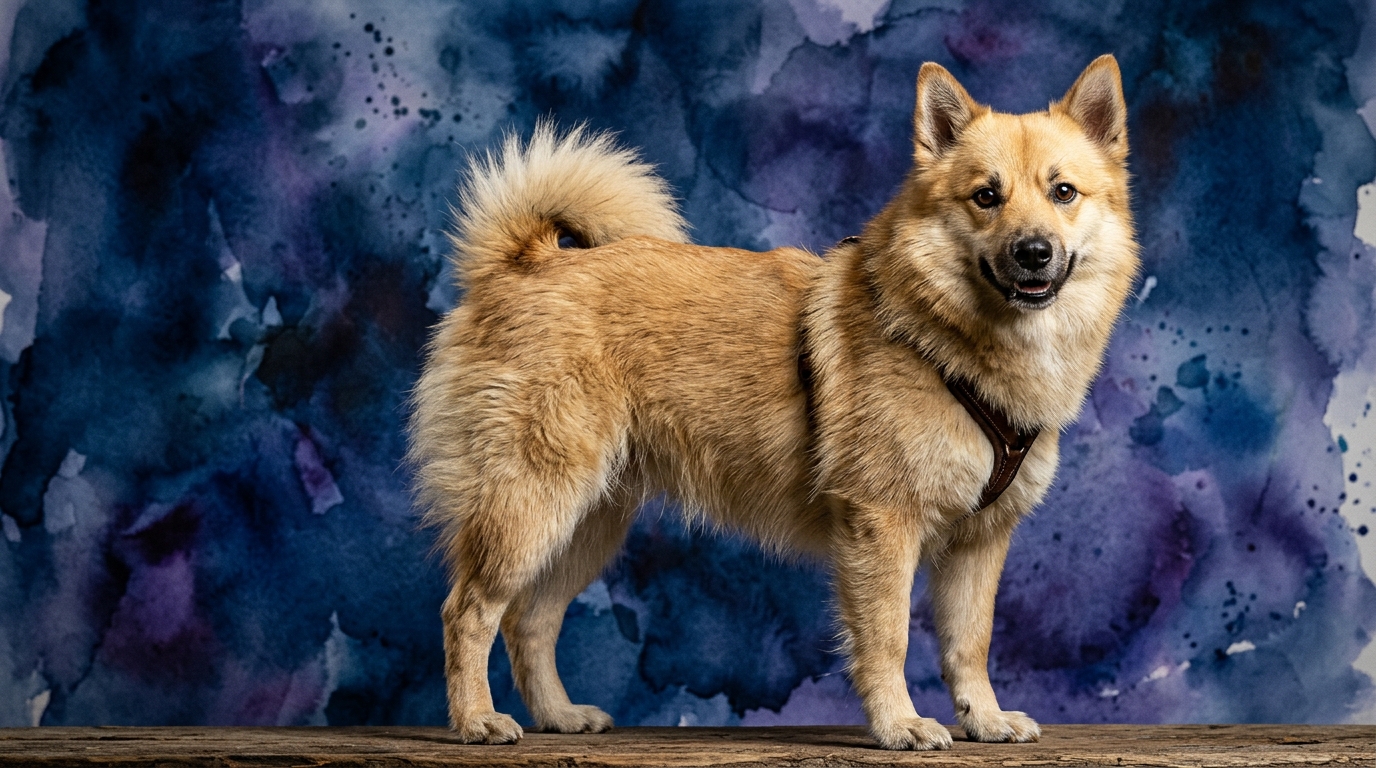

Side-by-Side Cognitive Profiles
The Cosmic Pet Pet IQ Lab provides a fascinating framework for understanding canine cognition, breaking it down into five core dimensions. For both the Norwegian Buhund and the Dogo Argentino, all five dimensions register a score of 3/5, indicating a robust and capable, yet not extreme, cognitive aptitude. However, interpreting what a '3/5' means for each breed requires looking beyond the number to their distinct historical purposes and inherent dispositions.
For the **Norwegian Buhund**, a herding breed originating from Norway, a **Problem Solving** score of 3/5 suggests a practical ingenuity, particularly in navigating complex environments or figuring out how to manage livestock, a trait refined over centuries. They might demonstrate this by creatively finding ways to move objects or outsmarting perceived barriers in their home environment. A **Training Speed** of 3/5 indicates they learn new commands and routines with reasonable alacrity, often eager to engage with their handlers, though their independent herding spirit means they might occasionally offer their own 'suggestions.' Their **Social Intelligence** at 3/5 points to an aptitude for reading human emotions and intentions, fostering strong bonds with their family, while being discerning with strangers. The **Instinctive Drive** at 3/5 clearly highlights their strong, innate herding drive, expressed through watchful attentiveness, a desire to 'gather' family members, and often a vocal nature. Finally, a **Memory** score of 3/5 suggests the Buhund retains training, experiences, and social interactions effectively, contributing to their reliability and ability to form lasting relationships.
The **Dogo Argentino**, a powerful working breed developed in Argentina for big-game hunting and guarding, applies its identical 3/5 scores in a profoundly different manner. Its **Problem Solving** score of 3/5 manifests as focused determination, particularly when confronting challenges related to tracking and subduing formidable prey. They demonstrate a strategic approach to obstacles, rather than impulsive reactions, often thinking through a situation before acting with immense resolve. A **Training Speed** of 3/5 means the Dogo is capable of learning complex tasks and commands, but their strong will and independent nature require a handler who is consistent, clear, and understands their intrinsic motivations. Once committed, they perform tasks with unwavering resolve. The Dogo's **Social Intelligence** at 3/5 reflects their capacity for forming deep, loyal bonds with their immediate family, coupled with a natural wariness and discerning nature towards strangers, adept at interpreting their owner's moods and reacting protectively. Its **Instinctive Drive** at 3/5 underscores the Dogo's powerful prey drive, protective instincts, and territoriality, traits essential for their original purpose as hunters and guardians, requiring significant channeling. A **Memory** score of 3/5 suggests the Dogo Argentino retains both positive and negative experiences, as well as learned behaviors, for extended periods, contributing to their consistent performance in training and their ability to recall social interactions.
Where the Norwegian Buhund Wins Cognitively
While both breeds share a 3/5 in Problem Solving, the Norwegian Buhund often exhibits a more adaptable and nuanced form of this capability in a domestic setting. Their herding background requires them to read subtle cues from livestock and adjust strategies on the fly, translating to an ability to quickly assess and adapt to novel household situations or routines. This manifests as a readiness to learn new games or navigate changing family dynamics with relative ease, showing ingenuity in non-confrontational contexts. Their social intelligence, combined with their eagerness to please, allows them to 'win' in scenarios demanding quick social calibration and integration into diverse family activities.
Where the Dogo Argentino Wins Cognitively
Conversely, the Dogo Argentino's 3/5 in Problem Solving often shines in situations demanding focused determination and strategic assessment. Developed for tracking and confronting formidable wild boar, their cognitive strength lies in sustained concentration and methodical execution of a task. This translates to an unwavering focus during specialized training, such as scent work or protection exercises, where they can methodically work through complex sequences or threats with profound resolve, often displaying a calculated rather than impulsive approach to challenges. Their memory and drive combine to create a partner with exceptional recall and consistency for specific, high-stakes tasks.
Which is Easier to Train and Why
Both the Norwegian Buhund and the Dogo Argentino score 3/5 in Training Speed, indicating a moderate pace of learning. However, the *nature* of their training experience differs significantly due to their distinct instinctive drives. The Buhund, with its strong herding drive, often possesses an innate eagerness to please and a desire to work alongside its handler. This can make initial obedience training relatively straightforward, as they respond well to positive reinforcement and appreciate having a job, even if that job is learning new tricks. Their challenge often lies in managing their vocal nature and redirecting their herding impulses away from family members or other pets, requiring consistent management of their innate drive.
The Dogo Argentino, while equally capable of learning, approaches training with a more independent and strong-willed disposition, stemming from its background as a big-game hunter requiring self-reliance. Training a Dogo demands absolute consistency, clear boundaries, and a handler who can establish firm, respectful leadership. They may take longer to accept a command initially, not due to lack of comprehension, but often because they are evaluating its purpose or testing boundaries. Once a Dogo commits to a behavior, however, their memory and resolve ensure remarkable consistency and unwavering execution.
Therefore, for an owner seeking a dog that responds quickly to varied commands and enjoys a wide range of activities, the Buhund might feel 'easier' due to its cooperative spirit and desire to engage. For an owner prepared for rigorous, consistent leadership to channel immense power and focus, the Dogo's training, while demanding, yields an incredibly reliable, steadfast, and formidable partner.
Suitability for Active vs. Relaxed Owners
Neither the Norwegian Buhund nor the Dogo Argentino are suited for truly relaxed owners, as both require substantial physical activity and mental engagement. The Norwegian Buhund, a spirited herding dog, thrives on varied activities that stimulate its body and mind. Owners who enjoy hiking, agility, obedience, or even casual 'herding' games in the backyard will find the Buhund an enthusiastic participant. They need daily opportunities to run, play, and engage in problem-solving activities to prevent boredom and potential destructive behaviors. Their moderate energy level, combined with their desire for companionship, makes them an excellent fit for active individuals or families who want a canine partner in their adventures.
The Dogo Argentino, conversely, demands an owner who is not only active but also highly experienced and committed to structured exercise and ongoing training. Their immense power, stamina, and strong prey drive necessitate rigorous physical outlets, such as long, brisk walks, runs, or structured sports like weight pulling or protection work, always in controlled environments. A Dogo Argentino is not a casual jogging partner without extensive training, nor are they content with minimal engagement. They thrive with owners who understand the needs of a powerful working breed, providing consistent mental challenges and physical exertion within a well-defined routine. Therefore, while both demand activity, the Buhund aligns with a broadly active lifestyle, whereas the Dogo requires a more dedicated, structured, and experienced active owner.
The Verdict
Choose the Norwegian Buhund if you seek an adaptable, spirited companion eager to participate in diverse family activities and can provide consistent mental and physical stimulation in a cooperative learning environment.
Opt for the Dogo Argentino if you are an experienced, confident owner prepared for rigorous, structured training and substantial exercise, valuing a loyal, protective partner with unwavering focus.
🧠 Find Your Pet's IQ Score
Our Pet IQ Lab assessment covers 25+ tests across 5 cognitive dimensions — personalized to your breed.
Take the Full IQ Test →Frequently Asked Questions
Are Norwegian Buhunds good with children?
Norwegian Buhunds, with their 3/5 social intelligence, can be excellent family dogs, often forming strong bonds with children. Their herding instinct may lead them to 'herd' youngsters, so supervision and teaching appropriate interactions are important, but they are generally patient and playful companions.
Do Dogo Argentinos require a lot of space?
While Dogo Argentinos are powerful, their 3/5 instinctive drive means they need secure, defined spaces and ample exercise rather than just a large yard. Consistent mental and physical stimulation through structured activities is more crucial than sheer square footage for their well-being.
Which breed is more vocal?
The Norwegian Buhund, with its strong herding background and watchful nature, tends to be more vocal, often using barks to alert or express itself. The Dogo Argentino, while capable of barking, typically uses its voice more sparingly, often in response to perceived threats or during focused work, making the Buhund generally the more talkative of the two.