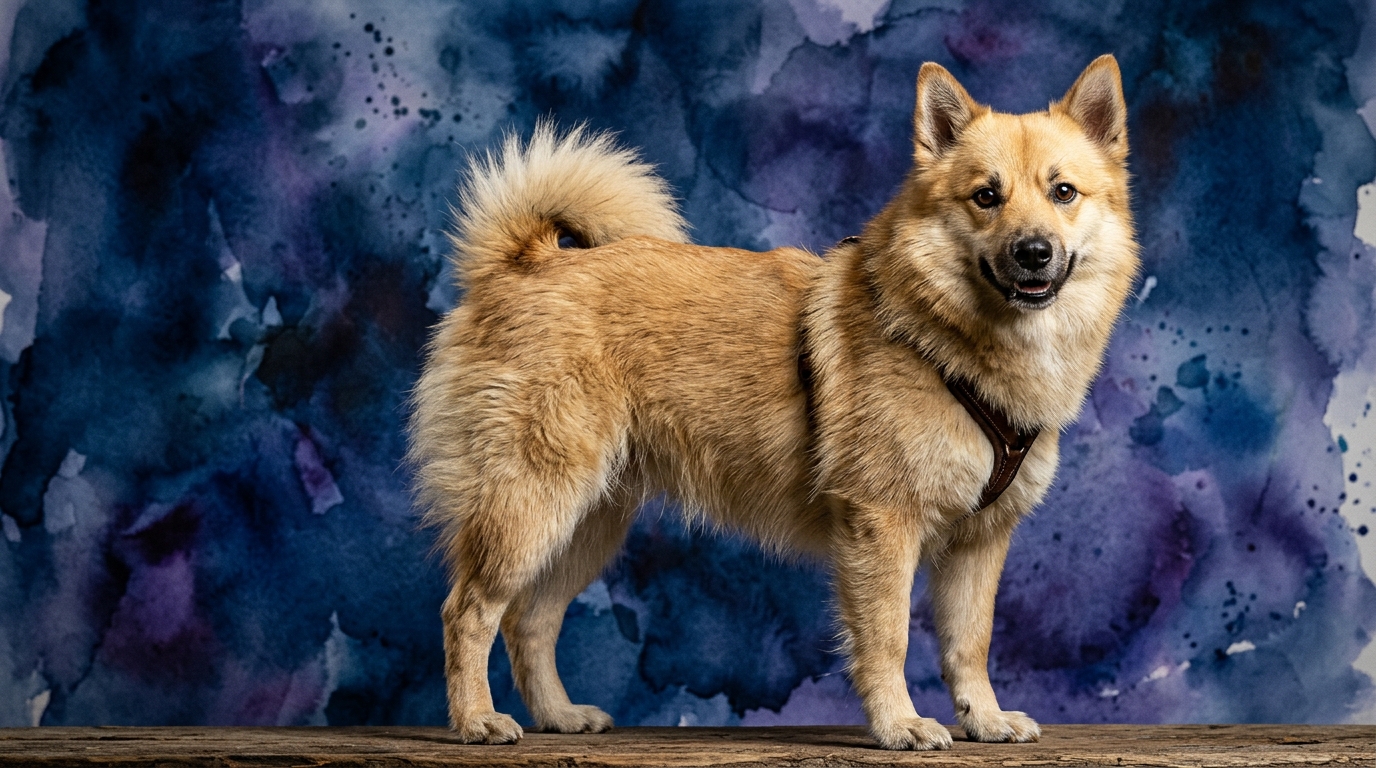
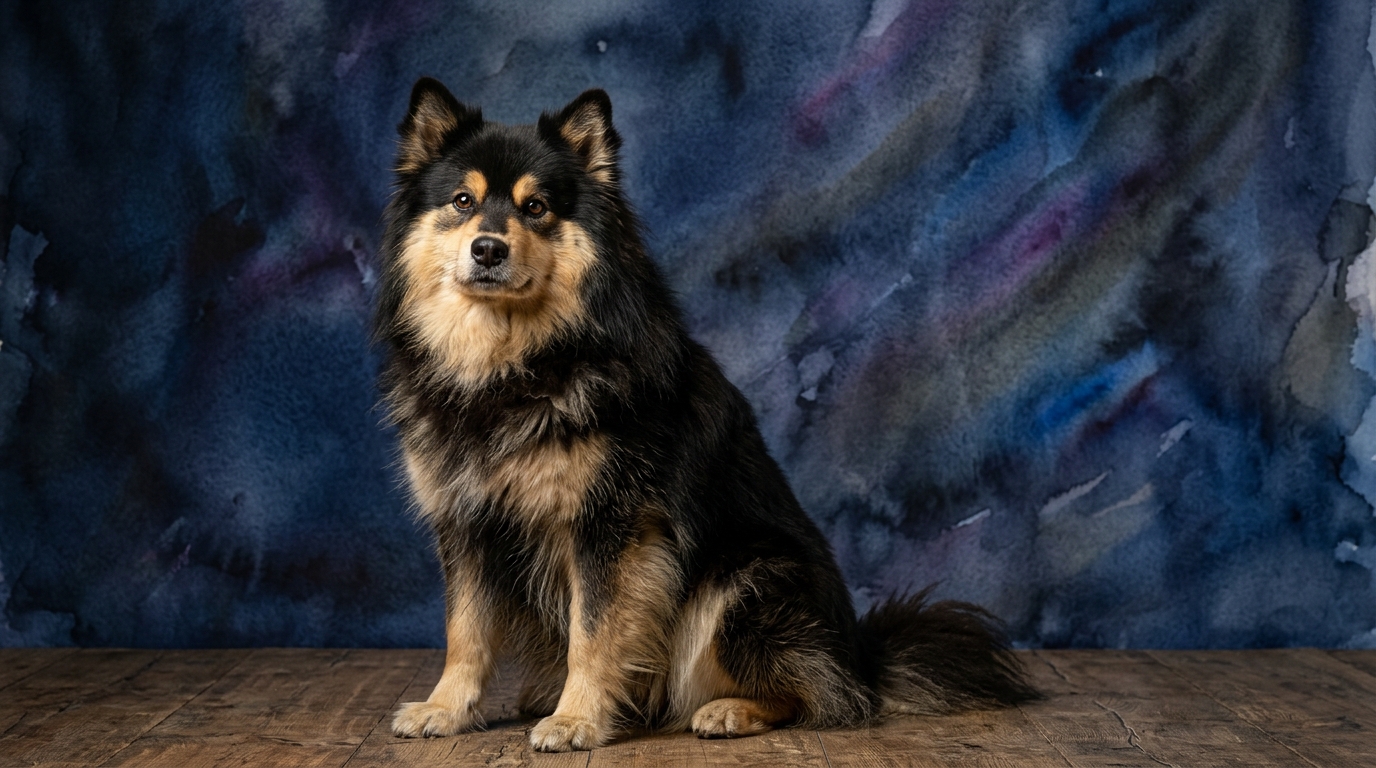
A Side-by-Side Look at Their Cognitive Profiles
Both the Norwegian Buhund and the Finnish Lapphund achieve a commendable 3 out of 5 across all five evaluated dimensions of intelligence, indicating a solid foundation of cognitive capability rather than any deficiency. This shared numerical rating invites a deeper exploration into the unique expressions of these traits within each breed's historical context and typical temperament.
In Problem Solving (3/5), the Norwegian Buhund often exhibits an adaptable mind, historically tasked with managing livestock on varied Norwegian terrain, requiring quick decisions and independent action. Its problem-solving might manifest as figuring out how to re-route a stray sheep or navigate a novel agility course with minimal guidance. The Finnish Lapphund, also rated 3/5, applies its problem-solving acumen to a different challenge: the vast, often harsh landscapes of Lapland, where it traditionally herded reindeer. This demands an ability to understand complex herd dynamics, predict animal movements, and adapt strategies in constantly changing weather conditions, showcasing a more patient, observant form of cognitive flexibility.
Regarding Training Speed (3/5), both breeds demonstrate a good capacity for learning and retaining commands. The Buhund's eager and outgoing nature often translates to an enthusiastic approach to training, where it picks up new tasks readily with positive reinforcement and engaging methods. The Lapphund, while equally capable of learning at a moderate pace, often benefits from a gentler, more relationship-focused training style, where trust and clear communication are paramount due to its more sensitive and reserved disposition.
Social Intelligence (3/5) in the Norwegian Buhund is often characterized by its friendly and outgoing demeanor, allowing it to form strong bonds with its human family and interact readily with familiar individuals. It generally reads human cues well and seeks engagement. The Finnish Lapphund, while also scoring 3/5, expresses its social intelligence through a deep loyalty and sensitivity to its immediate family. It might be more reserved with strangers but possesses a profound understanding of its household's emotional landscape, often displaying a quiet empathy and an ability to respond to subtle shifts in mood or routine.
Their Instinctive Drive (3/5) is a defining feature for both herding breeds, though its manifestation differs. The Buhund exhibits a classic herding drive, often expressed through watchful alertness, a tendency to 'gather' family members, and a predisposition to bark to alert. Its drive is often high-energy and proactive. The Lapphund's instinctive drive is geared towards the specialized task of reindeer herding, which involves patient circling, vocalizing to direct, and enduring long periods in challenging environments. This drive is often expressed with a quiet determination and a strong work ethic, less about high-speed pursuit and more about sustained, intelligent management.
Finally, Memory (3/5) in both breeds reflects their ability to recall commands, routines, and experiences. The Norwegian Buhund's memory serves its active, versatile nature, allowing it to remember complex sequences in dog sports or intricate daily routines. The Finnish Lapphund's memory is crucial for navigating familiar territories, remembering individual animals within a herd, and recalling subtle environmental cues over extensive periods, reflecting a memory geared towards practical, long-term application in its working environment.
Where the Norwegian Buhund Shines Cognitively
The Norwegian Buhund's cognitive strengths often lean towards proactive engagement and adaptability in dynamic situations. Its more outgoing social intelligence, rated 3/5, can make it quicker to assess and respond to novel human interactions or adjust to new environments, often approaching new experiences with an eager curiosity. This breed tends to be more overtly expressive in its communication, making its intentions and needs somewhat easier for a novice owner to interpret. Its problem-solving capacity, also 3/5, frequently manifests in a desire to 'do' and 'solve' independently, making it a strong candidate for dog sports that require quick thinking and initiative, such as agility or competitive obedience, where it can quickly learn and apply complex sequences of actions.
Furthermore, the Buhund's instinctive drive, while rated similarly at 3/5, often presents as a more generalized alertness and 'watchdog' tendency, making it highly aware of its surroundings. This cognitive vigilance, combined with its memory, allows it to quickly identify and remember potential changes or anomalies in its home environment, contributing to its effectiveness as a diligent family guardian. Its overall cognitive profile supports a dog that thrives on active participation and mental stimulation that involves direct interaction and challenge.
Where the Finnish Lapphund Excels Cognitively
The Finnish Lapphund's cognitive prowess often lies in its nuanced perception and enduring focus, particularly within its established social circle. While also scoring 3/5 in social intelligence, its expression is often more subtle and deeply empathetic, allowing it to pick up on minute emotional cues from its human family. This profound understanding fosters an exceptionally strong bond and makes it highly responsive to its owner's emotional state, often leading to a quiet, comforting presence. Its problem-solving, also 3/5, excels in situations requiring sustained attention and a methodical approach, such as navigating complex, familiar territories or understanding the intricate social structures of a group, be it a herd or a household.
The Lapphund's instinctive drive, rated 3/5, is characterized by a remarkable patience and a strong, yet gentle, herding instinct that emphasizes gathering and control rather than forceful driving. This translates cognitively into an ability to maintain focus on a task for extended periods, even in distracting environments, and to utilize its memory to recall detailed information about its surroundings and the individuals within them. Its cognitive strengths are particularly suited for roles requiring calm discernment, consistent application of learned behaviors, and a deep, intuitive connection with its handler.
Which Is Easier to Train and Why?
While both breeds share a 3/5 rating for Training Speed, their approaches to learning, and thus the 'ease' of training, can differ based on owner expectations and methodology. The Norwegian Buhund's generally outgoing and enthusiastic personality often makes it appear easier to train for active owners who enjoy engaging in dynamic, reward-based training sessions. Its eagerness to please and zest for activity mean it often responds quickly to positive reinforcement, excelling in obedience, agility, or rally. However, its independent streak and tendency to bark can require consistent management and early socialization to channel its energy effectively.
The Finnish Lapphund, despite the same 3/5 training speed, can present a different training experience. Its sensitive and sometimes reserved nature means it thrives on gentle, patient, and trust-based training methods. Harsh corrections or overly boisterous training can be counterproductive, potentially leading to a shutdown or reluctance. Once a strong bond and clear communication are established, the Lapphund learns reliably and retains information well, often performing with a quiet focus. Owners who appreciate a sensitive, thoughtful learner and are prepared to invest in building a deep, respectful relationship may find the Lapphund a profoundly rewarding training partner, albeit one that might require more initial patience to 'unlock' its full potential.
Suitability for Active vs. Relaxed Owners
For active owners seeking a canine companion that matches their zest for life, the Norwegian Buhund often aligns well. Its 3/5 instinctive drive and problem-solving capacities lend themselves to a dog that thrives on daily physical activity, mental challenges, and a sense of purpose. Buhunds enjoy hiking, running, dog sports, and active games, and their cognitive profile enables them to learn and engage in these activities with enthusiasm. They require consistent mental stimulation to prevent boredom, which can manifest as unwanted behaviors. Owners who can provide regular outlets for their breed's inherent desire to 'do' will find a devoted and lively partner.
Conversely, while not a couch potato, the Finnish Lapphund's cognitive strengths and temperament make it an excellent fit for owners who appreciate a more relaxed, yet still engaged, lifestyle. Its profound social intelligence and memory, both 3/5, mean it forms deep, quiet bonds and thrives on being a cherished part of the family, often content with regular, moderate exercise like long walks, rather than high-impact sports. Their patient herding instinct translates into a calm presence indoors, provided their moderate exercise needs are met. They are particularly suited for individuals or families who value a thoughtful, observant companion capable of quiet companionship and subtle interaction, and who are prepared to engage their minds through consistent, gentle training and puzzle toys rather than constant high-octane activity.
The Verdict
Choose the Norwegian Buhund if you seek an outgoing, eager companion for active pursuits and enjoy a dog that offers proactive engagement and a watchful presence.
Opt for the Finnish Lapphund if you value a deeply loyal, sensitive partner who thrives on quiet companionship, subtle communication, and a gentle, consistent approach to life.
🧠 Find Your Pet's IQ Score
Our Pet IQ Lab assessment covers 25+ tests across 5 cognitive dimensions — personalized to your breed.
Take the Full IQ Test →Frequently Asked Questions
Do Norwegian Buhunds or Finnish Lapphunds bark more?
The Norwegian Buhund generally has a stronger predisposition to bark, often using its voice to alert or express excitement due to its vigilant herding instinct. The Finnish Lapphund also uses vocalizations, but often in a more controlled manner, historically for directing reindeer, making its barking typically less frequent or intense than a Buhund's.
Are both breeds good with children and other pets?
Both breeds can be excellent with children and other pets when properly socialized from a young age. The Buhund's outgoing nature often makes it playful and tolerant, while the Lapphund's gentle and patient disposition makes it a calm, watchful companion for families, especially those who respect its sensitive nature.
Which breed requires more grooming?
The Finnish Lapphund typically requires more dedicated grooming due to its dense double coat, which is designed for harsh Nordic climates and sheds seasonally, necessitating regular brushing to prevent mats. The Norwegian Buhund also has a double coat but generally requires less intensive grooming, with weekly brushing usually sufficient.