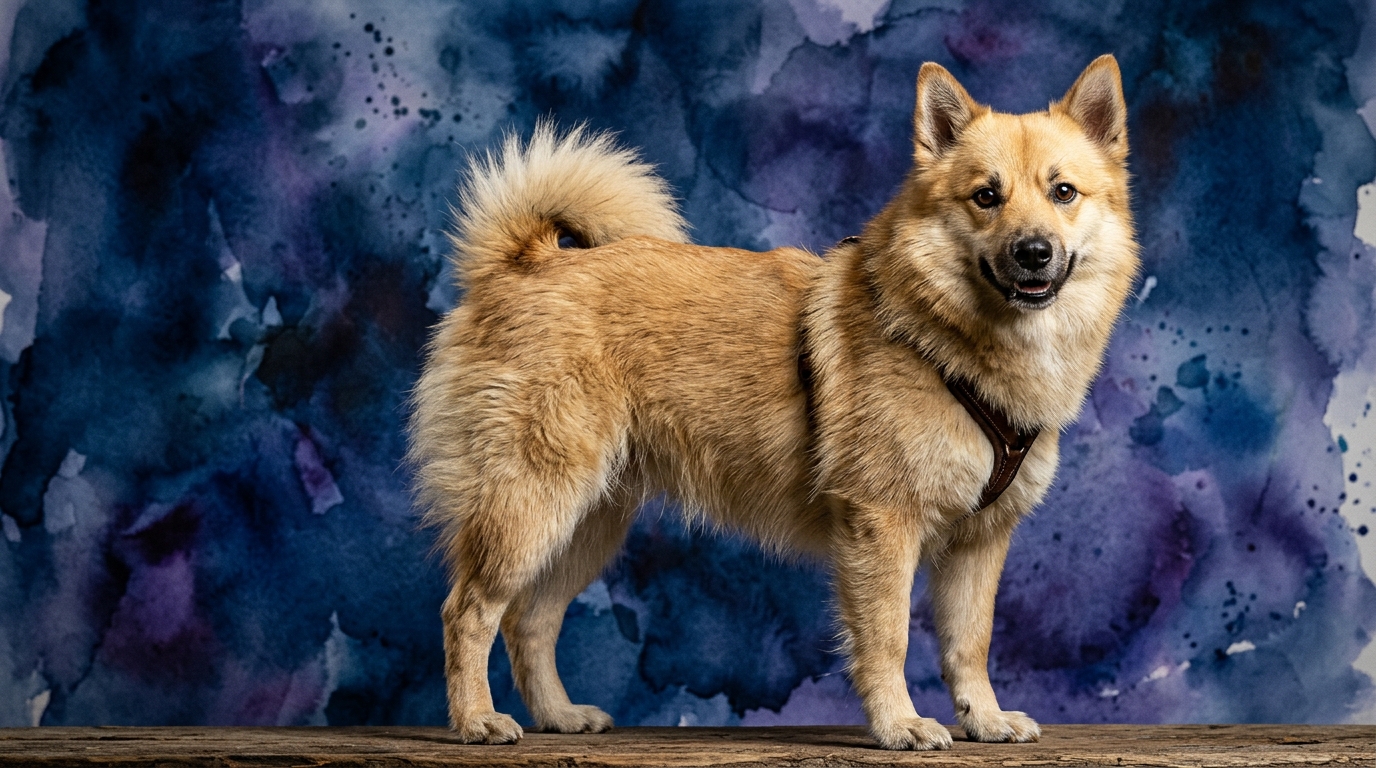
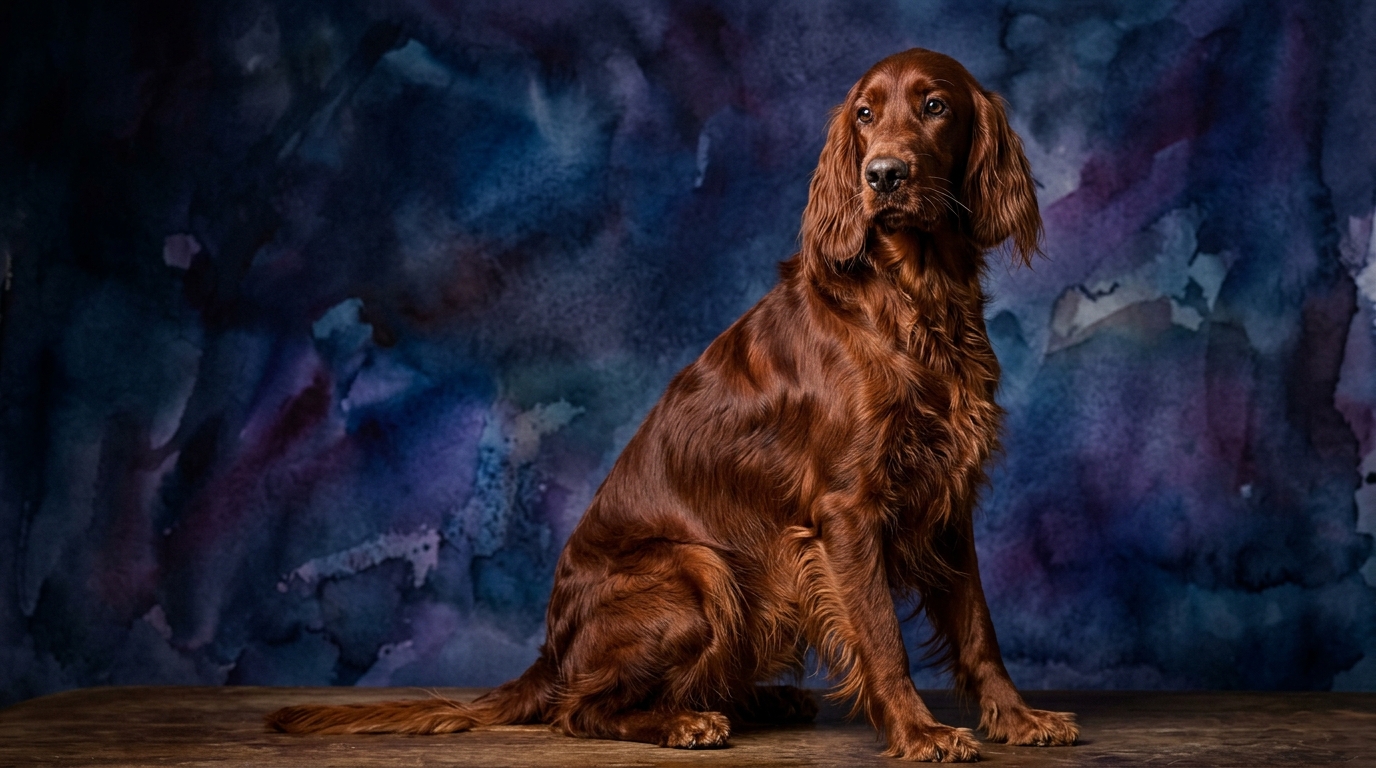
Side-by-Side Cognitive Profile: Buhund vs. Irish Setter
The Cosmic Pet Pet IQ Lab employs a five-dimensional framework to assess canine intelligence, providing a nuanced perspective on each breed's cognitive strengths. For the Norwegian Buhund, a herding dog of ancient lineage, the profile reveals a consistent and balanced cognitive makeup across the board. They score 3 out of 5 for Problem Solving, indicating a moderate ability to navigate novel situations and figure out solutions independently. Their Training Speed is also rated at 3 out of 5, suggesting they learn new commands and routines at a steady pace, requiring consistent but not excessive repetition. Social Intelligence, measuring their ability to understand and respond to human cues and social dynamics, stands at 3 out of 5, reflecting a reasonable capacity for interaction. Instinctive Drive, which gauges the strength of their inherent breed-specific behaviors, is 3 out of 5, signifying a present but manageable level of natural inclination towards herding tasks. Finally, their Memory is also a 3 out of 5, indicating a fair retention of learned information and experiences.
In contrast, the Irish Setter, a sporting dog celebrated for its striking appearance and field prowess, presents a cognitive profile with distinct peaks. Their Problem Solving ability is rated at 4 out of 5, suggesting a higher aptitude for independently navigating complex scenarios and finding solutions, particularly those related to their hunting tasks. Training Speed also scores higher at 4 out of 5, implying they are generally quicker to pick up new commands and sequences, often requiring fewer repetitions than the Buhund. Social Intelligence mirrors the Buhund's at 3 out of 5, indicating a similar moderate capacity for understanding and engaging with human social cues. Their Instinctive Drive is likewise a 3 out of 5, reflecting a strong but not overwhelming inclination towards their sporting roles, such as scenting and retrieving. A notable strength for the Irish Setter is their Memory, which is rated at 4 out of 5, suggesting a superior ability to recall training, locations, and past experiences.
Where the Norwegian Buhund Demonstrates Cognitive Advantage
While the Irish Setter may exhibit higher scores in specific cognitive dimensions, the Norwegian Buhund's distinct advantage lies in its remarkably balanced and adaptable cognitive profile. With consistent scores of 3 out of 5 across Problem Solving, Training Speed, Social Intelligence, Instinctive Drive, and Memory, the Buhund offers a predictable and well-rounded companion. This equilibrium means that no single cognitive trait is excessively dominant or deficient, leading to a dog that is generally stable and less prone to extreme tendencies that might arise from highly specialized cognitive strengths.
Their herding background has cultivated a unique form of practical intelligence. Buhunds are bred to work independently, making nuanced decisions about flock movement and potential threats without constant human direction. This manifests not as rapid-fire problem-solving in a sporting context but as a thoughtful, observational intelligence, allowing them to assess situations and react with measured judgment. For owners who value a dog capable of independent thought, capable of moderate learning in all areas without overwhelming intensity in any one, the Buhund's balanced cognitive architecture proves to be a significant asset, fostering a versatile and even-tempered companion ready for a variety of tasks and environments without specific cognitive 'hot spots' to manage.
Where the Irish Setter Demonstrates Cognitive Advantage
The Irish Setter's cognitive profile clearly shines in areas directly linked to its sporting heritage, particularly in Problem Solving, Training Speed, and Memory, where it scores a robust 4 out of 5. This higher aptitude means Irish Setters are generally more adept at figuring out complex tasks, especially those involving navigating terrain, locating hidden objects, or executing multi-step sequences. Their elevated problem-solving ability equips them to excel in activities that require more intricate thought processes and independent decision-making within a structured objective, such as advanced scent work or agility courses.
Furthermore, their superior Training Speed means they typically grasp new commands and concepts more rapidly than the Buhund. This translates into a more efficient training process for complex routines and a quicker progression through various levels of obedience or specialized dog sports. Coupled with their enhanced Memory, Irish Setters tend to retain a larger repertoire of commands and experiences over time, making them excellent candidates for ongoing advanced training and a reliable partner in activities requiring consistent recall and performance. For owners seeking a dog that can quickly master and remember a wide array of skills, the Irish Setter's cognitive strengths offer a clear advantage.
Training Dynamics: Which Breed Learns with Greater Ease?
When considering ease of training, the Irish Setter generally holds an advantage due to its higher scores in Training Speed (4/5) and Memory (4/5). These metrics suggest that Irish Setters are typically quicker to pick up new commands and retain them for longer periods. Their historical role as bird dogs required them to learn complex signals, respond to distant commands, and remember the location of downed game, fostering an eagerness to please and a strong working partnership with their handler. This often translates to a relatively smoother and faster training progression, particularly in formal obedience or field work. They tend to be highly responsive to positive reinforcement and can quickly connect actions with rewards.
The Norwegian Buhund, with scores of 3/5 in both Training Speed and Memory, will certainly learn, but may require a more patient and consistent approach. Their herding background instilled a degree of independent thought and decision-making, as they were expected to manage flocks without constant human intervention. This independence, while valuable in its own right, can sometimes translate to a less immediate eagerness to comply with commands if they perceive an alternative course of action. While they are certainly trainable and form strong bonds, owners might find that Buhunds require more repetition and creative engagement to solidify new behaviors, and their learning curve may be more gradual compared to the Irish Setter's quicker uptake.
Matching Lifestyles: Active Owners vs. Relaxed Owners
Neither the Norwegian Buhund nor the Irish Setter are suited for truly relaxed, sedentary owners; both breeds possess significant energy and a need for engagement, albeit expressed differently. The Irish Setter, with its sporting dog heritage, thrives with active owners who can provide ample opportunities for vigorous exercise and mental stimulation. Their high stamina and strong retrieve drive mean they excel in activities like long runs, hiking, field trials, or dog sports such as agility and flyball. Owners who enjoy spending hours outdoors, engaging in structured play, or pursuing active hobbies will find an Irish Setter to be an enthusiastic and tireless companion. Their cognitive strengths in problem-solving and memory also mean they benefit greatly from training that challenges their minds, making them suitable for owners committed to ongoing skill development.
The Norwegian Buhund also requires an active lifestyle, but its activity often leans more towards purposeful engagement and mental work derived from its herding roots. While they enjoy physical exercise, they also need a 'job' or outlets for their observational intelligence and independent thinking. Owners who appreciate consistent walks, hiking, or participate in activities like herding trials, nose work, or advanced obedience will find the Buhund to be a rewarding partner. They are not content to merely lie around but need tasks that engage their minds and bodies in a collaborative yet self-reliant manner. Therefore, owners who are active and enjoy structured activities that tap into a dog's inherent working drives, rather than just raw physical exertion, would be a better match for the Buhund.
The Verdict
Choose the Norwegian Buhund if you seek a balanced, adaptable companion with a moderate and consistent cognitive profile across all dimensions, valuing independent thought within a collaborative framework.
Opt for the Irish Setter if you desire a dog that excels in rapid learning, problem-solving complex tasks, and retaining a wide array of commands, ideal for active engagement in dog sports and focused training.
🧠 Find Your Pet's IQ Score
Our Pet IQ Lab assessment covers 25+ tests across 5 cognitive dimensions — personalized to your breed.
Take the Full IQ Test →Frequently Asked Questions
Are Norwegian Buhunds difficult to train?
Norwegian Buhunds are not difficult to train, but their 3/5 Training Speed and Memory scores suggest they may require more patience and consistency than some other breeds. Their independent herding instincts mean they respond best to positive reinforcement and engaging methods that respect their thoughtful nature, rather than rote repetition.
Do Irish Setters need a lot of mental stimulation?
Yes, Irish Setters, with their 4/5 Problem Solving and Memory, thrive on mental stimulation. Beyond physical exercise, they benefit greatly from training sessions that challenge their cognitive abilities, such as learning new tricks, puzzle toys, or participating in dog sports that require strategic thinking and recall.
Which breed is better for a first-time dog owner?
For a first-time owner committed to active engagement and consistent training, the Irish Setter might be slightly easier due to its higher Training Speed and Memory, potentially offering quicker progress. However, the Norwegian Buhund's balanced cognitive profile can also be suitable for a dedicated novice who appreciates a dog's independent thought and is prepared for patient, consistent guidance.