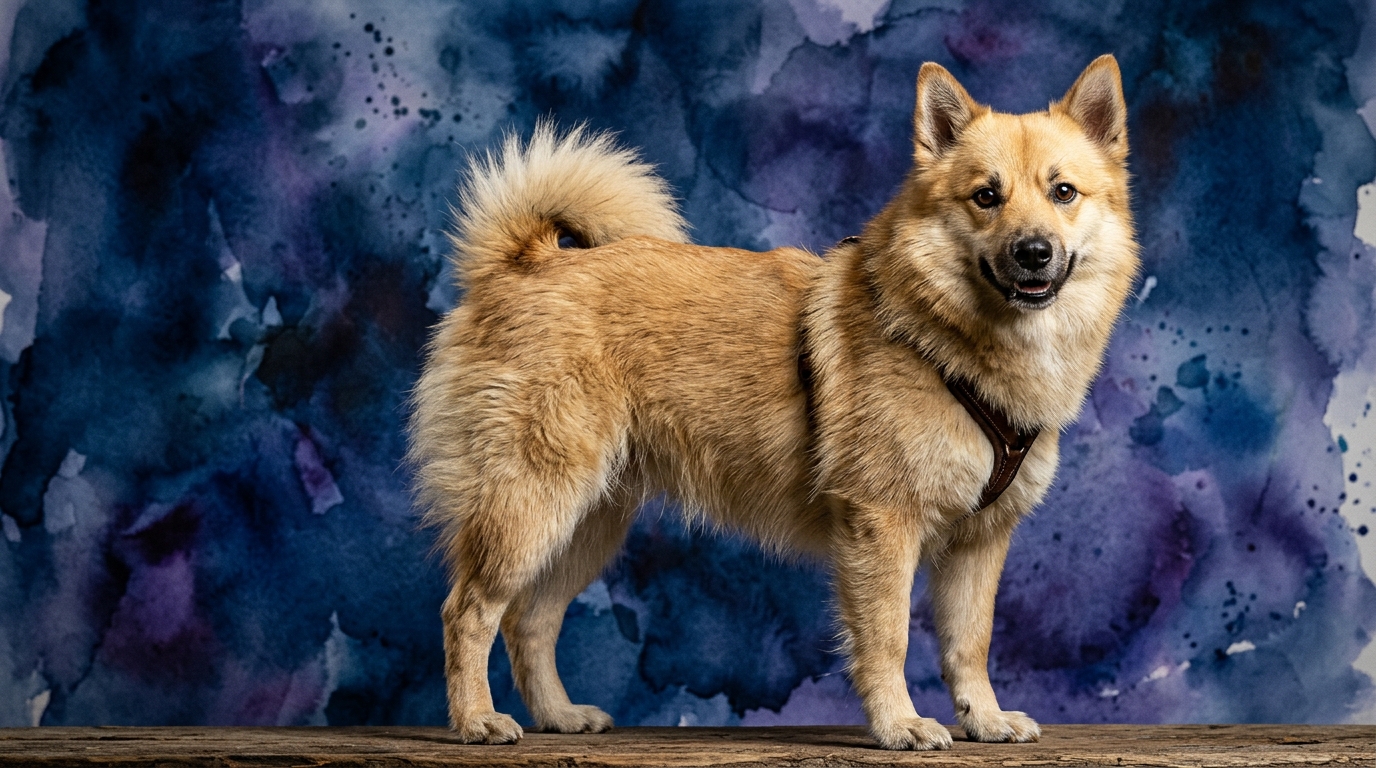

Side-by-Side IQ Profile: Herding Vigilance vs. Scenting Tenacity
The Cosmic Pet Pet IQ Lab assesses canine intelligence across five key dimensions, and remarkably, both the Norwegian Buhund and the Redbone Coonhound achieve a consistent 3/5 rating in each. While the numerical scores are identical, the manifestation of these cognitive abilities is uniquely tailored to their breed groups and historical vocations.
For the Norwegian Buhund, a spirited Herding dog, a 3/5 in Problem Solving often translates into practical, task-oriented ingenuity. This might involve independently assessing a situation to guide livestock, finding the most efficient path to round up a flock, or alerting their human to unusual occurrences on the farm. Their problem-solving is often rooted in observation and strategic movement. Their Training Speed at 3/5 reflects a willingness to learn and respond to direction, characteristic of a dog bred to work closely with humans, though their independent herding judgment means they aren't purely robotic. Social Intelligence at 3/5 for the Buhund signifies a strong awareness of their family unit, often being sensitive to moods and quick to offer comfort or alert to strangers, embodying their role as a watchful companion. Their Instinctive Drive also rated 3/5, is powerfully expressed through their inherent herding tendencies, a natural inclination to gather and control, coupled with a vigilant nature that makes them excellent watchdogs. Finally, their Memory at 3/5 allows them to retain complex commands, understand routines, and remember the boundaries of their territory, crucial for effective farm work and companionship.
In contrast, the Redbone Coonhound, a persistent member of the Hound group, applies its 3/5 cognitive scores through a lens of scent-driven pursuit and endurance. Their 3/5 in Problem Solving is often demonstrated in their relentless tracking ability, figuring out how to navigate complex terrain, overcome obstacles, or decipher a fading scent trail to locate quarry. This form of problem-solving is intensely focused and relies heavily on sensory input and persistence. The Redbone's Training Speed at 3/5 indicates they are capable learners, but their powerful Instinctive Drive (also 3/5), primarily expressed as an overwhelming drive to follow a scent, can sometimes make them appear less compliant if a compelling trail presents itself. Training often requires patience and consistency to override these deep-seated hunting urges. Their Social Intelligence at 3/5 typically manifests as an amiable and generally friendly disposition towards both humans and other dogs, though their focus can easily shift from social interaction to environmental investigation if a scent captures their attention. Lastly, their Memory at 3/5 is exceptionally strong for scent trails and geographical layouts encountered during a hunt, remembering where prey was found or a particularly good tracking route, rather than solely abstract commands.
Where Norwegian Buhund Wins Cognitively
The Norwegian Buhund's cognitive strengths shine in scenarios demanding quick situational assessment and adaptable responses within a structured environment. Their herding background cultivates a unique blend of independent judgment and responsiveness to human direction. For instance, a Buhund excels at predicting the movement of objects or individuals, making them adept at tasks requiring foresight and spatial reasoning, like navigating an agility course or anticipating a child's next move. Their vigilance and alertness, part of their inherent herding and guarding instincts, contribute to a superior ability to notice subtle changes in their environment, making them excellent at alerting their owners to anything out of the ordinary long before a less observant breed might. This translates into a cognitive edge in tasks requiring a proactive, watchful intelligence, where anticipating potential issues and acting on them is paramount.
Where Redbone Coonhound Wins Cognitively
The Redbone Coonhound's cognitive prowess is unparalleled in the realm of sensory perception and persistent, focused deduction. Their wins are rooted in their extraordinary olfactory capabilities and their unwavering commitment to a task once a scent is engaged. A Redbone truly excels at complex scent discrimination and tracking, demonstrating remarkable problem-solving by piecing together fragmented scent information across varying terrains and conditions, a feat that requires immense cognitive focus and memory for intricate scent patterns. This specialized intelligence allows them to "read" an environment through their nose in ways other breeds cannot, interpreting a rich tapestry of information invisible to the human eye. Their stamina and determination in pursuit also highlight a cognitive strength in sustained effort and single-minded dedication, making them formidable in any task requiring deep focus and an almost obsessive commitment to a sensory goal.
Which is Easier to Train and Why
While both breeds rate 3/5 for Training Speed, their approaches to learning and their motivations differ significantly, influencing perceived ease of training. The Norwegian Buhund, as a herding dog, generally exhibits a strong desire to please its human companion and thrives on clear communication and consistent direction. Their historical role required them to work in close partnership with shepherds, fostering a natural inclination towards understanding and executing commands. They are typically receptive to positive reinforcement and respond well to varied training exercises, often enjoying the mental stimulation. However, their independent herding judgment means they can sometimes make their own decisions if they perceive a situation differently, requiring patient guidance to reinforce desired behaviors.
The Redbone Coonhound, conversely, presents a different training dynamic. While capable of learning, their powerful instinctive drive to follow a scent can be a significant "distraction" from human-directed tasks. Their world is largely governed by their nose, and a compelling scent can override even well-learned commands, making off-leash reliability a particular challenge without extensive, consistent training in highly distracting environments. Training a Redbone requires immense patience, understanding of their hound nature, and often a higher value reward system to compete with the allure of a fresh trail. Their independence, a trait valued in a hunting dog expected to work away from its handler, means they are less inherently inclined to constant human approval compared to a herding breed. Therefore, while both learn, the Buhund typically offers a more responsive and less distraction-prone training experience for the average owner, while the Coonhound demands a dedicated approach that acknowledges and works with its profound scenting instincts.
Which Suits Active Owners vs. Relaxed Owners
Both the Norwegian Buhund and the Redbone Coonhound are undeniably active breeds, but their activity needs manifest in different ways, making them suitable for distinct types of active owners. The Norwegian Buhund thrives on engaging, purposeful activity that stimulates both their body and their mind. They excel in dog sports like agility, obedience, and herding trials, and enjoy long hikes, runs, or even just complex puzzle toys. They require an owner who is committed to providing consistent mental and physical challenges, and who appreciates a dog that wants to be involved in family activities. Their energy is often directed towards interaction and learning, making them a good fit for owners who enjoy hands-on engagement and training. A relaxed owner might find the Buhund's persistent need for activity and mental engagement overwhelming, potentially leading to boredom-induced behaviors.
The Redbone Coonhound also demands a high level of activity, but their exercise needs are often centered around their innate desire to track and explore. They require ample opportunities for long walks, hikes, or runs, ideally in areas where they can safely indulge their powerful sense of smell, perhaps through scent work games or controlled off-leash exploration in secure environments. Their stamina is impressive, and they can go for miles. However, their activity is less about human-directed tasks and more about satisfying their inherent drive to "hunt" or explore. While they enjoy companionship, their idea of activity often involves following a trail independently. A relaxed owner would struggle with the Redbone's need for extensive physical outlets, and their propensity for baying when excited or on a scent could be disruptive in a quiet household. Neither breed is truly suited for a "relaxed" owner who prefers a sedentary lifestyle; both require significant daily commitment to exercise and mental stimulation, but the type of activity differs. The Buhund suits an owner who wants an active, interactive partner, while the Coonhound suits an owner who enjoys long, exploratory outings and understands the hound's independent nature.
The Verdict
Opt for the Norwegian Buhund if you seek an active, engaged companion eager to participate in training and family activities, thriving on mental stimulation and a clear working partnership. This breed excels with owners who appreciate a vigilant, responsive dog capable of independent thought within a structured environment.
Select the Redbone Coonhound if you are a highly active individual who cherishes long, exploratory outdoor adventures and understands the profound influence of scent drive on canine behavior. This breed flourishes with owners who can patiently guide their independent spirit and provide ample opportunities for their nose to lead the way.
🧠 Find Your Pet's IQ Score
Our Pet IQ Lab assessment covers 25+ tests across 5 cognitive dimensions — personalized to your breed.
Take the Full IQ Test →Frequently Asked Questions
Do Norwegian Buhunds and Redbone Coonhounds bark frequently?
Yes, both breeds can be quite vocal, though for different reasons. Norwegian Buhunds are known for their alert barking as part of their watchdog and herding instincts, signaling anything unusual. Redbone Coonhounds often bay, a distinctive vocalization used to signal they are on a scent trail or to express excitement, which can be quite loud and resonant.
Which breed is better with children and other pets?
Both breeds can be good with children and other pets when properly socialized from a young age. Norwegian Buhunds are generally patient and playful with children, though their herding instinct might lead to gentle "nipping" at heels if not managed. Redbone Coonhounds are typically amiable and tolerant, but their strong prey drive means careful introductions and supervision are crucial with smaller pets.
Are there significant health differences between the two breeds?
While both are generally robust breeds, they have different predispositions. Norwegian Buhunds are relatively healthy but can be prone to eye conditions like hereditary cataracts and hip dysplasia. Redbone Coonhounds are typically healthy, but as a deep-chested breed, they are at a higher risk for bloat, and some may experience hip or elbow dysplasia.