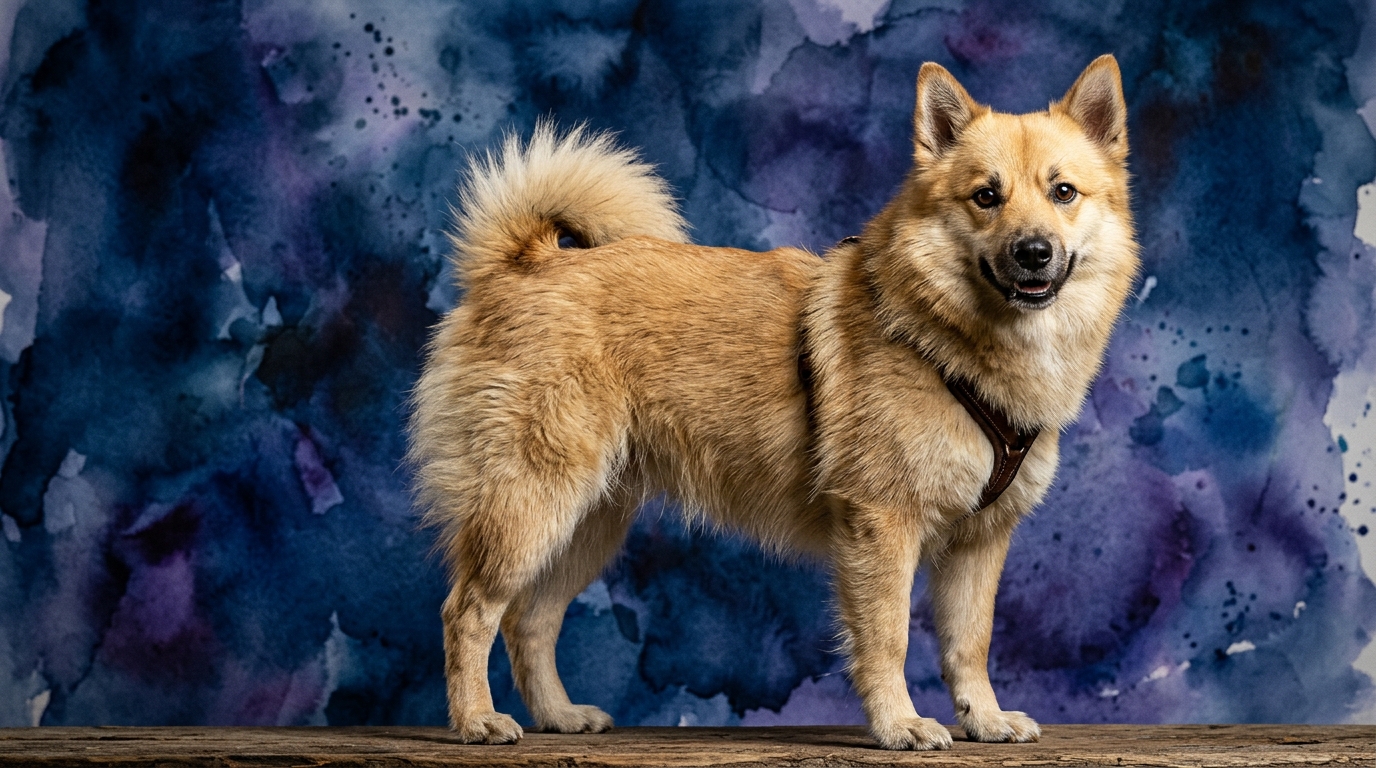

Side-by-Side IQ Profile: A Deeper Look
At first glance, the Pet IQ Lab scores for both the Norwegian Buhund and the Toy Fox Terrier appear identical across all five dimensions: Problem Solving (3/5), Training Speed (3/5), Social Intelligence (3/5), Instinctive Drive (3/5), and Memory (3/5). However, these identical numerical ratings manifest quite differently in breeds with such distinct histories and purposes. These scores signify a solid, mid-range cognitive ability, indicating neither breed is at the extreme ends of the spectrum, but rather possesses a balanced and functional intellect tailored to their heritage.
For the Norwegian Buhund, a Herding breed, a 3/5 in Problem Solving points to an ability to independently assess and manage situations, like a stray sheep, demonstrating practical, task-oriented cleverness rather than abstract puzzle-solving. Their 3/5 Training Speed suggests they absorb commands and routines effectively, though their independent working spirit means they learn best with clear purpose and fair consistency. Social Intelligence at 3/5 highlights their capacity for understanding human cues and integrating into a family unit, while also maintaining a discerning awareness of their surroundings. Their Instinctive Drive, also 3/5, is strongly rooted in herding, manifesting as vigilance and a desire to patrol or gather. Finally, a 3/5 in Memory means they retain complex sequences and learned behaviors reliably, crucial for their historical roles.
The Toy Fox Terrier, conversely, a Toy breed with terrier roots, expresses these same scores through a different lens. Their 3/5 Problem Solving manifests as quick wit, often finding ingenious ways to achieve their desires, be it opening a cabinet or charming an extra treat. A 3/5 Training Speed indicates they can pick up tricks and commands with enthusiasm, especially when highly motivated, though their independent terrier streak might lead to selective hearing if the reward isn't compelling. Their 3/5 Social Intelligence allows them to be highly attuned to their human family's moods and routines, often becoming deeply bonded and perceptive companions. The 3/5 Instinctive Drive in a Toy Fox Terrier is typically a strong prey drive, alert barking, and a tenacious spirit, remnants of their ratting past. Their 3/5 Memory means they remember routines, past interactions, and certainly where the treat jar is kept with impressive accuracy.
Where the Norwegian Buhund Shows Cognitive Strengths
The Norwegian Buhund's cognitive strengths are deeply intertwined with its herding legacy, where sustained focus and practical application of intelligence were paramount. Their 3/5 Problem Solving, while not necessarily about quick-fire novelty, shines in scenarios requiring perseverance and a methodical approach. For instance, a Buhund might excel at a multi-stage scent work challenge, systematically tracking a trail with unwavering attention, whereas a breed focused on immediate gratification might lose interest. Their memory at 3/5 is particularly robust for operational sequences; they can recall a series of commands or a complex route over extended periods, making them reliable partners for tasks that require consistency and follow-through. This memory isn't just about tricks, but about understanding and repeating patterns of behavior that lead to a successful outcome.
Furthermore, their instinctive drive, rated at 3/5, translates into a purposeful engagement with their environment. This isn't just boundless energy, but a cognitive drive to 'do something' with that energy, often involving vigilance or overseeing their domain. Owners frequently observe them 'herding' family members or patrolling the yard, indicating a mental framework that seeks order and control. This purposeful drive, combined with their moderate social intelligence, means they often seek to understand their human's intentions and work collaboratively on perceived 'tasks,' even if those tasks are simply a long walk in the woods. Their cognitive resilience allows them to handle varying conditions and unexpected variables within a task, adapting their approach without becoming easily flustered.
Where the Toy Fox Terrier Shows Cognitive Strengths
The Toy Fox Terrier, despite its smaller stature, possesses a sharp, agile mind that excels in different cognitive domains. Their 3/5 Problem Solving often manifests as a clever, opportunistic intelligence. They are adept at figuring out how to get around obstacles, whether it's navigating a closed door or outsmarting a larger dog for a toy. This isn't brute force problem-solving, but rather a nimble, often charming, approach to achieving their goals. Their quick reaction times, stemming from their terrier heritage, mean they process new information and adapt to changes in their immediate environment with remarkable speed. This makes them excellent candidates for agility sports or quick-thinking games where rapid decision-making is key.
Their social intelligence, also 3/5, combined with their expressive nature, allows them to be incredibly perceptive companions. They are often acutely aware of their owner's emotional state and can adapt their behavior accordingly, offering comfort or initiating play at just the right moment. This isn't just mimicry; it's an understanding of social dynamics within their human 'pack.' Their memory (3/5) is particularly strong for associations and routines that benefit them, ensuring they rarely forget a treat schedule or a favorite toy's hiding spot. This breed's cognitive strengths lie in their ability to quickly assess, react, and often charmingly manipulate their surroundings to their advantage, making them highly engaging and often amusing companions who are always 'thinking' about their next move.
Which is Easier to Train and Why?
Both the Norwegian Buhund and the Toy Fox Terrier score 3/5 in Training Speed, indicating they are capable learners, but the 'ease' of training them can differ significantly based on the owner's approach and the type of training desired. The Norwegian Buhund, with its herding background, often responds well to structured, command-based training that provides a clear purpose. They learn complex sequences and multi-step commands effectively, especially when the training is consistent and fair, respecting their independent working spirit. Their moderate social intelligence means they genuinely aim to understand and cooperate, particularly when they view their human as a competent leader. However, their inherent drive to make their own decisions means training requires patience and firm, positive reinforcement to channel their natural instincts rather than suppress them.
The Toy Fox Terrier, while also scoring 3/5, often learns quickly when highly motivated, particularly for tricks or short, engaging commands. Their clever problem-solving (3/5) can sometimes be a double-edged sword; they might quickly figure out what you want but also what they can get away with. Their strong instinctive drive, combined with a 'what's in it for me' terrier attitude, means they can be more challenging for consistent, rigorous obedience without high-value rewards or a highly engaging training style. They might excel at learning 20 different tricks in a week but struggle with a reliable 'stay' if a squirrel passes by. Therefore, while both breeds learn at a similar pace, the Buhund might be 'easier' for owners seeking a reliable working partner for more complex, sustained tasks, whereas the Toy Fox Terrier might be 'easier' for owners who enjoy quick, fun trick training and mental games that capitalize on their agility and wit, provided they can manage the terrier's independent streak.
Active Owners vs. Relaxed Owners: A Lifestyle Match
When considering which breed aligns better with an owner's lifestyle, the differences in their cognitive makeup, despite similar IQ scores, become pronounced. The Norwegian Buhund, with its robust herding instincts and sustained mental engagement, is ideally suited for active owners. These dogs thrive when given a 'job' to do, whether it's participating in dog sports like agility, herding, or obedience, or simply accompanying their owners on long, vigorous hikes and runs. Their problem-solving abilities and memory are best utilized in environments that offer consistent mental and physical challenges. An owner who enjoys outdoor activities and can dedicate time to structured training and purposeful interaction will find the Buhund to be an incredibly rewarding and engaged companion. A relaxed owner who cannot provide this level of stimulation might find a Buhund restless or prone to finding their own, less desirable, forms of entertainment.
The Toy Fox Terrier, while possessing a vibrant energy, tends to thrive with owners who appreciate bursts of activity rather than sustained endurance. Their cleverness and quick learning mean they need mental stimulation through puzzle toys, interactive games, and trick training, but their physical exercise requirements are generally more moderate than a herding breed. They are well-suited for owners who enjoy engaging in short, frequent play sessions, daily walks, and who want a perceptive companion to share their home life. A Toy Fox Terrier can adapt well to apartment living, provided their quick minds are kept busy and they receive adequate opportunities for expressing their terrier instincts through play and exploration. While they enjoy being active, their energy is often more about mental agility and quick bursts of movement, making them a good fit for owners who might be less inclined towards multi-hour strenuous outdoor adventures but still want an engaged, spirited dog.
The Verdict: When to Choose Each
Making the choice between a Norwegian Buhund and a Toy Fox Terrier ultimately comes down to matching your lifestyle and expectations with their distinct cognitive and behavioral profiles. Both breeds offer solid, functional intelligence, but express it in ways unique to their heritage.
If you are an owner who thrives on purposeful activity, enjoys structured training, and can provide consistent mental and physical engagement for a resilient, independent working partner, the Norwegian Buhund is an excellent choice. If your home life is more about quick, engaging interactions, clever companionship, and you appreciate a spirited dog with a quick wit and bursts of playful energy, the Toy Fox Terrier will be a delightful and perceptive addition.
The Verdict
Choose a Norwegian Buhund if you seek a resilient, engaged partner for structured activities and enjoy channeling a purposeful working drive into training and outdoor adventures.
Opt for a Toy Fox Terrier if you desire a clever, spirited companion who thrives on quick mental challenges and enjoys being the center of family attention with bursts of playful energy.
🧠 Find Your Pet's IQ Score
Our Pet IQ Lab assessment covers 25+ tests across 5 cognitive dimensions — personalized to your breed.
Take the Full IQ Test →Frequently Asked Questions
Are Norwegian Buhunds good with children?
Their social intelligence and inherent protective nature often make them gentle family members, though proper socialization from a young age is crucial to ensure respectful interactions with all children. They appreciate children who understand boundaries and engage them in play.
Do Toy Fox Terriers bark a lot?
Being alert and observant, Toy Fox Terriers can be vocal, often using barks to announce visitors or express excitement, which can be managed with consistent training and redirection. Their strong instinctive drive means they are quick to alert their family to perceived novelties in their environment.
How much exercise does each breed need?
A Norwegian Buhund requires substantial daily exercise, including vigorous walks or runs, alongside mental engagement to satisfy their herding instincts, while a Toy Fox Terrier benefits from regular shorter walks, play sessions, and engaging indoor activities to keep their quick minds stimulated.