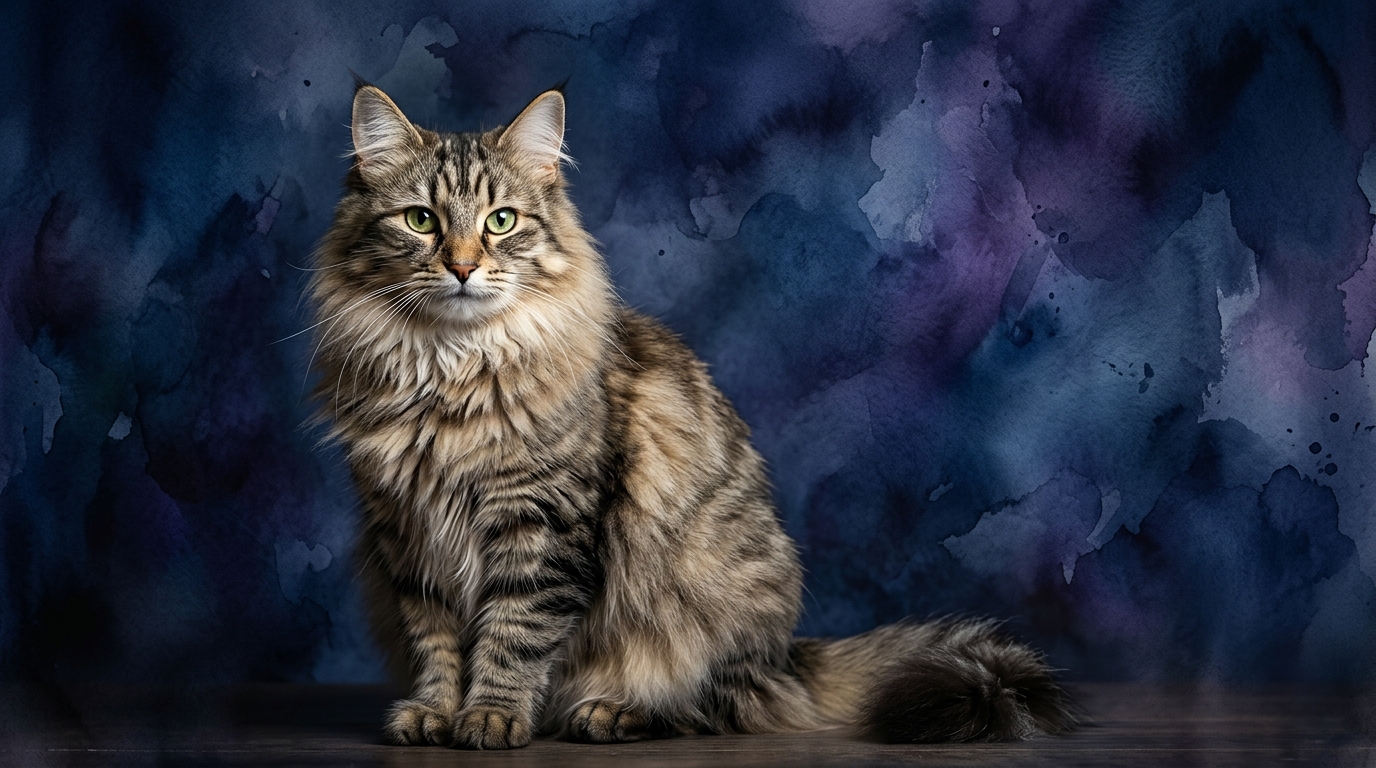

Side-by-Side IQ Profile: Norwegian Forest Cat vs. Birman
The Norwegian Forest Cat, hailing from the cold forests of Northern Europe, displays a robust cognitive profile tailored for survival and exploration. Their Problem Solving is rated at 4/5, indicating a strong capability for independent thought and navigating complex situations, often figuring out intricate mechanisms or reaching high vantage points. Training Speed stands at 3/5, suggesting a moderate learning curve that responds well to engaging, consistent methods. In Social Intelligence, they score 3/5, meaning they understand human cues and integrate into family life, though often maintaining a degree of independence. A remarkable 5/5 in Instinctive Drive highlights their profound urge to hunt, climb, and explore, making them highly attuned to their environment. Finally, their Memory is strong at 4/5, allowing them to recall complex sequences, past experiences, and learned boundaries effectively.
The elegant Birman, with its gentle disposition and striking appearance, presents a cognitive makeup that emphasizes companionship and adaptability. Their Problem Solving is rated 3/5, meaning they can tackle straightforward puzzles but might seek human assistance for more complex challenges. Training Speed, like the Norwegian Forest Cat, is 3/5, indicating they learn steadily with positive reinforcement and patience. They also score 3/5 in Social Intelligence, demonstrating a capacity for forming deep bonds and understanding household dynamics, often expressed through affectionate interaction. Their Instinctive Drive is moderate at 3/5, enjoying play and exploration but without the intense, persistent focus seen in some breeds. Their Memory is rated 3/5, allowing them to retain routines, recognize familiar faces, and remember past interactions adequately, contributing to their predictable and comforting presence.
Where the Norwegian Forest Cat Wins Cognitively
The Norwegian Forest Cat truly stands out in areas demanding independent thought, persistent exploration, and robust natural instincts. Their 4/5 problem-solving score indicates a cat that actively strategizes to achieve goals, whether it's figuring out how to manipulate a complex treat-dispensing toy or devising a novel route to a high perch. This breed isn't one to passively wait for solutions; they are active architects of their environment, often experimenting with different approaches until a desired outcome is achieved. This cognitive strength is profoundly amplified by their exceptional 5/5 instinctive drive. This translates into an unyielding curiosity and a powerful urge to explore new spaces, stalk “prey” (even if it's just a dust bunny), and engage with their surroundings on a deep, fundamental level. This adventurous spirit is supported by a strong 4/5 memory, enabling them to retain successful strategies, recall complex spatial layouts, and remember the precise timing of beloved games or favored hiding spots, building a rich, detailed mental map of their territory.
Where the Birman Wins Cognitively
While the Birman's individual cognitive scores are generally on par with or slightly below the Norwegian Forest Cat, its unique blend of traits creates a distinct advantage in specific interaction styles and household integration. With a 3/5 in both Training Speed and Social Intelligence, the Birman matches the Norwegian Forest Cat's capacity for learning and understanding social cues, but often expresses these abilities with a more placid, less demanding, and highly cooperative demeanor. Their moderate 3/5 instinctive drive is a key differentiator here; it means they are less likely to be driven by an intense, constant need for 'work' or high-energy exploration, which can be a cognitive 'win' for owners seeking a calmer, more predictable companion. This lower drive means their problem-solving (3/5) and memory (3/5) are applied within a generally more relaxed framework, making them masters of subtle communication and ideal for a serene home environment.
Which is Easier to Train and Why?
Both the Norwegian Forest Cat and the Birman share a 3/5 rating in Training Speed, suggesting they learn at a moderate pace with consistent effort and positive reinforcement. However, the *type* of training and the *approach* required can differ significantly due to their other cognitive dimensions and inherent motivations. The Norwegian Forest Cat's high 5/5 instinctive drive means they are profoundly motivated by prey-like toys, interactive challenges, and opportunities to engage their natural hunting behaviors. Training them often involves channeling this drive into complex tricks or agility courses, requiring an owner who can keep pace with their energetic mind. Their 4/5 problem-solving ability also means they might quickly figure out how to circumvent a training boundary if not properly motivated, making consistency and creativity crucial.
For the Birman, with its more moderate 3/5 instinctive drive, training might focus more on gentle obedience, leash walking in calm environments, or simple tricks that reinforce their strong bond with their owner. They are less likely to demand constant mental stimulation through training but respond very well to positive reinforcement delivered in a calm, affectionate environment. Neither breed is inherently 'easier' in terms of raw learning speed, but the Birman's more subdued drive might make them appear more amenable to training for owners who prefer a less intense, more cooperative feline student. The 'Wegie,' on the other hand, requires an owner ready to harness their substantial cognitive energy and independent spirit into structured, engaging activities, turning training into a dynamic partnership.
Suitability for Active vs. Relaxed Owners
For active owners seeking a feline companion to share in adventures and mentally stimulating games, the Norwegian Forest Cat is an exceptional match. Their 4/5 problem-solving skill combined with a powerful 5/5 instinctive drive means they thrive on interactive play, intricate puzzle toys, and even supervised outdoor exploration on a leash or in a secure enclosure. They possess the mental stamina and physical agility to keep pace with an owner who enjoys consistently engaging their pet's intellect and encouraging natural exploratory behaviors. A Norwegian Forest Cat expects and appreciates frequent opportunities to 'work' their brain and body, turning daily life into an engaging series of discoveries.
Conversely, the Birman is ideally suited for more relaxed owners who appreciate a gentle, affectionate presence without the constant demand for high-octane mental engagement. Their moderate 3/5 instinctive drive and balanced cognitive profile mean they are perfectly content with regular, but not intense, play sessions and enjoy being a calm, observant, and loving part of the household. While they certainly appreciate interaction and affection, Birmans don't typically require complex cognitive challenges to remain content, making them perfect for those who prefer quiet companionship and a more predictable daily rhythm.
The Verdict
Choose the Norwegian Forest Cat if you are an active owner ready to engage a curious, problem-solving feline with a strong urge to explore and interact with its environment. This breed thrives with mental challenges and opportunities to exercise its robust natural instincts.
Opt for the Birman if you desire a gentle, adaptable companion that enjoys calm companionship and moderate play, fitting seamlessly into a relaxed household. They offer affectionate presence without demanding intense cognitive stimulation or constant activity.
🧠 Find Your Pet's IQ Score
Our Pet IQ Lab assessment covers 25+ tests across 5 cognitive dimensions — personalized to your breed.
Take the Full IQ Test →Frequently Asked Questions
Are Norwegian Forest Cats good at learning tricks?
Yes, with a problem-solving score of 4/5 and a training speed of 3/5, Norwegian Forest Cats are quite capable of learning tricks. Their strong instinctive drive (5/5) means they respond well to training methods that tap into their natural hunting and exploration instincts, making puzzle-based training particularly effective.
Do Birmans get bored easily if not constantly entertained?
Birmans have a moderate instinctive drive (3/5) and are generally content with regular, but not constant, interaction. While they appreciate play and companionship, they are less prone to boredom-induced mischief compared to breeds with higher drives, making them suitable for owners who prefer a more relaxed pace.
How do the memory capabilities of these two breeds compare?
The Norwegian Forest Cat has a memory score of 4/5, indicating a strong ability to retain complex information, routines, and spatial layouts over time. The Birman has a memory score of 3/5, meaning they remember routines and interactions well, but perhaps with less detail or over shorter durations than their 'Wegie' counterparts.