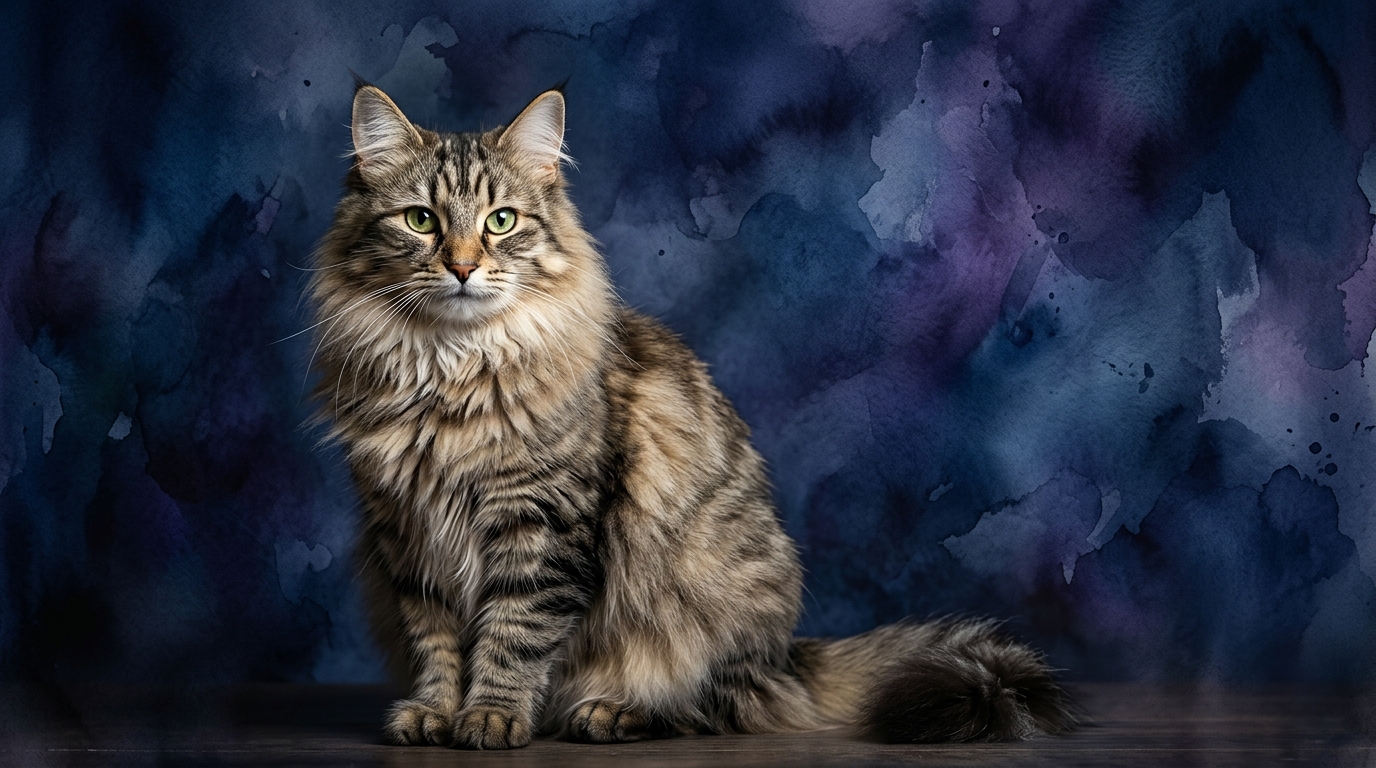
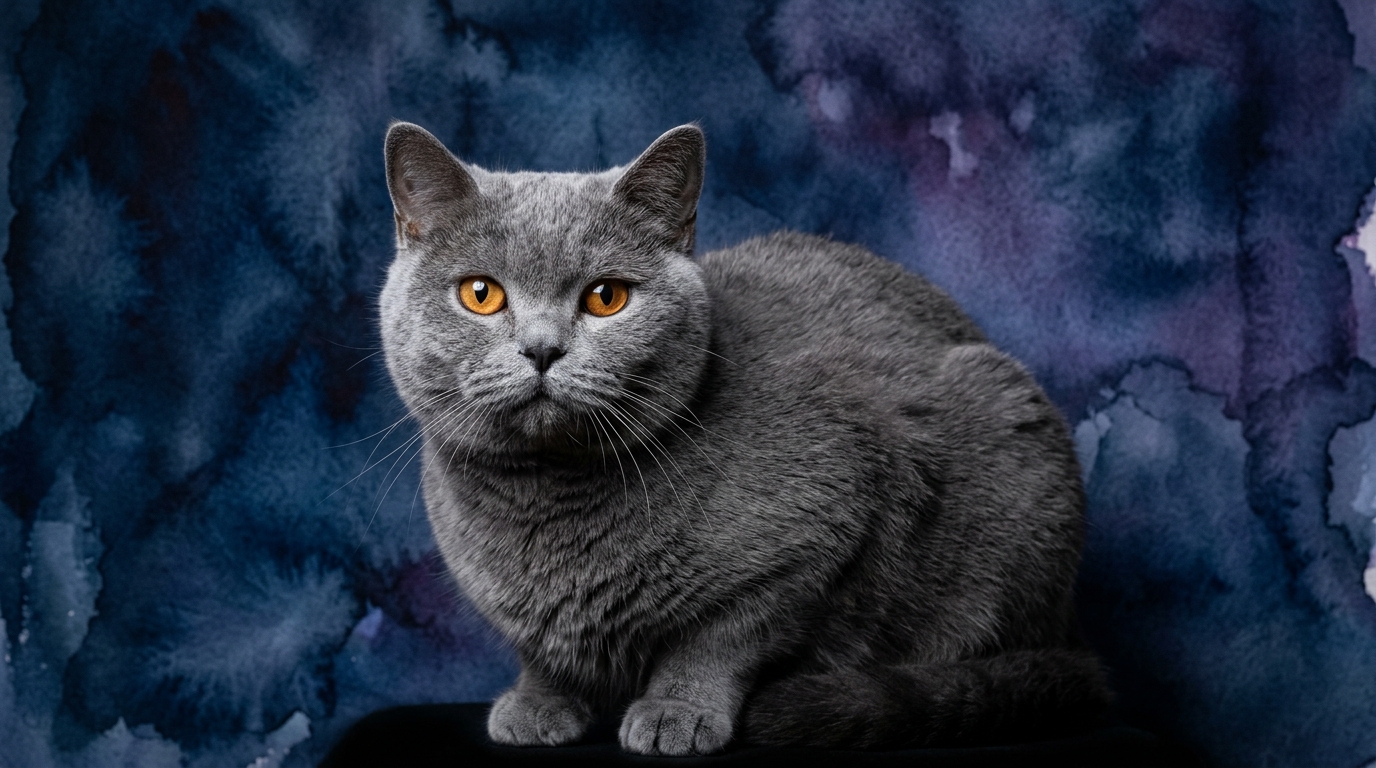
Side-by-Side IQ Profile: Norwegian Forest Cat vs. British Shorthair
To understand the nuanced intelligence of these two captivating breeds, The Cosmic Pet Pet IQ Lab employs five distinct cognitive dimensions. Let's examine how the Norwegian Forest Cat and the British Shorthair stack up in each.
The Norwegian Forest Cat, a breed with a notable wild heritage, demonstrates a robust cognitive profile. Their Problem Solving score of 4/5 indicates a natural inclination to unravel puzzles, whether it's figuring out how to open a door or retrieve a hidden toy, showcasing a flexible and persistent approach to challenges. Training Speed is rated 3/5, meaning they are capable of learning routines and tricks, especially when motivation aligns with their strong natural instincts, though not always at a rapid pace. Social Intelligence, also at 3/5, suggests they form strong bonds with their chosen humans and can read social cues, but their affection is often on their terms, showing a balanced rather than overtly effusive social nature. A powerful Instinctive Drive of 5/5 highlights their exceptional predatory heritage, influencing their play, curiosity, and intense need for environmental enrichment. Finally, their Memory score of 4/5 reflects a strong ability to retain information about their environment, routines, and past experiences, allowing them to navigate complex layouts and remember specific interactions effectively.
In contrast, the British Shorthair presents a more consistently moderate cognitive blueprint. Their Problem Solving score of 3/5 indicates they approach new situations with a moderate level of curiosity and persistence, capable of solving straightforward problems but less inclined to engage with intricate cognitive challenges. Training Speed, also 3/5, means they learn at a steady pace, responding well to consistent, positive reinforcement, though they may not be known for rapid acquisition of numerous or highly complex behaviors. Their Social Intelligence, rated 3/5, signifies a stable and amiable social temperament, enjoying companionship without demanding constant attention, and generally adapting well to household dynamics. The British Shorthair's Instinctive Drive is 3/5; their natural hunting and exploratory drives are present but moderate, leading to a generally calmer demeanor and less intense need for constant stimulation compared to more active breeds. Lastly, their Memory score of 3/5 signifies a reliable memory for routines, familiar faces, and safe spaces, contributing to their sense of security and their ability to navigate their home environment comfortably.
Where the Norwegian Forest Cat Wins Cognitively
The Norwegian Forest Cat truly distinguishes itself through its elevated Problem Solving (4/5) and formidable Instinctive Drive (5/5). Their higher problem-solving aptitude means they are often the architects of their own entertainment, adept at devising strategies to access interesting spaces, unlatch cabinets, or manipulate objects to achieve a goal. This cognitive flexibility makes them engaging companions for owners who appreciate a cat that actively interacts with its environment rather than merely observing it. Furthermore, their powerful instinctive drive translates into a profound curiosity and a persistent investigative nature. This isn't just about hunting; it's about exploring every nook, climbing to the highest vantage point, and engaging deeply with interactive toys that simulate prey. Their robust memory (4/5) complements these traits, allowing them to recall successful hunting strategies or the layout of complex environments, making them incredibly adaptable and resourceful pets.
Where the British Shorthair Wins Cognitively
While the British Shorthair's cognitive scores are generally more moderate, their consistent profile (3/5 across most dimensions) represents a distinct cognitive advantage for specific household dynamics. Their balanced Problem Solving (3/5) means they are less likely to engage in "overthinking" situations or persistently trying to outsmart their owners in ways that might lead to mischief, offering a predictable and calm presence. This breed’s moderate Instinctive Drive (3/5) is a particular "win" for owners seeking a companion less driven by an incessant need for simulated hunting or extensive environmental challenges, resulting in a more tranquil home environment. Their stable Social Intelligence (3/5) ensures they are reliably affectionate and approachable without demanding complex social games or constant interaction, making them excellent companions for those who appreciate a cat that is present and amiable, yet largely self-sufficient in its emotional needs. This cognitive consistency allows them to integrate smoothly into a variety of quiet family settings, providing a steady and undemanding intellectual presence.
Which is Easier to Train and Why
Both breeds score a 3/5 in Training Speed, suggesting a similar baseline capacity for learning. However, their underlying cognitive profiles dictate different approaches and potential challenges. The Norwegian Forest Cat, with its high Instinctive Drive (5/5) and superior Problem Solving (4/5), can be highly motivated by training that taps into its natural predatory instincts, such as clicker training for fetch or obstacle courses that simulate hunting. Their sharp memory (4/5) means they retain learned behaviors well. However, this same strong drive can also lead to distractions if the training environment isn't engaging enough or if their natural instincts pull them towards exploration. The British Shorthair, possessing a moderate Instinctive Drive (3/5) and Problem Solving (3/5), tends to be less distractible and more amenable to consistent, gentle training sessions focused on basic commands or house rules. While they may not demonstrate the same flair for complex tricks as a Forest Cat, their steady temperament and less intense drive can make them more straightforward to teach foundational behaviors, as long as the training is patient and reward-based. They might be "easier" in the sense of less pushback from strong innate drives, but perhaps less enthusiastic about learning purely for the sake of mental challenge.
Cognitive Profiles and Owner Lifestyles: Active vs. Relaxed Owners
The cognitive makeup of these two breeds clearly aligns with different owner lifestyles. Active owners who relish engaging with their pets on a deeper cognitive level will find the Norwegian Forest Cat an exceptional match. Their 4/5 Problem Solving and 5/5 Instinctive Drive mean they thrive on interactive play, puzzle feeders, climbing structures, and opportunities to explore safely. These cats require mental stimulation to prevent boredom and will actively seek out challenges, making them ideal for households that can provide varied enrichment and consistent interaction. Conversely, relaxed owners seeking a calm, self-sufficient, and predictable companion will likely find the British Shorthair more suitable. With its 3/5 scores across most cognitive dimensions, this breed is content with a more serene environment, regular affection, and less demanding play. They appreciate routine and a stable home, offering a comforting presence without requiring constant intellectual engagement or vigorous activity. Their moderate drive means they are less prone to climbing curtains or dismantling household items out of boredom, fitting seamlessly into a quieter, less active routine.
The Verdict
Choose the Norwegian Forest Cat if you desire a cognitively active companion eager to explore, solve puzzles, and engage in stimulating play, thriving with an owner who provides rich environmental enrichment.
Opt for the British Shorthair if you seek a consistently calm and amiable companion, content with a relaxed pace and moderate interaction, offering a predictable and comforting presence in a tranquil home.
🧠 Find Your Pet's IQ Score
Our Pet IQ Lab assessment covers 25+ tests across 5 cognitive dimensions — personalized to your breed.
Take the Full IQ Test →Frequently Asked Questions
Do Norwegian Forest Cats need more mental stimulation than British Shorthairs?
Yes, Norwegian Forest Cats, with their 4/5 problem-solving and 5/5 instinctive drive, generally require more consistent mental and physical enrichment. They benefit from puzzle toys, climbing opportunities, and interactive play to satisfy their strong investigative instincts and prevent boredom.
Are British Shorthairs less prone to destructive behaviors due to their cognitive profile?
British Shorthairs, exhibiting a moderate 3/5 instinctive drive and problem-solving, are typically less inclined towards destructive behaviors driven by boredom or intense curiosity. Their calmer cognitive approach means they are less likely to persistently try to open cabinets or climb where they shouldn't, compared to more driven breeds.
How does memory differ between these two breeds?
The Norwegian Forest Cat boasts a 4/5 memory, allowing them to recall complex routes and past successful actions, making them highly adaptable. The British Shorthair has a 3/5 memory, reliably remembering routines and familiar environments, which contributes to their sense of security and predictable behavior within their home.