Unpacking the Cognitive Profiles: Norwegian Forest Cat vs. Himalayan
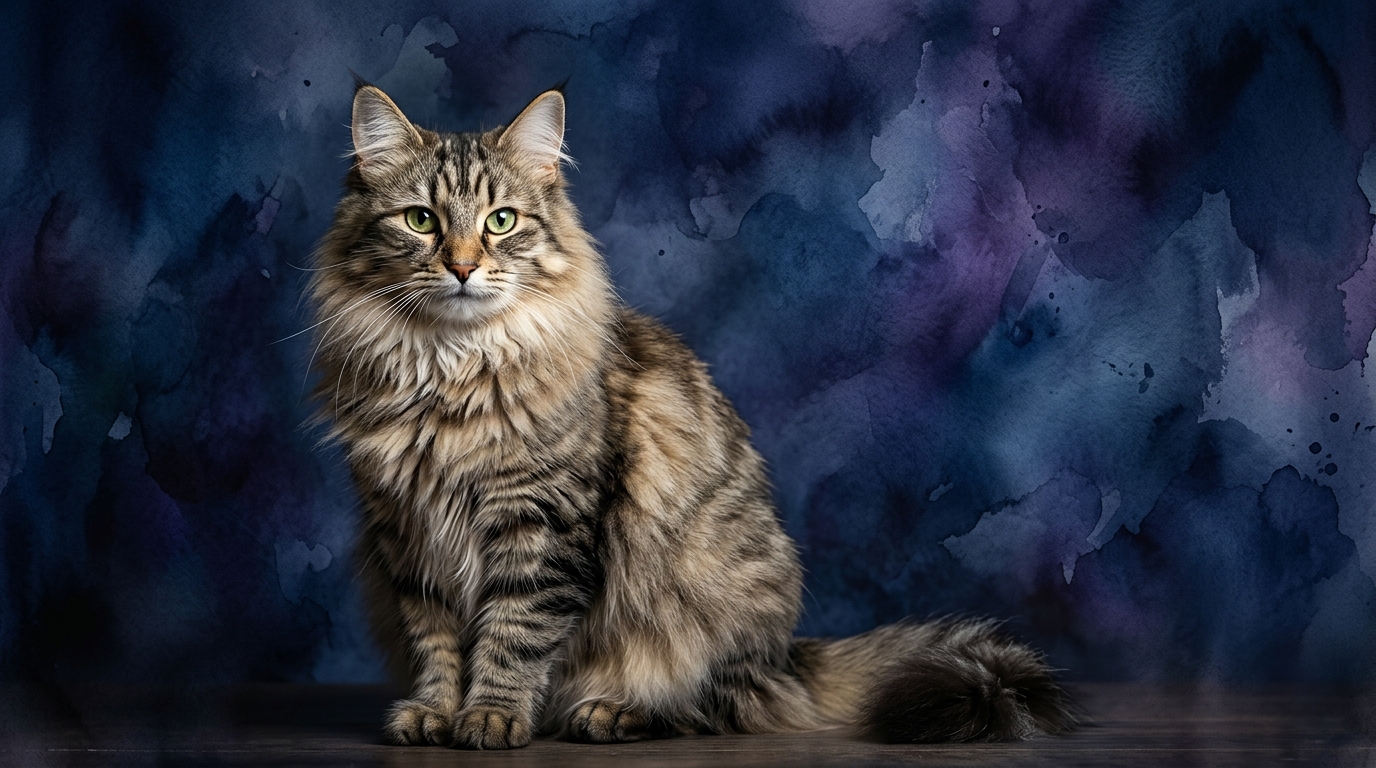
The Cosmic Pet Pet IQ Lab offers a unique lens through which to view feline cognition, breaking down intelligence into five distinct dimensions. For the Norwegian Forest Cat, a breed celebrated for its robust nature, its cognitive profile paints a picture of a resourceful and independent thinker. Its Problem Solving ability, rated at 4/5, indicates a feline adept at figuring out complex situations, be it navigating new environments or manipulating objects to achieve a goal. Training Speed stands at 3/5, suggesting a moderate pace for learning new commands, requiring consistent and engaging methods. Social Intelligence, also at 3/5, implies a capacity to understand human cues and adapt to household dynamics, though perhaps not with the nuanced sensitivity of some other breeds. Where the Norwegian Forest Cat truly distinguishes itself is its Instinctive Drive, scoring a perfect 5/5, reflecting a powerful urge to hunt, explore, and climb. Finally, its Memory, at 4/5, allows it to retain learned information and recall experiences over significant periods, aiding its adventurous spirit and adaptability.
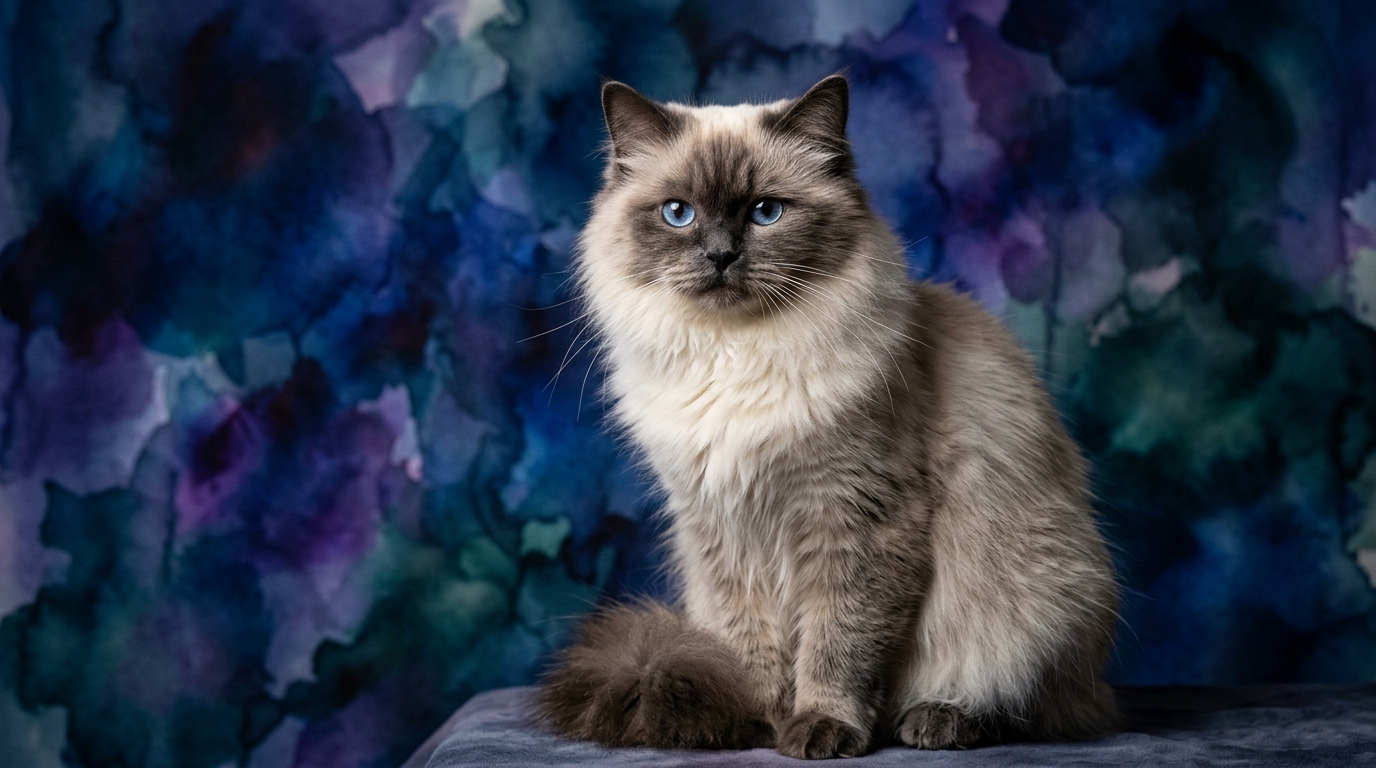
In contrast, the Himalayan presents a cognitive profile that leans towards a more tranquil and predictable existence. Its Problem Solving score of 3/5 suggests an aptitude for routine challenges but a lesser inclination to innovate or persist with highly complex puzzles. Matching the Norwegian Forest Cat, its Training Speed is also 3/5, indicating that patience and repetition are key for effective learning, without being overtly challenging or exceptionally quick. The Himalayan’s Social Intelligence mirrors its counterpart at 3/5, demonstrating a moderate ability to interact and bond within a family setting, appreciating companionship without demanding constant engagement. A notable divergence appears in its Instinctive Drive, scoring 3/5, which points to a more subdued desire for hunting or intense exploration, preferring comfort and stability. Its Memory, at 3/5, signifies a decent capacity for recall, though it might require more reinforcement for long-term retention compared to breeds with higher scores, making consistent routines particularly beneficial for this breed.
Where the Norwegian Forest Cat Excels Cognitively
The Norwegian Forest Cat’s cognitive advantages are evident in its superior problem-solving capabilities, robust instinctive drives, and impressive memory. With a Problem Solving score of 4/5, these felines exhibit a remarkable capacity for strategic thinking and environmental manipulation. They are the cats likely to figure out how to open child-proof cabinets, operate door handles, or devise clever strategies to access coveted treats. This isn't just about curiosity; it's a cognitive process of assessing obstacles and experimenting with solutions, a trait honed by generations of adapting to harsh, natural environments. Their mental agility allows them to quickly understand cause-and-effect relationships, making them fascinating companions for owners who enjoy interactive play and puzzle toys that challenge their intellect.
Furthermore, the Norwegian Forest Cat’s Instinctive Drive, rated at 5/5, fuels a powerful cognitive framework for exploration and hunting. This drive isn't merely physical; it involves spatial reasoning, planning ambush tactics, assessing prey behavior, and navigating complex outdoor terrains if given the opportunity. Their minds are constantly engaged in processing environmental stimuli, identifying potential 'prey,' and planning their next move. This high drive translates into a need for mental stimulation that mimics their natural behaviors, such as elaborate play sessions that simulate hunting or climbing structures that satisfy their innate desire for high vantage points. Their Memory, at 4/5, complements these traits by allowing them to recall successful hunting strategies, safe routes, and the layout of their territory, contributing to their overall resilience and adaptability in various settings. They are adept at remembering specific interactions with people, associating certain individuals with positive or negative experiences, which shapes their future social responses.
Where the Himalayan's Cognitive Profile Shines
While the Himalayan’s individual cognitive scores may not reach the peaks of the Norwegian Forest Cat in certain dimensions, its overall cognitive profile offers a distinct advantage for specific lifestyles, particularly for owners seeking a tranquil and predictable companion. The Himalayan’s Problem Solving at 3/5, Instinctive Drive at 3/5, and Memory at 3/5 combine to create a feline that thrives on stability rather than constant mental challenge. This means they are less prone to developing destructive behaviors out of boredom or excessive curiosity, which can sometimes plague breeds with higher problem-solving drives. Their contentment with a more sedentary routine reduces the cognitive burden on owners to constantly provide novel stimulation, allowing for a more relaxed companionship dynamic.
The Himalayan’s cognitive strength lies in its suitability for a calm, indoor existence. Their lower instinctive drive means their minds are not constantly preoccupied with hunting or exploring, making them less likely to attempt escapes or exhibit intense predatory behaviors towards household items or smaller pets. This cognitive preference for comfort over adventure translates into a cat that is often content to observe its surroundings from a cozy spot, processing information at a more leisurely pace. Their moderate social intelligence (3/5), combined with their less demanding cognitive needs, makes them adept at forming gentle bonds with their human family without requiring complex social games or constant interaction. For an owner who values a serene home environment and a companion that contributes to that peaceful atmosphere, the Himalayan’s cognitive makeup is perfectly aligned, minimizing cognitive friction in daily life and fostering a sense of calm predictability.
Training Dynamics: Which Cat is Easier to Guide?
Both the Norwegian Forest Cat and the Himalayan share a Training Speed score of 3/5, suggesting that neither breed is inherently a prodigy nor a particular challenge to train. However, the nuances of their other cognitive dimensions significantly influence the *approach* and *nature* of their training. For the Norwegian Forest Cat, its higher Problem Solving (4/5) and Instinctive Drive (5/5) mean that while they may quickly grasp complex commands if the motivation is high, their strong drives can also lead to distractions or an inclination to 'problem solve' their way out of a command if they don't perceive its value. Training a Norwegian Forest Cat requires engagement that taps into their natural curiosity and desire to explore. Using clicker training, positive reinforcement, and incorporating elements of play and 'hunting' for rewards will be most effective. Their 4/5 Memory also means they retain learned behaviors well, but consistent, stimulating sessions are crucial to keep their sharp minds engaged.
The Himalayan, with its 3/5 scores across Problem Solving, Instinctive Drive, and Memory, presents a different training dynamic. They may not be as quick to generalize new concepts as a Norwegian Forest Cat, but their lower instinctive drive means they are generally less prone to distraction by environmental stimuli. Their training might proceed at a more measured pace, but once a behavior is learned through consistent repetition, it tends to be reliably performed due to their preference for routine and predictability. They respond well to gentle, consistent methods, valuing a calm and reassuring training environment. While they might not be enthusiastic learners of complex tricks, they are generally compliant with basic commands and household rules. Owners should focus on clear, simple cues and positive reinforcement, understanding that the Himalayan thrives on a structured and predictable learning process. Therefore, 'easier' depends on the owner's definition: NFC might learn complex tricks faster but requires more mental effort to keep engaged, while Himalayan might be more compliant with routines but slower to pick up novel tasks.
Matching Feline Cognition with Owner Lifestyles
The distinct cognitive profiles of the Norwegian Forest Cat and the Himalayan make them suitable for very different owner lifestyles. The Norwegian Forest Cat, with its high Instinctive Drive (5/5) and Problem Solving (4/5), is an ideal companion for active owners who relish engaging with their pets in mentally and physically stimulating ways. These cats thrive in environments where they have ample opportunities to climb, explore, and 'hunt' through interactive play or puzzle feeders. Owners who enjoy teaching their cats tricks, providing secure outdoor access like a catio, or simply engaging in vigorous play sessions will find the Norwegian Forest Cat to be a responsive and gratifying partner. Their cognitive needs demand an owner who is prepared to provide consistent enrichment, preventing boredom and channeling their natural drives into positive outlets. An owner who understands their need for mental and physical exertion will foster a well-adjusted and happy Norwegian Forest Cat.
Conversely, the Himalayan, characterized by its lower Instinctive Drive (3/5) and Problem Solving (3/5), is perfectly suited for more relaxed owners who appreciate a tranquil and predictable home environment. These cats are content with a less demanding daily routine, preferring cozy naps, gentle petting, and calm observation over intense activity or constant mental challenges. Owners who enjoy quiet companionship, lap time, and minimal fuss will find the Himalayan's cognitive disposition aligns beautifully with their lifestyle. While they still enjoy play, it's typically less intense and more focused on comfort and interaction rather than simulating a full-blown hunt. Their preference for stability means they adapt well to indoor-only living and do not constantly seek out novelty or mischief. For an owner seeking a calm, affectionate presence that doesn't require extensive cognitive engagement, the Himalayan offers a wonderfully serene partnership.
The Verdict
Choose the Norwegian Forest Cat if you are an active owner seeking a mentally agile companion who thrives on problem-solving, exploration, and engaging play that satisfies a robust instinctive drive.
Choose the Himalayan if you are a relaxed owner desiring a tranquil companion content with a predictable, calm indoor lifestyle, valuing gentle interaction over intense mental stimulation or physical exertion.
🧠 Find Your Pet's IQ Score
Our Pet IQ Lab assessment covers 25+ tests across 5 cognitive dimensions — personalized to your breed.
Take the Full IQ Test →Frequently Asked Questions
Do Norwegian Forest Cats need more mental stimulation than Himalayans?
Yes, Norwegian Forest Cats, with their 4/5 Problem Solving and 5/5 Instinctive Drive, require significantly more mental stimulation than Himalayans. They benefit from puzzle toys, interactive play simulating hunting, and opportunities for exploration to keep their sharp minds engaged and prevent boredom.
Are Himalayans harder to train since their memory score is lower?
Himalayans (Memory 3/5) may require more consistent repetition during training compared to Norwegian Forest Cats (Memory 4/5) for long-term retention. However, their lower instinctive drive can make them less distractible, potentially leading to more consistent adherence to learned routines once established.
Which breed is more likely to open cabinets or doors?
The Norwegian Forest Cat, with its 4/5 Problem Solving score, is more likely to figure out how to open cabinets or doors. Their inquisitive nature and higher cognitive drive for manipulating their environment make them adept at such tasks, whereas Himalayans (3/5 Problem Solving) are generally less inclined to engage in such complex exploratory behaviors.