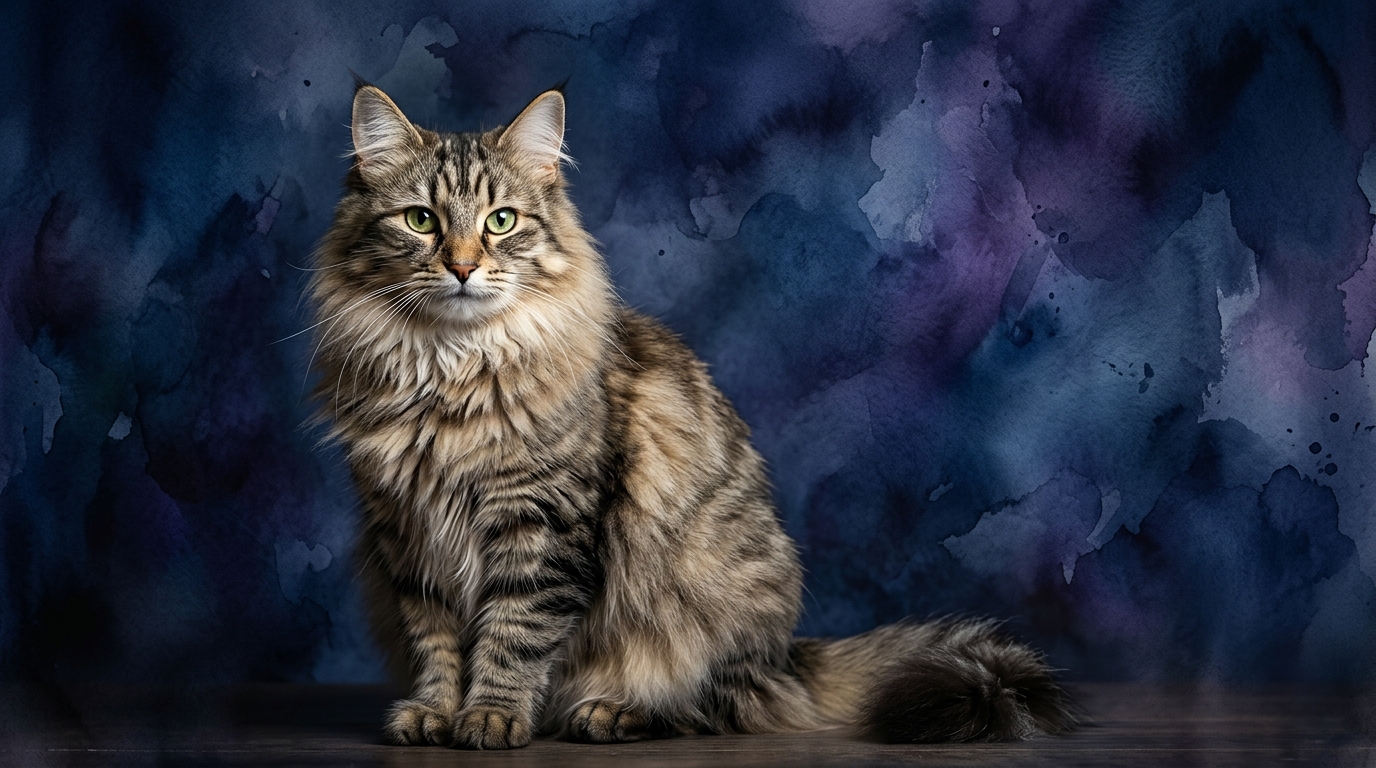
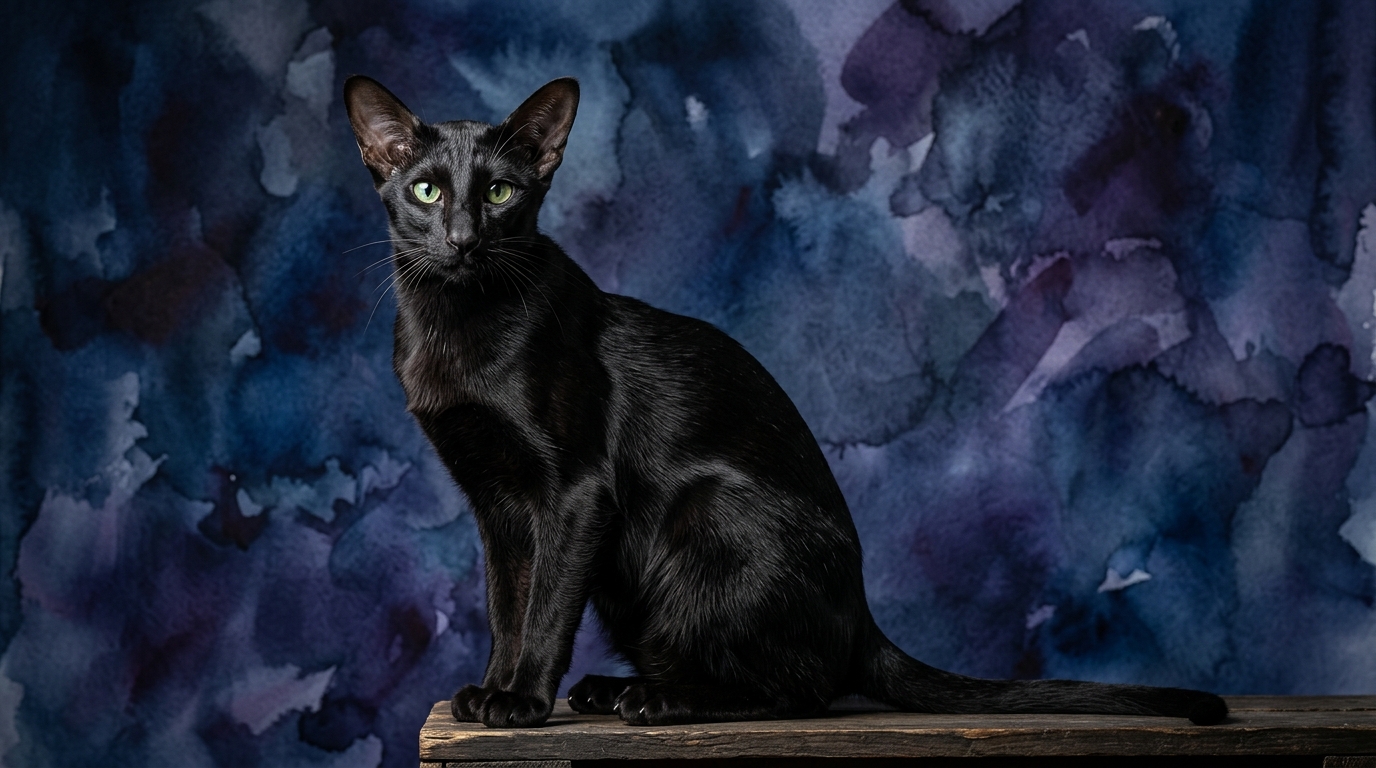
Side-by-Side Cognitive Profile: Norwegian Forest Cat vs. Oriental Shorthair
The Cosmic Pet Pet IQ Lab provides a unique framework for understanding feline cognition, breaking down intelligence into five key dimensions. For the Norwegian Forest Cat, we observe a Problem Solving score of 4/5, indicating a strong aptitude for navigating complex environments and figuring out how to achieve goals, like opening cabinets or finding hidden toys; their ingenuity often involves trial-and-error learning and remembering successful strategies. Their Training Speed stands at 3/5, showing a moderate pace in associating commands with actions, requiring consistent, positive reinforcement to solidify new behaviors, as their independent nature means they learn best when motivated by high-value rewards. Social Intelligence is also 3/5, exhibiting a balanced capacity for understanding human cues and interacting within a social structure; they form strong bonds but also appreciate personal space, discerning social signals without being overly dependent. An impressive Instinctive Drive of 5/5 means they possess a formidable urge to hunt, explore, and engage with their natural predatory behaviors, translating into a need for substantial physical and mental stimulation, often expressed through climbing and chasing. Lastly, their Memory score of 4/5 demonstrates a robust ability to recall past events, locations of items, and learned routines over extended periods, aiding in their problem-solving and navigation skills within their territory.
In contrast, the Oriental Shorthair presents a distinct cognitive blueprint. Their Problem Solving is rated at 3/5, exhibiting a solid, practical approach to daily challenges, capable of learning routines and solving straightforward puzzles, though they might not pursue complex, multi-step solutions with the same persistence. Training Speed is 3/5, meaning they learn at a moderate rate, responding well to consistent, engaging training sessions, with their desire for interaction being a leverage point. Social Intelligence is 3/5, showing a comparable capacity for social interaction and understanding human communication; they are often described as communicative and attentive to their human companions, forming close, interactive relationships. Their Instinctive Drive is 3/5, indicating a moderate level of natural hunting and exploratory instincts; while they enjoy play that mimics hunting, their drive is generally less intense than breeds with a wilderness background, making them well-suited to indoor life. Finally, their Memory score of 3/5 demonstrates a reliable recall for routines, favored people, and familiar environments, contributing to their adaptability and consistent social engagement.
Where the Norwegian Forest Cat Wins Cognitively
The Norwegian Forest Cat truly distinguishes itself in areas demanding deep cognitive engagement and environmental mastery. Their Problem Solving score of 4/5 indicates a superior capacity for analytical thought, manifesting in their ability to methodically dismantle complex situations, whether it's figuring out how to open a child-proof latch or devising a strategy to reach a high perch. This isn't just about simple curiosity; it's about a persistent, analytical approach to environmental manipulation. Coupled with a Memory score of 4/5, they retain these successful strategies, building a mental library of solutions for future challenges. Owners frequently observe their Wegies remembering the precise location of a hidden treat weeks later or recalling a specific sequence of actions that yielded a desired outcome. Furthermore, their extraordinary Instinctive Drive of 5/5, while not directly a 'cognitive' score, profoundly influences their cognitive engagement. This intense drive fuels their exploratory instincts and their relentless pursuit of perceived 'prey,' translating into a heightened awareness of their surroundings and a constant cognitive mapping of their territory. They are always processing sensory input, identifying potential opportunities for 'hunting' or climbing, which keeps their minds exceptionally active and engaged with their physical world. This combination of robust problem-solving, enduring memory, and powerful instinctive motivation positions the Norwegian Forest Cat as a master of their domain, constantly learning and adapting through active engagement.
Where the Oriental Shorthair Wins Cognitively
While the Oriental Shorthair’s raw IQ scores might appear lower in some dimensions, their unique cognitive strengths lie in their application within a domestic, human-centric environment. Their Social Intelligence score of 3/5, combined with their renowned vocalizations, points to a sophisticated understanding and active participation in human-cat communication. They don't just understand cues; they initiate complex vocal dialogues, using a wide range of tones and inflections to express desires, observations, and emotions. This isn't merely instinct; it's a learned, adaptive communication strategy, demonstrating a keen cognitive understanding of their human companions' responses and a memory for which sounds elicit specific reactions. This active engagement in communication can be seen as a cognitive 'win' for owners seeking a more verbally interactive pet. Furthermore, their Instinctive Drive of 3/5, while moderate compared to the Norwegian Forest Cat, can be a distinct advantage in a modern home. This level of drive means they are stimulated by play but are less likely to experience profound frustration or destructive behaviors if extensive outdoor exploration isn't available. Their cognitive energy can be more easily channeled into interactive play, puzzle toys, and social grooming, rather than needing vast territories to satisfy innate hunting urges. This adaptability suggests a cognitive profile that thrives on focused, interactive engagement within a defined space, making them less prone to the cognitive stress that can arise from unfulfilled intense instincts in a restricted environment. Their moderate Memory (3/5) is perfectly adequate for remembering routines and people, contributing to a consistent, predictable, and comforting domestic presence, where complex environmental mapping is less critical than social recall.
Training Dynamics: Which Breed is Easier to Train?
When comparing the ease of training, both the Norwegian Forest Cat and the Oriental Shorthair hold a Training Speed score of 3/5, suggesting a moderate learning curve that benefits from consistency. However, their underlying behavioral differences create distinct training experiences. The Norwegian Forest Cat's formidable Instinctive Drive (5/5) and independent nature mean that while they are capable of learning, training often requires highly motivating rewards and a clear purpose that aligns with their natural inclinations. They might learn a trick quickly if it leads to a 'hunt' for a treat or allows them to access a desired high spot, but their focus can be easily diverted if the task feels arbitrary. Their problem-solving acumen (4/5) means they're figuring out *why* they should do something, not just *how*. In contrast, the Oriental Shorthair's training experience is often enhanced by their strong desire for interaction and their communicative nature. While their Instinctive Drive is lower (3/5), their social engagement (3/5) means they are often eager participants in activities that involve their human companions. They might be more inclined to learn tricks or respond to commands simply for the sake of interaction and positive attention. Their vocal nature can even be leveraged in training, as they are quick to associate specific sounds or words with actions. Therefore, while both breeds require patience, the Oriental Shorthair might feel 'easier' to train for owners who value interactive engagement and a cat that seeks to please, whereas the Norwegian Forest Cat will respond best to training that taps into their innate drive and problem-solving curiosity.
Matching Feline Companions to Owner Lifestyles
The choice between these breeds significantly depends on an owner's lifestyle and their capacity for feline engagement. The Norwegian Forest Cat, with its robust Instinctive Drive (5/5) and superior Problem Solving (4/5) and Memory (4/5) scores, thrives with active owners who can provide ample opportunities for physical and mental stimulation. These cats need environments that allow for climbing, 'hunting' games, and puzzle challenges that satisfy their innate curiosity and analytical minds. A relaxed owner who cannot commit to regular, engaging play sessions or who lives in a restrictive environment might find the Wegie's unmet needs manifesting in boredom or mischief. They require an owner who appreciates a cat that actively explores and interacts with its surroundings, seeking out new challenges. Conversely, the Oriental Shorthair, possessing a moderate Instinctive Drive (3/5) and a strong propensity for social interaction, is well-suited for owners who enjoy a highly communicative and present companion, whether they are active or more relaxed. While Orientals enjoy interactive play and can be quite energetic, their cognitive profile suggests they are more content with focused, engaging sessions within the home rather than needing extensive outdoor exploration. A relaxed owner who enjoys 'conversing' with their cat, providing puzzle toys, and engaging in frequent petting and lap time will find the Oriental Shorthair a rewarding companion. They are adaptable to a variety of home environments, as long as their need for human companionship and mental engagement is met, making them a fit for both moderately active and more sedentary households that prioritize interactive connection.
The Verdict
Choose the Norwegian Forest Cat when you desire a self-reliant, adventurous feline companion with a profound drive to explore and master its environment, and you can provide ample stimulation for its problem-solving mind and strong instincts.
Choose the Oriental Shorthair when you seek a highly communicative and interactive feline friend that thrives on close human companionship and engaging play, and you appreciate a cat whose cognitive engagement is primarily focused on social bonds within the home.
🧠 Find Your Pet's IQ Score
Our Pet IQ Lab assessment covers 25+ tests across 5 cognitive dimensions — personalized to your breed.
Take the Full IQ Test →Frequently Asked Questions
Is the Norwegian Forest Cat truly more 'intelligent' than the Oriental Shorthair?
Based on The Cosmic Pet Pet IQ Lab scores, the Norwegian Forest Cat displays higher aptitudes in problem-solving, memory, and instinctive drive. However, 'intelligence' is multifaceted, and the Oriental Shorthair excels in areas like interactive communication and adaptability to diverse domestic settings.
Do both breeds require a lot of mental stimulation?
Yes, both breeds benefit from mental stimulation, but the *type* differs. The Norwegian Forest Cat needs challenges that satisfy its intense hunting instincts and problem-solving drive, while the Oriental Shorthair thrives on interactive play and social engagement with its human companions.
How do their social intelligence scores compare?
Both breeds received a Social Intelligence score of 3/5, indicating a balanced capacity for understanding human cues and forming bonds. The Oriental Shorthair often expresses this through vocal communication, while the Norwegian Forest Cat may show it through quieter, observant interactions.