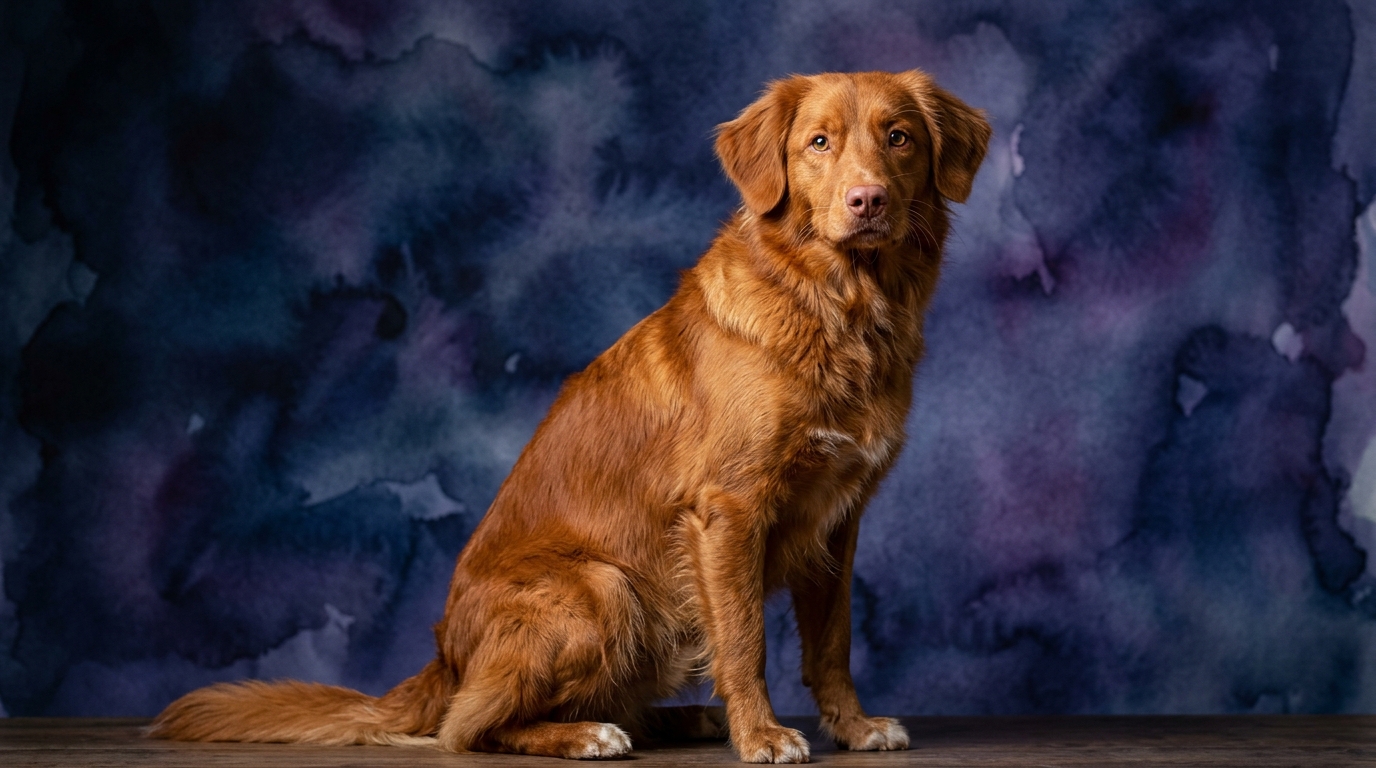
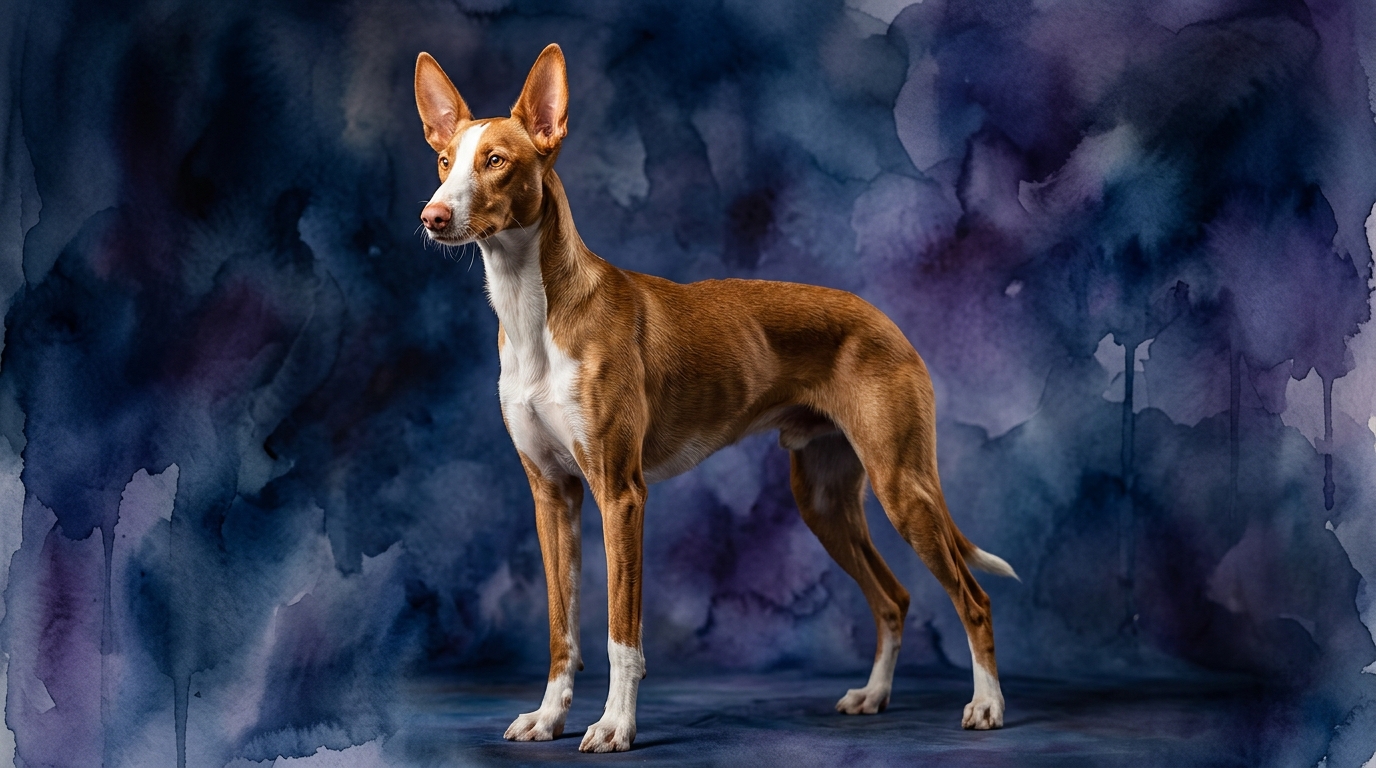
Side-by-Side IQ Profile: Toller vs. Ibizan Hound
At The Cosmic Pet Pet IQ Lab, we assess canine intelligence across five key dimensions. While both the Nova Scotia Duck Tolling Retriever and the Ibizan Hound score a balanced 3/5 in each category, how these capacities manifest in their daily lives and work is profoundly different, sculpted by their breed-specific purposes.
For the **Nova Scotia Duck Tolling Retriever**:
**Problem Solving (3/5):** Tollers exhibit practical problem-solving, focused on tasks like efficiently retrieving objects, navigating water obstacles, or deciphering multi-step training exercises. Their solutions are often goal-oriented, leveraging spatial reasoning and memory for successful completion within a collaborative context.
**Training Speed (3/5):** These dogs grasp new commands and routines at a moderate pace, aided by their eagerness to please and enjoyment of working with their handler. While sometimes enthusiastic to the point of distraction, their collaborative nature generally ensures consistent learning with positive reinforcement.
**Social Intelligence (3/5):** Tollers display a moderate capacity for understanding human cues and family dynamics, crucial for their coordinated work. They are attuned to their handler's intentions and can navigate interactions with others, often preferring familiar company but adapting well with proper introductions.
**Instinctive Drive (3/5):** The Toller's drive centers on their unique “tolling” behavior—luring waterfowl—and their powerful retrieving instinct. This manifests as a strong desire to fetch, carry, and engage playfully yet purposefully with objects, foundational to their breed identity and work ethic.
**Memory (3/5):** Tollers possess a moderate memory for tasks and relevant locations, recalling complex retrieving sequences, specific commands, and spatial information. This allows them to execute multi-step tasks reliably and return to specific points in their environment.
For the **Ibizan Hound**:
**Problem Solving (3/5):** Ibizan Hounds demonstrate independent problem-solving, often centered on their hunting heritage. This involves finding optimal vantage points, navigating challenging terrain during a chase, or strategizing to flush out game. Their solutions are agile, adaptable, and reflect a need for self-reliance in varied environments.
**Training Speed (3/5):** Ibizan Hounds learn at a moderate pace, yet their sighthound independence means they may prioritize external stimuli over commands. They grasp concepts but require engaging, highly rewarding training to overcome their strong self-direction and achieve consistent compliance.
**Social Intelligence (3/5):** Ibizans show a moderate understanding of social cues, particularly within their immediate family. They can be reserved with strangers, indicating a discerning approach. Their social intelligence often involves subtle body language and environmental awareness, rather than constant human validation.
**Instinctive Drive (3/5):** The Ibizan Hound's drive is profoundly rooted in spotting, chasing, and catching prey. This manifests as an intense focus on movement, exceptional speed, and a powerful desire to pursue anything that runs, often overriding other impulses when activated.
**Memory (3/5):** Ibizan Hounds exhibit a moderate memory, particularly for visual cues, hunting routes, and the locations of potential prey or interesting environmental features. This aids their independent exploration and their ability to recall complex paths taken during pursuits.
Where the Nova Scotia Duck Tolling Retriever's Cognition Excels
The Toller's cognitive strengths shine in areas demanding collaborative effort and focused, sequential task execution. Their problem-solving, while rated similarly, leans more towards understanding and executing multi-step instructions from a human partner, crucial for their retrieving role. For instance, a Toller’s 3/5 problem-solving might involve deciphering a complex retrieving pattern in a field, requiring them to remember specific drop points and retrieve items in a particular order. Their social intelligence, also 3/5, is geared towards finely tuned responsiveness to human direction and subtle body language, which is paramount for effective teamwork in the field. This makes them particularly adept at activities like competitive obedience or agility, where precise execution based on handler cues is rewarded. Their memory, at 3/5, is often applied to recalling specific training sequences and the location of fallen objects, making them exceptionally reliable in their working capacity.
Where the Ibizan Hound's Cognition Excels
The Ibizan Hound's cognitive advantages become apparent in situations requiring independent thought, environmental awareness, and rapid, self-directed action. Their 3/5 problem-solving manifests as a keen ability to navigate complex terrain and strategize during a chase, often making split-second decisions without direct human input. For example, an Ibizan’s problem-solving might involve identifying a weakness in a rabbit’s escape route or finding the most efficient path through dense undergrowth while maintaining visual contact. Their instinctive drive, rated 3/5, is a finely honed engine for pursuit, giving them an unparalleled focus and determination when engaging their prey drive. This allows them to excel in activities like lure coursing, where their natural talents for speed and agility, combined with independent decision-making, are fully unleashed. Their social intelligence, while also 3/5, often involves a nuanced understanding of their environment and the subtle cues of potential prey or threats, rather than solely focusing on human interaction. Their memory is particularly strong for spatial layouts and visual patterns, crucial for navigating large territories and remembering hunting grounds.
Which is Easier to Train and Why?
Given their identical 3/5 training speed, neither breed is inherently “easier” in an absolute sense, but their *approach* to training differs significantly, influencing perceived ease. The Nova Scotia Duck Tolling Retriever, a Sporting breed, typically exhibits a stronger desire to please their human companions and a lower threshold for independent action when given a command. Their 3/5 social intelligence and 3/5 training speed combine to make them generally more receptive to traditional obedience methods that rely on collaboration and positive reinforcement. They often find joy in the process of learning and working alongside their handler, making them appear more “trainable” for many owners. Their instinctive drive, while strong, is often channeled into structured tasks like retrieving, which aligns well with training goals.
The Ibizan Hound, conversely, as a sighthound, possesses a potent 3/5 instinctive drive for hunting and a more independent problem-solving style. While they also have a 3/5 training speed, their learning is often filtered through their own assessment of a situation and their priorities. Their social intelligence, also 3/5, means they understand cues, but their strong prey drive can easily override a command if a visual stimulus captures their attention. Training an Ibizan requires immense patience, creativity, and a deep understanding of their sighthound nature. They learn best when training is engaging, rewarding, and feels like a partnership, rather than strict command-and-control. Their “stubbornness” is often a manifestation of their independent problem-solving and powerful instinctive drive, rather than a lack of understanding. Therefore, for most owners seeking a dog for general obedience or competitive dog sports, the Toller will likely present a smoother, more straightforward training experience due to their inherent collaborative nature.
Suitability for Active vs. Relaxed Owners
Both breeds are suited to active owners, but the *type* of activity they thrive on differs. The Nova Scotia Duck Tolling Retriever, with its 3/5 instinctive drive for retrieving and working, requires consistent mental and physical engagement that often involves structured activities. They are excellent companions for owners who enjoy dog sports like agility, flyball, dock diving, or competitive obedience, as well as hiking, running, or regular games of fetch. Their energy is often channeled into purposeful work, and they need outlets that engage their problem-solving and memory in a collaborative context. A relaxed owner might find a Toller's unmet needs lead to destructive behaviors or excessive vocalization, as their moderate energy and drive demand an outlet.
The Ibizan Hound, with its 3/5 instinctive drive for chasing and its Coren rank suggesting moderate working intelligence, is built for bursts of intense speed and independent exploration. They are ideal for owners who can provide secure, large, fenced areas for them to gallop freely, or who participate in activities like lure coursing or straight racing. While they enjoy a good run, their energy expenditure often comes in shorter, more explosive bursts rather than sustained, collaborative efforts like a Toller. After their intense exercise, Ibizans are typically quite relaxed indoors, enjoying comfortable lounging. However, a relaxed owner who cannot provide the crucial outlets for their powerful prey drive and need for speed will struggle, as these dogs require significant opportunity to stretch their legs and satisfy their hunting instincts. For owners seeking a dog that can transition from high-intensity bursts of activity to quiet companionship, the Ibizan Hound could be a fit, provided their unique exercise needs are met.
The Verdict
Select a Toller if you seek a collaborative canine partner for dog sports, retrieving, or a variety of structured activities, appreciating their responsive nature and eagerness to work alongside you. Their balanced intelligence makes them adaptable to various training goals, provided they receive consistent mental and physical engagement.
Opt for an Ibizan Hound if you admire independent thinkers, enjoy fast-paced activities like lure coursing, and can provide ample secure space for them to run freely, understanding their unique sighthound instincts and training approach. Their elegance and reserved charm suit those who appreciate a dog with a strong sense of self and a need for bursts of intense physical release.
🧠 Find Your Pet's IQ Score
Our Pet IQ Lab assessment covers 25+ tests across 5 cognitive dimensions — personalized to your breed.
Take the Full IQ Test →Frequently Asked Questions
Do Ibizan Hounds make good family pets despite their hunting drive?
Yes, Ibizan Hounds can be wonderful family pets; they are often gentle and affectionate with their families, thriving in a home that understands their need for secure outdoor running space and respects their sometimes reserved nature. Their intense prey drive means small, fast-moving pets might not be ideal companions, but they typically adapt well to children and other calm dogs.
Are Nova Scotia Duck Tolling Retrievers prone to barking or being noisy?
Tollers can be quite vocal, using barks, 'toller screams,' and other sounds to express excitement, alert their owners, or during play, which is part of their breed's luring behavior. While not excessively noisy, potential owners should be prepared for a dog that communicates enthusiastically and may require training to manage vocalizations.
How do their grooming needs compare given their similar intelligence profiles?
Their intelligence profiles don't directly influence grooming, but their coats do: Tollers have a medium-length double coat requiring regular brushing to manage shedding and prevent mats, especially with their water-loving nature. Ibizan Hounds have either a short, smooth coat or a wirehaired coat, both of which are relatively low maintenance, needing only occasional brushing.