Side-by-Side Cognitive Profiles: Decoding Identical Scores
On the surface, both the Nova Scotia Duck Tolling Retriever and the Spinone Italiano present an intriguing identical score of 3/5 across our five key IQ dimensions. This parity doesn't suggest a lack of individual brilliance, but rather a consistent, mid-range competency that underpins their respective roles as versatile sporting dogs. The true distinction emerges when we consider how each breed’s history and innate purpose shape the expression of these shared cognitive capacities.
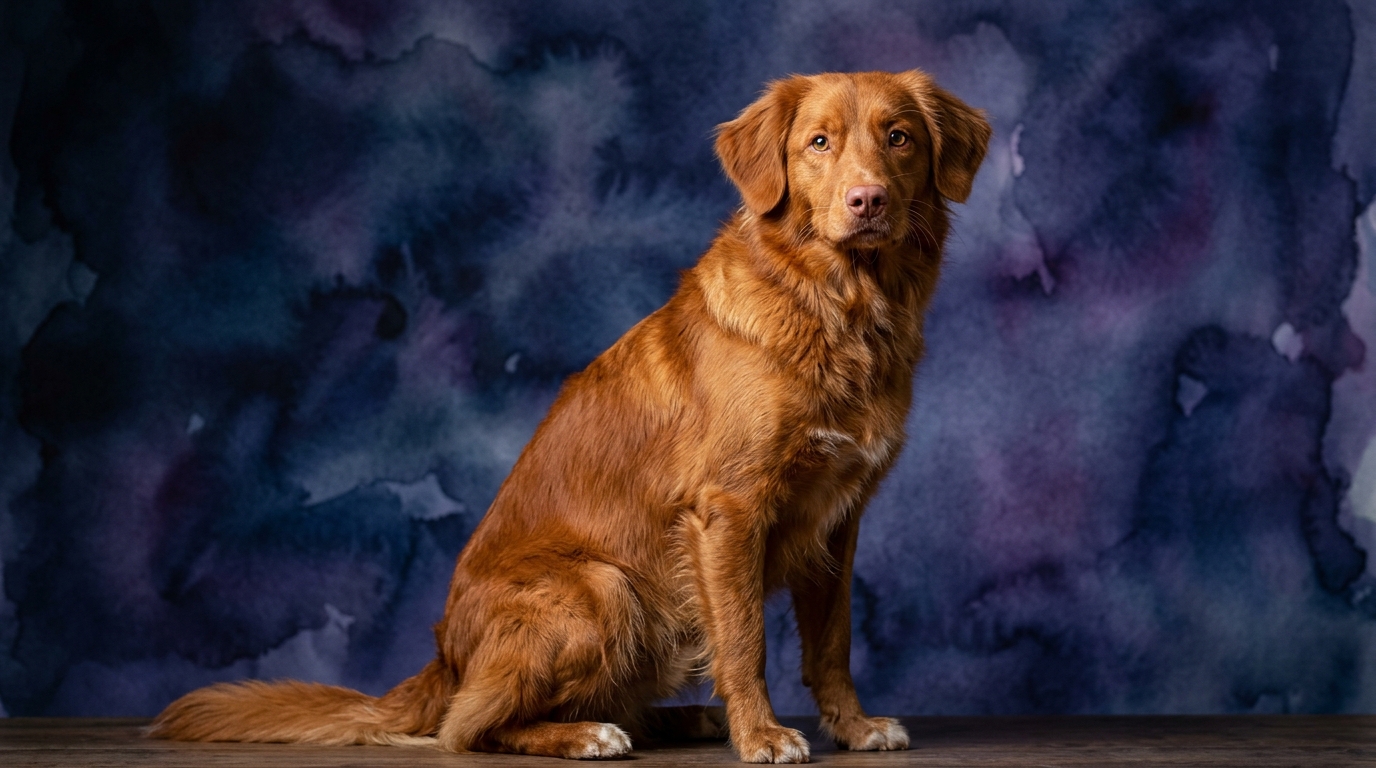
For the Nova Scotia Duck Tolling Retriever, a Problem Solving score of 3/5 often translates into resourceful, adaptive behaviors in dynamic environments. Their historical role of luring and retrieving waterfowl requires them to quickly assess situations, such as navigating complex shorelines or retrieving decoys from varied water conditions. Their training Speed, also at 3/5, reflects an eagerness to engage and a capacity for rapid learning when tasks are presented with enthusiasm and clear direction, particularly those involving sequential actions or pattern recognition. Social Intelligence at 3/5 for the Toller means they are generally attuned to human cues and group dynamics, capable of forming strong bonds and understanding their handler's intent in a working partnership. Their Instinctive Drive of 3/5 is distinctly focused on prey drive, specifically for waterfowl, manifesting as sustained focus, marking ability, and an intense desire to retrieve. Finally, a Memory score of 3/5 ensures they retain complex retrieve patterns, learned commands, and handler signals over time, critical for efficient field work.
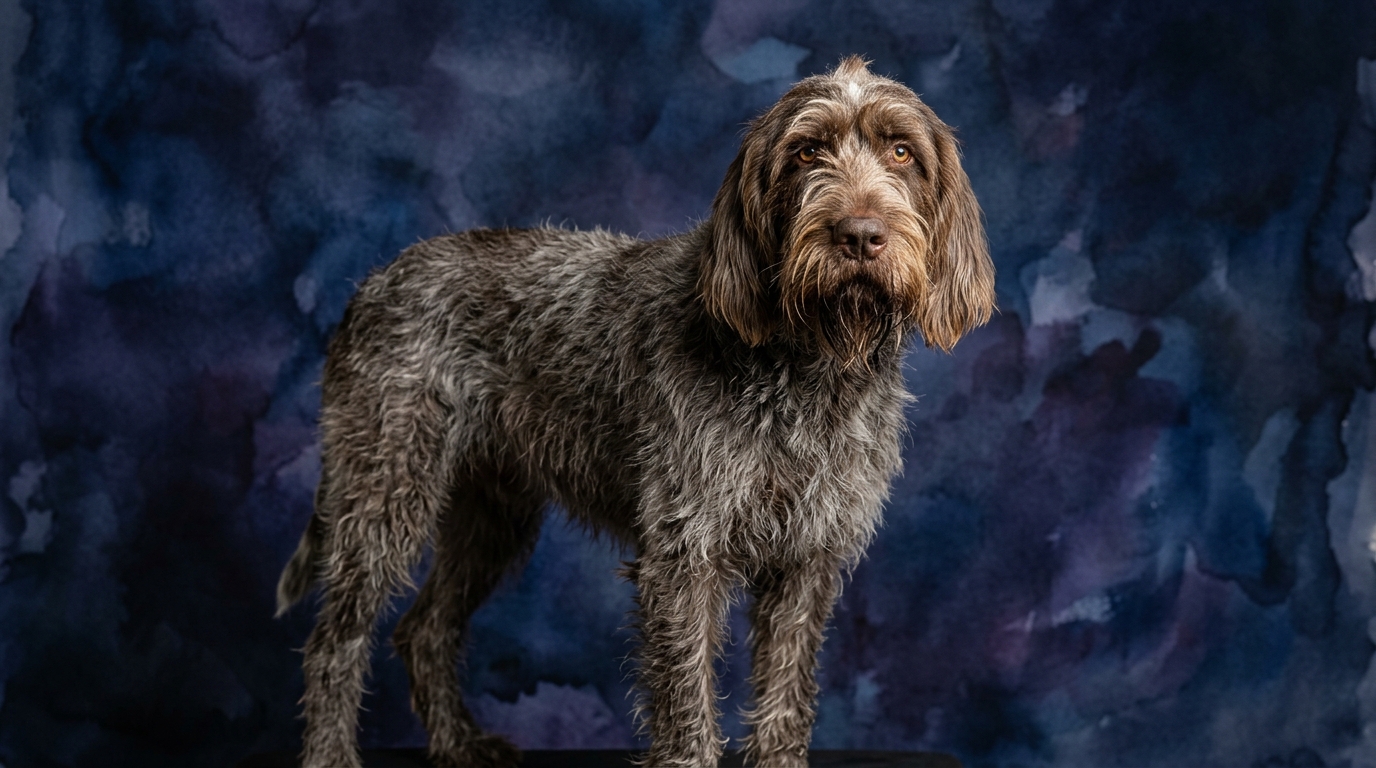
The Spinone Italiano, with the same 3/5 for Problem Solving, demonstrates its cognitive strength through methodical and persistent approaches. This might involve patiently unraveling a complex scent trail or carefully navigating dense cover to locate game, rather than the Toller's rapid-fire assessment. Their Training Speed of 3/5 indicates a thoughtful learner who processes information thoroughly, often requiring consistent, patient guidance to build understanding and reliability, rather than simply memorizing actions. Social Intelligence at 3/5 for the Spinone often shines in their calm, observant nature within a family unit, displaying a quiet attentiveness to human emotions and a generally amiable disposition towards familiar individuals. The Spinone’s Instinctive Drive, also 3/5, is a broad, versatile hunting drive encompassing tracking, pointing, and retrieving, characterized by endurance and a deliberate pace rather than explosive bursts. Their Memory score of 3/5 supports their ability to recall intricate scent patterns, remember locations of game, and retain a wide repertoire of learned behaviors, ensuring reliable performance in diverse hunting scenarios.
Where the Nova Scotia Duck Tolling Retriever Excels Cognitively
Despite identical numerical scores, the Toller exhibits particular cognitive strengths rooted in its specialized purpose. Their problem-solving acumen, rated 3/5, often manifests as rapid strategic adjustments in the field; a Toller might quickly deduce the best path through reeds to a downed bird, demonstrating efficient route planning under pressure. Their instinctive drive (3/5) is uniquely channeled into the 'tolling' behavior itself—a complex, multi-stage cognitive process involving luring waterfowl within gun range by playing and disappearing along the shore. This requires a sophisticated understanding of cause and effect, an ability to maintain focus, and a keen awareness of their environment, showcasing a specific type of applied intelligence that is both cunning and precise.
Furthermore, their training speed (3/5) often translates into a notable ability to pick up sequences of commands quickly, especially when tasks are engaging and reward-driven. This makes them adept at advanced obedience and canine sports that demand intricate routines. Their memory (3/5) is particularly strong in marking multiple falls and recalling the exact location of retrieves, even after a delay or distraction, a critical asset for a bird dog working in challenging conditions.
Where the Spinone Italiano Excels Cognitively
The Spinone Italiano, while matching the Toller in overall scores, showcases its cognitive prowess in distinct ways, reflecting its heritage as a versatile, deliberate hunting companion. Its problem-solving capacity (3/5) is less about speed and more about methodical persistence; a Spinone will meticulously work out a complex scent trail, demonstrating an unwavering focus and an ability to systematically eliminate possibilities. This translates to an enduring mental fortitude, allowing them to remain on task for extended periods, even when faced with challenging conditions or elusive game.
Their instinctive drive (3/5) is characterized by a unique combination of a soft mouth and a patient, deliberate point, requiring significant impulse control and a nuanced understanding of their role in the hunt. This isn't just raw drive, but a controlled application of instinct, demonstrating a specific cognitive strength in self-regulation and partnership. The Spinone's social intelligence (3/5) often manifests as a deep, quiet understanding of their human companions, making them particularly sensitive to subtle cues and fostering a strong, cooperative bond built on mutual respect. Their memory (3/5) is robust for recalling vast areas of terrain and the precise locations of game encountered, contributing to their reliability as a versatile hunting partner across diverse landscapes.
Training Dynamics: Toller's Eagerness vs. Spinone's Thoughtfulness
When considering ease of training, the identical 3/5 training speed scores for both breeds belie significant differences in their learning styles and what motivates them. The Nova Scotia Duck Tolling Retriever, often described as having an 'off switch' only when completely exhausted, brings an effervescent energy and an inherent desire to please into training sessions. Their keenness to work alongside their human, coupled with a high food or toy drive, means they often respond with quick enthusiasm to positive reinforcement. They thrive on engaging, fast-paced lessons that incorporate variety and mental challenges, and their quick uptake of commands can make them appear easier to train for those who enjoy dynamic interaction. However, this same intensity can lead to boredom or mischievousness if training lacks consistency or sufficient mental stimulation.
The Spinone Italiano, while equally capable of learning, approaches training with a more thoughtful, sometimes independent, disposition. Their 3/5 training speed is indicative of a dog that prefers to understand the 'why' behind a command rather than simply executing it by rote. They require patience, consistency, and a strong, trust-based relationship with their handler. While they may not offer the flashy, rapid responses of some breeds, what they learn, they learn deeply and reliably. Their independent streak means that harsh methods are counterproductive; gentle, positive reinforcement, coupled with clear communication and an understanding of their sensitive nature, yields the best results. A Spinone will learn at its own pace, but once a concept is grasped, it is typically retained with remarkable steadfastness, making them a steady and dependable partner.
Lifestyle Match: Active Companionship vs. Patient Exploration
Choosing between these two breeds based on lifestyle means understanding their inherent energy levels and how their cognitive profiles influence their daily needs. The Nova Scotia Duck Tolling Retriever is undeniably built for active owners. Their high energy and instinctive drive demand significant daily physical exercise and consistent mental engagement. An owner who enjoys running, hiking, dog sports like agility or flyball, or who can provide regular field work will find a Toller an eager and tireless companion. Their 3/5 problem-solving and memory scores mean they excel when given 'jobs' to do, and without sufficient outlets, their intelligence can manifest as destructive behaviors or excessive vocalization. They thrive in environments where they are consistently challenged and integrated into an active family life, requiring an owner prepared for a high-octane partnership.
The Spinone Italiano, while also a sporting breed and requiring substantial exercise, often fits a slightly different active owner profile. They appreciate long, steady walks, leisurely hikes, and opportunities to explore with their noses, rather than constant, high-intensity bursts of activity. Their methodical problem-solving and persistent instinctive drive (both 3/5) make them excellent partners for owners who enjoy patient tracking, scent work, or exploring natural environments at a steady pace. While they can keep up with active families, they also value quiet companionship and downtime. A Spinone can adapt to a slightly more relaxed pace than a Toller, provided they still receive consistent opportunities for physical activity and mental stimulation through scent games or thoughtful training. They are well-suited for owners who appreciate a calm, amiable presence in the home but are committed to daily outdoor adventures.
The Verdict
Choose a Nova Scotia Duck Tolling Retriever if you lead a highly active lifestyle, thrive on fast-paced training, and seek a quick-witted, energetic companion eager for constant engagement and complex 'jobs'.
Opt for a Spinone Italiano if you appreciate a thoughtful, patient companion, enjoy methodical exploration and scent work, and are prepared for consistent, gentle training with a dog that learns deeply and forms a profound, calm bond.
🧠 Find Your Pet's IQ Score
Our Pet IQ Lab assessment covers 25+ tests across 5 cognitive dimensions — personalized to your breed.
Take the Full IQ Test →Frequently Asked Questions
Do Tollers or Spinones shed more?
Both breeds shed, but their coat types differ. Tollers have a medium-length double coat that sheds moderately year-round with heavier seasonal shedding, requiring regular brushing. Spinones have a coarse, wiry single coat that sheds less profusely than a Toller's, but still requires regular grooming, including hand-stripping to maintain coat texture.
Are Tollers or Spinones better with children?
Both breeds can be excellent family dogs, but their temperaments differ. Tollers are generally playful and energetic with children, though their exuberance may be overwhelming for very young kids. Spinones are typically more patient, gentle, and calm with children, often displaying a protective yet amiable demeanor, making them a very steady presence in a family setting.
Which breed is more prone to health issues?
Both breeds are generally robust but have predispositions to certain health concerns. Tollers can be prone to hip dysplasia, eye anomalies, and autoimmune thyroiditis. Spinones are also susceptible to hip and elbow dysplasia, as well as cerebellar ataxia and certain eye conditions. Responsible breeders screen for these genetic conditions in both breeds.