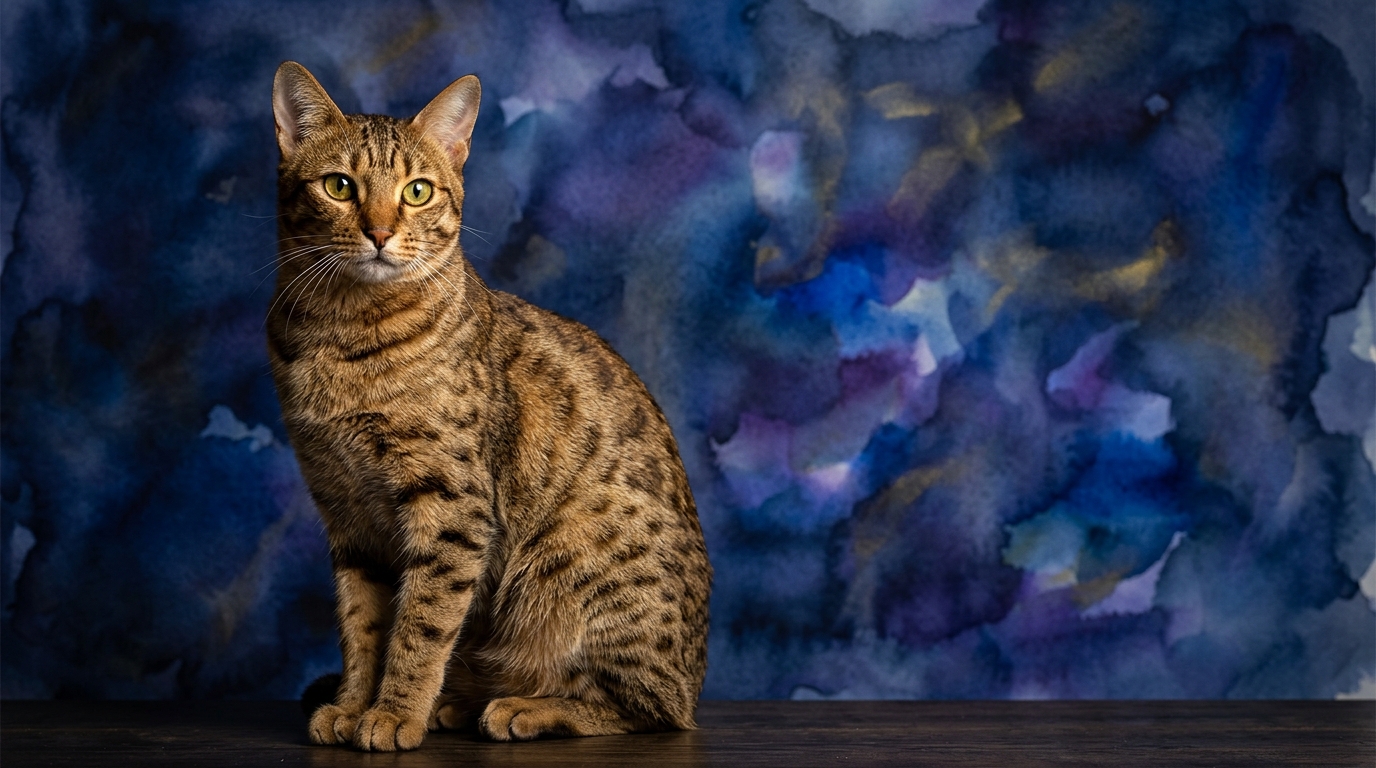
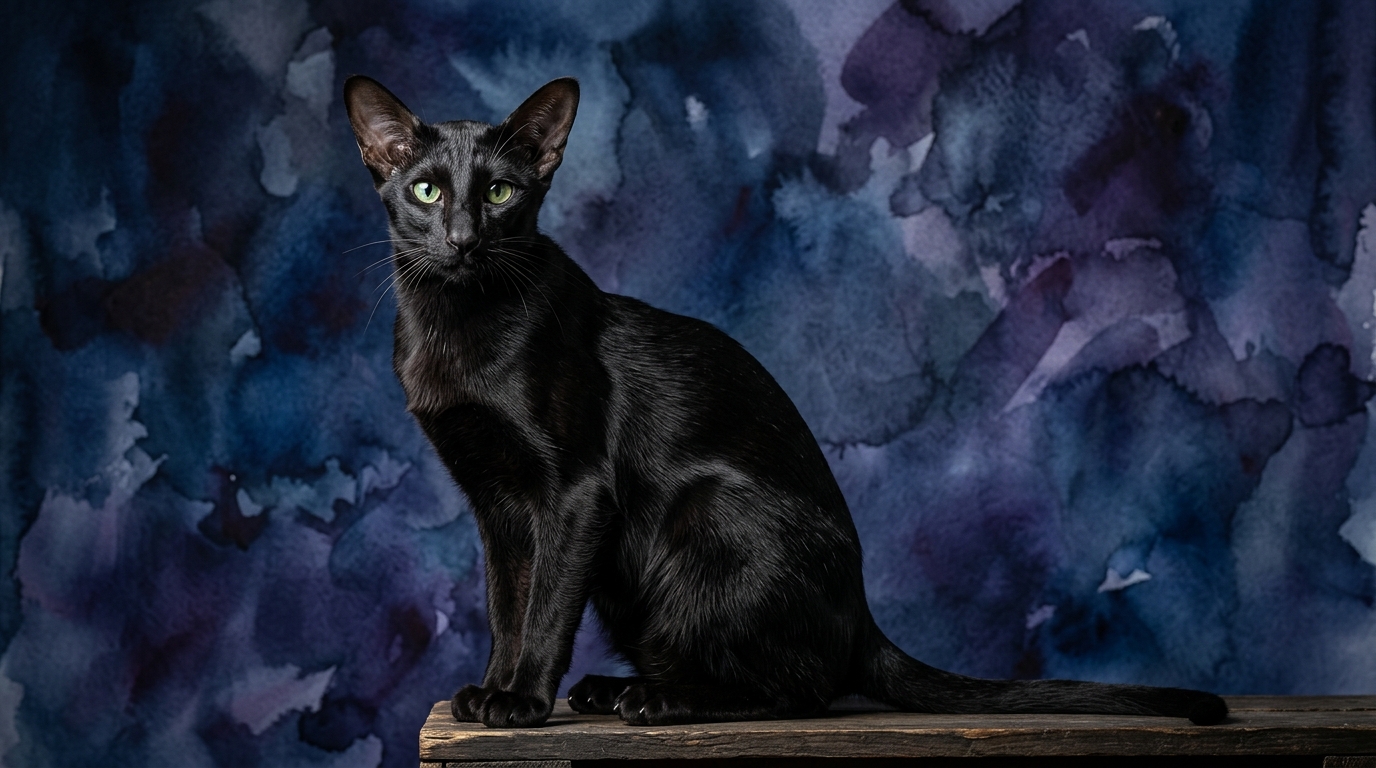
Side-by-Side IQ Profile
The Ocicat exhibits a robust cognitive toolkit. Its Problem Solving is rated 4/5, indicating a strong capacity to figure out complex puzzles or navigate novel situations. Training Speed stands at an impressive 5/5, suggesting rapid learning and retention of cues. Social Intelligence scores 4/5, reflecting an acute awareness of human emotions and social dynamics within a household. Instinctive Drive, also 4/5, points to a well-developed predatory instinct and a natural inclination to explore and interact with its environment. Finally, Memory at 4/5 ensures it can recall past experiences and learned behaviors effectively.
The Oriental Shorthair presents a more consistently balanced, yet slightly less intense, cognitive profile. Its Problem Solving is 3/5, meaning it can tackle moderately challenging tasks but might require more guidance or repetition than the Ocicat. Training Speed is 3/5, indicating a competent ability to learn new commands, though perhaps at a more measured pace. Social Intelligence also registers 3/5, showing it is generally aware and responsive to human interaction, but perhaps not as acutely perceptive as the Ocicat. Instinctive Drive is 3/5, suggesting a healthy level of curiosity and playfulness without being overwhelmingly focused on hunting simulations. Memory, at 3/5, allows it to retain important information and routines, contributing to its adaptable nature.
Where Ocicat Wins Cognitively
The Ocicat's cognitive strengths are evident across all dimensions, particularly its superior Training Speed (5/5). This means an Ocicat can quickly grasp new commands, intricate tricks, or even complex routines like leash walking or fetch, often with fewer repetitions than other breeds. Its Problem Solving (4/5) enables it to independently navigate challenging environments, figure out how to open cabinets, or solve puzzle toys, demonstrating a proactive approach to mental engagement.
Furthermore, the Ocicat's elevated Social Intelligence (4/5) translates into a more nuanced understanding of human moods and intentions. This can manifest as an Ocicat offering comfort when sensing distress or actively seeking interaction in a responsive manner. Its strong Instinctive Drive (4/5) and Memory (4/5) combine to create a cat that not only remembers where its favorite toys are hidden but also devises new strategies to "hunt" them, showcasing a persistent and adaptable mental approach to play and exploration.
Where Oriental Shorthair Wins Cognitively
While the Oriental Shorthair's scores are consistently 3/5, this uniformity can be interpreted as a distinct cognitive advantage for specific owner preferences. Its balanced profile across Problem Solving, Training Speed, Social Intelligence, Instinctive Drive, and Memory suggests a cat that is consistently competent without being overly demanding. This means an Oriental Shorthair is intelligent enough to engage in play and learn routines, but perhaps less likely to constantly seek out new intellectual challenges or devise elaborate schemes to outwit its environment.
The Oriental Shorthair's "winning" aspect lies in its predictable and agreeable cognitive engagement. Owners can expect a cat that is responsive to training and social cues (3/5 in both) without the intense cognitive drive that might lead to an Ocicat exploring every cupboard or demanding constant mental puzzles. Its 3/5 Instinctive Drive means it enjoys play but might be less singularly focused on "hunting" than the Ocicat, making it a delightful, interactive companion that doesn't necessarily require an owner to constantly devise new intellectual stimulation to prevent boredom-induced mischief.
Which is Easier to Train and Why
The Ocicat unequivocally presents as the easier breed to train, primarily due to its exceptional Training Speed (5/5) and robust Problem Solving (4/5). These attributes mean an Ocicat rapidly connects actions with consequences and quickly understands what is expected of it. Owners will find they can introduce new commands, litter box alternatives, or even agility courses with minimal repetition, as the Ocicat possesses a keen ability to absorb and apply information. This rapid learning curve is supported by its strong Memory (4/5), ensuring that once a behavior is learned, it's retained over time.
In contrast, the Oriental Shorthair, with its 3/5 Training Speed and Problem Solving, requires a more patient and consistent approach. While certainly trainable, it may take more repetitions for an Oriental Shorthair to master a new trick or adjust to a novel routine. For instance, teaching an Ocicat to walk on a leash might involve a few guided sessions before it understands the concept, whereas an Oriental Shorthair might need several weeks of consistent practice. The Oriental Shorthair's competent but not exceptional scores mean training is successful with dedication, but the process itself is generally less accelerated than with an Ocicat.
Which Suits Active Owners vs Relaxed Owners
For active owners who thrive on engagement and mental stimulation, the Ocicat is an ideal match. Its high Problem Solving (4/5), Training Speed (5/5), and Instinctive Drive (4/5) mean it genuinely enjoys interactive play, puzzle toys, and learning new skills. These cats flourish when their owners dedicate time to teaching tricks, providing complex environmental enrichment, or even participating in feline agility. An Ocicat left without sufficient mental engagement might invent its own "puzzles," potentially leading to behaviors like opening cabinets or exploring forbidden territories out of sheer boredom.
Conversely, the Oriental Shorthair's balanced 3/5 cognitive profile across all dimensions makes it a better fit for owners seeking a companion that is interactive and present, but without the intense demand for constant mental challenges. Relaxed owners will appreciate an Oriental Shorthair's willingness to engage in play and cuddles, its responsiveness to routines, and its generally affable nature, without feeling the pressure to constantly innovate new forms of intellectual entertainment. While they still need play and attention, their cognitive needs are met with a more moderate level of daily interaction, making them less prone to mischief if left to their own devices for periods.
The Verdict
If you are an active owner eager to engage in advanced training, provide extensive mental enrichment, and appreciate a cat that actively seeks out intellectual challenges, the Ocicat's sharp cognitive profile is an exhilarating match.
Opt for the Oriental Shorthair if you desire a consistently competent and interactive companion that integrates smoothly into routines without demanding constant, high-intensity mental stimulation, offering a balanced and agreeable presence.
🧠 Find Your Pet's IQ Score
Our Pet IQ Lab assessment covers 25+ tests across 5 cognitive dimensions — personalized to your breed.
Take the Full IQ Test →Frequently Asked Questions
Can an Oriental Shorthair learn tricks like an Ocicat?
Yes, an Oriental Shorthair can certainly learn tricks, but its 3/5 Training Speed means it may require more consistent repetition and patience compared to an Ocicat's rapid 5/5 learning ability. Both breeds enjoy the mental engagement, but the pace of acquisition will differ.
Do Ocicats get bored easily if not mentally stimulated?
With a Problem Solving score of 4/5 and a strong Instinctive Drive, Ocicats indeed thrive on mental stimulation and can become bored if not provided with sufficient engagement, potentially leading them to create their own entertainment, which might not always align with owner preferences.
How does social intelligence differ between these two breeds?
The Ocicat's 4/5 Social Intelligence indicates a more nuanced understanding of human emotions and social cues, often leading to more responsive and interactive companionship. The Oriental Shorthair's 3/5 score means it's still social and aware, but perhaps less acutely perceptive of subtle human signals, offering a more generally agreeable interaction style.