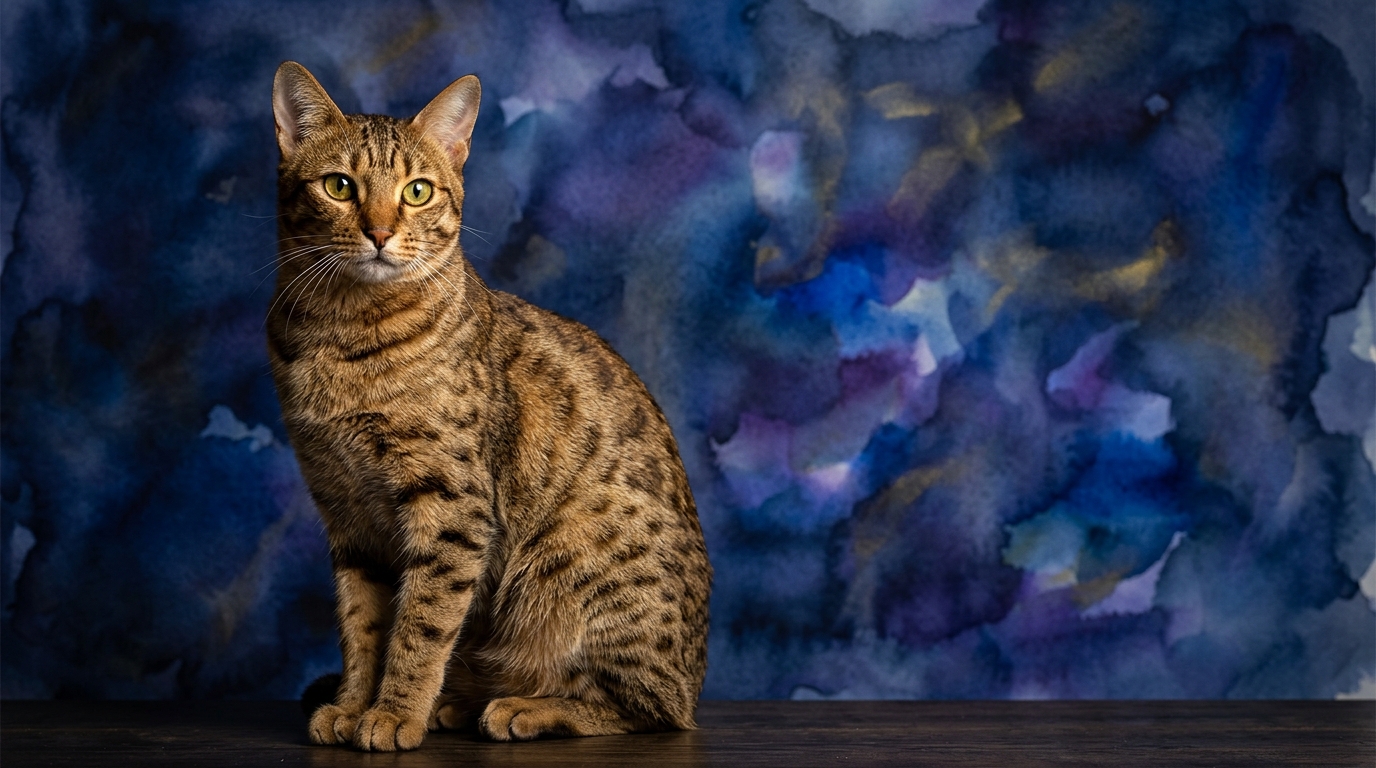
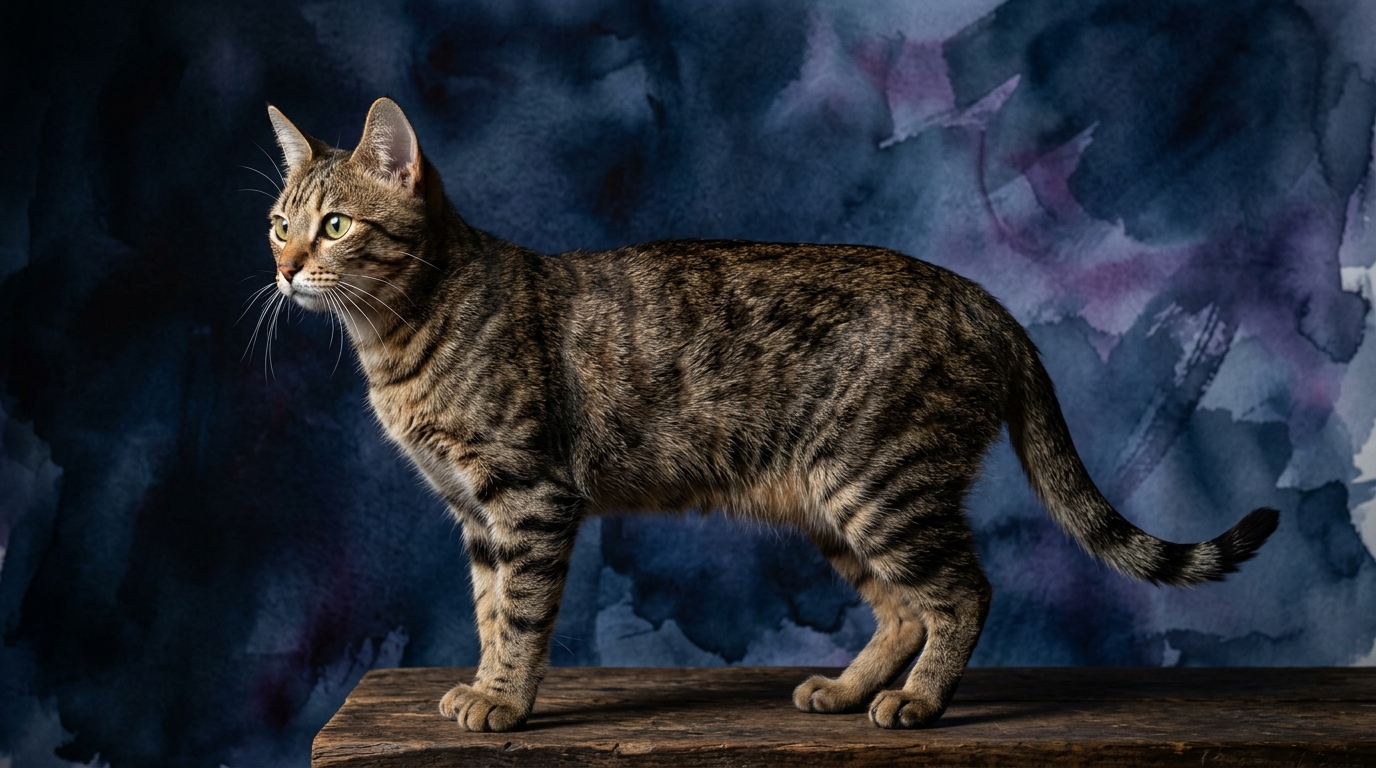
Side-by-Side: The Pet IQ Lab Profile
The Pet IQ Lab assesses feline cognition across five key dimensions, offering a granular view of how different breeds process information and interact with their environment. For the Ocicat and Sokoke, these scores illuminate distinct approaches to learning and engagement.
**Ocicat Intelligence Profile:** With a Problem Solving score of 4/5, Ocicats demonstrate a significant capacity for figuring out novel situations and navigating complex environments. They are adept at manipulating objects to achieve goals, such as opening cabinets or mastering intricate puzzle toys, showcasing an inquisitive and analytical approach to challenges. Their Training Speed is an impressive 5/5, meaning this breed learns new commands and routines with remarkable swiftness. Eager to engage, they form associations quickly, picking up tricks, leash training, or even agility courses in fewer repetitions. Social Intelligence, rated at 4/5, indicates a refined understanding of social cues from both humans and other animals. They interpret moods, respond appropriately, and often seek out companionship, thriving on reciprocal engagement. An Instinctive Drive of 4/5 means their natural hunting instincts are pronounced, fueling their play with a strong desire to stalk, chase, and capture. Lastly, their Memory, at 4/5, shows a robust ability to recall routines, learned behaviors, and significant experiences with clarity, allowing them to adapt quickly to familiar situations.
**Sokoke Intelligence Profile:** The Sokoke approaches Problem Solving with a practical, straightforward method, scoring 3/5. While capable of addressing common household challenges and understanding basic puzzle feeders, they may require more time or simpler designs for intricate tasks, preferring direct solutions. Their Training Speed is 3/5, indicating they learn at a moderate pace, acquiring new behaviors and commands with consistent, patient reinforcement. They respond well to positive training methods but might need more repetition than faster-learning breeds. Social Intelligence, also 3/5, suggests they engage socially with a balanced demeanor. They form affectionate bonds with their chosen humans but tend to be less overtly demanding of attention, appreciating companionship without constant, complex social interaction. An Instinctive Drive of 3/5 means their natural hunting instincts are present but often expressed with a moderate intensity, leading to less persistent or destructive predatory behaviors indoors. Finally, their Memory, rated 3/5, reflects a competent recall for daily routines and learned associations, remembering favorite resting spots and basic commands, though less frequently practiced skills might benefit from refreshers.
Where the Ocicat Excels Cognitively
The Ocicat's cognitive profile paints a picture of a feline with a keen intellect and a strong desire for interaction. Their superior scores across all dimensions translate into a multifaceted cognitive advantage. With a 4/5 in Problem Solving, Ocicats exhibit a noticeable aptitude for unraveling complexities, making them adept at navigating new environments or figuring out how to access desired objects. This isn't just about curiosity; it's about persistent, analytical thought applied to their surroundings.
Their 5/5 Training Speed is a standout trait, positioning them as exceptionally quick learners. This means an Ocicat can master a new trick, learn to walk on a leash, or understand intricate household rules with remarkable efficiency, often surprising owners with their rapid grasp of concepts. This quick uptake is supported by their 4/5 Memory, ensuring that once a lesson is learned, it tends to stick. Owners will find that Ocicats consistently recall commands and routines, making daily life predictable and enhancing the effectiveness of training efforts.
Furthermore, the Ocicat's 4/5 Social Intelligence allows them to form deep, responsive connections. They are attuned to human emotions and social cues, often initiating interactions and responding meaningfully to engagement. This cognitive capacity makes them engaging companions who actively participate in the social fabric of the home, seeking out attention and reciprocating affection in discernible ways.
Where the Sokoke's Cognitive Profile Offers Unique Advantages
While the Sokoke's scores are consistently moderate at 3/5 across all categories, this does not imply a lack of cognitive function; rather, it suggests a balanced and often less demanding cognitive style that can be a distinct 'win' for certain lifestyles. Their 3/5 Problem Solving means they are perfectly capable of handling everyday challenges without constantly seeking out new, complex puzzles to solve. This can translate to less mischief born from boredom or over-curiosity, making for a more predictable home environment.
The Sokoke's moderate 3/5 Training Speed and Memory indicate a feline that is certainly trainable, but perhaps not constantly seeking the next mental challenge. They learn effectively with consistent reinforcement, and their retention is reliable for core routines. This can be an advantage for owners who prefer a cat that integrates seamlessly into a routine without requiring constant novel mental stimulation or who might find a very high-drive cat overwhelming.
Their 3/5 Social Intelligence and Instinctive Drive contribute to a generally well-adjusted and self-sufficient personality. Sokokes are affectionate and enjoy companionship, but their social needs are often less intense or complex than breeds with higher scores. Similarly, their moderate instinctive drive means they enjoy play that mimics hunting without the extreme focus or persistence that could lead to more disruptive behaviors, making them a good fit for homes seeking a companionable yet independent feline presence.
Training Dynamics: Ocicat vs. Sokoke
When it comes to training, the differences between the Ocicat and Sokoke become quite apparent, largely due to their distinct scores in Training Speed and Memory. The Ocicat, with its 5/5 Training Speed and 4/5 Memory, is often described by owners as a dream to teach. They grasp new concepts rapidly, often after just a few repetitions, and retain that information effectively. This makes them excellent candidates for advanced training, such as learning complex sequences of tricks, navigating agility courses, or even performing tasks like retrieving specific items. Their eagerness to engage and their quick cognitive processing mean that positive reinforcement methods yield swift and satisfying results, making the training process a highly interactive and rewarding experience for both cat and owner.
In contrast, the Sokoke, with 3/5 in both Training Speed and Memory, requires a more patient and consistent approach. They are absolutely trainable, but their learning curve is more gradual. Owners should be prepared for more repetitions and a slower progression through new commands. While they will eventually master skills like coming when called or using a scratching post, the process demands sustained effort and clear, consistent cues. Their moderate memory means that less frequently practiced skills might need occasional refreshers. This doesn't make them 'difficult' to train, but rather highlights that their cognitive pace is more measured, suiting an owner who values steady progress over rapid mastery and enjoys the journey of gradual learning.
Ideal Owners: Active Engagement vs. Calm Companionship
Understanding these cognitive profiles is key to matching a feline to the right home environment. The Ocicat's high scores in Problem Solving, Training Speed, and Instinctive Drive make them an ideal companion for active owners who thrive on engagement and mental stimulation. These are individuals or families who are eager to invest time in interactive play, puzzle toys, and ongoing training. Ocicats flourish when their curious minds are challenged and their physical energy is channeled into constructive activities. They enjoy learning new things, participating in family routines, and engaging in stimulating games that mimic their natural predatory behaviors. An Ocicat will likely seek out interaction and may become bored or mischievous if not provided with sufficient mental and physical outlets.
The Sokoke, with its more moderate cognitive scores, tends to suit owners who appreciate a balanced and relatively self-sufficient companion. These felines are affectionate and enjoy human company, but their need for constant, complex mental stimulation is generally lower than that of the Ocicat. They are well-suited for relaxed owners who enjoy quiet companionship, consistent routines, and perhaps a less intensely demanding interactive dynamic. While they still benefit from play and attention, a Sokoke might be content with simpler forms of enrichment and is less likely to become agitated by periods of independent activity, making them a wonderful choice for those seeking a charming, adaptable, and less 'high-intensity' feline friend.
The Verdict
Choose an Ocicat if you are an active, engaged owner eager to provide consistent mental challenges, participate in advanced training, and enjoy a highly interactive, intelligent feline companion.
Opt for a Sokoke if you appreciate a balanced, adaptable cat that thrives on consistent routines, offers calm companionship, and doesn't require constant, intense mental stimulation.
🧠 Find Your Pet's IQ Score
Our Pet IQ Lab assessment covers 25+ tests across 5 cognitive dimensions — personalized to your breed.
Take the Full IQ Test →Frequently Asked Questions
Are Ocicats good with children and other pets?
Ocicats, with their 4/5 Social Intelligence, often adapt well to families with respectful children and other pets, provided they are properly socialized from a young age. Their outgoing nature means they can integrate successfully, but supervision is always recommended to ensure positive interactions.
Do Sokokes require a lot of grooming?
Sokokes have short, sleek coats that are relatively low maintenance. Their moderate instinctive drive means they are generally less prone to getting into situations that would require extensive cleaning, making them a good choice for owners who prefer minimal grooming routines.
Can Ocicats be left alone for long periods?
Due to their high Social Intelligence (4/5) and strong desire for engagement, Ocicats generally do not thrive when left alone for extended periods. They benefit from companionship, whether human or feline, and may exhibit boredom or anxiety if their social and mental needs are not met.