
Side-by-Side IQ Profile: Herding vs. Retrieving Minds
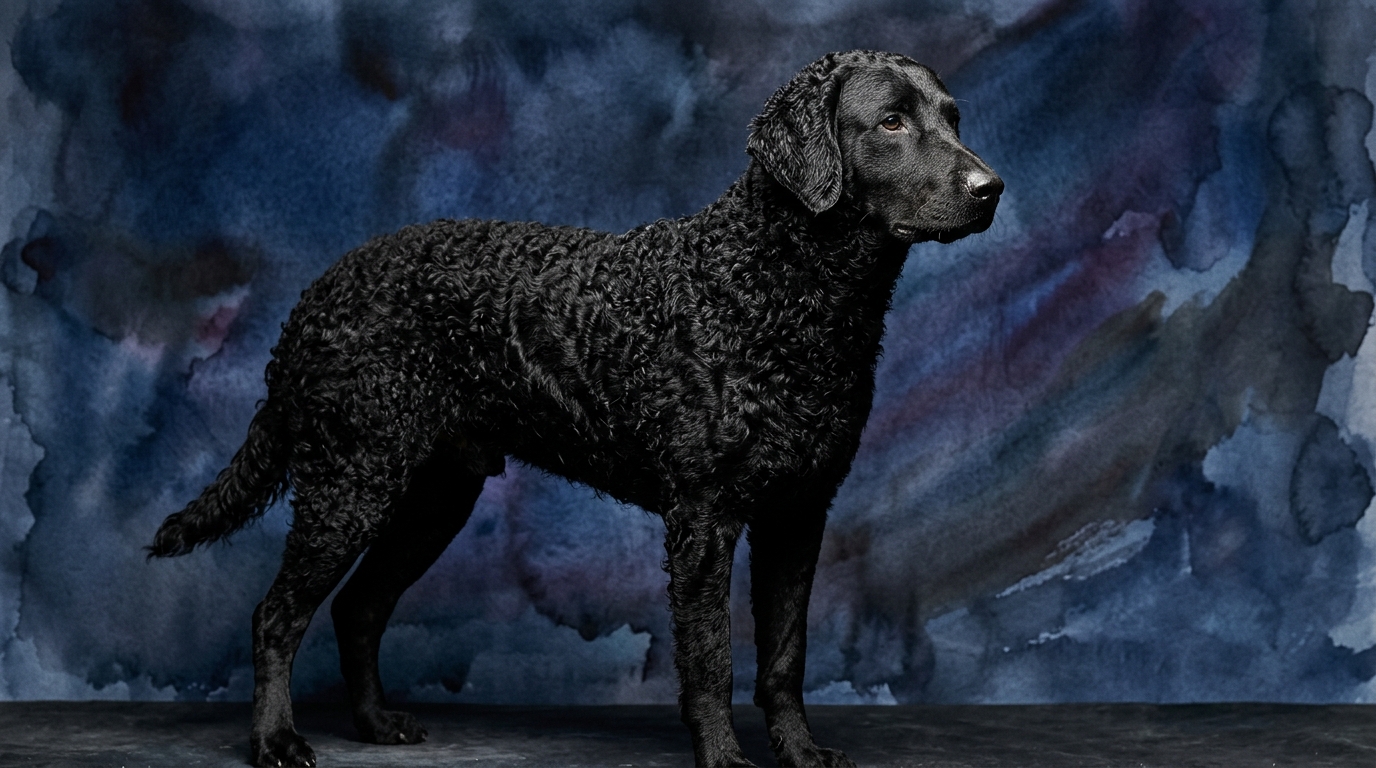
At first glance, the IQ profiles of the Old English Sheepdog (OES) and the Curly-Coated Retriever (CCR) appear almost identical, with both breeds scoring consistently across five key cognitive dimensions. The Old English Sheepdog holds a Coren rank of #44, placing it in the category of above-average working and obedience intelligence, a testament to its capacity for learning and executing commands, albeit with a characteristic thoughtful independence. Similarly, the Curly-Coated Retriever, with a Coren rank of #41, also sits firmly within the above-average range, indicating a robust capacity for learning and executing tasks, particularly those related to its retrieving functions.
For the Old English Sheepdog, a score of 3/5 in Problem Solving isn't about mastering intricate puzzle toys, but rather about the dynamic, real-time decision-making required in a working pasture. Imagine a flock of sheep scattering unexpectedly; the OES must quickly assess the situation, determine the most efficient path to gather the errant individuals, and gently but firmly guide them back, all while anticipating their next move. This involves intricate spatial reasoning, understanding group dynamics, and adapting strategies on the fly. Their Training Speed, also 3/5, reflects their ability to learn complex routines when the task feels purposeful, aligning with their innate desire to manage and organize, though they might require more motivation and understanding of the 'why' behind a command rather than just rote repetition. Social Intelligence, at 3/5, encompasses their nuanced understanding of livestock behavior and their handler's non-verbal cues, allowing for effective, non-confrontational control, while their Instinctive Drive (3/5) is primarily for gathering, controlling, and protecting, an impulse for order rather than high prey drive. Crucially, their Memory, at 4/5, is excellent for recalling the layout of pastures, habits of individual animals, and complex herding patterns, enabling consistent performance over time.
The Curly-Coated Retriever's 3/5 in Problem Solving manifests in its ability to navigate challenging terrains and find downed game. This might involve figuring out the best route through dense undergrowth, breaking ice to reach a retrieve, or discerning scent trails in complex environments, showcasing a practical, goal-oriented intelligence focused on overcoming physical obstacles. Their Training Speed, also 3/5, means they are intelligent and capable of learning complex retrieving protocols, but their independent nature and sometimes reserved temperament necessitate consistency, positive reinforcement, and clear expectations. Social Intelligence, at 3/5, is evident in their strong bond with their handler and their ability to read subtle cues during a retrieve, crucial for working at a distance, though they can be more discerning with new people. Their Instinctive Drive (3/5) is focused and persistent, centered on retrieving and working alongside their human companion, coupled with a keen nose and natural affinity for water. A CCR's Memory, scoring 4/5, is vital for remembering where multiple birds have fallen, recalling complex retrieve patterns, and retaining learned commands, ensuring reliability in demanding hunting or field trial scenarios.
Despite identical numerical scores across these dimensions, the context of their historical roles shapes how these cognitive abilities are expressed. The OES applies its problem-solving and memory to managing a dynamic, living flock, while the CCR directs its intellect towards the precise, focused task of finding and returning game across varied landscapes. This distinction is key to understanding their individual strengths beyond the numbers.
Where the Old English Sheepdog Excels Cognitively
The Old English Sheepdog shines in cognitive areas related to complex spatial reasoning and the nuanced management of dynamic groups. Their 3/5 problem-solving ability, while numerically identical to the CCR, is uniquely applied to understanding the movement and psychology of a flock. They excel at anticipating individual animal behavior, maneuvering around obstacles, and executing multi-stage herding patterns that require not just brute force but strategic thinking and subtle influence. This cognitive strength allows them to maintain order and guide animals without causing undue stress, a testament to their thoughtful approach to their work.
Furthermore, the OES's 4/5 memory is particularly robust when it comes to recalling intricate routines, understanding established boundaries, and remembering the specific habits of individuals within a group. This isn't just about remembering a 'sit' command; it's about recalling the layout of an entire field, where hazards might be, and which sheep are prone to wandering. This deep-seated recall allows them to perform complex tasks consistently and reliably over long periods, making them exceptional partners in managing a changing environment. Their social intelligence, at 3/5, also involves a deep understanding of their handler's directives, often communicated through subtle body language, allowing for a seamless partnership in the field.
Where the Curly-Coated Retriever Excels Cognitively
The Curly-Coated Retriever's cognitive prowess is particularly evident in its focused perseverance and environmental navigation skills, especially in retrieving contexts. Their 3/5 problem-solving capability is keenly directed towards overcoming physical challenges to achieve a specific goal. This means figuring out how to retrieve a duck from dense reeds, navigating swiftly through icy water, or locating a downed bird in thick cover purely by scent. They possess a practical intelligence that allows them to assess a situation and devise an effective, often physically demanding, path to success.
The CCR's 4/5 memory is outstanding for recalling specific retrieve locations, often multiple ones, even after distractions or a significant time lapse. This 'marking' ability is crucial in hunting scenarios where several birds might fall. Their memory allows them to execute complex retrieving sequences, remembering the order of fallen game and the precise spots. This, combined with their 3/5 instinctive drive for retrieving, translates into a dog that can maintain intense focus on a task, demonstrating remarkable dedication and precision in their chosen field, often requiring significant independence from the handler during the retrieve itself.
Which is Easier to Train and Why?
When considering ease of training, both breeds score 3/5 in Training Speed, indicating they are capable learners but might not be the quickest to pick up new commands or the most eager to please in a conventional obedience sense. The Old English Sheepdog, with its strong herding instincts and independent working history, can sometimes be perceived as more challenging to train for general obedience. They thrive when tasks have a clear purpose or engage their natural desire to organize and manage. Training an OES often requires patience, consistency, and making the training feel like a 'job' rather than just a series of commands. They might question the necessity of a command if it doesn't align with their inherent drive or sense of logic, requiring a handler who can motivate through understanding and positive reinforcement rather than strict repetition.
The Curly-Coated Retriever, while also having an independent streak common to many retrieving breeds, often finds powerful motivation in tasks that engage its retrieving drive. Their training can be highly successful when focused on activities like fetch, scent work, or water retrieves. However, CCRs can also be sensitive and may shut down with harsh training methods, making a positive, reward-based approach essential. Their reserved nature with strangers might also mean they take longer to warm up to new trainers or environments. Ultimately, both breeds benefit from handlers who understand their specific motivations and tailor training methods to harness their inherent drives, rather than fighting against them. The CCR might appear slightly more 'trainable' in a typical obedience class if the handler can tap into their retrieve drive, while the OES might excel more in activities like rally or agility that allow for more independent problem-solving and engagement of their herding brain.
Which Suits Active Owners vs. Relaxed Owners?
Neither the Old English Sheepdog nor the Curly-Coated Retriever is ideally suited for truly relaxed or sedentary owners. Both breeds possess significant mental and physical energy that requires consistent outlets. An Old English Sheepdog, despite its fluffy appearance, is a working dog at heart. They require regular, lengthy walks and structured activities that engage their intelligent herding brain. Without sufficient mental stimulation, an OES can become bored, potentially leading to undesirable behaviors like 'herding' family members or furniture. Owners who enjoy long, purposeful strolls, engaging in dog sports like agility or rally, or even exploring herding trials will find the OES a rewarding companion.
The Curly-Coated Retriever is equally, if not more, demanding physically. Bred for retrieving game over land and water, they possess immense stamina and a need for robust exercise. This breed thrives on consistent, vigorous activity such as running, swimming, and extended games of fetch. Owners who lead an active outdoor lifestyle, particularly those who enjoy hiking, swimming, or participating in dog sports like dock diving or field trials, will find a perfect match in the CCR. A relaxed owner will quickly find themselves overwhelmed by the CCR's unmet energy needs, potentially resulting in a frustrated and destructive companion. Therefore, both breeds necessitate dedicated engagement and a commitment to providing ample opportunities for physical and mental exertion.
The Verdict
Choose the Old English Sheepdog if you seek a thoughtful, independent companion who excels in complex spatial reasoning and thrives on structured mental engagement, particularly if you appreciate their herding heritage and enjoy purposeful, collaborative activities.
Opt for the Curly-Coated Retriever if you desire a dedicated, sturdy partner for robust outdoor adventures, especially those involving water and focused retrieving tasks, and if you value a dog with intense drive and quiet determination in their work.
🧠 Find Your Pet's IQ Score
Our Pet IQ Lab assessment covers 25+ tests across 5 cognitive dimensions — personalized to your breed.
Take the Full IQ Test →Frequently Asked Questions
Are Old English Sheepdogs good family dogs?
Yes, Old English Sheepdogs can be wonderful family dogs, known for their affectionate and protective nature towards their family members. They generally get along well with children, often displaying a gentle patience, but their herding instincts might lead them to 'nudge' or 'herd' younger kids, which requires supervision and training.
Do Curly-Coated Retrievers shed a lot?
Curly-Coated Retrievers shed moderately, but their unique curly coat helps to contain loose hair, making it less noticeable than in some other breeds. Regular grooming, including brushing and occasional clipping, is important to prevent matting and manage shedding effectively.
What kind of mental stimulation do these breeds need?
Both breeds require significant mental stimulation to prevent boredom and undesirable behaviors. Old English Sheepdogs benefit from puzzle toys, scent work, and activities that mimic herding tasks, while Curly-Coated Retrievers thrive on retrieving games, obedience training, and problem-solving tasks that engage their natural hunting and tracking abilities.