
Side-by-Side Cognitive Profiles
The Cosmic Pet Pet IQ Lab employs a five-dimensional framework to assess canine intelligence, offering a granular view of how breeds process information and interact with their environment. For the Old English Sheepdog, a Herding group member, its Coren ranking at #44 places it among breeds with above-average working and obedience intelligence. Its IQ scores are: Problem Solving 3/5, Training Speed 3/5, Social Intelligence 3/5, Instinctive Drive 3/5, and Memory 4/5. This profile suggests a well-rounded cognitive capacity, with a notable strength in retaining information over time.
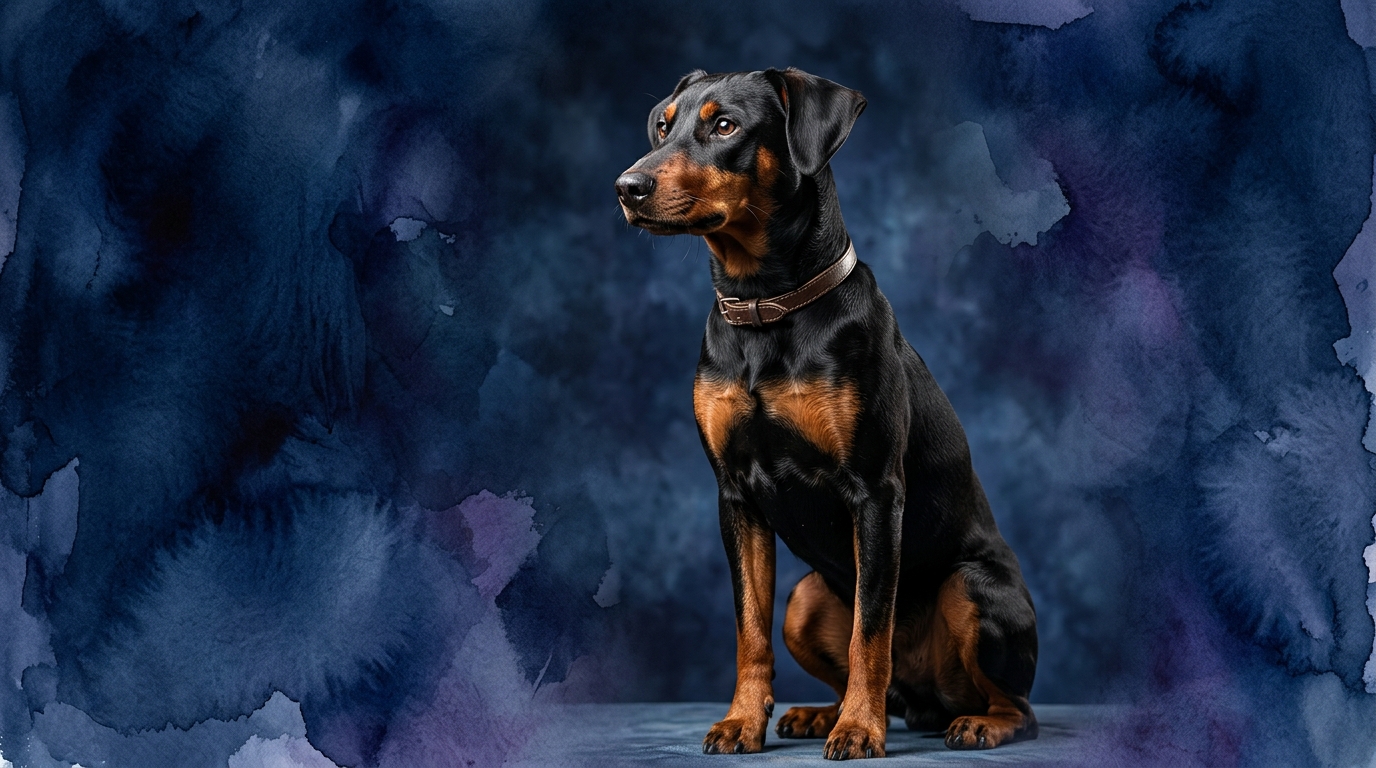
In contrast, the German Pinscher, from the Working group, does not have a specific Coren ranking, indicating it might fall outside the top tier for obedience intelligence, or its cognitive profile is less about complex obedience and more about practical application. Its IQ scores are: Problem Solving 3/5, Training Speed 3/5, Social Intelligence 3/5, Instinctive Drive 3/5, and Memory 3/5. This suggests a consistent and capable cognitive baseline across most dimensions, mirroring the OES in many aspects but showing a slight difference in memory retention.
Where the Old English Sheepdog Wins Cognitively
The Old English Sheepdog's standout cognitive advantage lies clearly in its Memory, scoring 4/5 compared to the German Pinscher's 3/5. This superior memory capacity means an OES is generally more adept at recalling complex sequences, remembering specific instructions over longer periods, and retaining learned behaviors with less frequent reinforcement. For an owner, this translates into a dog that can master multi-step commands or intricate agility courses and remember them reliably even after a break in training. Its Herding group lineage also contributes to its capacity for understanding and executing complex spatial tasks, remembering the positions and movements of livestock, which translates into a strong aptitude for structured, patterned activities.
Furthermore, the OES's Coren ranking of #44 places it within the top half of breeds for working and obedience intelligence. While Coren's ranking primarily assesses understanding new commands and obedience, this higher placement suggests a general cognitive flexibility and willingness to engage in structured learning that is a hallmark of many successful working breeds. This historical capacity for absorbing and applying human directives, coupled with its strong memory, provides a distinct cognitive edge for tasks requiring sustained recall and consistent performance.
Where the German Pinscher Wins Cognitively
While the German Pinscher's individual IQ scores are largely on par with the Old English Sheepdog, with the exception of memory, its cognitive strengths manifest uniquely through its 'Working' group designation. This breed excels in the practical and direct application of its cognitive abilities. With Problem Solving, Training Speed, Social Intelligence, and Instinctive Drive all rated at 3/5, the German Pinscher demonstrates a robust and balanced capacity for purposeful action. Its problem-solving skills are often applied with a focused intensity, geared towards vigilance, protection, and immediate task execution, rather than complex, abstract reasoning.
The German Pinscher's cognitive edge can be observed in its tenacity and directness. While its memory score is 3/5, this doesn't imply a lack of learning, but perhaps a different approach to retention, focusing on functional, real-world skills. Its instinctive drive, also 3/5, coupled with its working background, means it often thrives when given a clear job or purpose, applying its moderate cognitive abilities with unwavering determination. This breed's intelligence is often characterized by its self-assuredness and a pragmatic approach to its environment, making it adept at assessing situations and acting decisively, a trait highly valued in its historical roles.
Which Is Easier to Train and Why
Given their respective IQ profiles, the Old English Sheepdog generally presents as the easier breed to train, primarily due to its superior Memory score of 4/5. While both breeds share a 3/5 Training Speed, meaning they can grasp new commands at a similar pace, the OES's enhanced memory ensures these commands are retained more effectively and require less frequent refreshing. This means once an OES learns a command or routine, it is more likely to remember it consistently over time, making advanced training and long-term behavioral shaping more efficient. Their herding instinct, while sometimes requiring redirection, also provides a foundation for responding to cues and managing groups, which can be channeled into obedience work.
The German Pinscher, with its 3/5 Memory, will likely require more consistent repetition to solidify learned behaviors. While equally capable of understanding tasks, an owner might find themselves revisiting commands more often to ensure they stick. Its working dog temperament means it often seeks a purpose and can be highly motivated, but without the OES's memory advantage, training success relies heavily on the handler's consistency and engaging methods. Behavioral differences such as the Pinscher's potential for independence or strong protective instincts can also mean that while it learns, it might also make its own decisions based on its drive, requiring clear, firm, and fair guidance to ensure compliance.
Which Suits Active Owners vs. Relaxed Owners
Neither the Old English Sheepdog nor the German Pinscher are suited for truly relaxed, sedentary owners; both require significant engagement, albeit with different nuances. The Old English Sheepdog, despite its fluffy appearance, is a Herding breed that needs regular physical exercise and mental stimulation to prevent boredom and destructive behaviors. Its 3/5 Instinctive Drive means it has an innate urge to work and be active. Owners who enjoy long walks, hiking, or participate in dog sports like agility, herding trials, or obedience will find the OES a willing and capable partner. Its social intelligence (3/5) also makes it generally adaptable to family life, thriving on interaction and inclusion in activities.
The German Pinscher, as a Working breed, also demands an active lifestyle. Its 3/5 Instinctive Drive is geared towards vigilance and purposeful activity, making it an excellent fit for owners who can provide structured tasks, consistent training, and ample opportunities for physical and mental exertion. This breed may appeal to owners involved in protection sports, advanced obedience, or those who appreciate a dog with a strong sense of purpose and a need for a 'job.' While equally active, the German Pinscher's energy might be more focused and intense, making it a better match for owners who appreciate a dog with a robust, assertive personality and the dedication to channel that energy productively.
The Verdict
Choose the Old English Sheepdog if you value exceptional memory for complex training, enjoy a dedicated family companion, and are prepared for consistent grooming and active engagement.
Opt for the German Pinscher if you seek a vigilant, purposeful companion for an active lifestyle, appreciate a dog with a strong working drive, and are committed to consistent, focused training.
🧠 Find Your Pet's IQ Score
Our Pet IQ Lab assessment covers 25+ tests across 5 cognitive dimensions — personalized to your breed.
Take the Full IQ Test →Frequently Asked Questions
Do Old English Sheepdogs need extensive grooming due to their coat?
Yes, Old English Sheepdogs have a thick, double coat that requires regular and thorough grooming, typically several times a week, to prevent matting and maintain skin health. This is a significant commitment for prospective owners.
Are German Pinschers good with children and other pets?
German Pinschers can be good with older, respectful children and other pets if properly socialized from a young age. Their strong protective instincts and assertive nature mean supervision and clear boundaries are essential, especially with smaller animals.
What kind of mental stimulation benefits these breeds most?
Both breeds benefit from activities that engage their cognitive abilities; for the Old English Sheepdog, this includes obedience, agility, and puzzle toys, leveraging its memory. For the German Pinscher, tasks that involve problem-solving, vigilance, and a sense of purpose, like scent work or protection training, are highly rewarding.