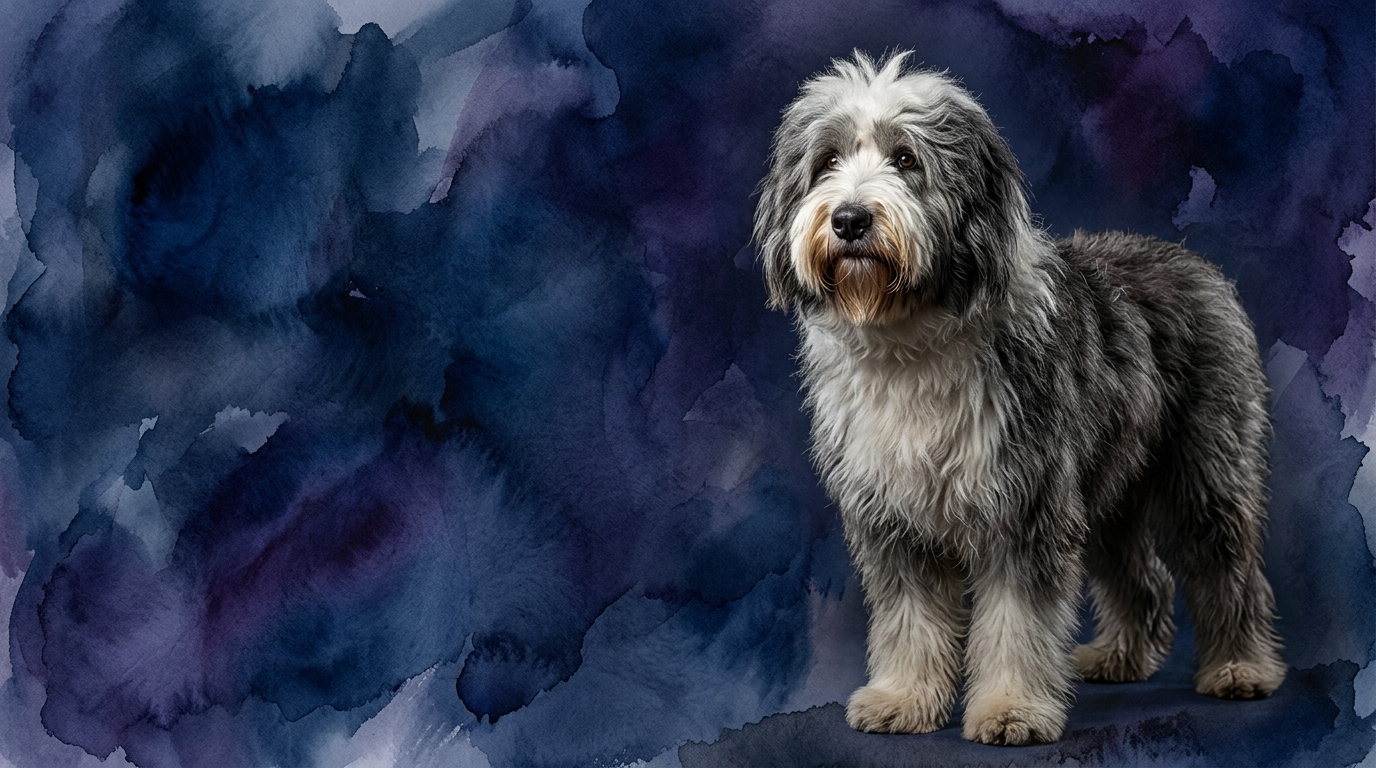
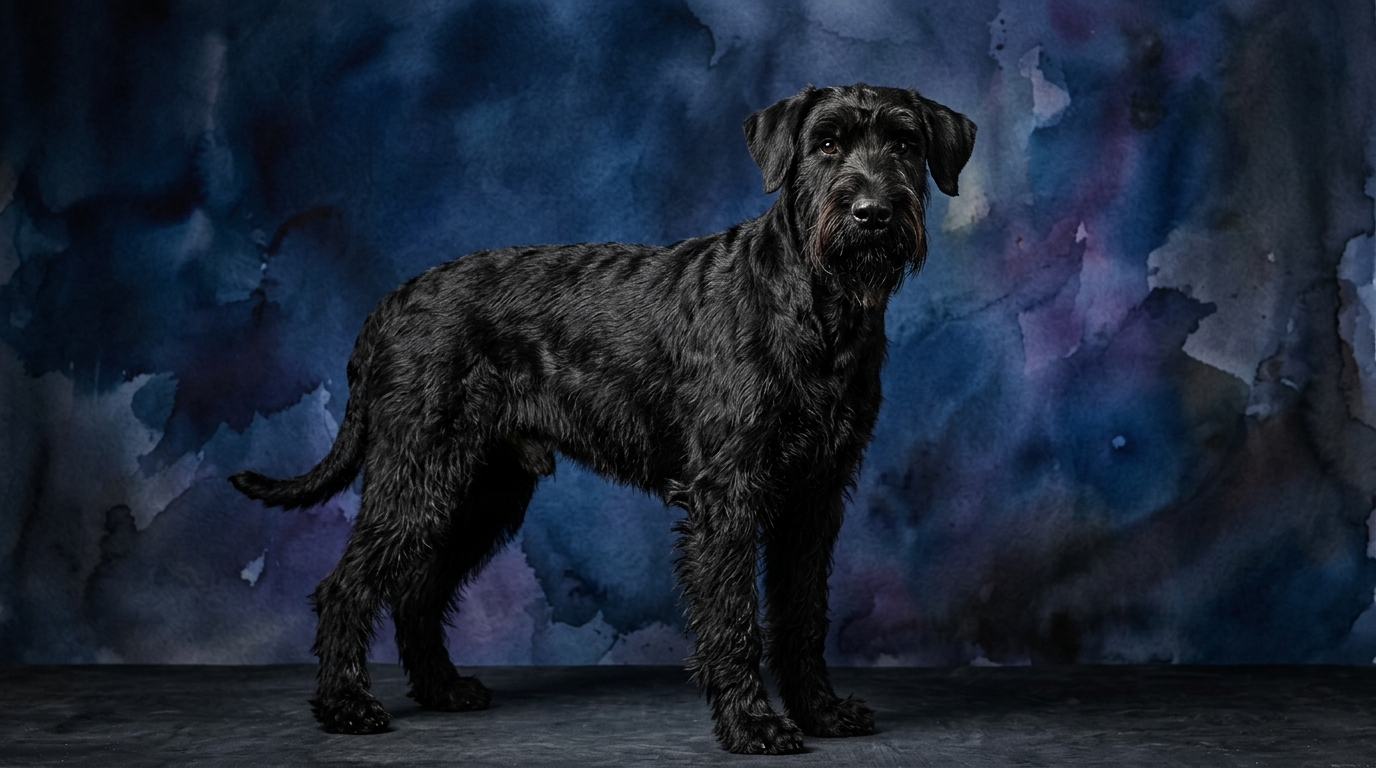
Side-by-Side IQ Profile: Old English Sheepdog vs. Giant Schnauzer
The Old English Sheepdog's cognitive makeup, as assessed by The Cosmic Pet Pet IQ Lab, presents a balanced profile. Their Problem Solving is rated 3/5, indicating a practical but not intensely innovative approach to mental challenges. Training Speed also sits at 3/5, suggesting they learn steadily with consistent effort. Social Intelligence is 3/5, reflecting their family-oriented nature with a tendency to be reserved with strangers. Their Instinctive Drive is likewise 3/5, rooted in their herding heritage. A notable strength is their Memory, scoring a robust 4/5, ensuring they retain learned information and routines effectively.
In contrast, the Giant Schnauzer demonstrates a more acceleration-focused cognitive profile. Their Problem Solving ability is rated 4/5, showcasing a keen intellect and a drive to find solutions. This aligns with their Training Speed, which also scores 4/5, meaning they grasp new concepts quickly. Their Social Intelligence is 3/5, indicating deep loyalty to their family while maintaining a discerning attitude towards outsiders. The Instinctive Drive is 3/5, reflecting their strong working and guarding predispositions. Mirroring the OES, the Giant Schnauzer also boasts an impressive Memory score of 4/5, contributing to their reliability in complex tasks.
Where the Old English Sheepdog Wins Cognitively
The Old English Sheepdog's cognitive strengths often manifest in their nuanced understanding of social dynamics within their family unit and their remarkable memory for established routines. While their problem-solving might not be overtly innovative, their 4/5 memory score ensures they reliably recall commands and the intricate patterns of daily life, making them predictable and reassuring companions. This memory, coupled with their moderate social intelligence, allows them to anticipate family needs and react with a gentle, consistent presence.
Their instinctive drive, though rated 3/5, is specifically tuned to their herding legacy, which isn't just about moving livestock but about maintaining order and cohesion. This translates into a natural inclination to keep their 'flock' (family members, especially children) together and safe, often displaying a patient watchfulness. They might not invent new games, but they remember the rules of the old ones perfectly, providing a comforting stability that many owners value. Their strength lies in their steady, reliable cognitive processing, making them excellent at consistency.
Where the Giant Schnauzer Wins Cognitively
The Giant Schnauzer shines with a distinct advantage in problem-solving and training speed, both rated 4/5. Their superior ability to analyze situations and develop solutions means they are often the ones figuring out how to open a childproof gate or retrieve a toy from an inaccessible spot. This proactive mental engagement sets them apart, indicating a breed that thrives on intellectual challenge and actively seeks to understand and manipulate its environment.
Their accelerated training speed is a direct consequence of this problem-solving prowess and an innate eagerness to learn and comply. A Giant Schnauzer often grasps new commands with fewer repetitions, quickly forming associations between actions and consequences. This makes them exceptionally rewarding for owners who enjoy advanced obedience, dog sports, or complex task training. Their working background means they aren't just learning for the sake of it, but often with a deeper understanding of purpose, making them highly effective partners in demanding roles.
Which Is Easier to Train and Why
When considering ease of training, the Giant Schnauzer generally presents a more straightforward path for experienced handlers. With a Coren ranking of #28 and a training speed of 4/5, they demonstrate a quicker acquisition of new commands and a greater eagerness to respond consistently. Their problem-solving acumen means they often understand the 'why' behind an instruction faster, leading to more willing compliance and the ability to extrapolate learned behaviors to new situations. They thrive on structured training and mental engagement, often viewing it as a stimulating activity rather than a chore.
The Old English Sheepdog, while certainly trainable, falls into a different category with a Coren rank of #44 and a training speed of 3/5. They are capable learners, but their independent herding nature means they might require more patience, consistency, and positive reinforcement to solidify behaviors. They can be thoughtful in their responses, sometimes appearing to ponder a command before acting. While their excellent memory ensures retention once a skill is learned, the initial acquisition phase may take longer, demanding a more measured and persistent approach from their trainer.
Which Suits Active Owners vs. Relaxed Owners
For active owners who relish mental engagement and structured activities, the Giant Schnauzer is often the more suitable companion. Their high problem-solving capacity and strong working drive mean they thrive when given a 'job' or involved in demanding dog sports like agility, obedience, or protection work. They require consistent mental stimulation and physical exercise to prevent boredom and channel their considerable energy constructively. An owner who enjoys teaching complex tricks or participating in competitive events will find a highly motivated and capable partner in the Giant Schnauzer, who truly flourishes when challenged.
Conversely, owners seeking a companion that integrates smoothly into a more relaxed, routine-oriented household might find the Old English Sheepdog a better fit, provided their exercise needs are still met. While they certainly require regular physical activity, their cognitive profile suggests they are less likely to demand constant, novel mental puzzles. Their excellent memory for routines and their steady social intelligence make them reliable and comforting presences in a family setting. They appreciate consistency and a predictable environment, making them adaptable to owners who prefer a calm companion after their daily walk, without the constant need for advanced mental games.
The Verdict
For those seeking a highly engaged and quick-learning partner for complex training and demanding activities, the Giant Schnauzer's superior problem-solving and training speed make them an excellent choice.
If a steady, reliable companion with strong memory for routines and a gentle herding instinct for family cohesion is preferred, the Old English Sheepdog offers a wonderfully consistent presence.
🧠 Find Your Pet's IQ Score
Our Pet IQ Lab assessment covers 25+ tests across 5 cognitive dimensions — personalized to your breed.
Take the Full IQ Test →Frequently Asked Questions
Does the Old English Sheepdog's memory make them easier to live with?
The Old English Sheepdog's strong memory (4/5) definitely contributes to their ease of living, as they reliably remember routines, house rules, and commands once learned. This consistency helps create a predictable and harmonious home environment, reducing the need for constant re-training on established behaviors.
How does a Giant Schnauzer's problem-solving ability impact daily life?
A Giant Schnauzer's superior problem-solving (4/5) means they are highly adept at figuring things out, which can be both beneficial and challenging. They might quickly learn to open doors or manipulate objects, requiring owners to be proactive in providing mental enrichment and ensuring their environment is appropriately stimulating and secure.
Are Old English Sheepdogs less active than Giant Schnauzers due to their IQ scores?
While the Old English Sheepdog's cognitive profile suggests less demand for novel mental puzzles compared to the Giant Schnauzer, both breeds are energetic working dogs that require substantial daily exercise. The difference lies more in the type of mental stimulation they seek, with the Giant Schnauzer generally thriving on more complex, goal-oriented tasks.