Side-by-Side Cognitive Profiles
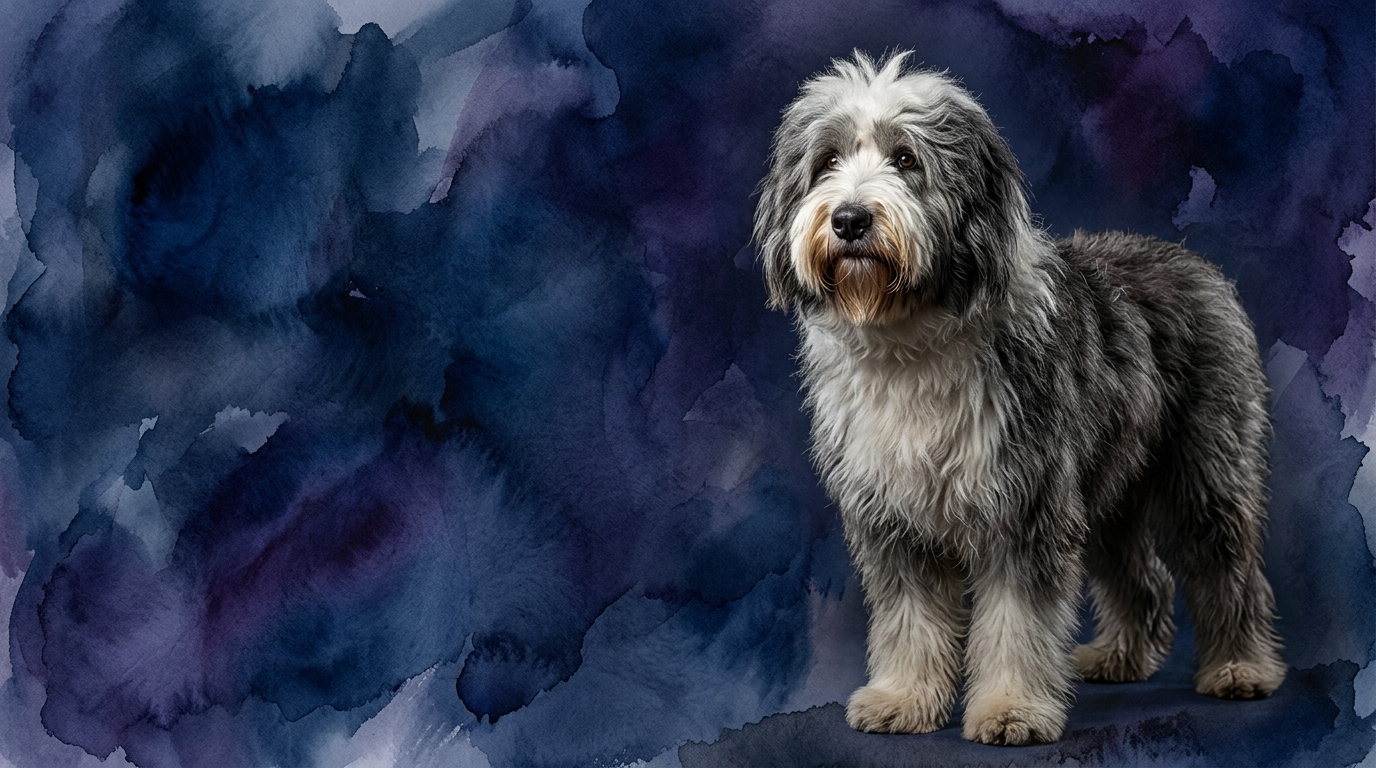
**Old English Sheepdog (OES)**: Problem Solving (3/5): OES demonstrate a moderate aptitude for navigating complex situations, often seeking human guidance but capable of independent thought when managing a flock. Their historical role required them to assess and respond to dynamic livestock movements, indicating a practical, adaptive intelligence rather than abstract puzzle-solving. Training Speed (3/5): These dogs learn at a steady pace, benefiting from consistent, positive reinforcement. While not instant learners, their desire to please their handler, stemming from their herding partnership, facilitates the acquisition of new commands and routines. Social Intelligence (3/5): OES exhibit a moderate understanding of social cues, both canine and human. Their ability to work closely with shepherds and other dogs in a flock environment showcases an awareness of group dynamics and a capacity for harmonious interaction. Instinctive Drive (3/5): Their core instinctive drive is rooted in herding, manifesting as a desire to gather, control, and protect. This drive, while moderate, can be channeled into constructive activities, or, if undirected, might lead to 'herding' family members or objects. Memory (4/5): A standout trait for the OES is their superior memory. This serves them well in remembering complex routes, the layout of fields, and specific tasks associated with livestock management, allowing them to retain learned behaviors and commands over long periods.
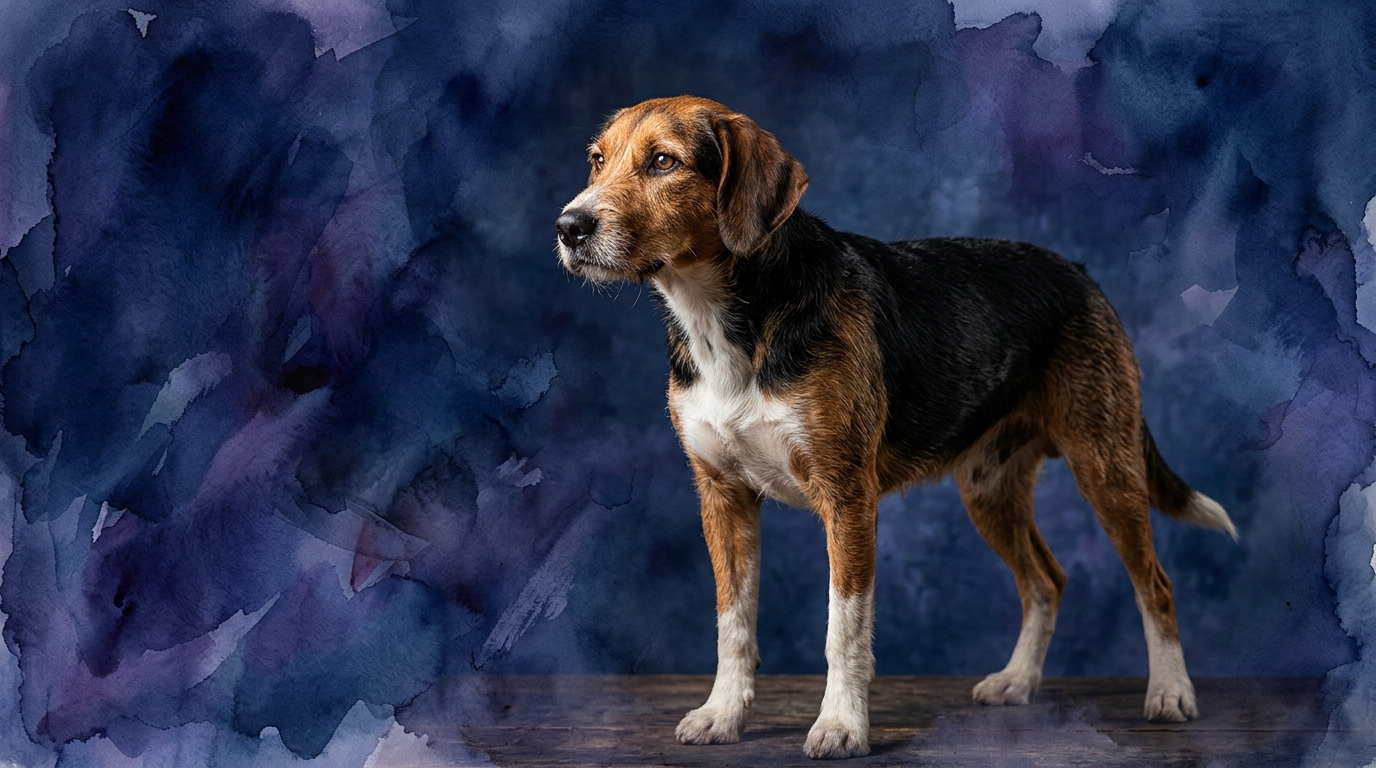
**Harrier**: Problem Solving (3/5): Harriers possess a moderate ability to tackle challenges, often relying on their keen senses to decipher their environment. Their problem-solving is typically geared towards overcoming obstacles in pursuit of a scent, demonstrating persistence rather than intricate strategic planning. Training Speed (3/5): Harriers absorb information at a moderate rate, but their independent nature as scent hounds means they can be easily distracted by compelling smells. Training requires patience and a highly engaging approach to maintain their focus against their strong instinctive urges. Social Intelligence (3/5): These hounds display a moderate understanding of social interactions, thriving in pack environments. They are generally amiable with other dogs and people, but their primary focus during work is often on the scent trail, which can override social cues. Instinctive Drive (3/5): The Harrier's instinctive drive is powerfully tied to scent work and the chase. This moderate-to-strong drive propels them to follow a trail with unwavering determination, making them resilient and focused in their preferred activity, but potentially single-minded in other contexts. Memory (3/5): Harriers show a moderate capacity for memory, capable of recalling scent trails and learned routines. While sufficient for their hunting tasks, it doesn't reach the same level of retention for complex, multi-step sequences that a herding dog might exhibit.
Where the Old English Sheepdog Excels Cognitively
The Old English Sheepdog's cognitive strengths primarily stem from its herding lineage, demanding a blend of independence and cooperation. Its distinct advantage lies in a 4/5 memory score, surpassing the Harrier. This superior memory allows OES to retain intricate command sequences and environmental layouts crucial for livestock management, remembering boundaries and specific animal behaviors over extended periods. For instance, an OES might consistently recall a complex agility course or the location of items with fewer repetitions than a Harrier, showcasing strong spatial and procedural memory.
The OES's Coren rank of #44, unlike the Harrier's unranked status, subtly highlights its greater predisposition towards obedience and working intelligence in human-directed contexts. This ranking suggests a higher capacity for understanding and consistently executing complex commands, vital for a dog expected to work in close partnership. This cooperative intelligence influences how its problem-solving and training speed manifest, often with a greater inclination to engage with human instruction to solve tasks rather than solely relying on innate drives.
Where the Harrier Excels Cognitively
While the Harrier shares similar numerical ratings, its unique strengths are profoundly shaped by its hound heritage, particularly its instinctive drive and problem-solving applied to scent work. Although both score 3/5 in problem-solving, the Harrier's manifestation is distinctly geared towards unraveling complex scent puzzles. It meticulously follows intricate trails over varied terrains, filtering extraneous smells with unwavering focus – an autonomous, sensory-driven intelligence.
The Harrier's instinctive drive, rated 3/5, is expressed with unparalleled intensity and single-mindedness when pursuing a scent. This persistence, though challenging in training when competing with compelling smells, is a cognitive triumph. It demands internal motivation and sustained focus on a singular goal, ignoring distractions. This deep-seated drive ensures a Harrier excels in scenarios demanding relentless tracking and autonomous decision-making, dedicating its cognitive processes entirely to decoding the olfactory world without constant human input.
Training Dynamics: OES vs. Harrier
The Old English Sheepdog generally holds an advantage in trainability, owing to its herding background and superior memory. Their historical role fostered a natural inclination towards responsiveness and a desire to please. The OES's 4/5 memory score ensures more effective command retention, requiring fewer repetitions for learned behaviors. For instance, an OES is more likely to master a multi-step obedience routine like "sit, stay, heel" with greater consistency and long-term recall than a Harrier. Their moderate training speed (3/5) is further aided by their cooperative nature, making them amenable to structured lessons.
The Harrier, also 3/5 in training speed, presents a unique challenge. Their profound instinctive drive for scent work means focus is often externally driven by smells, not human instruction. This independence, coupled with moderate memory (3/5), necessitates highly engaging, consistent training, often in distraction-free environments. A Harrier might struggle to ignore a scent trail for a "stay" command, while an OES would prioritize the handler. Effective Harrier training involves harnessing their natural drives, incorporating scent games or tracking to keep them mentally stimulated.
The Ideal Owner Match
The Old English Sheepdog thrives with owners appreciating a cooperative companion, suitable for active or moderately relaxed lifestyles, provided mental and physical needs are met. While active, their herding background means they are content within family life, requiring consistent mental stimulation via training, puzzle toys, and structured play that taps into their problem-solving and memory. An OES adapts to a relaxed home with regular walks and purposeful engagement, preventing boredom-induced behaviors. They suit owners who enjoy consistent training and integrating their dog into daily routines.
The Harrier, conversely, suits active owners who understand and accommodate a powerful, independent prey drive and boundless energy. Their hound heritage dictates extensive physical exercise and mental stimulation centered on scent work. A Harrier won't thrive in a relaxed, sedentary household; they require long, vigorous walks, runs, or secure off-leash areas to indulge their tracking passion. Owners enjoying hiking, running, or dog sports like tracking will find a Harrier an enthusiastic partner. Their independence means they explore their environment, making them ideal for individuals valuing a dog with strong purpose and significant outdoor adventure.
The Verdict
Choose the Old English Sheepdog if you seek a cooperative companion with excellent memory, adaptable to various family dynamics, and enjoy consistent, structured training. They excel in environments where their desire to be part of the "flock" and engage in partnership with their human is valued.
Opt for the Harrier if you lead an active lifestyle, are prepared to provide extensive physical and mental exercise, and appreciate a dog whose independent, scent-driven nature makes them a tireless partner for outdoor adventures. They are best for owners who can channel their powerful instincts constructively.
🧠 Find Your Pet's IQ Score
Our Pet IQ Lab assessment covers 25+ tests across 5 cognitive dimensions — personalized to your breed.
Take the Full IQ Test →Frequently Asked Questions
Do Old English Sheepdogs bark a lot?
Old English Sheepdogs can be quite vocal, using barks to communicate, alert, and sometimes to "herd" their family members. Consistent training and addressing their needs for mental stimulation and exercise can help manage excessive barking.
Are Harriers good with children?
Harriers are generally good with children, possessing a playful and tolerant nature, especially if raised with them. Their high energy levels mean they can be boisterous, so supervision is important to ensure safe interactions, particularly with very young children.
How much exercise does a Harrier need daily?
Harriers require a significant amount of daily exercise, typically at least one to two hours of vigorous activity, such as running, hiking, or dedicated scent work. Their endurance and drive demand consistent opportunities to burn energy and engage their powerful sense of smell.