
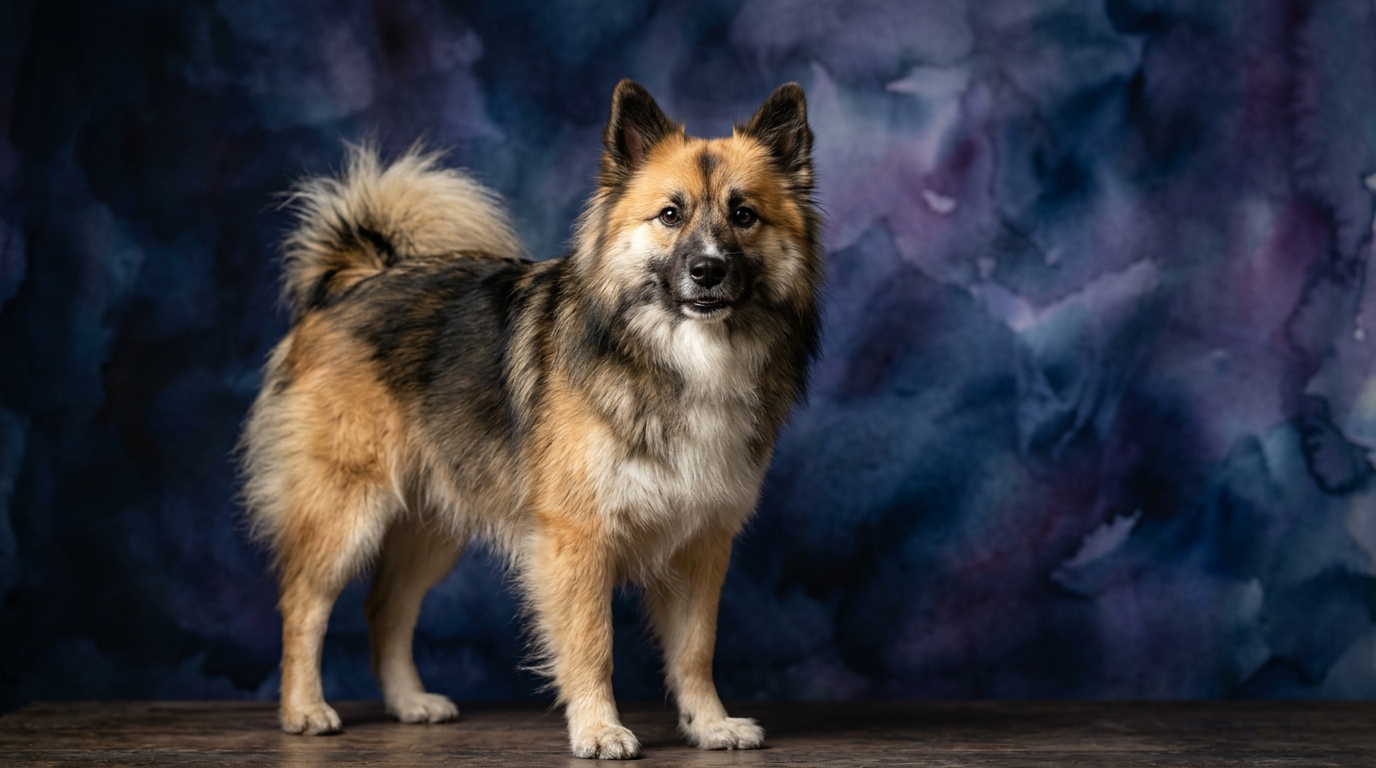
Side-by-Side Cognitive Profile: Old English Sheepdog vs. Icelandic Sheepdog
The Old English Sheepdog, recognized by its Coren rank of #44, presents a cognitive blueprint well-suited for its historical role. Its Problem Solving ability is rated 3/5, indicating a practical capacity to navigate obstacles and adapt to changes within its environment, often relying on observation and learned patterns to achieve goals, such as re-gathering stray livestock. Training Speed also scores 3/5, suggesting a steady learning pace that benefits from consistent reinforcement and clear communication, especially given its strong-willed nature.
In Social Intelligence, the OES earns a 3/5, reflecting a solid aptitude for understanding human cues and integrating into family dynamics, crucial for cooperative herding. Its Instinctive Drive, rated 3/5, manifests as a persistent desire to gather and control, which in a domestic setting might translate to 'herding' family members. The standout cognitive strength for the OES is its Memory, scoring an impressive 4/5, which allows for robust retention of commands, routines, and complex sequences, reducing the need for frequent re-teaching.
The Icelandic Sheepdog, though not Coren-ranked, possesses a distinct cognitive makeup shaped by its rugged homeland. Its Problem Solving is rated 3/5, showcasing a practical intelligence vital for navigating challenging terrains, locating lost sheep, or adapting to sudden weather shifts. Solutions are typically grounded in immediate environmental factors and keen sensory input. Training Speed, like the OES, is 3/5, indicating an attentive and willing learner who responds best to engaging, positive reinforcement that fosters a partnership rather than strict obedience.
The Icelandic Sheepdog's Social Intelligence also scores 3/5, highlighting its deep connection to humans and expressive communication style, honed by generations of close farm life. Its Instinctive Drive, a 3/5, is geared towards locating and gathering sheep through barking and physical presence, often working collaboratively. While its Memory is a solid 3/5, it signifies a capable retention of commands and routines, ensuring reliability as a working companion, though perhaps not with the same breadth of complex recall seen in the OES.
Where the Old English Sheepdog Wins Cognitively
The Old English Sheepdog's most pronounced cognitive advantage lies in its superior Memory, scoring 4 out of 5 compared to the Icelandic Sheepdog’s 3. This enhanced recall capacity directly translates into a dog that can master and retain a broader and more intricate array of commands and behavioral sequences over extended periods. An OES, once taught a multi-step routine or a complex series of tricks, is more likely to execute it flawlessly on subsequent attempts, requiring fewer refreshers and demonstrating remarkable consistency.
This robust memory is invaluable for complex working roles where precision and consistency are paramount, enabling them to recall the nuances of large pasture boundaries or specific handling requirements for different types of livestock. In a domestic context, this elevated memory aids the OES in establishing and adhering to household rules and routines with greater reliability, making them adept at remembering where certain items belong or specific times for activities, thereby contributing to a more predictable and harmonious living environment for owners who value detailed training and a dog that 'remembers' well.
Where the Icelandic Sheepdog Wins Cognitively
While the Icelandic Sheepdog doesn't numerically surpass the OES in any single measured category, its cognitive profile, characterized by consistent 3/5 scores across all dimensions, represents a distinct advantage in terms of adaptable and balanced operational intelligence. This equilibrium means its problem-solving, training speed, social intelligence, instinctive drive, and memory are perfectly calibrated for its historical role: a resilient, independent, and highly cooperative herder in a challenging, sparsely populated environment. Its unique blend of social intelligence and instinctive drive results in a dog that is less prone to intense, demanding herding behaviors than some other breeds, yet remains acutely aware of its human companion's needs.
The Icelandic Sheepdog's 'win' lies in this cohesive, well-rounded cognitive toolkit that promotes adaptability and strong human-animal cooperation. Its social intelligence, though numerically similar, manifests as a profound communicative capacity, using barks, nudges, and expressive body language to interact and problem-solve collaboratively. This deep communicative bond fosters a partnership where the dog actively participates in decision-making within its sphere, such as alerting to perceived dangers or guiding a handler towards a lost item, making them exceptionally well-suited for owners seeking an engaged, communicative, and versatile companion who thrives on shared experience.
Which is Easier to Train and Why
Both the Old English Sheepdog and the Icelandic Sheepdog share a similar training speed score of 3 out of 5, suggesting they absorb new information at a comparable initial pace. However, the OES holds a distinct advantage in memory (4/5 compared to the ISD’s 3/5), which significantly impacts long-term trainability and retention. While an Icelandic Sheepdog will learn a new command efficiently, an OES is likely to solidify that learning more quickly and remember it more consistently over time, requiring fewer refreshers and making it easier to build an extensive and reliable repertoire of commands.
Behaviorally, the OES's stronger memory allows for more complex layering of tasks. They can handle multi-step instructions or chained behaviors with greater proficiency, potentially making them easier to advance in disciplines like competitive obedience or intricate trick training. The Icelandic Sheepdog, while equally willing and socially astute, might require more consistent practice to maintain proficiency in a large number of commands. Both breeds are motivated by their herding instincts, which, when channeled appropriately, can make training highly engaging and purposeful, though the OES's memory provides a slight edge in retaining the nuances of advanced tasks.
Which Suits Active Owners vs. Relaxed Owners
Choosing between these two breeds based on owner activity levels requires careful consideration of their cognitive and instinctual drives. Both score a 3 out of 5 in instinctive drive, signifying an inherent desire for purpose and engagement. The Old English Sheepdog, with its robust memory (4/5) and practical problem-solving (3/5), thrives on structured activities that challenge both its mind and body. They excel with owners who enjoy teaching complex routines, engaging in dog sports like agility or rally obedience, or embarking on long, exploratory walks where their memory can be tested, requiring consistent physical and mental engagement to prevent boredom.
For active owners seeking a true partner in demanding routines, the OES offers a fulfilling companion. Conversely, the Icelandic Sheepdog’s consistent 3/5 scores across the board, particularly its strong social intelligence, lend themselves to a different kind of active engagement. They are less about mastering complex, multi-step routines and more about consistent, interactive play and companionship. They are excellent for owners who enjoy regular hikes, interactive games of fetch, or simply spending quality quality time together, where their social acumen can shine. They need mental stimulation but might be content with varied, less structured activities that emphasize partnership and communication, making them suitable for active owners who prioritize companionship and outdoor exploration over highly competitive sports. Neither breed is suitable for truly relaxed owners without a commitment to meeting their inherent working dog needs.
The Verdict
Choose the Old English Sheepdog if you are an owner who enjoys delving into advanced training, appreciates a dog with a remarkable capacity for recalling complex commands and routines, and is prepared for the consistent physical and mental engagement required by a large, working breed that thrives on structured purpose.
Opt for the Icelandic Sheepdog if you seek a highly communicative, adaptable, and socially attuned companion for outdoor adventures and interactive family life, valuing a well-rounded cognitive profile that fosters partnership and consistent engagement over the mastery of intricate, long-term memorized tasks.
🧠 Find Your Pet's IQ Score
Our Pet IQ Lab assessment covers 25+ tests across 5 cognitive dimensions — personalized to your breed.
Take the Full IQ Test →Frequently Asked Questions
Does the Coren ranking affect overall intelligence for these breeds?
Stanley Coren's ranking primarily assesses 'working and obedience intelligence,' focusing on how quickly a dog learns new commands and obeys them. While the Old English Sheepdog is ranked #44, the Icelandic Sheepdog is not listed, which doesn't imply a lack of intelligence but rather that its specific cognitive strengths might align differently with the criteria, often excelling in independent problem-solving and social communication within its unique working context.
How do their herding instincts differ based on their cognitive profiles?
Both breeds share a 3/5 instinctive drive, but its expression varies. The Old English Sheepdog, with its stronger memory, might recall specific herding patterns or boundaries more precisely. The Icelandic Sheepdog’s drive is often characterized by persistent barking and gathering, working closely with a shepherd, and its balanced cognitive profile supports its adaptability in rugged terrain, focusing on locating and bringing sheep rather than intense 'eye' control.
Are either of these breeds suitable for first-time dog owners?
Both breeds possess moderate training speeds and require consistent mental and physical engagement due to their herding backgrounds. While their social intelligence makes them keen to please, their inherent drives mean they are best suited for owners willing to invest time in positive reinforcement training and providing ample outlets for their energy and intellect. An experienced owner might find it slightly easier to manage their specific needs, but a dedicated first-timer with commitment could succeed with either.