
Side-by-Side Cognitive Profile
The Cosmic Pet Pet IQ Lab categorizes canine intelligence across five key dimensions, offering a nuanced view of how breeds navigate their environments and learn. For the Old English Sheepdog, their profile includes a Problem Solving score of 3/5, indicating an adaptable mind capable of figuring out practical solutions in dynamic situations, such as maneuvering a flock. Their Training Speed is also 3/5, suggesting they absorb commands efficiently when lessons are clear and consistent. Social Intelligence stands at 3/5, reflecting their ability to read cues from their human family and flock members. Their Instinctive Drive, rated 3/5, points to a moderate but persistent herding urge, channeling their energies into cohesive group management. A notable strength is their Memory, scoring 4/5, which allows them to retain complex routines and past experiences over extended periods, making them consistent performers once a lesson is learned.
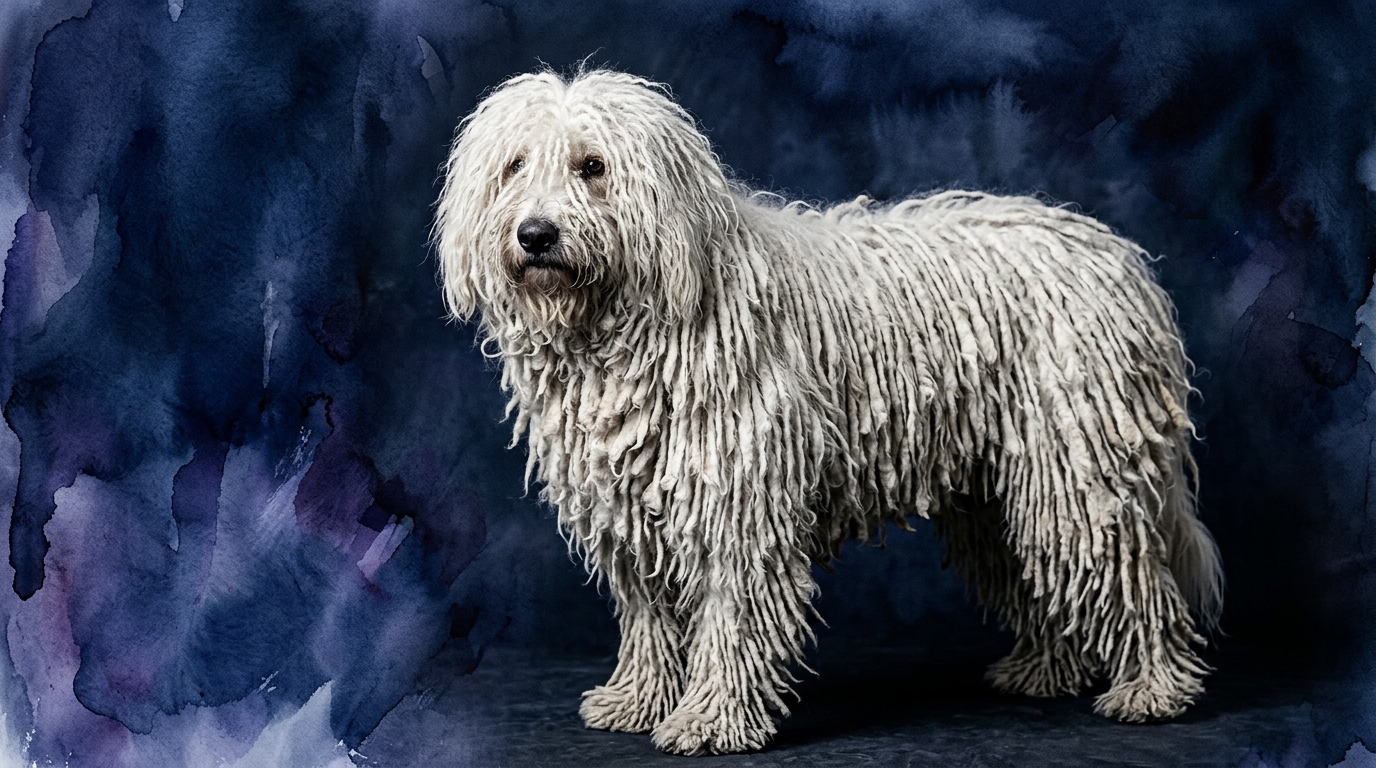
The Komondor presents a similar numerical baseline in several areas, yet the application of these cognitive traits is distinct due to their guarding heritage. Their Problem Solving is rated 3/5, signifying an independent approach to assessing threats and devising self-reliant strategies to protect their charges, often without direct human intervention. Training Speed is 3/5, meaning they learn effectively, but typically when the task's purpose aligns with their innate protective instincts. Social Intelligence also registers at 3/5, indicating a keen ability to discern intentions and read the subtle dynamics within their family unit and potential threats. Their Instinctive Drive is 3/5, a powerful, self-directed guarding impulse that compels them to patrol and observe. Finally, their Memory is 3/5, practical and focused on retaining crucial information related to their guarding duties, such as territorial boundaries and the recognition of known individuals.
Where the Old English Sheepdog Wins Cognitively
The Old English Sheepdog's most pronounced cognitive advantage lies in its superior Memory, scoring 4/5 compared to the Komondor's 3/5. This enhanced capacity for recall translates into several practical benefits. An OES is more adept at mastering multi-step commands and intricate routines often seen in competitive dog sports like obedience or agility, retaining these complex sequences with greater ease over time. Their robust memory also means they can more quickly re-engage with training concepts after a break, requiring less re-teaching. This trait makes them highly responsive to evolving family routines and expectations, facilitating a broader range of shared activities and contributing to their adaptability as family companions who remember everyone's habits and preferences.
Where the Komondor Wins Cognitively
While not always reflected in numerically higher scores, the Komondor's cognitive strength is profoundly evident in the application of its problem-solving and instinctive drive, particularly within its dedicated guardian role. Their 3/5 Problem Solving and 3/5 Instinctive Drive are perfectly aligned for autonomous decision-making in protective scenarios. This breed excels at independently assessing dynamic threats and formulating responses without constant human direction, a critical cognitive asset for a livestock guardian. Their social intelligence, while rated 3/5, is acutely tuned to discerning intentions and potential dangers, allowing them to act decisively and often preemptively. This self-sufficient judgment means they don't rely on human cues for every action, representing a significant cognitive advantage in solitary guarding situations where immediate, independent action is paramount.
Which is Easier to Train and Why
For a typical household seeking general obedience and companionship, the Old English Sheepdog generally proves easier to train. Their 4/5 memory allows for quicker internalization of commands and routines, fostering a more consistent response. Furthermore, their herding background often instills a cooperative spirit, making them inclined to work alongside a handler and viewing training as a collaborative task. They respond well to positive reinforcement and clear directives, eager to engage.
The Komondor, despite its 3/5 training speed, demands a different approach entirely. Their independent guardian mindset means they are less interested in arbitrary commands and more focused on tasks they perceive as purposeful or beneficial to their 'flock.' Training a Komondor requires immense patience, unwavering consistency, and a deep understanding of their motivations. Success hinges on convincing them that the desired action aligns with their innate guarding instincts or serves a clear, logical purpose. They learn, but often on their own terms, making them less suited for owners seeking a highly compliant, 'eager-to-please' trainee.
Which Suits Active Owners vs Relaxed Owners
The Old English Sheepdog is better suited for owners who enjoy active engagement and mental stimulation. While their activity needs are not necessarily about high-intensity running, they thrive on structured activities, learning new skills, and participating in family outings. Their moderate instinctive drive means they appreciate having a 'job,' whether it's herding children, participating in dog sports, or simply learning complex tricks. They are companions who flourish with consistent interaction and a mentally enriching environment, making them a good match for families seeking an active partner in their daily lives.
The Komondor, conversely, might appeal more to owners who value a relaxed yet vigilant presence, provided they can offer ample space and respect the breed's independent nature. While they are active in their patrolling and observation, their exercise needs are often more about purposeful movement within their territory rather than continuous, high-intensity play. They are not typically dogs that will fetch for hours on end. Their contentment comes from fulfilling their guardian role, which for a pet Komondor means ensuring the safety of their home and family. Owners must be prepared for their self-directed nature and understand that 'relaxed' for a Komondor means a state of watchful calm, not necessarily a sedentary lifestyle. They require an owner who understands and respects their distinct working ethos.
The Verdict
If you seek an adaptable, engaged companion eager to learn a wide array of commands and participate in varied family activities, the Old English Sheepdog's strong memory and cooperative spirit make them an excellent choice. They thrive on mental stimulation and collaborative partnership, readily integrating into an active, hands-on household.
Opt for the Komondor if you need a steadfast, independent guardian with a deep sense of duty and are prepared to respect their autonomous decision-making and unique training needs. They are best suited for experienced owners who can provide clear boundaries, ample space, and appreciate a dog whose primary contentment comes from protecting their home and family with quiet vigilance.
🧠 Find Your Pet's IQ Score
Our Pet IQ Lab assessment covers 25+ tests across 5 cognitive dimensions — personalized to your breed.
Take the Full IQ Test →Frequently Asked Questions
Do both breeds require extensive grooming due to their coats?
Yes, both the Old English Sheepdog and Komondor possess dense, unique coats that demand significant grooming attention. The OES needs regular brushing to prevent mats, while the Komondor's corded coat requires specific care to maintain its distinctive texture and cleanliness, often needing professional guidance.
How do their protective instincts differ towards strangers?
The Old English Sheepdog typically exhibits a moderate protective instinct, often being watchful but generally approachable once they assess a situation as safe, though they will alert to novelty. The Komondor, by contrast, has a profound and inherent guarding instinct, making them naturally wary and reserved with strangers, often requiring careful, early socialization to ensure appropriate responses.
Are these breeds suitable for first-time dog owners?
Neither breed is typically recommended for first-time dog owners due to their specific needs and strong personalities. The Old English Sheepdog benefits from owners who understand canine training and mental stimulation, while the Komondor's independent nature and strong guarding drive require an experienced handler with a deep understanding of livestock guardian breeds.