
Side-by-Side IQ Profile: OES vs. Lhasa Apso
The Old English Sheepdog (OES), a Herding group member with a Coren rank of #44, exhibits a balanced cognitive profile. Their Problem Solving is rated 3/5, demonstrating a solid capacity for navigating challenges, often employing innate herding strategies to understand and manipulate their environment; this practical intelligence is geared towards overcoming obstacles in a structured, purposeful manner. Training Speed is 3/5, meaning OES learn new commands at a moderate pace, receptive to instruction but requiring consistent repetition; their herding background means they are generally keen to cooperate, though their independent judgment can lead to thoughtful deliberation before compliance. Social Intelligence is also 3/5, as these dogs show a good understanding of human cues and emotional states, forming strong family bonds that allow them to integrate well into family dynamics. Their Instinctive Drive, at 3/5, primarily manifests as a strong herding impulse, requiring appropriate outlets and channeling into activities like herding trials or structured play. A standout trait for the OES is Memory, scoring 4/5; they excel at retaining learned commands, routines, and specific locations over extended periods, a critical asset for a working dog recalling complex sequences.
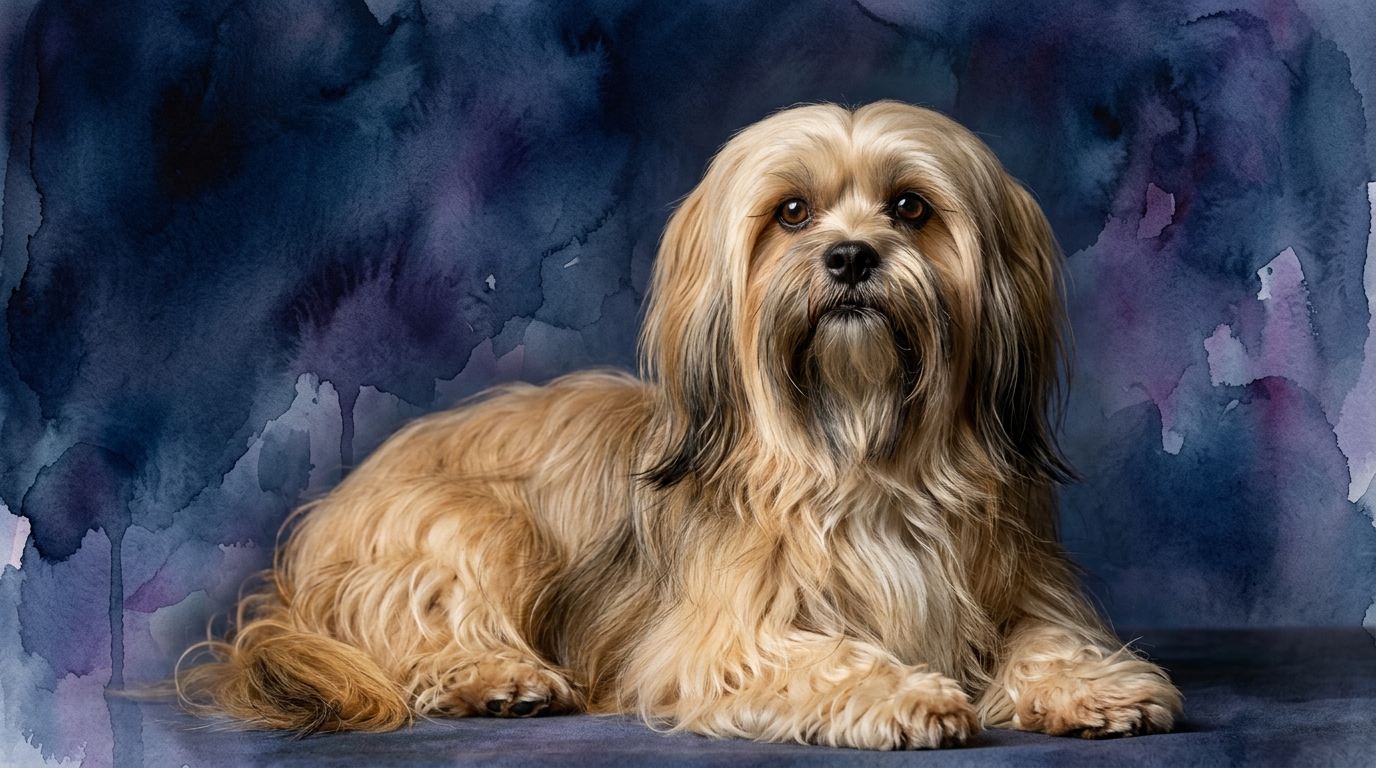
The Lhasa Apso (LA), from the Non-Sporting group with a Coren rank of #68, shares several cognitive scores with the OES but interprets them through a different lens. Their Problem Solving is 3/5, indicating a good ability to figure things out, but with a distinct, independent approach; their solutions often stem from a self-reliant mindset, suited to their historical role as sentinels assessing situations autonomously. Training Speed is 3/5, as Lhasas learn at a moderate pace, but their training speed is influenced by a strong-willed nature; they grasp concepts but may choose to comply on their own terms, requiring patience and creative motivation. Social Intelligence is 3/5, as Lhasa Apsos demonstrate solid understanding of social dynamics, forming deep, often singular bonds with primary caregivers; while reserved with strangers, their social intelligence within their inner circle is evident in reading moods and responding. Their Instinctive Drive, also 3/5, is rooted in their ancient purpose as a vigilant protector; this manifests as strong territoriality and acute awareness of surroundings, requiring mindful socialization. Lastly, Lhasa Apsos possess a competent Memory, scoring 3/5, capable of recalling commands and routines; while strong, it is rated slightly below the OES, suggesting they may benefit from more frequent refreshers for peak recall.
Where Old English Sheepdog Wins Cognitively
The Old English Sheepdog’s cognitive strengths distinctly emerge from its history as a livestock drover. Its superior memory (4/5 compared to Lhasa Apso's 3/5) is a significant advantage, enabling it to recall complex patterns, routes, and a larger repertoire of commands with impressive longevity. This deep retention is invaluable for intricate tasks, allowing an OES to learn and execute multi-step routines without constant prompting, paramount for a dog managing a flock across varied terrain. While both score 3/5 in problem-solving, the OES often approaches challenges with a more cooperative, purpose-driven mindset, characteristic of a herding dog seeking to work alongside its human. This means their problem-solving tends to be less about independent judgment and more about effective solutions within a collaborative framework, like guiding livestock. Their moderate instinctive drive, channeled into appropriate activities, provides a rich cognitive outlet, fostering mental engagement through structured 'work' that satisfies their inherent desire to organize. This working intelligence, finely tuned over generations, allows the OES to excel where consistent application of learned skills and reliable recall are paramount.
Where Lhasa Apso Wins Cognitively
Despite identical scores in problem-solving, training speed, social intelligence, and instinctive drive, the Lhasa Apso exhibits distinct cognitive strengths rooted in its sentinel role. Its problem-solving (3/5) often manifests as acute situational awareness and independent decision-making, crucial for a watch dog. A Lhasa Apso might excel at figuring out how to alert its family to an unusual sound, processing environmental cues with keen, self-reliant intellect rather than waiting for direction. Their social intelligence (3/5) leans towards discerning trustworthiness, making them exceptional judges of character within their immediate environment, a valuable protective trait. While their Coren rank is lower, this doesn't diminish their specific cognitive prowess. The Lhasa Apso's moderate instinctive drive (3/5) is channeled into vigilance and territoriality, requiring them to constantly analyze and react to surroundings. This fosters a sharp, perceptive mind, capable of quickly assessing potential threats or changes. Their robust, independent spirit means they are less prone to "groupthink" and more likely to form their own conclusions, a cognitive advantage when a situation demands individual initiative and unwavering dedication to their immediate domain.
Which is Easier to Train and Why
For the average owner, the Old English Sheepdog generally presents a more straightforward training path, primarily due to its Herding group lineage. While both breeds score 3/5 in training speed, the OES's background predisposes it to a greater desire for cooperation and a tendency to look to its human for direction. Their inherent biddability, born from generations of working closely with shepherds, means they are often more eager to please and respond readily to commands. This is further supported by their superior memory (4/5), enabling them to retain learned behaviors more efficiently and for longer durations. In contrast, the Lhasa Apso, with its history as a temple guardian, possesses a strong independent streak. This self-reliant nature, while a cognitive strength, can translate into a "what's in it for me?" attitude during training. While capable of learning, their compliance often hinges on their perception of the command's value and their mood, requiring a trainer with exceptional patience, consistency, and a deep understanding of positive reinforcement to navigate their sometimes stubborn demeanor. The OES's inherent desire to be part of a team often makes the training journey smoother for those seeking a highly compliant companion.
Which Suits Active Owners vs. Relaxed Owners
The Old English Sheepdog, a working herding dog, naturally suits more active owners. While its instinctive drive is rated 3/5, this translates into a need for consistent physical and mental engagement to prevent boredom. Owners who enjoy long walks, hiking, or participating in dog sports like agility or obedience will find the OES a willing and capable partner. Their cognitive profile, particularly strong memory and cooperative problem-solving, thrives on learning new skills and having a 'job' to do, making them ideal for individuals who can dedicate time to structured activities. A relaxed owner might find an OES becomes restless without sufficient outlets. Conversely, the Lhasa Apso is often a better fit for more relaxed owners. While they enjoy walks and playtime, their exercise needs are generally moderate, content with shorter, regular outings. Their independent nature means they are often comfortable entertaining themselves or observing from a comfortable perch. Owners who appreciate a companion less demanding of constant activity, yet still providing keen vigilance and affectionate companionship on their own terms, will find the Lhasa Apso a delightful match. Their cognitive strengths are more about perceptive awareness within their immediate domain.
The Verdict
Choose the Old English Sheepdog if you seek a highly trainable, cooperative companion eager to learn complex tasks and participate in active, structured engagement, thriving on a shared "work" ethic.
Opt for the Lhasa Apso if you value an independent, perceptive companion with a strong sense of self, content with moderate activity and offering vigilant, discerning companionship on its own terms.
🧠 Find Your Pet's IQ Score
Our Pet IQ Lab assessment covers 25+ tests across 5 cognitive dimensions — personalized to your breed.
Take the Full IQ Test →Frequently Asked Questions
Do Old English Sheepdogs need a lot of mental stimulation?
Yes, Old English Sheepdogs benefit significantly from mental stimulation. Their Herding background and strong memory mean they thrive on learning new commands, engaging in puzzle toys, and participating in dog sports that challenge their problem-solving and cooperative instincts, preventing boredom.
Are Lhasa Apsos good apartment dogs despite their guardian instincts?
Lhasa Apsos can be excellent apartment dogs because their exercise needs are moderate, and their primary "job" is vigilance within their immediate territory. Proper socialization and consistent training are crucial to manage their territorial instincts, ensuring they are alert but not excessively vocal in a shared living space.
How do the Coren ranks (OES #44, Lhasa Apso #68) relate to their individual IQ scores?
The Coren rank broadly reflects a breed's perceived working and obedience intelligence, often emphasizing biddability and quick learning. While both breeds have similar individual IQ scores across most dimensions, the OES's higher Coren rank likely reflects its stronger cooperative drive and superior memory, making it generally more responsive to obedience training and complex tasks.