
A Side-by-Side Look at Cognitive Profiles
The Cosmic Pet Pet IQ Lab provides a unique lens through which to compare canine cognitive abilities, breaking down intelligence into five core dimensions. For the Old English Sheepdog, we observe a Coren rank of #44, placing it firmly within the category of dogs that understand new commands with fewer repetitions and obey the first command a good percentage of the time. Its individual scores are: Problem Solving 3/5, Training Speed 3/5, Social Intelligence 3/5, Instinctive Drive 3/5, and a standout Memory at 4/5. This profile suggests a dog capable of moderate independent thought and learning, with a notable capacity for retaining information and sequences over time. The OES's background as a drover and herder manifests in its balanced scores, indicating a dog that can assess situations, learn routines, and work cooperatively, all while remembering complex tasks.
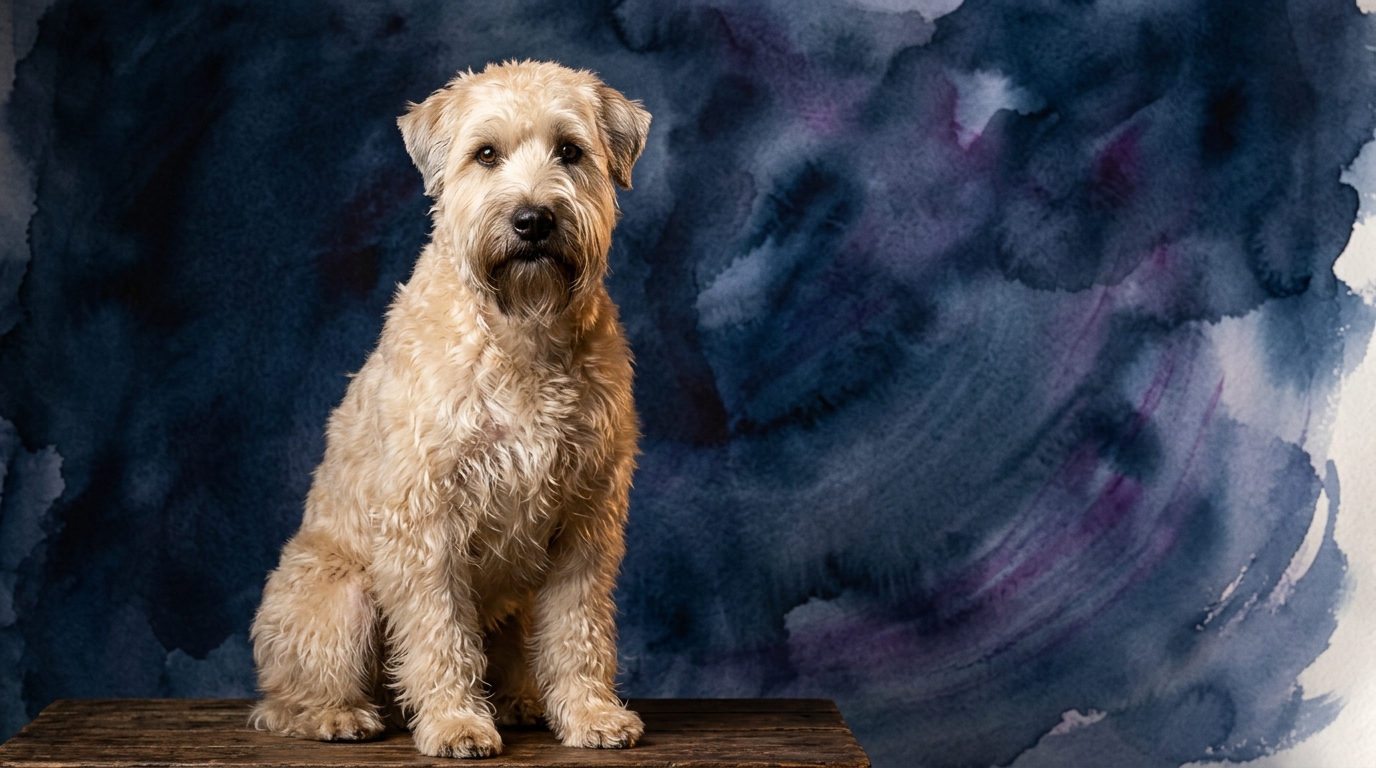
In contrast, the Soft Coated Wheaten Terrier, while not appearing on Coren's traditional ranking, presents a consistent cognitive profile across the board. Its scores are: Problem Solving 3/5, Training Speed 3/5, Social Intelligence 3/5, Instinctive Drive 3/5, and Memory also at 3/5. This breed's consistent scores suggest a well-rounded but perhaps less specialized cognitive approach compared to the OES. The Wheaten Terrier's problem-solving is practical and often driven by its terrier tenacity, while its training speed and social intelligence reflect a dog that learns and interacts adequately, though perhaps with a characteristic independent streak. Its memory, while solid, doesn't reach the same level of long-term retention as the OES, implying it might benefit from more frequent reinforcement of complex tasks.
Where the Old English Sheepdog Shows Cognitive Edge
The Old English Sheepdog truly shines in its memory capabilities, scoring a 4/5 compared to the Wheaten Terrier's 3/5. This enhanced memory is a significant cognitive advantage, allowing OES to recall complex sequences of commands, learned routines, and spatial layouts with greater accuracy and for longer periods. For tasks involving multiple steps or intricate patterns, such as advanced obedience, agility courses, or even navigating a familiar but complex environment, the OES is likely to demonstrate superior retention. This memory strength is deeply rooted in its herding lineage, where remembering the movements of a flock, the boundaries of a field, or a handler's specific signals was crucial for effective work. An OES can often pick up a task after a long break and still perform it with considerable precision, a testament to its robust recall.
Furthermore, the OES's Coren rank of #44, while not a direct IQ score, indicates a general propensity for understanding new commands more quickly and responding reliably to known commands. This suggests a cognitive framework that processes and integrates new information efficiently, particularly within a structured learning environment. While both breeds share a 3/5 in problem-solving, the OES's herding background often translates into a more methodical, spatial, and strategic approach to overcoming obstacles, especially those involving movement, positioning, and anticipating outcomes within a defined area.
Where the Soft Coated Wheaten Terrier Excels Cognitively
While the Soft Coated Wheaten Terrier's individual scores are consistently 3/5 across all dimensions, this consistency points to a balanced and adaptable cognitive makeup, rather than a deficiency. Where the Wheaten Terrier truly excels is in its pragmatic, tenacious approach to problem-solving, often driven by its innate terrier instincts. While its Problem Solving score matches the OES at 3/5, the *nature* of this problem-solving is distinct. Wheatens are adept at independent thought when faced with a challenge, particularly those that require persistence, cleverness, and sometimes a bit of ingenuity to achieve a desired outcome, much like their ancestors hunting vermin. They might not be looking for the most efficient route, but they will certainly find *a* route, demonstrating a focused determination.
The Wheaten Terrier's moderate instinctive drive (3/5) combined with its social intelligence (3/5) allows it to channel its natural exuberance and curiosity into engaging interactions and exploration. This breed often exhibits a lively curiosity about its environment and a willingness to investigate, which can translate into a form of active, experiential learning. While it may not retain complex sequences as readily as the OES, its ability to learn through doing, experimenting, and persistently engaging with its surroundings means it develops a practical understanding of its world. This makes them particularly adept at navigating novel situations with confidence and a characteristic zest for life, often finding joy in the process of discovery itself.
Training Dynamics: OES vs. SCWT
When considering ease of training, the Old English Sheepdog generally presents a more straightforward path for handlers, largely due to its superior memory and its Coren ranking. A Training Speed score of 3/5 for both indicates they learn at a similar pace, but the OES's 4/5 memory means it retains those lessons more effectively over time. An OES is more likely to remember a command or a routine after a period of inactivity, requiring less remedial practice. Their herding heritage also instills a natural inclination to work cooperatively with a human partner, making them generally receptive to guidance and structured learning. While they possess independent thought for herding tasks, this often translates into a thoughtful approach rather than outright defiance during training sessions. Consistency and positive reinforcement are still key, but the OES's cognitive architecture supports a more enduring grasp of lessons.
The Soft Coated Wheaten Terrier, with its 3/5 in Training Speed and Memory, requires a slightly different approach. Its terrier spirit, while endearing, can also manifest as an independent streak or a tendency to get distracted by environmental stimuli. While they are certainly capable of learning, their retention may not be as robust as the OES, necessitating more consistent review and practice, especially for complex commands. Training a Wheaten benefits immensely from making sessions fun, engaging, and varied to capture their attention and leverage their natural curiosity. Their moderate instinctive drive means they are often motivated by play and exploration, which can be harnessed in training. Owners must be prepared for a dog that might challenge boundaries or test limits with a playful persistence, requiring a patient, consistent, and creative trainer to keep them engaged and focused on the task at hand.
Matching Breeds to Lifestyles
For active owners seeking a companion for regular engagement and perhaps canine sports, both breeds offer unique attributes. The Old English Sheepdog, with its history of working long days, possesses substantial stamina. Its cognitive strengths in memory and methodical problem-solving make it well-suited for activities like advanced obedience, rally, or even herding trials, where precision and recalling complex patterns are paramount. Owners who enjoy structured activities and appreciate a dog that can follow intricate instructions will find the OES a rewarding partner. Their social intelligence (3/5) means they enjoy interaction, but their independent working history often allows them to settle calmly when not actively engaged, making them adaptable to varying levels of activity, provided their core needs for mental and physical exercise are met.
The Soft Coated Wheaten Terrier, while also possessing a 3/5 in instinctive drive, channels its energy with a more effervescent spirit. They are excellent companions for active owners who enjoy playful engagement, long walks, hiking, or even agility, where their quickness and zest for life can truly shine. Their problem-solving (3/5) often manifests in a spontaneous, exploratory manner, making them great partners for discovering new trails or navigating novel environments. For relaxed owners, the OES can adapt to a more relaxed pace provided it receives sufficient mental stimulation and moderate daily exercise to prevent boredom. The Wheaten Terrier, however, generally demands a consistently active lifestyle to thrive, as its vibrant energy and curiosity are best managed through regular physical and mental outlets. A less active home might find the Wheaten's exuberance challenging without sufficient engagement.
The Verdict
Choose the Old English Sheepdog if you value a companion with superior memory, a methodical approach to learning, and a cooperative spirit for structured activities, appreciating its thoughtful demeanor and ability to retain complex lessons.
Opt for the Soft Coated Wheaten Terrier if you seek an active, tenacious, and playful companion who approaches challenges with independent spirit and infectious enthusiasm, thriving on engaging, varied activities and consistent, creative training.
🧠 Find Your Pet's IQ Score
Our Pet IQ Lab assessment covers 25+ tests across 5 cognitive dimensions — personalized to your breed.
Take the Full IQ Test →Frequently Asked Questions
Is the Old English Sheepdog genuinely smarter than the Soft Coated Wheaten Terrier?
The OES, with its Coren rank and superior memory (4/5 vs 3/5), generally demonstrates a quicker grasp of new commands and better retention of complex tasks. However, the Wheaten Terrier's consistent 3/5 scores across the board indicate a balanced, adaptable intelligence, excelling in tenacious, independent problem-solving unique to its terrier heritage.
Which breed is better for first-time dog owners?
The Old English Sheepdog's cooperative nature and stronger memory can make training more predictable for first-time owners who are consistent. The Soft Coated Wheaten Terrier's independent spirit and need for engaging, varied training might present more of a challenge for novices, requiring patience and creativity.
Do these breeds require a lot of exercise?
Both breeds require regular exercise, but their energy expression differs. The Old English Sheepdog benefits from moderate, consistent activity and mental stimulation. The Soft Coated Wheaten Terrier often has a higher, more effervescent energy level that thrives on vigorous daily play, walks, and varied engagement to prevent boredom.