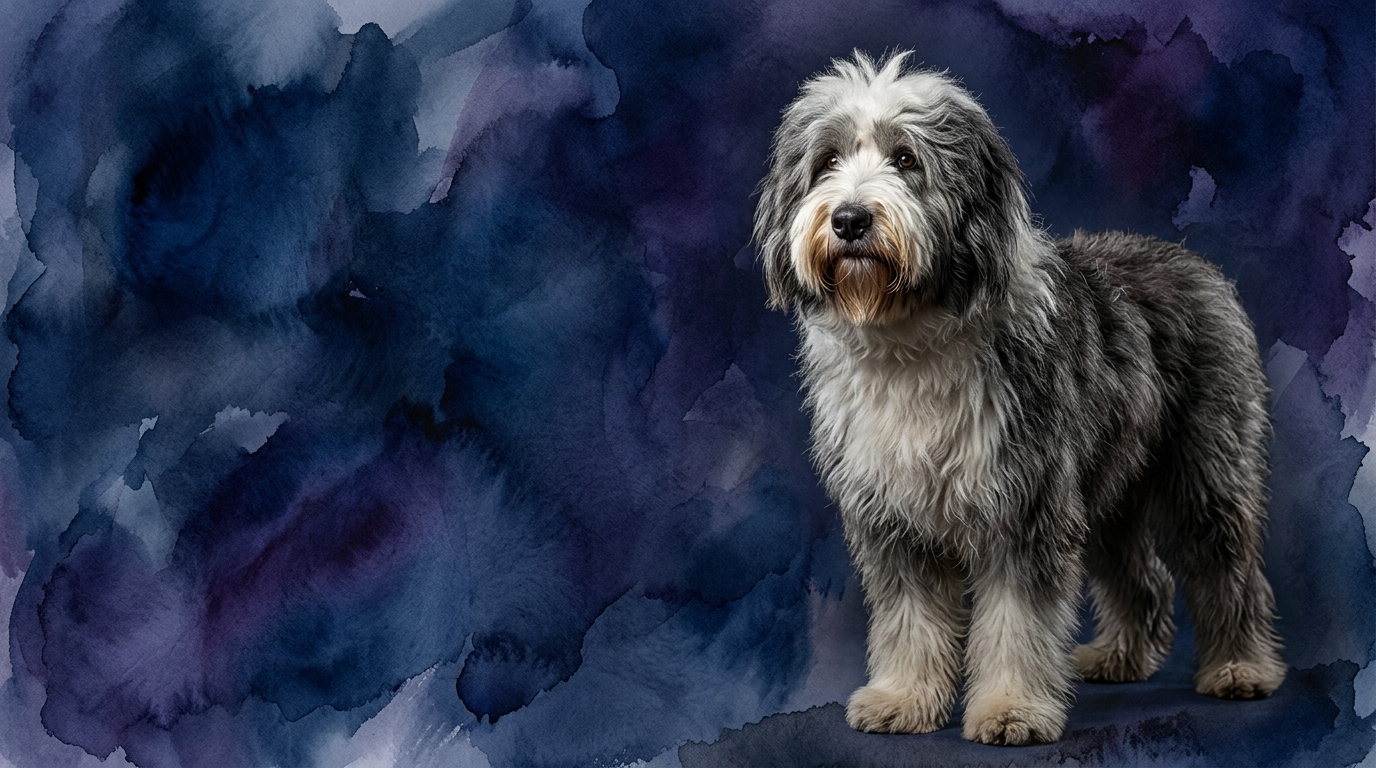
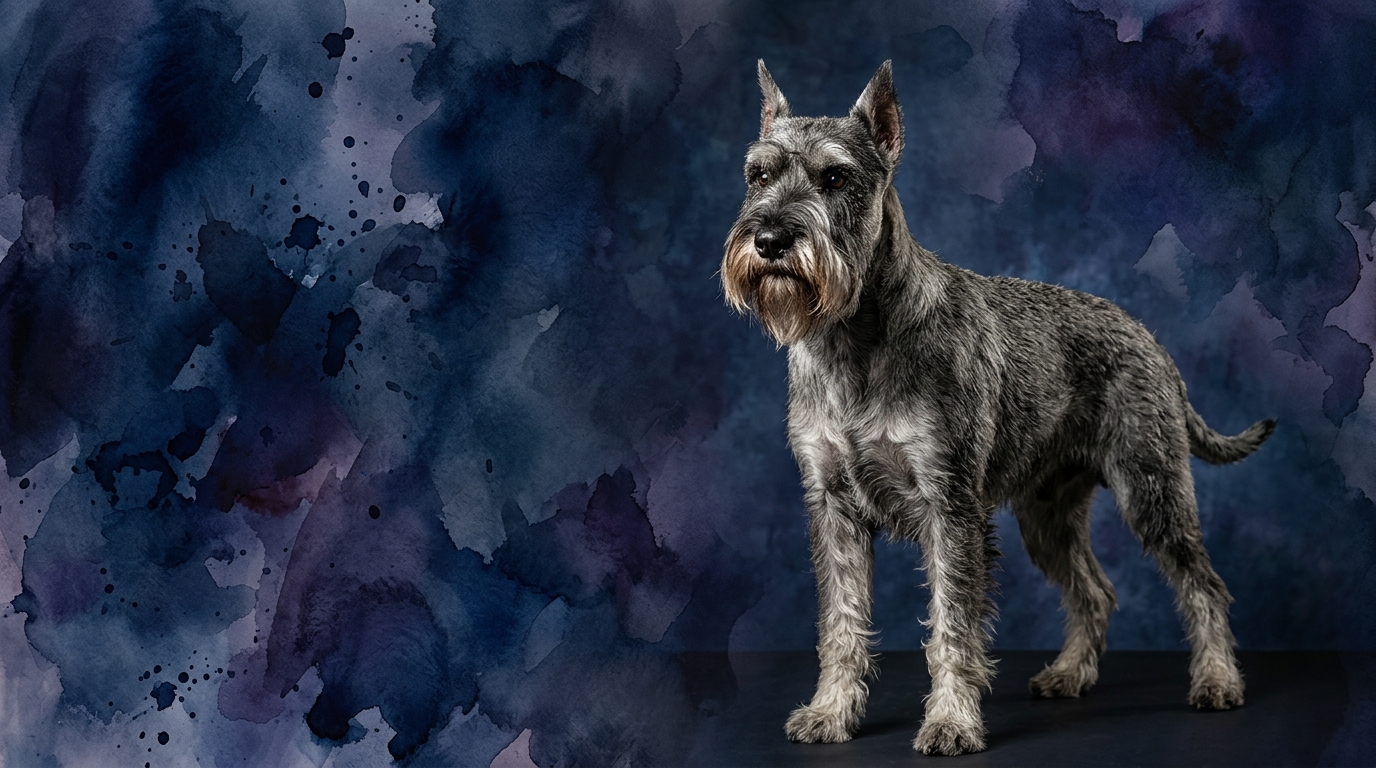
Side-by-Side IQ Profile: OES vs. Standard Schnauzer
At The Cosmic Pet Pet IQ Lab, we evaluate canine intelligence across five key dimensions, providing a nuanced understanding beyond simple obedience. The Old English Sheepdog (OES), a Herding group member with a Coren rank of #44, exhibits a particular cognitive rhythm. Their Problem Solving is rated 3/5, meaning they are capable of navigating typical challenges and finding established solutions, though they might take a more methodical approach to novel puzzles. Their Training Speed, also 3/5, indicates a steady learning curve that benefits greatly from consistent, positive reinforcement rather than rapid-fire instruction. Social Intelligence stands at 3/5, reflecting their capacity to understand human cues and integrate into family dynamics, often with a gentle, watchful nature. Instinctive Drive, at 3/5, is primarily expressed through their inherent herding tendencies, a desire to gather and protect their 'flock.' Finally, their Memory is a notable 4/5, allowing them to retain complex routines, learned commands, and past experiences with impressive recall.
The Standard Schnauzer, a Working group dog with a significantly higher Coren rank of #22, presents a different cognitive landscape. Their Problem Solving is rated 4/5, showcasing a greater aptitude for independently analyzing novel situations and devising creative solutions, making them quite adaptable. Training Speed is also 4/5, signifying a quicker grasp of new commands and concepts, often thriving on the mental engagement of learning new tasks. Their Social Intelligence aligns with the OES at 3/5, meaning they are responsive to human interaction and form strong bonds, though they might approach social situations with a more discerning, watchful demeanor characteristic of their guarding background. Instinctive Drive, like the OES, is 3/5, but manifests strongly in their protective and territorial instincts, coupled with a strong desire for purposeful activity. Their Memory matches the OES at 4/5, demonstrating excellent retention of training, routines, and experiences, contributing to their reliability.
Where the Old English Sheepdog Wins Cognitively
While the Standard Schnauzer boasts higher scores in some areas, the Old English Sheepdog's cognitive strengths lie in their steadfast reliability and a unique application of their intelligence, particularly in areas where consistency and nuanced understanding are paramount. Their Memory, rated 4/5, is a significant win. This capacity for robust retention means that once an OES learns a command or a complex routine, it tends to stick. This isn't just about remembering a 'sit' command; it extends to recalling intricate patterns for herding, navigating familiar territories, or adhering to established household rules over long periods, making them incredibly dependable partners once trained. Their cognitive strength here prioritizes endurance and accuracy of recall over sheer speed of acquisition.
Furthermore, the OES's Social Intelligence (3/5), when combined with their Instinctive Drive (3/5 Herding), presents a specific cognitive advantage. They possess an innate, subtle understanding of group dynamics, whether it's a flock of sheep or a human family. Their problem-solving (3/5) in this context often revolves around maintaining cohesion and safety. They might not be devising elaborate escape plans, but they are adept at anticipating shifts in group movement or mood, gently nudging things back into order. This 'flock management' intelligence is a highly specialized form of cognitive function, allowing them to act as a watchful, guiding presence, demonstrating a deep, practical social awareness tailored to their historical role.
Where the Standard Schnauzer Wins Cognitively
The Standard Schnauzer clearly excels in areas demanding quick wit, independent thought, and rapid assimilation of new information. Their Problem Solving score of 4/5 is a significant cognitive win. This breed demonstrates a superior ability to analyze novel situations, assess variables, and independently devise effective solutions. Whether it's figuring out a complex puzzle toy, navigating an unfamiliar obstacle course, or adapting to a sudden change in routine, the Schnauzer often displays a more proactive and inventive approach. This makes them particularly engaging for owners who enjoy challenging their dog's mental faculties with new and varied tasks.
Coupled with their problem-solving prowess is their Training Speed, also rated 4/5. This higher score indicates that Standard Schnauzers typically grasp new commands and concepts more quickly than many other breeds. They are often eager learners, enjoying the mental stimulation that comes with mastering new skills and a broader repertoire of commands. This cognitive agility, further supported by their Coren rank of #22, means they are generally more responsive and can reach advanced levels of obedience or performance sports with greater efficiency. Their Instinctive Drive (3/5, focused on guarding and working) is also cognitively advantageous, as they apply their problem-solving and training speed to their protective duties, making discerning judgments rather than simply reacting blindly.
Which is Easier to Train and Why
Based on their IQ profiles, the Standard Schnauzer is generally considered easier to train, especially for owners seeking a quick and responsive learner. Their 4/5 Training Speed means they pick up new commands and concepts with fewer repetitions, making training sessions efficient and rewarding. Their 4/5 Problem Solving ability means they are more likely to understand the 'why' behind a command and can generalize learned behaviors to new contexts more readily. They thrive on having a job and enjoy the mental engagement of structured training, often displaying a strong desire to please and an independent thought process that can be channeled into advanced work.
The Old English Sheepdog, with a Training Speed of 3/5, requires a more patient and consistent approach. While they are certainly capable of learning and possess an excellent Memory (4/5) for retaining what they've learned, the initial acquisition phase might take more time and repetition. Their problem-solving (3/5) is more geared towards established routines and maintaining order, rather than rapidly adapting to novel commands. Their strong herding instincts can sometimes lead to independent decision-making, which isn't 'stubbornness' but rather a cognitive preference for their own judgment in certain situations. Effective training for an OES involves understanding and channeling these instincts, rather than trying to suppress them, making it a slightly more nuanced process than with the quick-to-learn Schnauzer.
Which Suits Active Owners vs. Relaxed Owners
For active owners who thrive on structured activities and consistent mental engagement, the Standard Schnauzer is an ideal match. Their higher Problem Solving (4/5) and Training Speed (4/5) mean they not only enjoy learning but actively seek out mental challenges. They excel in dog sports like agility, obedience, tracking, and even protection work, which provide an outlet for their sharp minds and working drive. An owner who enjoys teaching new tricks, participating in competitive events, or simply providing daily intellectual puzzles will find the Schnauzer to be an eager and capable partner, requiring an owner who can consistently provide both physical exercise and robust mental stimulation to prevent boredom and destructive behaviors.
Conversely, the Old English Sheepdog, while requiring regular exercise, might be a better fit for owners who prioritize consistent routines and a more relaxed, yet engaged, companionship over constant novel challenges. Their excellent Memory (4/5) ensures they reliably follow established routines and commands, making them predictable and comforting companions. While they enjoy purposeful activity, such as long walks, herding games, or simply being involved in family life, they may not demand the same intensity of complex mental 'work' as a Schnauzer. Their 3/5 Problem Solving and Training Speed suggest they are content with a steady pace, making them suitable for owners who appreciate a loyal, adaptable companion without needing to constantly invent new cognitive tasks.
The Verdict
Choose the Old English Sheepdog if you value a steadfast, loyal companion with a strong memory for routines and a gentle, watchful nature, and are prepared for a methodical training journey.
Opt for the Standard Schnauzer if you desire a quick-witted, versatile partner eager for diverse mental challenges and rapid learning, thriving on consistent engagement in varied activities.
🧠 Find Your Pet's IQ Score
Our Pet IQ Lab assessment covers 25+ tests across 5 cognitive dimensions — personalized to your breed.
Take the Full IQ Test →Frequently Asked Questions
Are Old English Sheepdogs hard to train?
Old English Sheepdogs are not hard to train, but they require patience and consistency due to their 3/5 training speed. Their excellent memory (4/5) means they retain commands well once learned, so a steady, positive approach yields reliable results.
Do Standard Schnauzers need a lot of mental stimulation?
Yes, Standard Schnauzers absolutely thrive on mental stimulation. Their 4/5 problem-solving and training speed mean they actively seek out challenges and can become bored or destructive without consistent engagement through training, puzzles, and activities.
Which breed is better for a first-time dog owner?
For a first-time dog owner, the Standard Schnauzer's quicker training speed and problem-solving might seem appealing, but both breeds require commitment. The OES's steady learning pace and adaptable social intelligence can be forgiving with consistent effort, while the Schnauzer's higher drive demands a more experienced hand to channel their energy effectively.