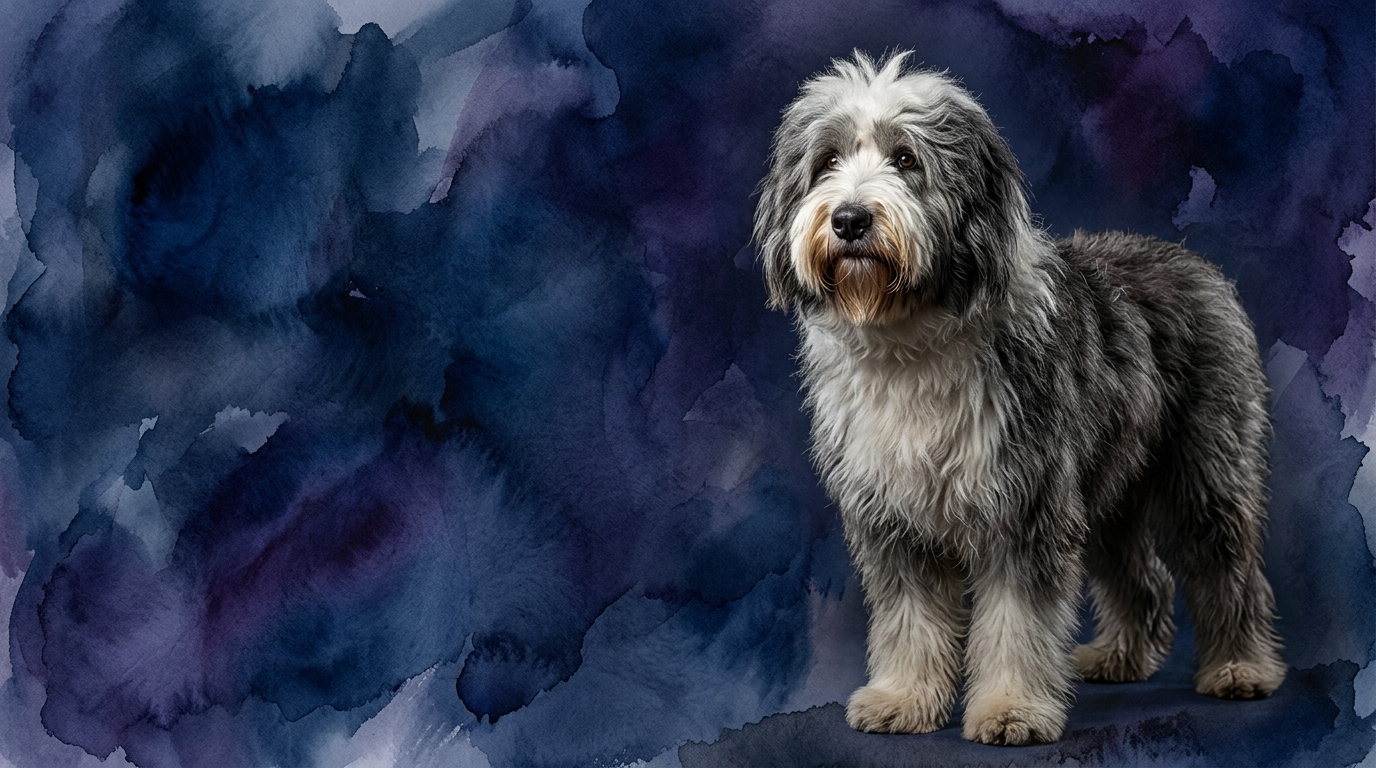
Side-by-Side Cognitive Profile: Old English Sheepdog
The Old English Sheepdog presents a balanced cognitive profile, scoring 3/5 in Problem Solving, Training Speed, Social Intelligence, and Instinctive Drive, with a notable 4/5 in Memory. Their problem-solving approach tends to be methodical, often relying on learned patterns and observation rather than spontaneous innovation. In herding contexts, this meant systematically moving flocks rather than quick, agile maneuvers. Their training speed is consistent; they absorb information steadily with clear, positive reinforcement, building on their strong memory. Socially, OES dogs are attuned to the emotional climate of their families, displaying empathy and a desire to be involved, though they can also exhibit an independent streak inherent to their working heritage. Their instinctive drive, while present, is typically moderate, expressed in a desire to keep their "flock" (family) together, but not overwhelmingly intense for modern home life. Their exceptional memory allows them to retain a vast repertoire of commands, routines, and past experiences, making them highly reliable once a behavior is established.
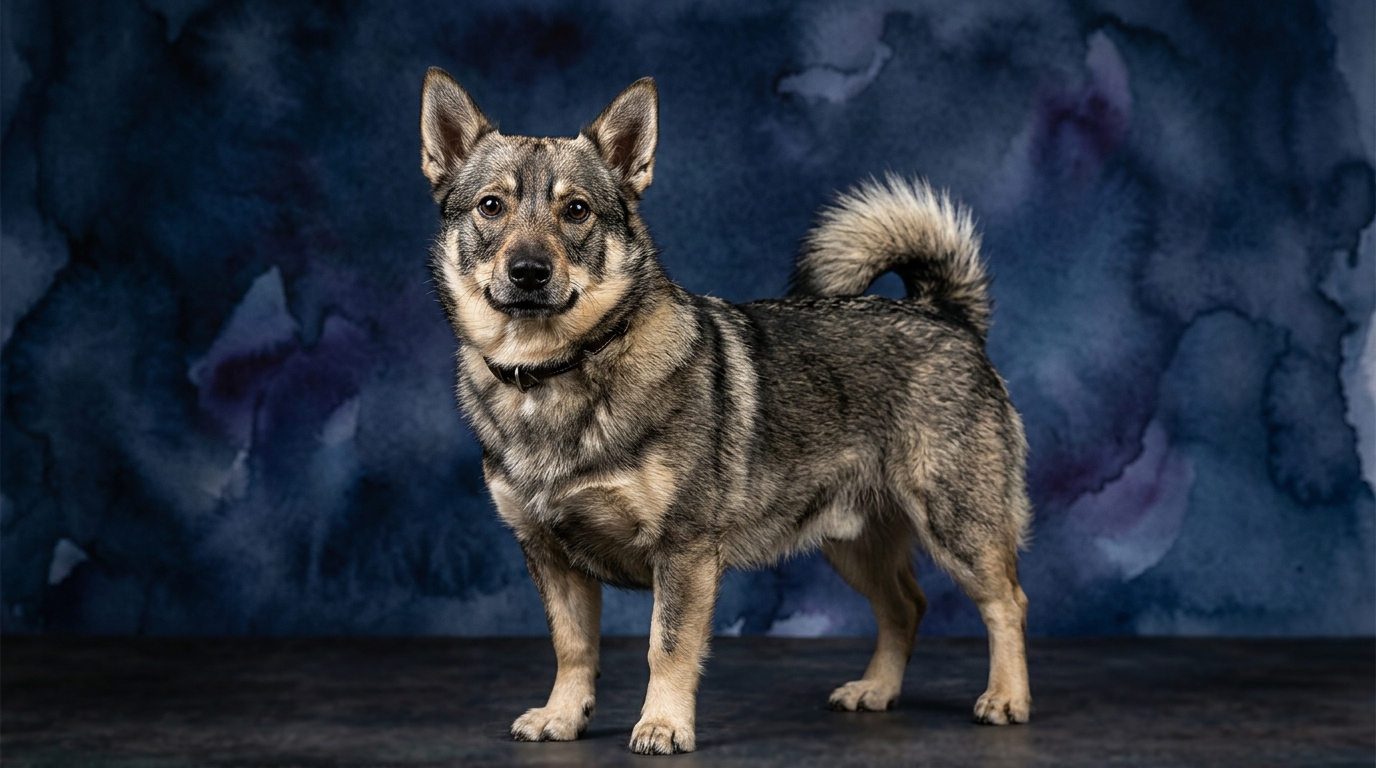
Side-by-Side Cognitive Profile: Swedish Vallhund
The Swedish Vallhund shares several cognitive scores with the Old English Sheepdog, also registering 3/5 in Problem Solving, Training Speed, Social Intelligence, and Instinctive Drive, but scoring 3/5 in Memory. Their problem-solving is characterized by resourcefulness and tenacity; they are adept at figuring out how to achieve goals, sometimes through creative and persistent trial-and-error, reflecting their history of nipping at cattle hocks to move them. Training speed for the Vallhund is efficient, provided the sessions are engaging and varied, as they can become bored with excessive repetition. Socially, they are observant and highly interactive, quickly picking up on human cues and moods, often demonstrating a cheerful and communicative nature. Their instinctive drive is robust, manifesting as a strong desire to work, chase, and herd, which needs appropriate outlets to prevent self-directed, less desirable behaviors. Their memory, while good for daily commands and routines, may not possess the same long-term depth as the Old English Sheepdog, requiring more consistent refreshers for less frequently used knowledge.
Where the Old English Sheepdog Wins Cognitively
The Old English Sheepdog demonstrates a distinct advantage in memory retention, scoring a 4/5 compared to the Vallhund's 3/5. This translates to a deeper capacity for recalling complex sequences of commands, the nuances of household routines, and even the long-term recall of specific experiences or individuals. An OES might recall a forgotten toy's location or a rarely used trick with surprising clarity years later, suggesting a more enduring cognitive map of their world. This superior memory makes them exceptionally reliable once a lesson is learned, requiring less frequent reinforcement over time for established behaviors. Furthermore, their Coren ranking at #44 among many breeds, while not a direct IQ score, implies a consistent and predictable ability to understand and execute commands, potentially outperforming some unranked breeds in terms of sheer obedience consistency over time, especially in highly structured environments where methodical learning is rewarded.
Where the Swedish Vallhund Wins Cognitively
While the Coren ranking doesn't capture every facet of cognitive ability, the Swedish Vallhund often exhibits a nuanced edge in certain adaptive problem-solving scenarios, particularly those requiring quick, agile responses and independent thought. Their historical role as 'heelers' for cattle, nipping at hocks, demands rapid decision-making and precise execution in dynamic, unpredictable environments. This translates to a dog that can quickly assess and react to changing situations, whether it's navigating a new agility course obstacle or figuring out how to retrieve a toy from an unusual hiding spot using their environment. Their robust social intelligence (3/5), while matching the OES in score, often manifests as a keen observational prowess and a more vocal, communicative nature, making them adept at interpreting human body language and emotional states, sometimes anticipating needs before a verbal cue is given. This blend of quick thinking and social awareness makes them highly interactive and responsive companions in dynamic settings.
Which is Easier to Train and Why
Neither breed is significantly 'easier' to train in terms of raw speed, both scoring 3/5 for Training Speed. However, their approaches differ due to other cognitive strengths. The Old English Sheepdog, with its superior memory (4/5), tends to retain commands and routines with greater longevity, making the reinforcement of learned behaviors highly effective in the long run. Once an OES understands a command, it's likely to stick, though initial acquisition might require patient, consistent repetition. Their training often benefits from a calm, steady approach, leveraging their desire to please their family. The Swedish Vallhund, while equally capable of learning, benefits from more varied and engaging training sessions due to its potential for boredom with monotony. Their quick thinking and herding drive mean they excel in activities like agility or herding trials that offer novelty and mental challenge. If training becomes overly repetitive or lacks stimulation, a Vallhund might become less cooperative, requiring an owner to be more creative in their methods to maintain their interest and focus. Therefore, the 'easier' breed depends on the trainer's style: consistent patience and repetition for the OES, dynamic engagement and variety for the Vallhund.
Which Suits Active Owners vs. Relaxed Owners
For relaxed owners, the Old English Sheepdog often presents a more suitable companionship profile. While they certainly require regular exercise to maintain their physical and mental well-being, including daily walks and opportunities to stretch their legs, they are also quite content to settle down and relax with their families once their needs are met. Their moderate instinctive drive (3/5) means they aren't constantly seeking an outlet for intense herding behaviors, making them adaptable to a quieter home life, provided their foundational exercise requirements are consistently met. Their calm demeanor, once mature, aligns well with a less frenetic household pace, allowing for extended periods of quiet companionship. Conversely, active owners will find an ideal match in the Swedish Vallhund. This breed, despite its smaller stature, possesses a robust energy level and a keen working drive that demands consistent mental and physical engagement. Their problem-solving acumen and social intelligence thrive when challenged with activities like agility, obedience, herding, or even canine parkour. Owners who enjoy hiking, running, or participating in dog sports will appreciate the Vallhund's enthusiasm and endurance. Without sufficient outlets, their ingenuity can lead to self-directed entertainment, which might not always align with an owner's preferences, making an active lifestyle crucial for their contentment.
The Verdict
Opt for an Old English Sheepdog if you seek a devoted, gentle companion with exceptional memory, comfortable with a steady routine, and content with moderate daily activity and patient training.
Select a Swedish Vallhund if you desire a spirited, clever, and energetic partner for dog sports, outdoor adventures, and thrive on dynamic, mentally stimulating training approaches.
🧠 Find Your Pet's IQ Score
Our Pet IQ Lab assessment covers 25+ tests across 5 cognitive dimensions — personalized to your breed.
Take the Full IQ Test →Frequently Asked Questions
Are Old English Sheepdogs difficult to groom?
While not directly cognitive, their dense, shaggy double coat requires significant grooming, typically several hours per week of brushing to prevent matting, or professional grooming every 6-8 weeks. This commitment is a major consideration for potential owners.
Do Swedish Vallhunds bark a lot?
Swedish Vallhunds are known for being vocal, often using a range of barks, "yips," and "trills" to communicate. This trait stems from their herding background as alert watchdogs, and while manageable with training, prospective owners should be prepared for a communicative dog.
Are these breeds generally good with children?
Both breeds, when properly socialized and trained, can be wonderful with children. Old English Sheepdogs are often described as patient "nanny dogs," while Swedish Vallhunds are playful and sturdy, though their herding instinct might lead to gentle nipping at heels if not channeled appropriately.