
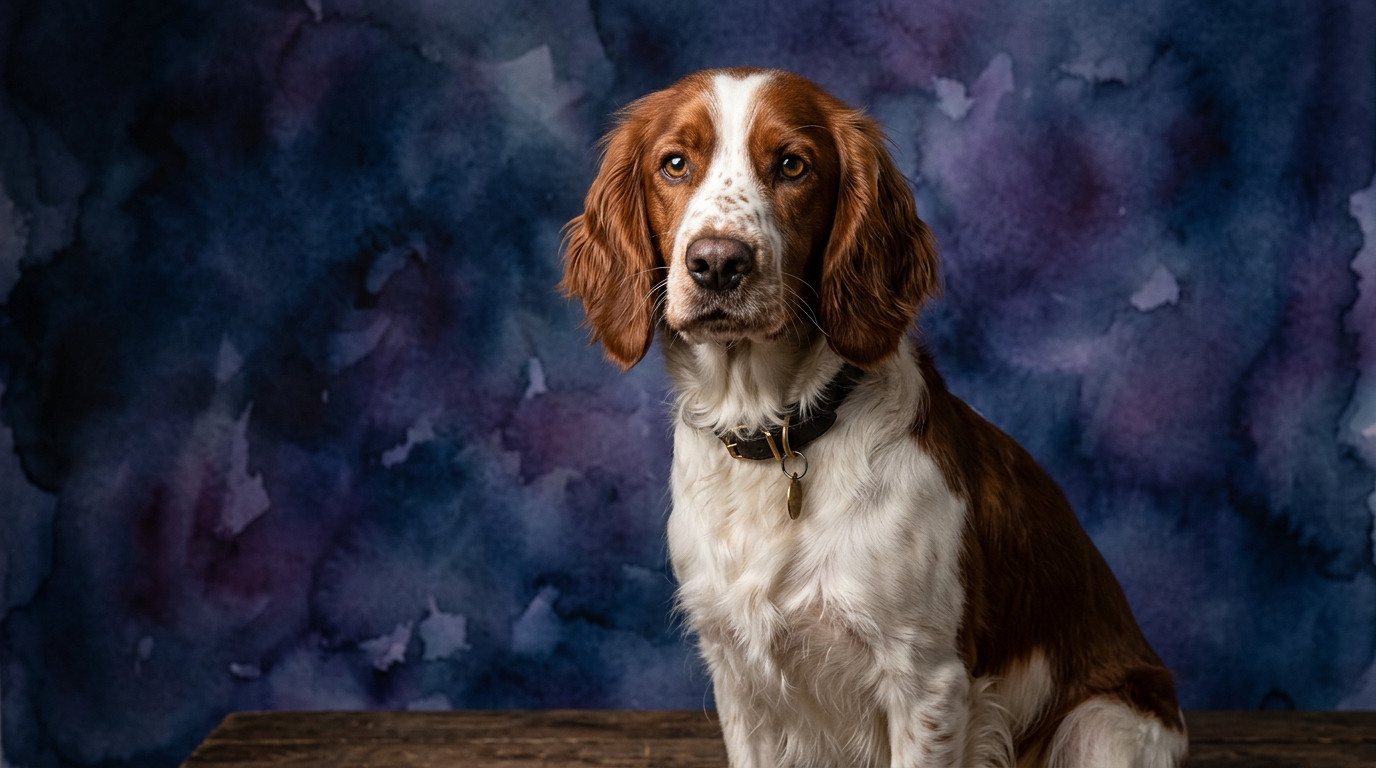
Side-by-Side Cognitive Profiles: Old English Sheepdog vs. Welsh Springer Spaniel
At The Cosmic Pet Pet IQ Lab, we analyze canine intelligence across five key dimensions, revealing the nuanced mental architecture of each breed. The Old English Sheepdog (OES), a robust Herding dog, holds a Coren rank of #44, indicating a respectable capacity for understanding and obeying commands, though not at the top tier. Its cognitive profile shows problem Solving at 3/5, suggesting a methodical approach rather than impulsive quick fixes. Training Speed is also 3/5, meaning the OES learns effectively with consistent, patient guidance, forming deep-seated habits. Social Intelligence is rated 3/5, reflecting a strong bond with its human family and an ability to interpret social cues, balanced by an independent herding nature. Its Instinctive Drive, at 3/5, manifests as a natural inclination to gather and protect, without being overly intense or restless. Memory, a strong suit for the OES, scores 4/5, enabling it to retain routines, commands, and spatial information with considerable accuracy, crucial for its historical role in managing livestock over vast areas.
In contrast, the Welsh Springer Spaniel (WSS), a vibrant Sporting dog, boasts a higher Coren rank of #31, placing it significantly higher in working and obedience intelligence. Its Problem Solving ability scores 4/5, indicating a quicker aptitude for navigating novel situations and figuring out solutions. Training Speed is also 4/5, showcasing an eager-to-please nature and a rapid grasp of new commands and concepts, typical of a cooperative gun dog. Social Intelligence matches the OES at 3/5, highlighting its family-oriented disposition and responsiveness to human interaction, essential for working closely with a handler. Its Instinctive Drive, like the OES, is 3/5, primarily focused on flushing and retrieving, but within a manageable and trainable framework. The WSS also shares the OES's excellent Memory score of 4/5, allowing it to recall complex sequences of tasks and mark fall locations with precision, vital for its field work.
Where the Old English Sheepdog Excels Cognitively
The Old English Sheepdog's cognitive strengths often manifest in areas requiring sustained focus and a strong recall of established patterns. While its problem-solving might be rated slightly lower than some, its 3/5 score suggests a deliberate, rather than impulsive, approach to challenges. This methodical nature, combined with a 4/5 memory, means an OES excels at remembering complex routes, routines, or the specific "rules" of its household environment. This isn't just about simple commands; it's about understanding and adhering to a larger framework, much like a herding dog remembering the boundaries of a pasture or the faces of its flock. Their herding instinct, rated 3/5, fuels a quiet observational intelligence, allowing them to assess situations and react with measured responses, rather than immediate action. This breed's strength lies in its ability to internalize and consistently apply learned behaviors and remembered sequences over long periods, making it highly reliable once a system is established. For an owner, this translates to a dog that, once trained, is remarkably consistent in its behavior and adherence to household expectations, relying on its robust memory for established protocols.
Where the Welsh Springer Spaniel Shows Cognitive Superiority
The Welsh Springer Spaniel's cognitive advantages are evident in its quicker learning and adaptive problem-solving capabilities. With a Coren rank of #31, significantly higher than the OES, and a Problem Solving score of 4/5, the WSS demonstrates a superior ability to quickly assess new situations and devise effective strategies. This agility of mind is crucial for a sporting dog navigating varied terrain, interpreting subtle handler cues, and making split-second decisions in the field. Their Training Speed of 4/5 further underscores this, as they are typically eager to learn and absorb new commands and complex sequences with remarkable alacrity. This isn't just about obedience; it's about the ability to process information rapidly and apply it to novel contexts. While both breeds share a 4/5 memory, the WSS often leverages its memory in conjunction with faster processing, allowing for more dynamic application of learned skills. This translates to a dog that can master a wider range of activities and adapt to new training challenges with greater ease and enthusiasm, making it a highly versatile and engaging partner for various dog sports or advanced obedience.
Which Breed is Easier to Train and Why
When evaluating ease of training, the Welsh Springer Spaniel generally presents a more straightforward experience for owners due to its inherent cognitive makeup and historical role. With a Training Speed of 4/5 and a higher Coren rank of #31, the WSS is typically more eager to please and receptive to instruction. Their sporting background has bred a desire for cooperation and responsiveness to handler direction, meaning they often pick up new commands and complex sequences with relative speed and enthusiasm. They thrive on positive reinforcement and quickly understand the connection between their actions and desired outcomes, making training sessions engaging and productive. In contrast, the Old English Sheepdog, with a Training Speed of 3/5 and a Coren rank of #44, often requires more patience and consistency. While perfectly capable of learning, their herding independence means they might occasionally exhibit a "what's in it for me?" attitude, requiring owners to find compelling motivators. Their methodical problem-solving style means they may take a little longer to internalize new concepts, but once learned, their strong memory ensures consistency. Therefore, while both breeds are trainable, the WSS often offers a quicker and more fluid training journey, while the OES benefits from an owner who appreciates a more deliberate and consistent approach, understanding that deep learning takes time.
Which Suits Active Owners vs. Relaxed Owners
The choice between an Old English Sheepdog and a Welsh Springer Spaniel often hinges on an owner's lifestyle and activity level. The Welsh Springer Spaniel, with its sporting heritage, is undeniably suited for active owners. This breed thrives on regular, vigorous exercise that goes beyond a simple walk around the block. They need outlets for their instinctive drive (3/5), which translates into a desire to run, fetch, swim, and engage in mentally stimulating activities like dog sports (agility, flyball) or scent work. Their quick problem-solving (4/5) and training speed (4/5) mean they excel in these active pursuits, making them ideal companions for hikers, runners, or anyone who enjoys dedicating significant time to outdoor adventures and structured play. A WSS that doesn't receive sufficient physical and mental stimulation can become bored and potentially destructive. The Old English Sheepdog, while certainly not a couch potato, can be a better fit for owners seeking a companion with a slightly less intense daily exercise demand, particularly those who appreciate consistent, purposeful activity rather than high-octane bursts. Their herding background means they appreciate long, meandering walks, consistent routines, and engaging in "management" tasks around the home. While they need regular exercise to prevent boredom and maintain health, their energy tends to be more sustained and less frantic than a typical sporting spaniel. They are content with a large yard to patrol, consistent family interaction, and perhaps some structured play, making them suitable for owners who enjoy a steady pace of life but are committed to daily engagement and exercise without needing an extreme athlete.
The Verdict
Choose the Old English Sheepdog if you value a loyal, independent companion who thrives on consistent routines, a patient training approach, and a strong memory for established patterns within a family setting. This breed suits owners who appreciate a deliberate pace and a dog that becomes a steadfast, deeply ingrained part of the household fabric.
Opt for the Welsh Springer Spaniel if you seek an enthusiastic, responsive partner for outdoor adventures and dog sports, valuing a quick learner and a cooperative spirit in training. This breed is ideal for active individuals or families who can provide ample physical and mental stimulation, enjoying a dynamic and engaged canine companion.
🧠 Find Your Pet's IQ Score
Our Pet IQ Lab assessment covers 25+ tests across 5 cognitive dimensions — personalized to your breed.
Take the Full IQ Test →Frequently Asked Questions
Is the Old English Sheepdog difficult to train?
The Old English Sheepdog isn't difficult to train, but requires consistency and patience due to its 3/5 training speed and independent herding nature. They learn well with positive reinforcement, and once concepts are grasped, their 4/5 memory ensures retention. Owners should be prepared for a more deliberate training journey than with some other breeds.
Do Welsh Springer Spaniels need a lot of exercise?
Yes, Welsh Springer Spaniels require significant daily exercise due to their sporting heritage. Their 3/5 instinctive drive and high energy levels necessitate regular vigorous activity like running, fetching, or swimming. Without sufficient mental and physical stimulation, they can become bored or exhibit undesirable behaviors.
Which breed is better for first-time dog owners?
For first-time dog owners, the Welsh Springer Spaniel might be slightly easier to manage due to its higher training speed (4/5) and eagerness to please, which can make initial obedience training more rewarding. However, both breeds require commitment to socialization, consistent training, and meeting their specific exercise needs to thrive.