
Side-by-Side IQ Profile: OES vs. Xolo
The Old English Sheepdog (OES), a Herding group member Coren-ranked at #44, exhibits a cognitive profile shaped by its working heritage. Its Problem Solving score of 3/5 reflects a practical approach to challenges, such as figuring out how to move livestock or navigate obstacles in a field. Training Speed, also 3/5, indicates a steady learning pace requiring consistent methods, while Social Intelligence at 3/5 highlights their attunement to human cues, essential for cooperative tasks. Their Instinctive Drive, a 3/5, is primarily rooted in the desire to herd and gather, manifesting as a persistent focus on movement. A standout feature is their Memory at 4/5, allowing for excellent recall of complex routines and tasks.
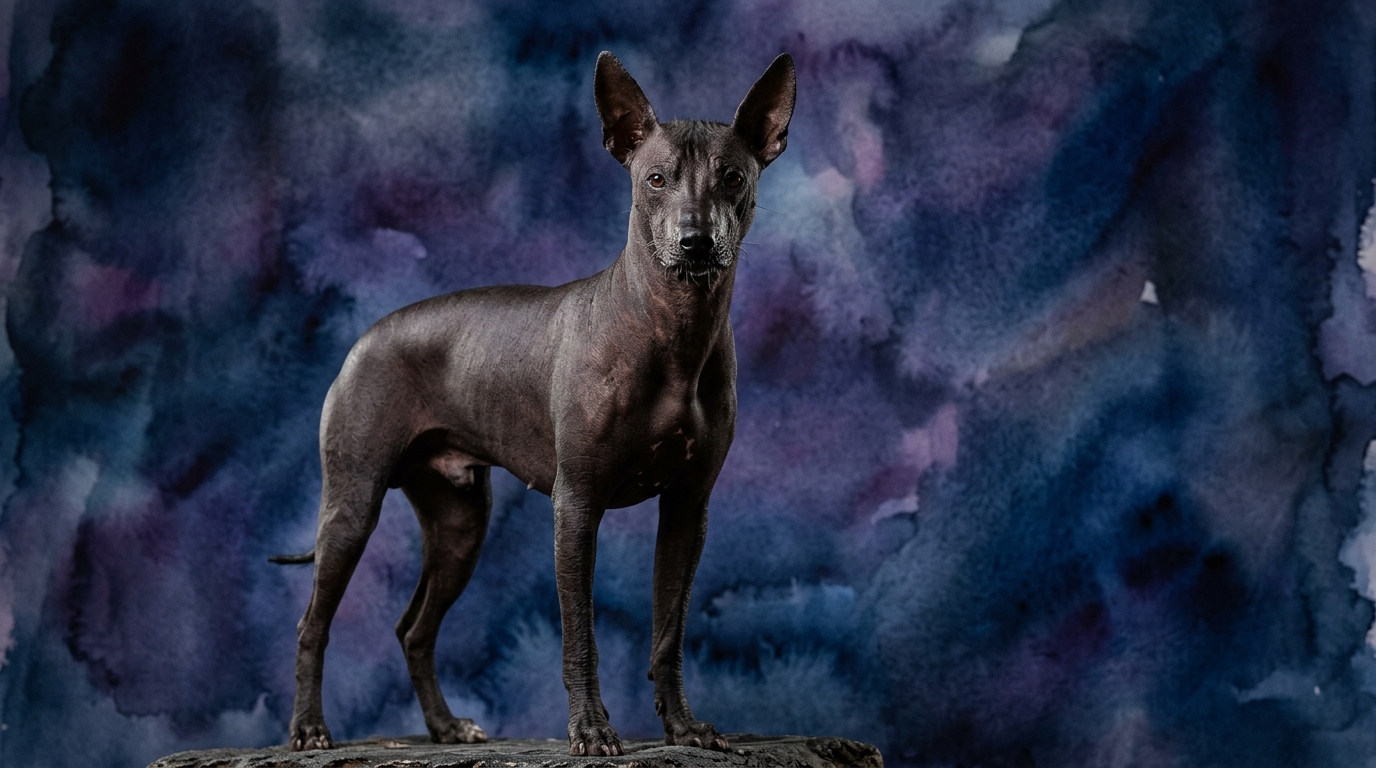
The Xoloitzcuintli (Xolo), a Non-Sporting breed not Coren-ranked, presents a consistent cognitive landscape across most dimensions. Their Problem Solving is 3/5, often expressed through thoughtful observation and independent decision-making rather than boisterous action to achieve a goal. Training Speed, also 3/5, suggests they learn reliably with patience, though their independent nature means they may require strong motivation. Social Intelligence at 3/5 underscores their deep, intuitive bond with family members and a watchful understanding of household dynamics, though they can be reserved with strangers. Their Instinctive Drive, also 3/5, is largely focused on protection and companionship, a deep-seated desire to be near and guard their human family. The Xolo’s Memory score is 3/5, indicating reliable recall of routines and trusted individuals, but perhaps without the intricate detail seen in some working breeds.
Where the Old English Sheepdog Wins Cognitively
The Old English Sheepdog truly shines in its memory capacity, scoring a notable 4/5 compared to the Xoloitzcuintli’s 3/5. This enhanced recall is a direct inheritance from their herding lineage, where remembering intricate routes, the positions of individual animals, and a wide array of commands was crucial for effective work. An OES can retain a broad repertoire of learned behaviors and complex routines with remarkable clarity, making them exceptionally adept at multi-stage tasks or recalling specific cues learned months or even years prior. For owners keen on advanced obedience, rally, or even intricate trick training, the OES's robust memory provides a distinct advantage, allowing for continuous skill development without the need for constant re-teaching. This cognitive strength also extends to remembering people and places, fostering deep, enduring bonds and a reliable understanding of their home environment and its inhabitants.
Where the Xoloitzcuintli Wins Cognitively
While both breeds share identical scores in problem-solving and social intelligence, the Xoloitzcuintli’s unique expression of its instinctive drive (3/5) offers a subtle but significant cognitive edge in specific contexts. Unlike the task-oriented herding drive of the OES, the Xolo’s drive is primarily rooted in deep companionship and protective vigilance. This translates into a profound social awareness centered on their immediate family, often manifesting as a quiet, intuitive understanding of household dynamics and their owner’s emotional state. Their independent problem-solving (3/5) is frequently geared towards self-preservation or safeguarding their human companions, demonstrating a thoughtful cunning rather than overt, boisterous action. This nuanced cognitive strength lies in their persistent focus on their human bond, enabling a perceptive and discerning social intelligence that prioritizes observation and subtle interaction, making them exceptionally attuned companions in a less physically demanding, more intimately connected manner.
Which Is Easier to Train and Why
When evaluating ease of training, the Old English Sheepdog, despite sharing a 3/5 training speed score with the Xoloitzcuintli, often presents as more straightforward due to its superior memory (4/5) and historical predisposition for cooperative work. An OES is generally eager to please and, once a command is grasped, it tends to stick, requiring less review. Their herding background means they are accustomed to working in partnership with humans, making them receptive to structured learning environments and consistent instruction. This readiness to engage and remember complex sequences makes training a more predictable and often rewarding experience for the owner.
The Xolo, conversely, possesses a strong independent streak. While equally capable of learning new concepts, their training often requires more patience and a deeper understanding of their motivations. They can be thoughtful and discerning, sometimes appearing 'stubborn' if they don't see the immediate value or logic in a command, or if the training isn't consistently engaging. Real behavioral differences include the OES’s tendency to embrace routines and tasks with a buoyant enthusiasm, often trying to anticipate what is desired, whereas a Xolo might need more convincing or a reward system that strongly appeals to its sometimes reserved and self-directed nature before fully committing to compliance. Their learning is solid, but their approach is often more deliberate.
Which Suits Active Owners vs. Relaxed Owners
For active owners seeking a canine partner for varied adventures and structured activities, the Old English Sheepdog is often a more natural and enthusiastic fit. Their herding heritage has endowed them with a considerable need for regular mental and physical engagement, thriving on purpose and tasks. Owners who enjoy long walks, hiking, or participating in dog sports like agility, obedience, or even casual herding games will find the OES a willing, capable, and often joyful companion. Their robust physical build and intrinsic desire for a job align well with a lifestyle that includes consistent, structured activities and opportunities to utilize their problem-solving and memory skills in dynamic, engaging ways.
Relaxed owners will likely find the Xoloitzcuintli more suitable for their lifestyle. While they certainly appreciate and benefit from regular exercise, their needs are generally less demanding than a working breed. Xolos are content with moderate daily walks and regular playtime, often preferring to spend the rest of their time as a calm, watchful, and affectionate presence beside their human companions. Their social intelligence is geared towards intimate family bonds, and they thrive in environments where they can observe and be present, rather than constantly performing or being 'on duty.' Their independent yet deeply loyal nature means they can entertain themselves for periods, making them less prone to restlessness or destructive behaviors if not constantly engaged by their owner, fitting well into a calmer, more reflective home environment.
The Verdict: When to Choose Each Breed
The Verdict
Choose the Old English Sheepdog if you are an active owner seeking a cooperative companion for varied activities, valuing a dog with robust memory and a history of working alongside humans. Their enthusiasm for tasks and strong recall make them suitable for structured training and dog sports.
Choose the Xoloitzcuintli if you prefer a thoughtful, sensitive companion who thrives on close family bonds and a calmer home environment, appreciating their discerning nature and protective devotion. They are well-suited for owners who value quiet companionship and can appreciate a dog with an independent spirit.
🧠 Find Your Pet's IQ Score
Our Pet IQ Lab assessment covers 25+ tests across 5 cognitive dimensions — personalized to your breed.
Take the Full IQ Test →Frequently Asked Questions
Is the Old English Sheepdog truly smarter than the Xoloitzcuintli?
The Pet IQ Lab data suggests the Old English Sheepdog has a stronger memory (4/5 vs 3/5) and is Coren-ranked at #44, while the Xolo is not Coren-ranked. However, both breeds score identically in problem-solving, training speed, social intelligence, and instinctive drive, indicating comparable overall cognitive abilities, just with different emphasized strengths.
How does the Xoloitzcuintli's 'Not Coren-ranked' status impact its intelligence perception?
The Coren ranking primarily assesses obedience and working intelligence, which heavily favors breeds developed for cooperative tasks. A 'Not Coren-ranked' status for the Xoloitzcuintli doesn't imply a lack of intelligence, but rather reflects their historical role as companion and guardian, which emphasizes independent thought and sensitivity over strict obedience to commands.
Can a Xoloitzcuintli be trained for advanced obedience or dog sports?
Yes, Xoloitzcuintli can certainly be trained for advanced obedience and various dog sports. While their independent nature might require more creative and patient training methods compared to some working breeds, their problem-solving and social intelligence scores indicate they are fully capable of learning complex tasks with the right motivation and consistent positive reinforcement.