
Side-by-Side Cognitive Profiles
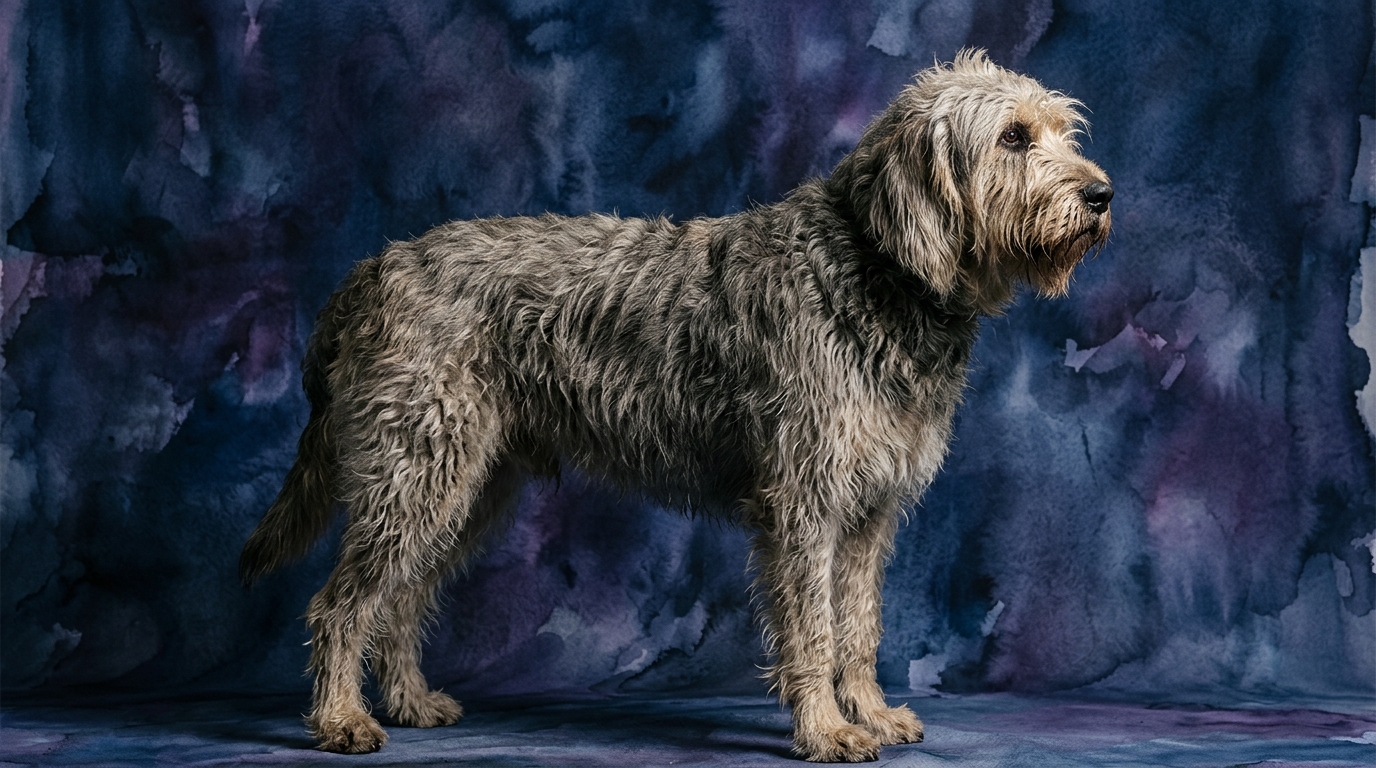
At The Cosmic Pet Pet IQ Lab, both the Otterhound, a large hound bred for otter hunting, and the Toy Fox Terrier, a compact toy breed with terrier tenacity, register identical scores across all five intelligence dimensions. This uniform scoring of 3 out of 5 for Problem Solving, Training Speed, Social Intelligence, Instinctive Drive, and Memory indicates a moderate, capable level of cognitive function for both, though their application of these abilities diverges significantly due to their distinct biological programming and historical roles.
A 3/5 in Problem Solving suggests both breeds possess a decent capacity to independently figure out solutions to novel challenges, rather than relying solely on learned behaviors or human intervention. For Training Speed, a 3/5 indicates they learn new commands and routines at a moderate pace, not instant learners but certainly not slow. Social Intelligence at 3/5 means they are moderately adept at interpreting human cues, understanding social structures within a household, and adapting their behavior accordingly. Instinctive Drive, also 3/5, points to a moderate level of innate, hardwired behaviors like hunting, guarding, or herding, which are intrinsic to their breed. Finally, a 3/5 in Memory signifies a moderate ability to recall past experiences, learned commands, and relationships, enabling them to build on previous interactions and training.
Where the Otterhound Excels Cognitively
Despite sharing a 3/5 cognitive profile with its smaller counterpart, the Otterhound's 'wins' in cognitive application are deeply rooted in its heritage as a scent hound. Its 3/5 Problem Solving and Instinctive Drive manifest as an exceptional, unwavering persistence when following a scent trail. An Otterhound might meticulously navigate complex outdoor environments, overcoming obstacles like fences or water, purely driven by its nose, demonstrating a focused, analytical approach to environmental puzzles directly related to its original purpose. This isn't about solving abstract logic puzzles, but rather about methodically processing a world of olfactory information to achieve a goal.
Their 3/5 Social Intelligence often translates into a jovial, cooperative nature within their family unit, even if they maintain a certain hound independence. They are adept at understanding the general mood of their household and are typically good-natured, though their size means their expressions of affection are robust. The 3/5 Memory score in an Otterhound can be particularly evident in their recall of specific hunting grounds or preferred sniffing locations, showing a strong spatial memory tied to their primary sensory input.
Where the Toy Fox Terrier Excels Cognitively
The Toy Fox Terrier, with its identical 3/5 scores, demonstrates its cognitive strengths in a much different arena. Its 3/5 Problem Solving shines through in its quick-witted approach to domestic challenges, such as figuring out how to access a forbidden treat, outmaneuver a larger pet for a prime napping spot, or cleverly alert its owner to perceived threats. This breed's problem-solving is often characterized by ingenuity and resourcefulness within a home environment, sometimes bordering on mischievousness.
The Toy Fox Terrier's 3/5 Training Speed is often applied to learning a vast repertoire of tricks and routines, capitalizing on their desire for engagement and attention. Their 3/5 Social Intelligence makes them particularly astute at reading human emotions and intentions, often using their charm and expressive faces to solicit attention, comfort, or play. This breed's 3/5 Instinctive Drive is most apparent in its tenacious terrier spirit—a sharp, alert disposition, a strong prey drive for small critters, and a confident, sometimes bold, demeanor that belies its small stature.
Training Dynamics: Otterhound vs. Toy Fox Terrier
Both breeds score a 3/5 in Training Speed, suggesting a moderate learning curve, but their training dynamics are quite distinct due to their inherent temperaments and drives. The Otterhound, while capable of learning, can be profoundly distracted by scents. Their 3/5 Instinctive Drive for tracking means that once a compelling smell is detected, their focus can shift entirely from their handler to the olfactory trail. Training an Otterhound requires immense patience, consistency, and highly motivating rewards to compete with their nose. Their independent hound nature means they often need to understand the 'why' behind a command, or at least be sufficiently motivated, rather than simply obeying without question.
The Toy Fox Terrier, conversely, also presents its own training challenges. While quick to grasp concepts (3/5 Training Speed), their terrier stubbornness and high energy can lead to boredom if training sessions are repetitive or too long. Their 3/5 Social Intelligence can make them adept at manipulating situations for their benefit, and their 3/5 Instinctive Drive for chasing and being alert means they can be easily distracted by movement or sounds. Effective training for a Toy Fox Terrier leverages their desire for interaction and praise, using short, fun, varied sessions with positive reinforcement to keep them engaged and prevent their quick minds from wandering to less desirable activities.
Ideal Lifestyles: Active vs. Relaxed Owners
When considering an Otterhound, prospective owners must recognize that its 3/5 Instinctive Drive and the physical demands of its original role translate into significant exercise requirements. These are boisterous dogs that need ample space to romp and opportunities to engage their powerful noses. Owners who enjoy long hikes, scent work, or other outdoor dog sports would find a compatible companion in an Otterhound. A relaxed owner who prefers minimal outdoor activity or lives in a small apartment without access to expansive outdoor areas would likely find an Otterhound's energy and size overwhelming.
The Toy Fox Terrier, while small, is far from a sedentary lapdog. Its 3/5 Instinctive Drive and lively spirit demand consistent mental and physical stimulation, though this can often be met through energetic indoor play and regular walks. They can adapt well to various living situations, including apartments, provided their owners are committed to daily engagement and exercise. Owners who appreciate a spirited, interactive companion, and are prepared for a dog that thrives on being part of family activities, whether active play or cozy cuddles, would suit a Toy Fox Terrier. A truly 'relaxed' owner who offers little interaction or mental challenge might find the Toy Fox Terrier's intelligence and energy lead to undesirable behaviors born of boredom.
The Verdict
Choose an Otterhound if you seek a unique, boisterous, and affectionate companion with a powerful nose, and you can provide extensive outdoor activity, space, and a patient approach to training.
Opt for a Toy Fox Terrier if you desire a lively, intelligent, and highly interactive small dog that thrives on engagement and can adapt to varied living situations, provided you meet its mental and physical needs.
🧠 Find Your Pet's IQ Score
Our Pet IQ Lab assessment covers 25+ tests across 5 cognitive dimensions — personalized to your breed.
Take the Full IQ Test →Frequently Asked Questions
Are Otterhounds difficult to train?
Otterhounds are moderately trainable (3/5 Training Speed), but their strong scent drive and independent hound nature mean they can be easily distracted and require consistent, patient training with high-value rewards to maintain focus. They are not typically a 'beginner's dog' when it comes to obedience.
Do Toy Fox Terriers bark a lot?
Toy Fox Terriers have a 3/5 Instinctive Drive, which includes being alert and vocal. They can be prone to barking at perceived threats, strangers, or even just for attention, a trait common in many terrier and toy breeds. Early training and socialization can help manage this tendency.
Which breed is better with children?
Both breeds can be good with children, but require proper socialization and supervision. Otterhounds are generally good-natured but their large size and boisterous play style can accidentally overwhelm small children. Toy Fox Terriers are sturdy for their size but can be nippy if not respected, making them better suited for older, more considerate children who understand how to interact with a small, spirited dog.