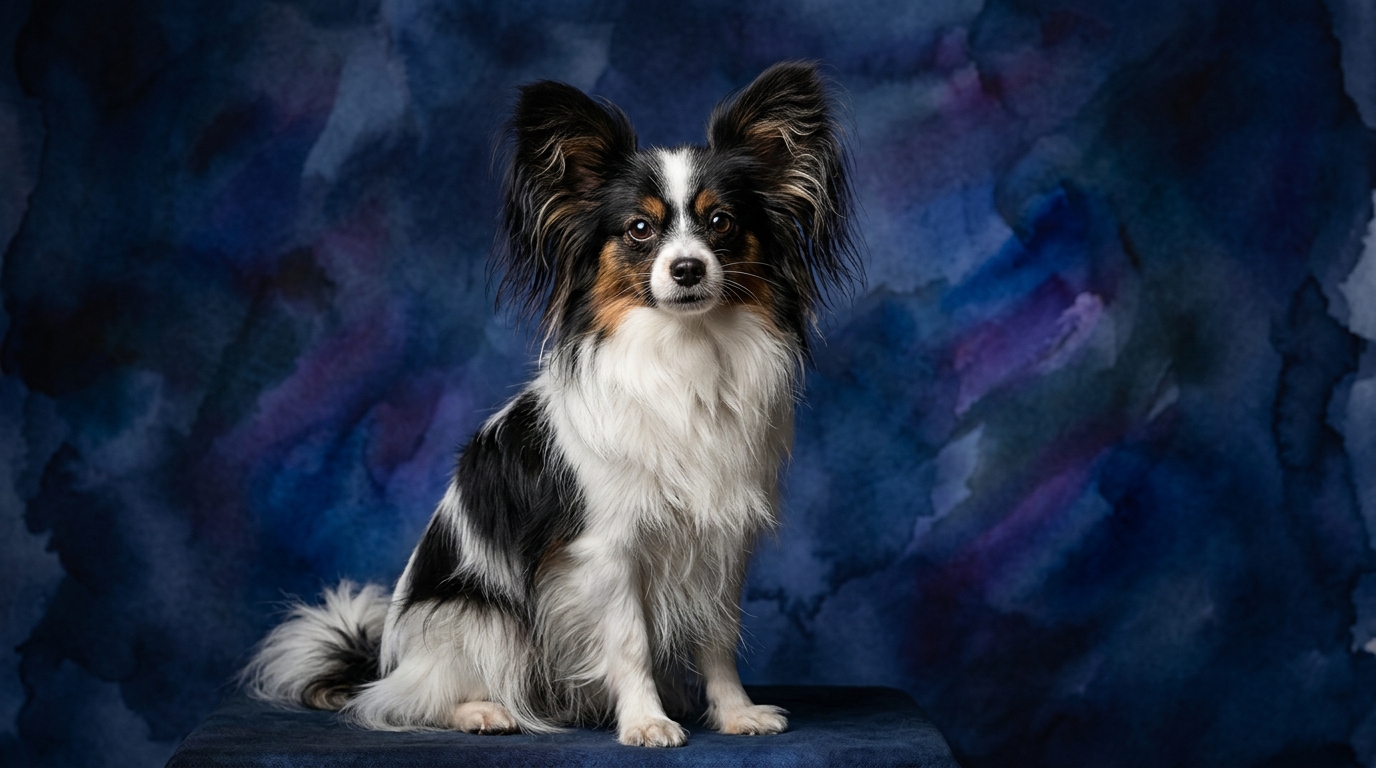

Side-by-Side IQ Profile: Papillon vs. Boerboel
At The Cosmic Pet Pet IQ Lab, we evaluate canine cognition across five crucial dimensions, providing a nuanced understanding of each breed's mental landscape. The Papillon, often seen gracing agility courses and laps alike, registers an impressive Coren rank of #8, signaling a breed with a keen aptitude for understanding human directives and adapting rapidly. Its cognitive profile reflects this, with Problem Solving rated 5/5, indicating an exceptional capacity to navigate complex challenges and figure out novel solutions. Training Speed also stands at 5/5, meaning new commands and routines are typically grasped with remarkable swiftness, often requiring minimal repetition. Social Intelligence is strong at 4/5, allowing them to read human cues and interact appropriately in various social settings, though their smaller stature can sometimes influence their boldness. Their Instinctive Drive is moderate at 3/5, manifesting as a balanced blend of companion seeking and an appropriate level of curiosity, rather than an overwhelming prey drive. Finally, their Memory is outstanding at 5/5, ensuring that once a lesson is learned or a trick mastered, it is retained for the long term.
The Boerboel, a majestic working breed, is not currently Coren-ranked, yet possesses a distinct set of cognitive strengths tailored to its historical role. Its Problem Solving ability is rated 3/5, suggesting a practical approach to challenges; they will methodically work through issues, though perhaps not with the rapid innovation seen in the Papillon. Training Speed is also 3/5, meaning they are certainly trainable, but require consistent, clear instruction and more repetition to solidify new behaviors compared to their toy breed counterpart. Their Social Intelligence scores 3/5, indicating a discerning nature; they are deeply loyal and attuned to their family, but often reserved or watchful with strangers, a trait integral to their guarding instincts. Instinctive Drive is a solid 3/5, primarily focused on protection and territorial awareness, rather than a high drive for retrieving or herding. Their Memory, at 3/5, is reliable for essential commands and routines, ensuring they retain crucial information for their duties, though perhaps not the vast repertoire of tricks a Papillon might master.
Where the Papillon Excels Cognitively
The Papillon’s cognitive architecture shines brightest in scenarios demanding rapid learning, intricate problem-solving, and precise execution. Their 5/5 Problem Solving and Training Speed mean they not only quickly understand multi-step commands but also actively enjoy the mental stimulation of figuring out new tasks. For instance, a Papillon might quickly learn to unlatch a complex puzzle feeder or master a multi-part agility course after just a few repetitions, demonstrating an innate capacity for sequential thought and environmental manipulation. Their exceptional memory (5/5) means that once these intricate sequences are learned, they are rarely forgotten, making them outstanding candidates for advanced obedience, rally, or even competitive freestyle canine dancing, where a vast array of precise movements must be recalled flawlessly. This breed's cognitive agility allows them to adapt to new environments and routines with remarkable ease, often thriving on the novelty and challenge of diverse experiences, from city living to international travel, provided they have adequate mental engagement.
Where the Boerboel Shows its Cognitive Strengths
While not a breed to chase the fastest trick acquisition records, the Boerboel's cognitive strengths are deeply rooted in its purpose: discerning guardianship and unwavering loyalty. Their 3/5 Social Intelligence, while not indicating a universal friendliness, points to a profound ability to assess situations and differentiate between friend and potential threat. This isn't just about barking; it’s about reading subtle cues in human behavior and environmental changes, making a calculated judgment on when to act. A Boerboel might not solve a complex puzzle box as quickly as a Papillon, but its cognitive focus is on vigilance—an astute awareness of its surroundings and the well-being of its family. Their memory (3/5) is robust for core duties and established routines, ensuring they recall boundaries, family members, and essential commands with steadfast reliability. This breed's problem-solving (3/5) manifests more in practical, real-world applications, such as identifying an unusual sound in the distance or understanding the need to position themselves between a child and a perceived danger, rather than abstract intellectual exercises. Their intelligence is a quiet, observant strength, prioritizing security and stability.
Ease of Training: A Tale of Two Temperaments
When considering ease of training, the Papillon's profile (5/5 Training Speed, 5/5 Problem Solving) positions it as an exceptionally responsive and eager student. They typically pick up new commands in very few repetitions, often showing a genuine enthusiasm for learning and performing. Their keen desire to please, coupled with their cognitive quickness, means they often enjoy the training process as a form of mental engagement and bonding. Behavioral differences include their high energy and need for mental stimulation, which, if not met, can lead to mischievous problem-solving (e.g., opening cabinets). They respond well to positive reinforcement and thrive on variety in training sessions, quickly becoming bored with repetitive drills.
The Boerboel, with its 3/5 Training Speed and Problem Solving, requires a different approach to training. They are capable of learning, but their process is more deliberate. Consistency, patience, and clear, firm guidance are paramount. Unlike the Papillon, who might jump at the chance to learn a new trick, the Boerboel approaches training with a more thoughtful, sometimes independent, mindset. Their protective instincts mean early and thorough socialization is crucial to channel their discerning social intelligence effectively. They respond best to a confident, consistent leader who establishes clear boundaries. Expecting rapid-fire trick acquisition would be unrealistic; instead, focus on foundational obedience, good manners, and reinforcing their natural guarding tendencies in appropriate ways. Their memory, while not 5/5, is reliable for core commands, ensuring that once a behavior is learned through consistent practice, it sticks.
Matching Breeds to Lifestyles: Active vs. Relaxed Owners
For the active owner who thrives on daily engagement and intricate activities, the Papillon is an ideal match. Their boundless energy and cognitive drive mean they excel in dog sports like agility, flyball, and obedience, requiring an owner who can dedicate time to structured training and mental games. They enjoy being the center of attention and participating in family adventures, from hiking to urban exploration. A relaxed owner who prefers minimal interaction might find a Papillon's constant need for mental and physical stimulation challenging, as an under-stimulated Papillon can invent its own, potentially disruptive, forms of entertainment. They are not content to simply be a lap warmer; they want to be an active participant in life.
Conversely, the Boerboel is better suited for owners who embody a calm, confident leadership, prepared for the commitment of managing a large, powerful breed with strong protective instincts. While they require regular exercise to maintain their imposing physique, their cognitive needs lean more towards consistent structure, clear communication, and purposeful tasks rather than constant, high-energy mental games. They are not a breed for novice owners or those seeking a 'set it and forget it' companion. Owners who appreciate a steadfast, loyal presence, and are dedicated to extensive early socialization and ongoing training to channel their protective nature responsibly, will find a deeply rewarding companion in the Boerboel. They thrive in a stable home environment where their role as guardian is understood and guided, rather than constantly seeking novel intellectual challenges.
The Verdict
Choose a Papillon if you seek a highly trainable, mentally agile companion for dog sports, advanced tricks, and constant interactive engagement.
Choose a Boerboel if you desire a steadfast, discerning guardian requiring consistent leadership, extensive socialization, and a deep understanding of working breed traits.
🧠 Find Your Pet's IQ Score
Our Pet IQ Lab assessment covers 25+ tests across 5 cognitive dimensions — personalized to your breed.
Take the Full IQ Test →Frequently Asked Questions
Is a Papillon difficult to train for a beginner?
No, Papillons are generally considered excellent for beginners due to their high training speed and eagerness to learn. Their responsiveness and desire to please make the training process enjoyable and relatively quick for new owners, especially with positive reinforcement methods.
Do Boerboels require a lot of mental stimulation?
Boerboels require consistent mental stimulation, though it differs from a Papillon's need for complex puzzles. Their intelligence leans towards vigilance and discerning social interactions, so training focused on obedience, boundaries, and appropriate guarding behaviors is crucial for their mental well-being.
Which breed is better with children, based on their social intelligence?
Both breeds can be good with children under proper supervision and socialization. The Papillon's 4/5 social intelligence allows them to adapt well to family dynamics, while the Boerboel's 3/5 social intelligence means they are deeply loyal and protective of their family children, though their sheer size and guardian instincts necessitate careful management.