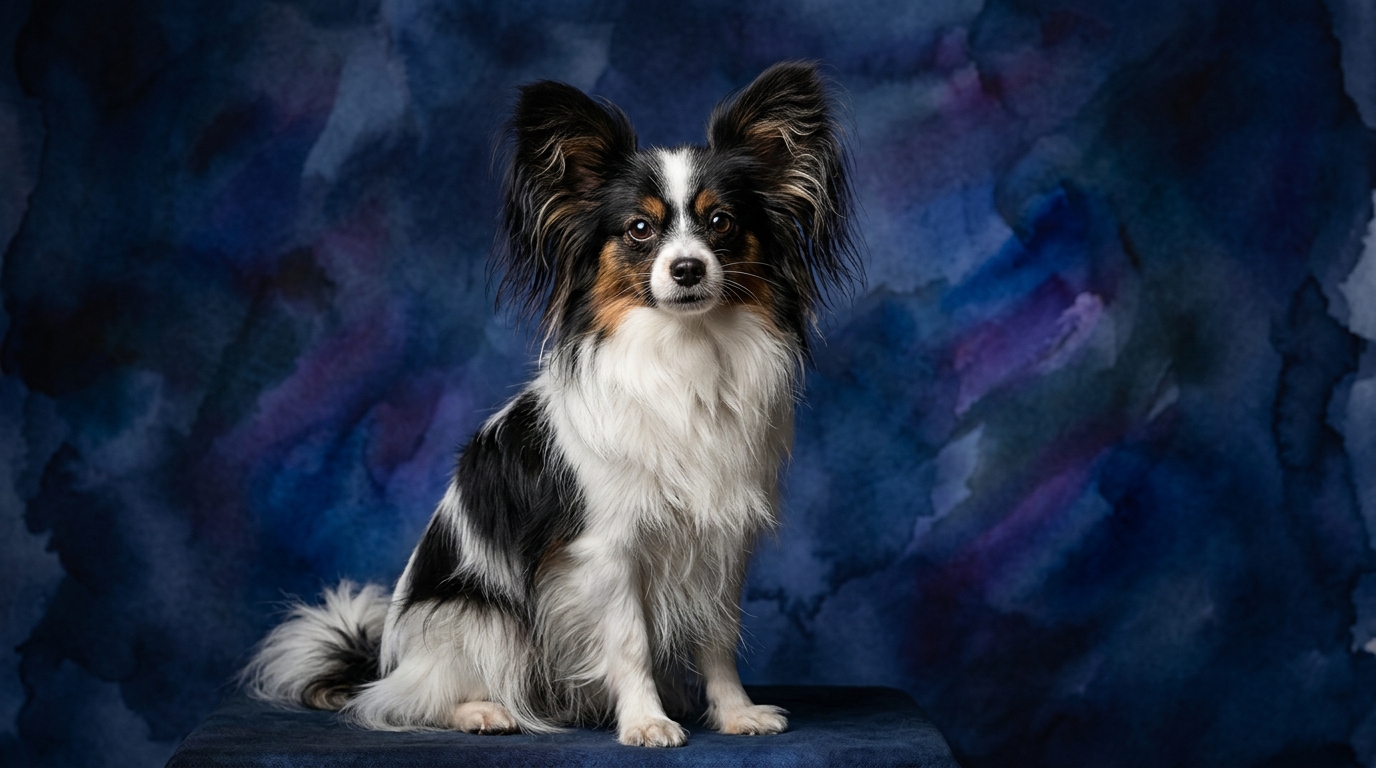
Papillon at a glance
| IQ Rank / Score | #8 |
|---|---|
| Trainability | ★★★★★ (5/5) |
| Social Intelligence | ★★★★☆ (4/5) |
| Lifespan | 12-16 years |
| Shedding | Low to moderate |
| Exercise Needs | Moderate (30-45 min/day) |
| Origin | France/Belgium |
The Papillon Paradox: A Working Mind in a Toy Package
Originating from European nobility as cherished companions, the Papillon embodies a fascinating paradox: a dog bred purely for companionship yet equipped with an intellectual capacity that rivals many traditional working breeds. This isn't just an anecdotal observation; Dr. Stanley Coren's renowned obedience intelligence ranking places the Papillon at an astonishing #8 out of 138 breeds. This makes them the highest-ranked toy breed on the entire list, shattering expectations and highlighting a cognitive prowess that defies their delicate appearance.
What makes this ranking so remarkable? Most breeds that dominate the top spots are historically associated with complex tasks: herding, retrieving, or protection. The Papillon, on the other hand, was developed to be a decorative lap dog, yet their inherent problem-solving abilities and rapid learning speed are undeniable. They possess a mental agility that allows them to grasp new concepts with impressive swiftness, often making them a joy to train for those who appreciate a quick-witted canine companion.
This high cognitive capacity isn't just for show; it translates into tangible achievements. Papillons regularly win agility championships against working breeds twice their size — competing on cognitive speed, not physical power. Their ability to quickly interpret courses, remember sequences, and execute commands with precision demonstrates an elite level of canine intelligence, proving that a dog's brainpower isn't dictated by its dimensions. This competitive edge speaks volumes about their mental sharpness and adaptability in high-pressure environments, a testament to their exceptional problem-solving and memory skills.
Unpacking the Papillon's Intelligence Profile
At the Cosmic Pet IQ Lab, we evaluate canine intelligence across several key dimensions, and the Papillon consistently shines. Their Problem Solving is rated a perfect 5/5, meaning these dogs excel at figuring things out independently, from intricate puzzle toys to navigating complex environments. They don't give up easily and display remarkable perseverance when faced with a challenge, often surprising owners with their clever strategies.
Their Training Speed also earns a flawless 5/5. If you've ever trained a Papillon, you know they soak up new commands like sponges, often mastering them in just a few repetitions. This makes them incredibly responsive and eager learners, thriving on mental engagement during training sessions. While their instincts aren't always geared towards traditional 'jobs' like retrieving a duck, their capacity to learn *any* new command or trick is exceptional.
Memory is another standout trait, scoring 5/5. Papillons rarely forget a learned command, a routine, or even people and places, which contributes significantly to their training success and overall adaptability. This strong memory underpins their ability to perform complex sequences in sports like agility and remember house rules without constant reinforcement. They build a deep understanding of their world through accumulated experience.
Social Intelligence, at 4/5, indicates their keen awareness of human emotions and social cues. Papillons are often described as highly empathetic, capable of picking up on their owner's mood and adjusting their behavior accordingly. They thrive on interaction and form deep bonds, understanding their place within the family unit and responding well to social learning. Finally, their Instinctive Drive, rated 3/5, reflects a moderate natural inclination towards behaviors like chasing or exploring. While not as high as a terrier or retriever, it's sufficient to fuel curiosity and engagement, especially when channelled into mentally stimulating games.
Cultivating a Papillon's Clever Mind
Given their exceptional cognitive abilities, Papillons require more than just physical exercise; they crave mental stimulation to truly thrive. Owners who provide consistent training, interactive toys, and opportunities for problem-solving will discover the true depth of their Papillon's intellect. Engaging their minds with new challenges prevents boredom and ensures they remain well-adjusted, confident companions.
Daily training sessions, even short ones, can be incredibly enriching. Focus on variety – teach new tricks, practice advanced obedience cues, or even introduce dog sports like rally or flyball. Their innate problem-solving skills make them adept at these activities. Furthermore, puzzle feeders and treat-dispensing toys can occupy their intelligent minds, turning mealtime into a mental workout and encouraging independent thinking.
3 At-Home Tests to Measure Your Papillon's IQ
These tests are adapted from peer-reviewed ethology research. No equipment is needed beyond items you have at home. Run each test 5–10 times for reliable results.
The Myth: "Small dogs are inherently less intelligent than large breeds."
✅ Canine intelligence is a complex, breed-specific trait, not a function of size. The Papillon stands as a prime example, demonstrating that cognitive capacity is independent of physical stature. Many small breeds possess keen minds, excelling in problem-solving and training, proving that intellect comes in all package sizes.
Papillon vs. Similar Breeds
🧠 What's Your Dog's IQ Score?
Our full Pet IQ Lab assessment includes 12+ tests across 5 cognitive dimensions, calibrated for Papillons specifically.
Take the Full IQ Test →Frequently Asked Questions
How smart is a Papillon?
Our Pet IQ Lab framework scores cognition across five dimensions (max 25). The Papillon totals 22/25 — exceptionally high for a domestic dog. The full article breaks down each dimension with at-home tests.
Are Papillons easy to train?
Papillons learn new cues very quickly — often in 5-15 repetitions. They score 5/5 on Training Speed in our breed profile.
Are Papillons good with children and other pets?
Yes — their Social Intelligence rates 4/5 in our Pet IQ Lab framework. With early socialization and supervised play, most Papillons integrate well into families with respectful children and other pets.
Do Papillons need a lot of mental stimulation?
Absolutely. With Problem Solving 5/5 and Instinctive Drive 3/5, Papillons need daily mental work — puzzle feeders, scent games, training sessions, or nose-work — to avoid boredom.
How much exercise does a Papillon need?
Papillons do well with 20-40 minutes of daily walks and play plus a few short training moments.
How good is a Papillon's memory?
Papillons score 5/5 on memory. They remember routines, hiding spots, and learned cues for months, sometimes years.
What is the typical lifespan of a Papillon?
Papillons commonly live 12-16 years when kept at a healthy weight.
The Papillon isn't just a pretty face with striking ears; they are a profound reminder that true canine intelligence defies stereotypes and size constraints. This small, elegant companion dog packs a cognitive punch that can rival the most esteemed working breeds, proving that brilliance often comes in the most unexpected packages.