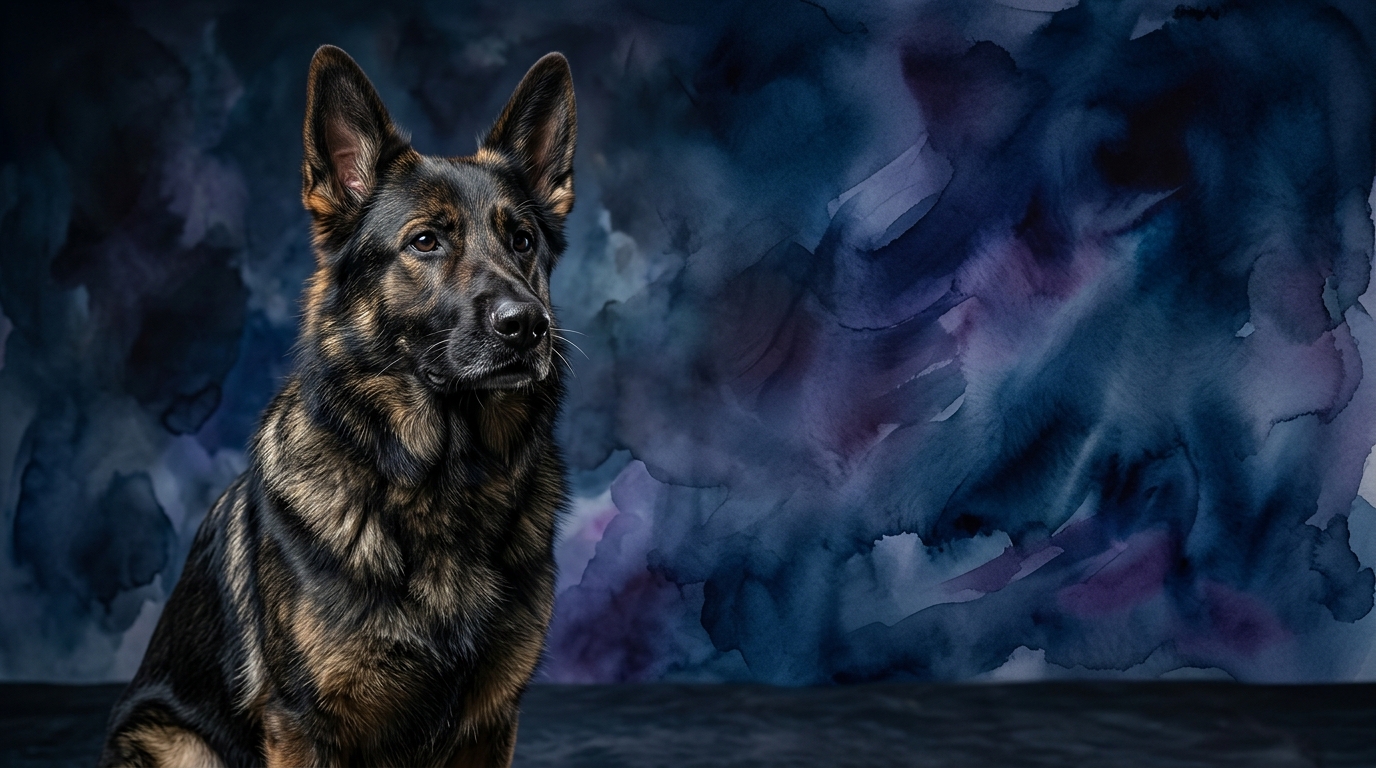
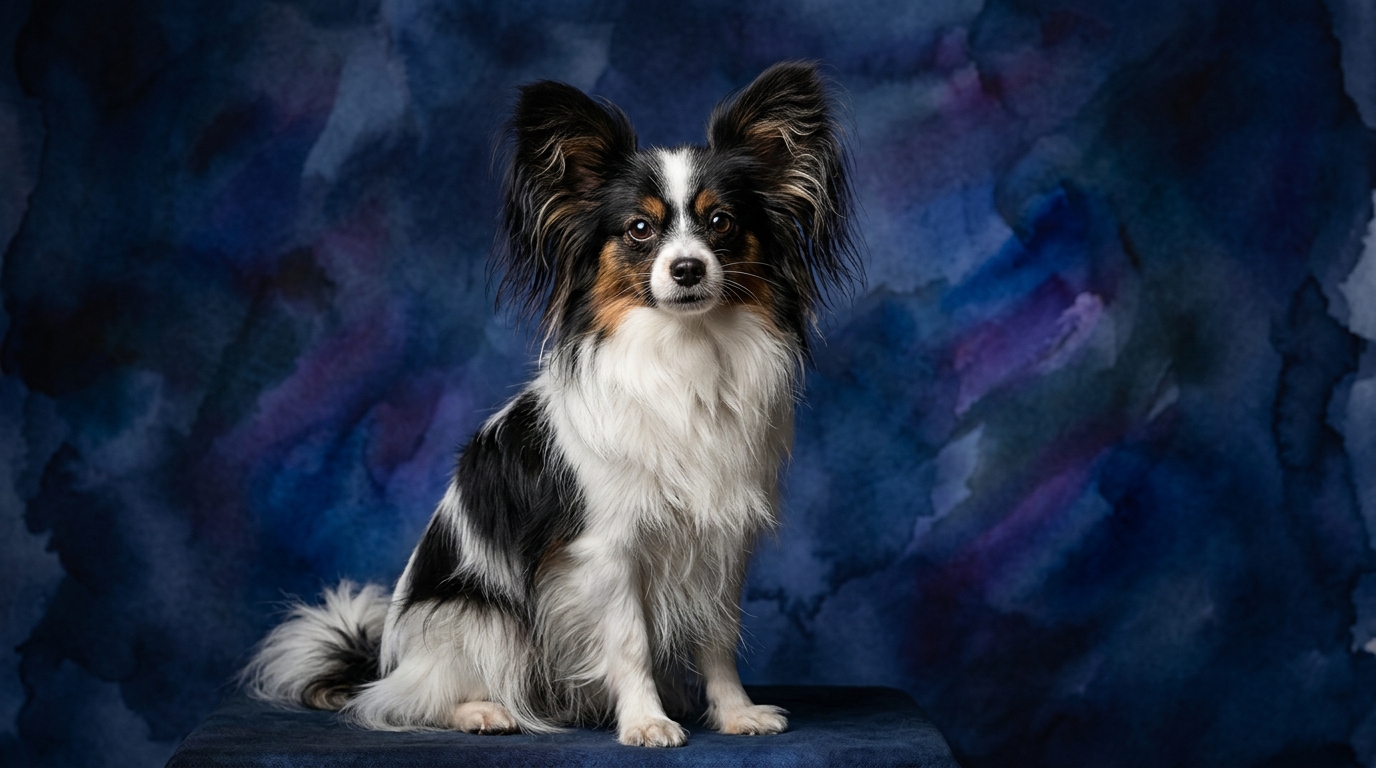
Side-by-Side IQ Profile: German Shepherd vs. Papillon
The Cosmic Pet Pet IQ Lab employs a five-dimensional cognitive framework to dissect canine intellect, offering a nuanced understanding beyond simple rankings. Let's examine how the German Shepherd (Coren rank #3) and the Papillon (Coren rank #8) measure up.
For the German Shepherd, problem Solving earns a perfect 5/5, reflecting their capacity for complex, multi-step solutions in real-world scenarios, often involving adapting to novel challenges. Training Speed is also 5/5, indicating an exceptional aptitude for acquiring and retaining new commands and behaviors with minimal repetition. Their social Intelligence registers a 5/5, showcasing a profound ability to interpret human cues, environmental shifts, and group dynamics, essential for their protective and working roles. Instinctive Drive scores a full 5/5, underscoring their robust inherent motivation for tasks like herding, guarding, and tracking, which fuels their work ethic. Finally, Memory is rated 5/5, demonstrating superior long-term retention of learned behaviors, routines, and recognition of individuals and environments.
The Papillon, while physically diminutive, presents a formidable cognitive profile. Its problem Solving capability is 5/5, revealing a surprising adeptness at navigating intricate puzzles, learning sequences, and adapting resourcefully within varied domestic environments. Training Speed matches the German Shepherd at 5/5, illustrating a rapid grasp of new commands, agility sequences, and an eager participation in trick training. Social Intelligence for the Papillon is 4/5, indicating a strong awareness of human emotions and a capacity for deep bonding, though perhaps with a slightly narrower focus compared to the broad environmental scanning of a working breed. Instinctive Drive is rated 3/5, suggesting a less intense inherent motivation for traditional working tasks, with their drives often channeled towards companionship and interactive play. Memory, like the German Shepherd, achieves a 5/5, enabling them to recall complex tricks, routines, and personal associations with remarkable precision.
Where the German Shepherd Wins Cognitively
The German Shepherd's cognitive strengths truly distinguish themselves in scenarios demanding sustained, high-stakes mental application, particularly where their innate drives converge with their learning capacity. Their perfect 5/5 in Instinctive Drive means they possess an inherent, unwavering motivation to engage in purposeful activities. This drive, combined with their 5/5 problem-solving, enables them to excel in roles like search and rescue, police work, or service dog duties, where they must autonomously assess and respond to dynamic, high-pressure environments over extended periods. Their social intelligence (5/5) allows them to interpret subtle human cues under duress, anticipating needs or threats with an acuity that often surpasses the scope of a typical companion animal. They demonstrate an unparalleled ability to generalize learned behaviors across varied contexts, applying solutions from training to real-world, unpredictable situations, a testament to their robust cognitive flexibility.
This breed's cognitive architecture is designed for intricate, multi-layered tasks. For instance, a German Shepherd can be trained to distinguish specific scents in a crowded environment, track a scent trail over varied terrain, and then communicate their findings with precision. This involves not just memory and problem-solving, but an intricate interplay of their strong instinctive drives, social understanding of their handler’s intent, and the capacity for sustained focus. The sheer mental stamina and dedication to a ‘job’ that stems from their high instinctive drive and problem-solving prowess is a significant cognitive advantage, allowing them to engage in complex, protracted cognitive work without losing focus or motivation.
Where the Papillon Wins Cognitively
While both breeds exhibit exceptional problem-solving (5/5), the Papillon often applies this in a distinct, often more nuanced fashion within their typical environment. Their cognitive wins shine in their remarkable adaptability and precision in tasks that demand quick thinking and intricate motor skills, without the overwhelming innate drive for large-scale work. For instance, a Papillon's problem-solving is frequently showcased in mastering elaborate agility courses or complex trick sequences, where they must rapidly analyze obstacles, remember precise routes, and execute movements with incredible accuracy. This demonstrates a cognitive nimbleness that is truly impressive.
Their training speed (5/5) is particularly pronounced in their ability to master intricate trick sequences or competitive obedience, often demonstrating a cheerful focus without the intense 'job' requirement of a working breed. Their social intelligence (4/5) allows them to form incredibly strong, perceptive bonds with their owners, often anticipating needs or moods, making them exceptional emotional support companions. This cognitive strength translates into an ability to thrive in diverse household settings, from bustling city apartments to quiet suburban homes, adjusting their behavior and interactions based on subtle environmental and human cues. Their intelligence is characterized by a vibrant, engaging curiosity that makes them perpetually eager to learn new things, often for the sheer joy of interaction rather than a deep-seated working purpose.
Which is Easier to Train and Why
Both the German Shepherd and the Papillon boast a perfect 5/5 in Training Speed, indicating that both breeds are highly receptive to learning new commands and behaviors. However, the 'ease' of training often depends on the owner's goals, methods, and understanding of each breed’s motivational drivers. A German Shepherd's training is often characterized by its depth and purpose. Their strong instinctive drive (5/5) means they are inherently motivated to work and please their handler, making them exceptionally responsive to structured, consistent training that provides a clear 'job'. They thrive on complex tasks and benefit from a firm, fair hand that channels their energy into productive outlets. If a German Shepherd is bored or lacks direction, their cognitive power can manifest as destructive behaviors, making consistent, engaging training a necessity for their well-being.
Conversely, the Papillon's training, while equally rapid, often leans towards positive reinforcement, trick training, and agility. Their lower instinctive drive (3/5) means they are less likely to seek out intense 'work' and are more motivated by interaction, praise, and treats. They are quick to pick up commands and excel in activities that engage their nimble minds and bodies in a fun, interactive way. While they are eager learners, their smaller stature means their training challenges are different; they might be more prone to stubbornness if not properly engaged, or to "small dog syndrome" if boundaries aren't consistently set. In essence, both are highly trainable, but the German Shepherd's training is often more about channeling a powerful drive into a purpose, while the Papillon's is about engaging a bright, curious mind in a cooperative, often playful manner.
Which Suits Active Owners vs. Relaxed Owners
For active owners, the German Shepherd is an ideal match. Their perfect 5/5 in Instinctive Drive and problem Solving, coupled with their robust physical capabilities, means they require significant daily mental and physical stimulation. Owners who enjoy long hikes, running, dog sports like agility or obedience, or even aspire to engage in working roles like protection or search and rescue, will find a German Shepherd to be an unparalleled partner. They thrive on having a purpose and require consistent engagement to prevent boredom and potential behavioral issues. A German Shepherd left without sufficient outlets for their cognitive and physical energy can become restless or destructive, making them less suitable for owners with a more relaxed lifestyle.
The Papillon, while possessing a lively and curious mind, offers greater adaptability for owners with varying activity levels. Their problem Solving (5/5) and training Speed (5/5) mean they benefit immensely from daily mental engagement through puzzle toys, trick training, and short, frequent training sessions. Physically, they are energetic for their size and enjoy daily walks and bursts of play, making them suitable for owners who can commit to regular, but not necessarily extreme, physical activity. Their lower instinctive drive (3/5) allows them to be content with companionship and varied indoor activities, making them an excellent choice for relaxed owners who still prioritize consistent mental stimulation and daily exercise, even if it's not a multi-mile trek or intense working trial. They are particularly well-suited for apartment living, provided their cognitive and moderate physical needs are met.
The Verdict
Choose a German Shepherd if you are an active individual or family seeking a devoted working partner, eager for a demanding cognitive challenge, and prepared to channel their powerful drives into structured activities, whether for protection, service, or competitive dog sports.
Choose a Papillon if you desire a bright, engaging companion for agility, tricks, or a lively presence in varied living situations, appreciating a smaller package with a large intellect and a capacity for deep, perceptive bonding without the intense working demands of a larger breed.
🧠 Find Your Pet's IQ Score
Our Pet IQ Lab assessment covers 25+ tests across 5 cognitive dimensions — personalized to your breed.
Take the Full IQ Test →Frequently Asked Questions
Can a Papillon perform tasks traditionally associated with larger breeds?
Yes, within their physical limitations, their exceptional problem-solving and training speed allow them to excel in advanced obedience, agility, trick work, and even scent detection, demonstrating a cognitive prowess often surprising for their size.
Do German Shepherds require constant 'work' to be content?
While German Shepherds thrive on purpose, 'work' can be fulfilled through structured training, competitive dog sports, complex daily routines, or service roles, not necessarily traditional working occupations. Consistent mental and physical engagement is key to their well-being.
How does the 'Instinctive Drive' difference manifest in daily life?
A German Shepherd's strong instinctive drive means they are often seeking a task or purpose, requiring consistent engagement to prevent boredom and potential behavioral issues. A Papillon's lower drive makes them generally more content with companionship, varied activities, and less intense, though still stimulating, mental and physical challenges.