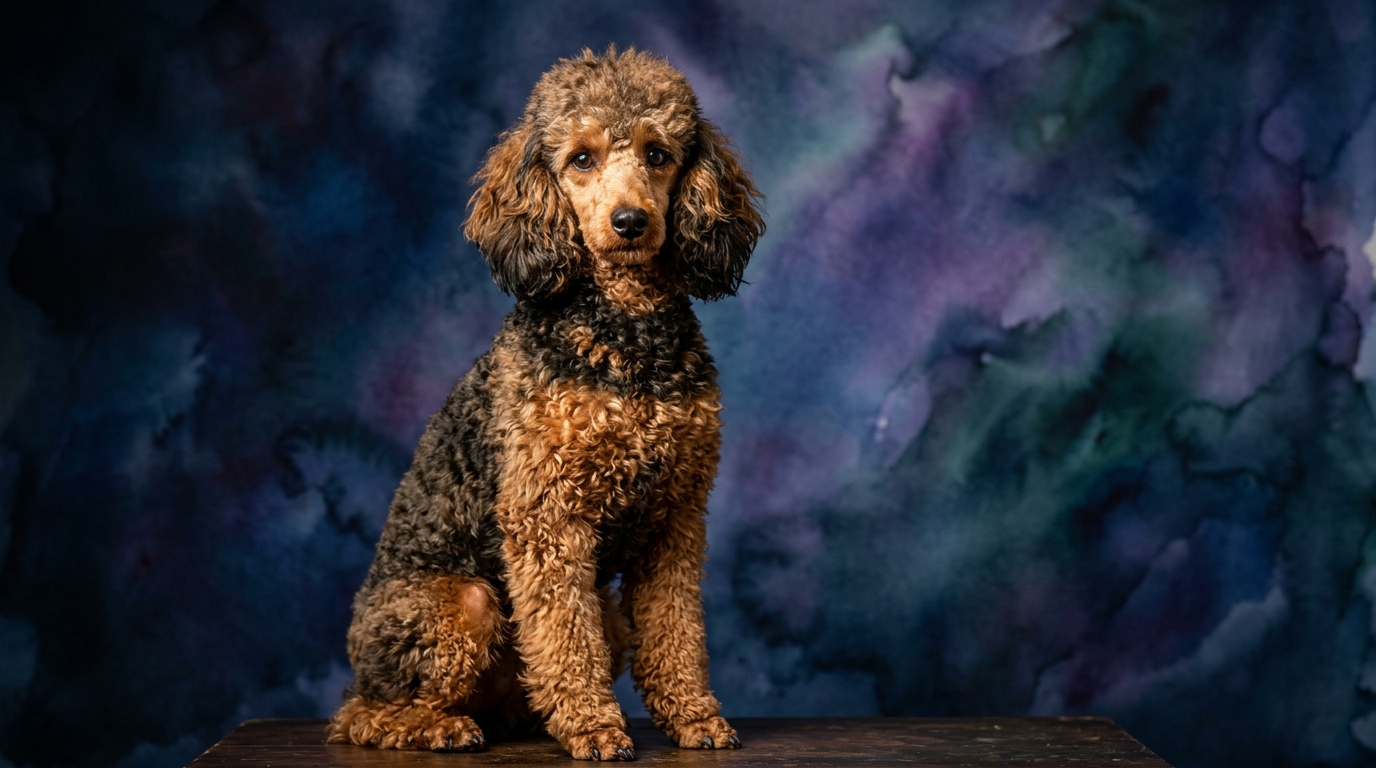
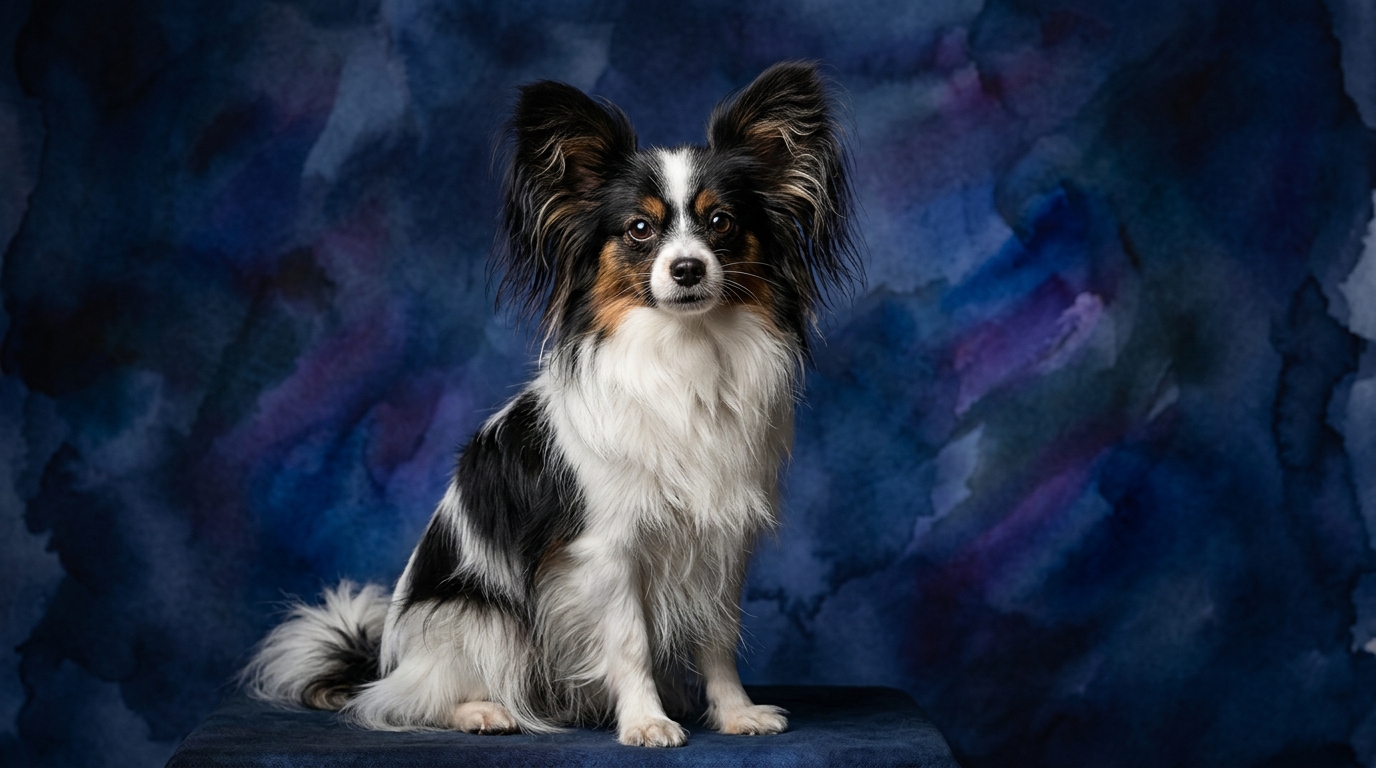
Side-by-Side IQ Profile: Standard Poodle vs. Papillon
At The Cosmic Pet Pet IQ Lab, we assess canine cognition across five distinct dimensions, providing a nuanced understanding beyond simple anecdotes. The Standard Poodle, ranked #2 by Coren, and the Papillon, ranked #8, both demonstrate exceptional mental faculties, yet their profiles reveal specific strengths.
The Standard Poodle's cognitive makeup is marked by consistent excellence. Their Problem Solving score of 5/5 indicates an outstanding capacity to analyze and navigate novel situations, quickly devising solutions to challenges. A Training Speed of 5/5 means they acquire new cues and behaviors with remarkable alacrity, often needing minimal repetitions. Their Social Intelligence, also 5/5, highlights a profound understanding of human communication, emotional states, and social dynamics within their environment. An Instinctive Drive of 4/5 reflects their historical role as water retrievers, manifesting as a strong, purposeful drive for tasks and engagement. Finally, their Memory score of 5/5 ensures they retain learned information and experiences over extended periods, contributing to their consistent performance.
The Papillon, while a toy breed, presents an equally impressive cognitive blueprint. They share the Standard Poodle's top-tier Problem Solving ability, scoring 5/5, showcasing an equal aptitude for independent thought and creative solutions. Their Training Speed also stands at 5/5, meaning they learn new commands and routines with the same rapid comprehension as their larger counterpart. While their Social Intelligence is a robust 4/5, it signifies a strong ability to interpret human cues and social contexts, though perhaps with a slightly less profound depth compared to the Poodle. Their Instinctive Drive is assessed at 3/5, a moderate level that still provides motivation for engagement but with less intensity than breeds bred for more demanding physical tasks. Like the Poodle, their Memory is 5/5, enabling them to recall complex sequences and past experiences effectively.
Where the Standard Poodle Wins Cognitively
The Standard Poodle's cognitive advantages emerge most clearly in two specific dimensions: Social Intelligence and Instinctive Drive. With a Social Intelligence score of 5/5 compared to the Papillon's 4/5, Standard Poodles demonstrate a deeper, more nuanced understanding of human social cues and emotional states. This means they are often more attuned to subtle shifts in their owner's mood or intentions, making them exceptionally intuitive partners. They excel at reading complex social situations, anticipating needs, and engaging in truly collaborative interactions, fostering a profound bond that feels almost telepathic at times.
Furthermore, the Standard Poodle's Instinctive Drive of 4/5, relative to the Papillon's 3/5, provides a cognitive edge in task-oriented engagement. Originating as water retrievers, they possess a stronger innate urge for purposeful activity. This higher drive translates into a more robust internal motivation for learning and performing complex sequences in obedience, agility, or scent work. Their cognitive processes are naturally geared towards problem-solving within a framework of 'work,' making them eager participants in structured activities and providing a greater intrinsic reward from completing tasks.
Where the Papillon Wins Cognitively
While the Papillon does not outscore the Standard Poodle in any individual cognitive dimension, its 'wins' are found in the efficient application of its capacities within its breed context, and in the nature of its specific drives. Achieving 5/5 in Problem Solving, Training Speed, and Memory within a compact toy breed demonstrates an extraordinary efficiency of cognitive resources. Papillons exhibit the same top-tier mental processing power as a Standard Poodle, but without the physical requirements of a larger, more robust dog, making them incredibly potent learners and thinkers in a smaller package.
A Papillon's Instinctive Drive of 3/5, while lower than the Poodle's, can be a cognitive advantage for certain owners. This moderate drive means they possess enough innate motivation for engagement and learning, but generally less intense prey drive or working drive to manage. Cognitively, this translates to fewer innate urges that require redirection or sophisticated impulse control training, allowing their impressive problem-solving and training speed to be applied to a broader range of activities without the constant management of strong, ingrained behavioral patterns. They can direct their mental energy towards intricate puzzles or trick training without the same background hum of a strong retrieving or hunting instinct.
Which Is Easier to Train and Why?
When evaluating ease of training, both breeds score an impressive 5/5 for Training Speed, indicating they both acquire new commands and concepts remarkably quickly. However, the 'ease' of the training experience can differ due to their other cognitive distinctions. The Standard Poodle's 5/5 Social Intelligence gives them a distinct advantage in making training feel like a seamless, intuitive partnership. They are exceptionally responsive to subtle human cues, body language, and vocal inflections, often anticipating what is desired. This deep attunement means that training a Poodle often feels less like teaching and more like guiding a willing, understanding collaborator. Their 4/5 Instinctive Drive can also be harnessed as a powerful motivator; they find intrinsic satisfaction in structured tasks, making them eager and focused students in disciplines like advanced obedience or rally.
The Papillon, with its 4/5 Social Intelligence, is still very capable of understanding human communication, but an owner might need to be marginally more explicit or consistent in their cues compared to a Poodle. While they grasp concepts rapidly due to their 5/5 Training Speed, their 3/5 Instinctive Drive means that motivation might need to be more consistently reinforced through positive rewards and engaging play rather than relying on a strong innate drive for tasks. Papillons excel in agility and trick training because their problem-solving and memory allow them to master complex sequences, but their motivation often stems from the enjoyment of the interaction and rewards, rather than an intense drive to 'work' in the traditional sense.
Which Suits Active Owners vs. Relaxed Owners?
The choice between a Standard Poodle and a Papillon often hinges on the owner's lifestyle and how they prefer to engage with their dog's cognitive capabilities. Active owners seeking a deeply engaged partner for consistent mental and physical challenges will find the Standard Poodle an ideal match. Their 4/5 Instinctive Drive, combined with top scores in Problem Solving, Training Speed, and Memory, means they thrive on structured activities, learning complex sequences, and participating in dog sports like agility, obedience, or scent work. They require outlets for their retrieving heritage and cognitive prowess, enjoying long, varied walks, puzzle-solving, and continuous learning to prevent mental stagnation. Their high social intelligence also means they enjoy being integral to all family activities.
For owners seeking a companion that is quick-witted and capable of impressive learning but fits into a slightly less demanding activity schedule, the Papillon is an excellent choice. While not a 'relaxed' dog in the sense of being inactive, their 3/5 Instinctive Drive often means they are content with less intense daily 'work.' Their 5/5 Problem Solving and Training Speed still necessitate mental stimulation, but this can often be met with indoor puzzle toys, regular trick training sessions, or shorter, varied walks that incorporate exploration. Their robust social intelligence (4/5) makes them adaptable companions, enjoying family life without the profound working demands or extensive physical exercise needs of a Poodle.
The Verdict
Choose a Standard Poodle if you are an active owner seeking a deeply collaborative partner for advanced training, performance sports, and a dog that thrives on complex intellectual engagement and a strong working bond.
Opt for a Papillon if you desire a nimble, quick-witted companion capable of impressive learning and intricate problem-solving, fitting into a slightly less demanding activity schedule while still requiring consistent mental enrichment and engaging interactions.
🧠 Find Your Pet's IQ Score
Our Pet IQ Lab assessment covers 25+ tests across 5 cognitive dimensions — personalized to your breed.
Take the Full IQ Test →Frequently Asked Questions
Do Standard Poodles or Papillons experience separation anxiety more often?
Standard Poodles, with their 5/5 Social Intelligence, often form profoundly deep bonds and may be more prone to separation distress if left alone extensively without careful conditioning and management. Papillons, while social with 4/5 Social Intelligence, might exhibit a slightly greater capacity for independent contentment, though both breeds benefit from consistent companionship and enrichment.
Are Poodles or Papillons better with children?
Standard Poodles, due to their 5/5 Social Intelligence and generally stable temperament, can be exceptionally understanding and patient companions for children, especially when well-socialized. Papillons (4/5 Social Intelligence) can also be good with children, but their delicate structure means interactions need careful supervision, and their slightly lower social score suggests they might be less tolerant of unpredictable or rough play.
Can a Papillon perform advanced obedience or trick training as well as a Poodle?
Absolutely. Both breeds score 5/5 in Problem Solving, Training Speed, and Memory, indicating an equivalent capacity for mastering complex sequences and commands. While their instinctive drives differ, their raw cognitive horsepower for learning and retaining advanced obedience routines or intricate tricks is equally exceptional, making both outstanding in performance disciplines.