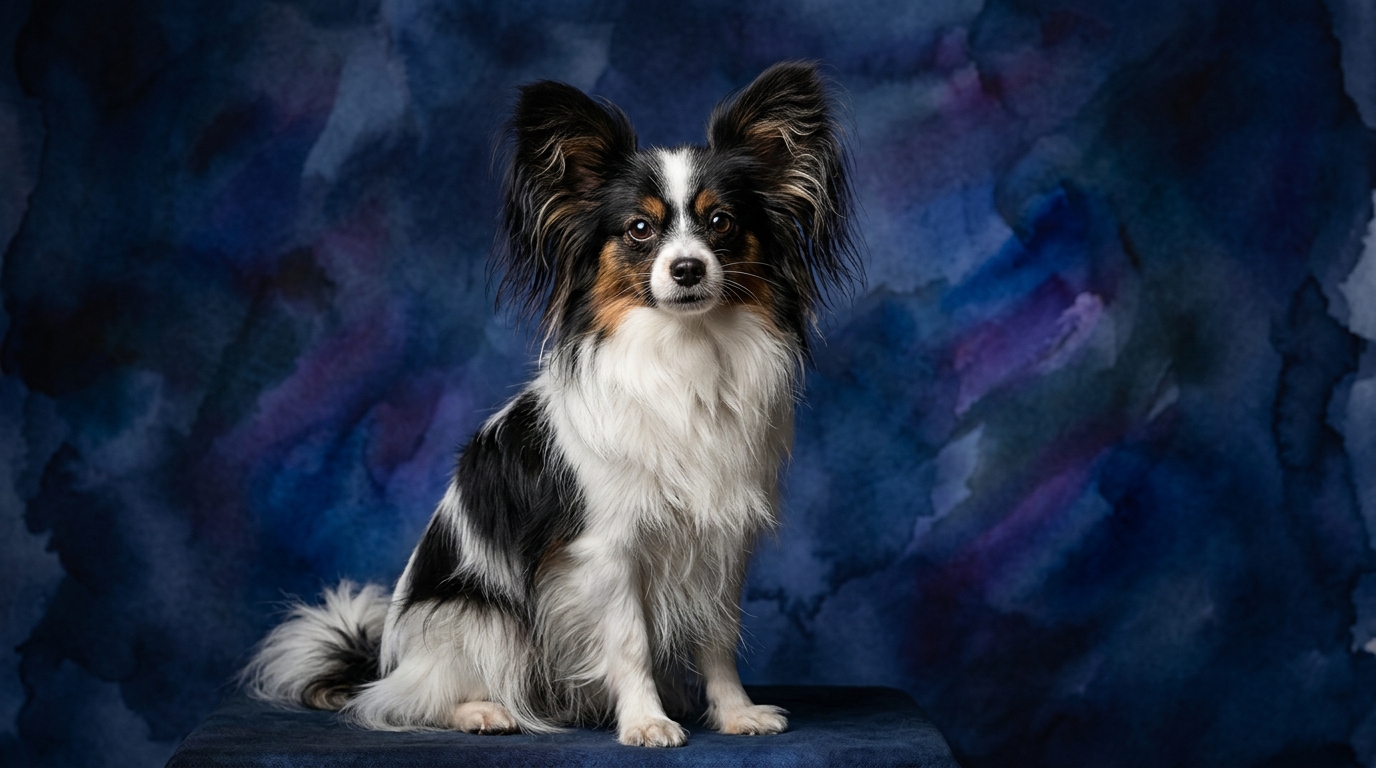
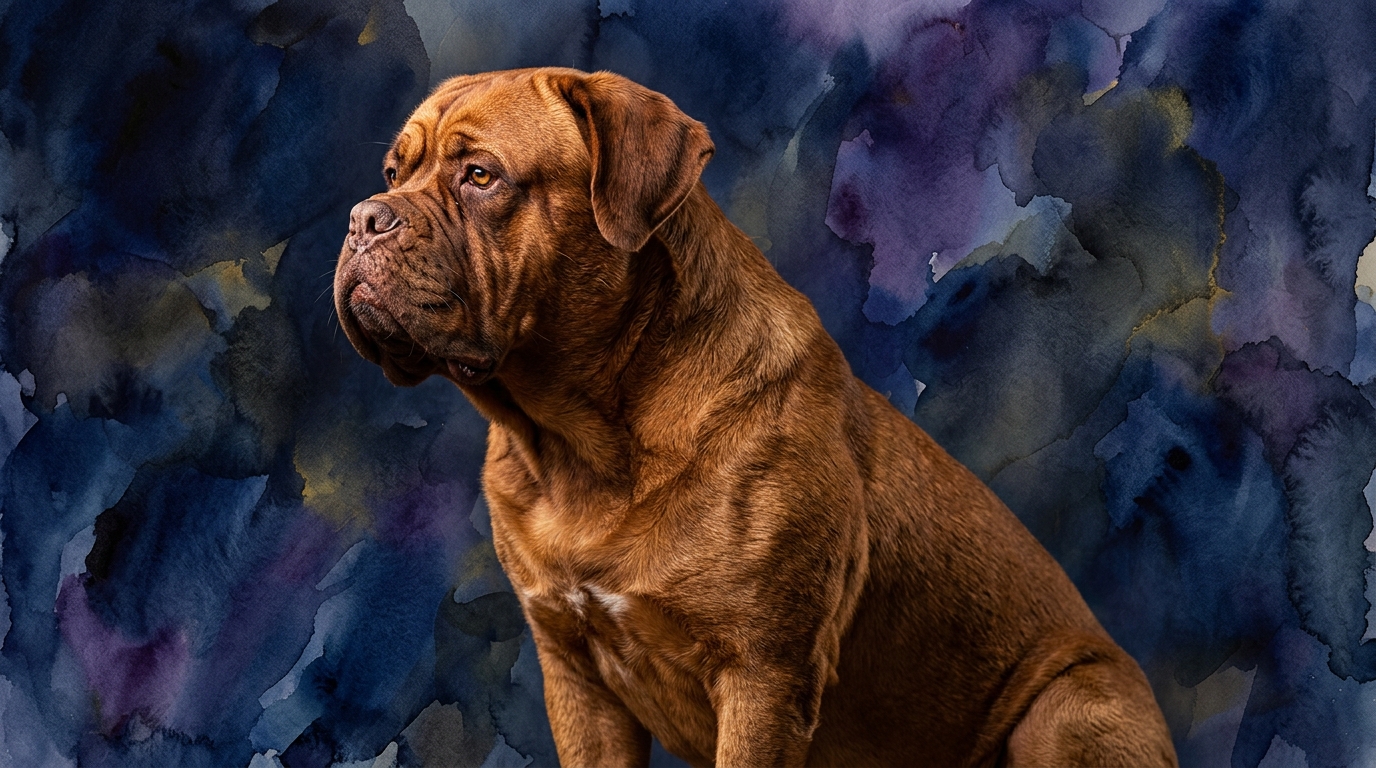
Side-by-Side IQ Profile: Papillon vs. Dogue de Bordeaux
Our Cosmic Pet Pet IQ Lab assesses canine intelligence across five key dimensions, revealing distinct cognitive strengths for each breed. For the Papillon, a breed renowned for its mental agility, we observe exceptional scores across several areas. Its Problem Solving is rated 5/5, indicating an outstanding capacity for navigating novel situations and devising independent solutions. Training Speed also earns a perfect 5/5, signifying rapid acquisition of new commands and routines, often grasping concepts in very few repetitions. Social Intelligence is strong at 4/5, suggesting a keen ability to interpret human cues and adapt behavior in various social contexts. Instinctive Drive is an average 3/5, implying moderate inclinations towards innate behaviors, while Memory shines with another 5/5, demonstrating excellent retention of learned information and experiences over long periods.
The Dogue de Bordeaux presents a profile of consistent, average cognitive capabilities across all dimensions, reflecting a different kind of operational intelligence. Its Problem Solving is rated 3/5, indicating it is capable of finding solutions to typical challenges but may not exhibit the same innovative or rapid adaptation as higher-scoring breeds, often benefiting from more direct guidance. Training Speed is also 3/5, meaning this breed learns at a moderate pace, typically requiring more repetitions and patience compared to breeds with higher scores, preferring consistency over rapid change. Social Intelligence stands at 3/5, suggesting they understand and respond to social signals adequately, but perhaps with less nuance. Instinctive Drive is 3/5, a balanced level that might manifest as a moderate protective instinct. Finally, Memory is also 3/5, indicating adequate retention of information, though consistent reinforcement is key for long-term recall and complex sequences.
Where the Papillon Excels Cognitively
The Papillon undeniably excels in several cognitive domains, particularly when it comes to mental agility and intricate learning. With a perfect 5/5 in both problem-solving and training speed, and an equally impressive 5/5 in memory, they are masters of rapid assimilation and application of knowledge. This means a Papillon can quickly decipher complex puzzle toys, swiftly learn multi-step obedience routines, and recall them flawlessly even after extended periods. Their exceptional cognitive processing allows them to thrive in activities demanding precision and quick thinking, such as competitive obedience, agility, or even learning elaborate tricks like weaving through legs or performing intricate scent work. Their high social intelligence (4/5) further enhances this, as they are adept at understanding handler cues and intentions, making the learning process a collaborative and highly responsive experience. This breed's intellectual capacity is truly geared for complex engagement and swift mastery.
Unique Cognitive Strengths of the Dogue de Bordeaux
While the Dogue de Bordeaux's cognitive profile shows average scores across the board (3/5 for problem-solving, training speed, social intelligence, instinctive drive, and memory), framing these as 'wins' requires understanding their unique strengths and the practical application of their intelligence. Their intelligence often manifests not in rapid, flashy displays, but in a steady, resolute capability and a profound, stable presence. For instance, their average problem-solving, combined with their inherent working breed characteristics, translates into a dog capable of understanding and fulfilling a protective role with calm determination, rather than frantic reaction. Their social intelligence, while not as nuanced as a Papillon's, allows for a deep, unwavering bond with their family, expressed through steadfast loyalty and an intuitive understanding of their immediate environment. The Dogue's cognitive strengths lie in their capacity for consistent, reliable behavior once a task is learned, and their ability to maintain composure in situations where other breeds might become overstimulated. This foundational competence underpins their role as formidable yet gentle guardians, valuing stability over swift, complex mental gymnastics.
Training Ease: Papillon's Swift Learning vs. Dogue's Steady Pace
Comparing training ease, the Papillon stands out as significantly more amenable to instruction due to its perfect 5/5 scores in both training speed and memory. They are often eager to please and process new information with remarkable efficiency, meaning they can master basic commands and even advanced routines in a fraction of the time it might take for other breeds. Their strong social intelligence (4/5) further aids this, as they are highly responsive to human feedback and subtle cues, making the training process feel highly cooperative and rewarding. In contrast, the Dogue de Bordeaux, with average scores of 3/5 in both training speed and memory, requires a different approach. While certainly trainable, they typically need more repetitions, greater patience, and consistent, clear methodology. Their training is less about speed and more about building a solid foundation through calm, firm guidance. A Dogue de Bordeaux might display a more independent or stoic temperament, which can be perceived as stubbornness if the trainer isn't consistently engaging, whereas a Papillon generally shows an immediate desire to engage and learn, making the process feel more fluid.
Matching Breeds to Owner Lifestyles
The cognitive profiles of these two breeds naturally align with different owner lifestyles. The Papillon, with its exceptional problem-solving (5/5), training speed (5/5), and memory (5/5), thrives with active owners who can provide ample mental stimulation alongside physical exercise. They are excellent candidates for dog sports like agility, flyball, or competitive obedience, and relish learning new tricks and engaging in interactive games that challenge their sharp minds. Owners who enjoy teaching and consistent intellectual engagement will find the Papillon a highly rewarding companion, as its cognitive abilities demand an outlet. Conversely, the Dogue de Bordeaux, with its consistent 3/5 scores across all cognitive dimensions, is better suited for relaxed owners who appreciate a calm, steady presence and are prepared for a slower, more deliberate training journey. While they still require regular exercise and mental engagement, their needs lean more towards routine, consistency, and a strong, patient leader. They are not built for high-octane mental gymnastics but excel in providing steadfast companionship and a reassuring presence, making them ideal for owners seeking a loyal, gentle giant who thrives on stable environments and predictable interactions.
The Verdict
Choose the Papillon if you seek a highly engaged, mentally agile companion eager to learn complex tasks and excel in dog sports, thriving on consistent intellectual challenge and interaction.
Opt for the Dogue de Bordeaux if you desire a calm, steadfast, and deeply loyal companion, valuing a stable temperament and willing to invest patient, consistent effort in their training and development.
🧠 Find Your Pet's IQ Score
Our Pet IQ Lab assessment covers 25+ tests across 5 cognitive dimensions — personalized to your breed.
Take the Full IQ Test →Frequently Asked Questions
Is the Dogue de Bordeaux difficult to train?
The Dogue de Bordeaux is not difficult to train but requires more patience and consistency than breeds with higher training speed. Their average training speed (3/5) means they learn at a moderate pace, benefiting greatly from clear, firm, and repetitive instruction from a calm handler.
Do Papillons need a lot of mental stimulation?
Yes, Papillons require significant mental stimulation due to their exceptional problem-solving and memory scores (both 5/5). They thrive on learning new commands, puzzle toys, and engaging in activities like agility or trick training to keep their sharp minds occupied and prevent boredom.
How does a breed's Coren ranking relate to its IQ lab scores?
Stanley Coren's ranking primarily assesses 'working intelligence/obedience,' which correlates strongly with our 'training speed' dimension. The Papillon's #8 Coren rank aligns with its 5/5 training speed, while the Dogue de Bordeaux being unranked by Coren suggests its training speed is not among the top tiers, consistent with its 3/5 score.