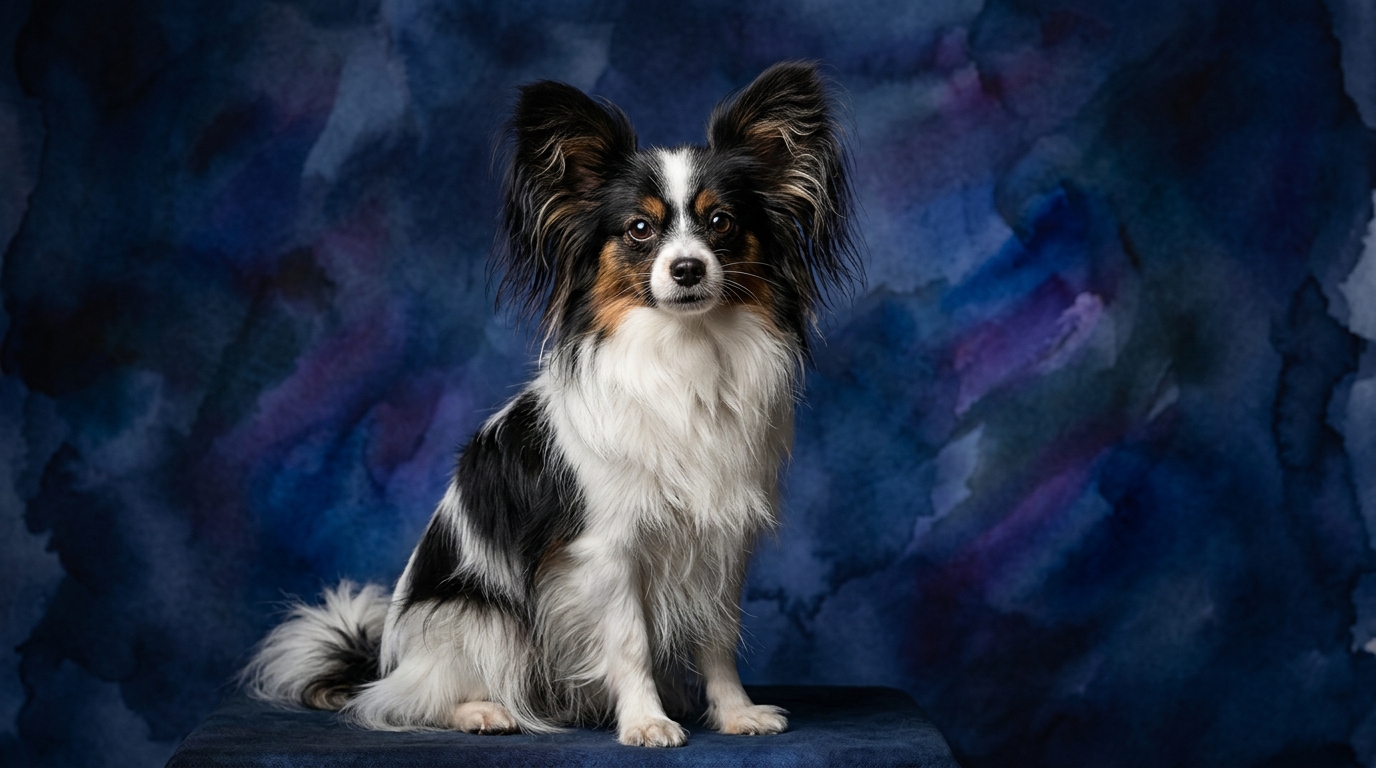
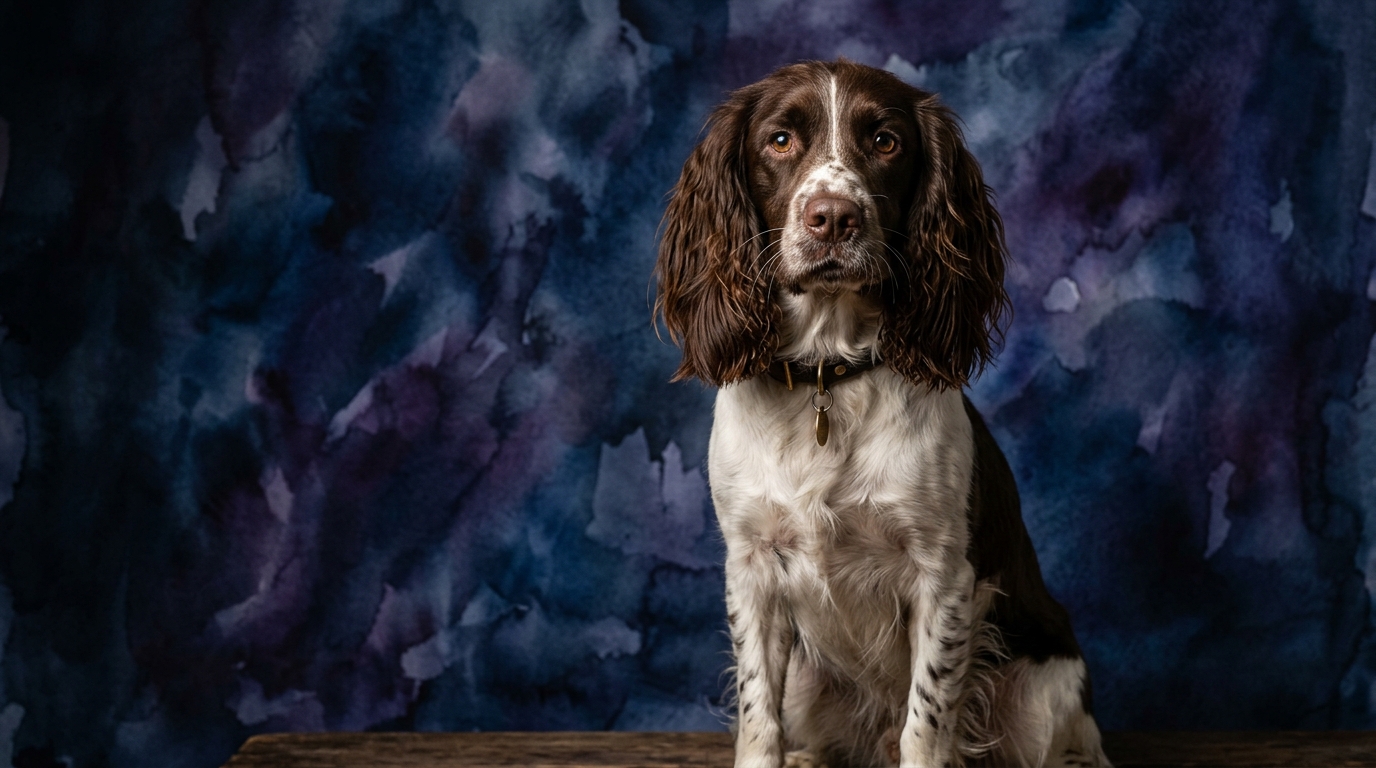
Side-by-Side Cognitive Profiles: Papillon vs. English Springer Spaniel
The Cosmic Pet Pet IQ Lab employs a comprehensive five-dimensional framework to assess canine intelligence, offering a granular view beyond simple obedience. Let's examine how the Papillon and English Springer Spaniel stack up.
The Papillon, ranking #8 on the Coren scale, demonstrates a remarkable cognitive toolkit. Its Problem Solving is rated 5/5, indicating an exceptional capacity for independent thought and creative solutions to novel challenges. Training Speed also scores a perfect 5/5, signifying their rapid grasp of new commands and routines, often requiring fewer repetitions than many other breeds. Social Intelligence stands at 4/5, reflecting their adeptness at interpreting human cues and forming strong, communicative bonds. Instinctive Drive is rated 3/5, meaning while they possess natural curiosity, their primary motivation is less about primal hunting or herding instincts and more geared towards companionship and interaction. Finally, their Memory is a solid 5/5, allowing them to retain complex sequences and recall past experiences with precision.
The English Springer Spaniel, holding the #13 spot on the Coren scale, presents a different, yet equally impressive, cognitive blueprint. Their Problem Solving capability is rated 4/5, indicating an effective, often methodical approach to challenges, particularly those related to their working heritage. Training Speed mirrors the Papillon at 5/5, highlighting their eagerness and ability to quickly learn and execute instructions, especially when a clear task is presented. Social Intelligence is 4/5, showcasing their cooperative nature and strong desire to work alongside their human companions. Where the Springer truly shines is in Instinctive Drive, earning a 5/5; this reflects their profound natural aptitudes for scent work, retrieving, and sustained focus on a task. Their Memory is rated 4/5, enabling them to recall extensive learned behaviors and complex patterns, crucial for field work.
Where the Papillon's Cognition Excels
The Papillon's cognitive strengths lean heavily into adaptability and nuanced interaction. With a 5/5 in Problem Solving, these small dogs often exhibit a surprising ingenuity, finding unconventional ways to achieve a goal, whether it's manipulating a puzzle toy or figuring out how to get a treat from a seemingly inaccessible spot. This isn't just about brute force; it's about subtle observation and trial-and-error refined by quick learning. Their superior Memory (5/5) means they not only solve a problem but remember the solution, applying it efficiently in future similar scenarios. This combination allows them to excel in agility courses that demand quick thinking and precise execution of multiple sequential commands. Furthermore, their high Social Intelligence (4/5) combined with their memory allows them to pick up on subtle changes in human emotion or routine, often anticipating desires before they are explicitly expressed, making them highly responsive companions.
Where the English Springer Spaniel's Cognition Shines
The English Springer Spaniel's cognitive prowess is deeply rooted in purpose and collaboration. Their 5/5 Instinctive Drive is a cornerstone of their intellect, channeling their problem-solving and memory into practical, task-oriented applications. While their Problem Solving is rated 4/5, it's often applied within the context of a job, such as tracking a scent through varied terrain or systematically searching an area for a retrieve. This isn't necessarily less capable than the Papillon's 5/5, but rather a different style — one that prioritizes efficiency and goal attainment within a structured framework, often working in tandem with a handler. Their strong memory (4/5) is particularly adept at retaining complex sequences of commands and understanding multi-stage tasks, essential for field trials or advanced obedience. The Springer's 4/5 Social Intelligence makes them exceptional team players, highly attuned to their handler's directions and body language, making them outstanding partners in any collaborative endeavor.
Training Dynamics: Which is Easier and Why?
Both the Papillon and the English Springer Spaniel boast a perfect 5/5 in Training Speed, suggesting both breeds are remarkably quick to grasp new concepts. However, the 'ease' of training can vary based on the handler's approach and the type of training. The Papillon's superior Problem Solving and Memory (both 5/5) mean they often pick up new tricks and commands with startling speed, sometimes even anticipating what you want them to do. Their motivation often stems from positive reinforcement and the desire to please their human, making them highly responsive to clicker training and reward-based methods. They thrive on variety and mental challenges, quickly becoming bored if training is repetitive.
The English Springer Spaniel's 5/5 Training Speed is driven significantly by their 5/5 Instinctive Drive. They are eager workers, often finding immense satisfaction in completing a task, especially those that engage their natural retrieving or scenting abilities. This drive provides a powerful motivational tool for trainers. While they learn quickly, their focus might be more directed towards the 'job' at hand rather than pure novelty. They excel in structured obedience and field work where their natural aptitudes are harnessed. For an owner looking to engage in competitive canine sports like agility, obedience, or scent work, the Springer's sustained focus and drive to complete tasks make them exceptionally rewarding to train, provided their physical and mental exercise needs are met.
Matching Canine Cognition to Lifestyle: Active vs. Relaxed Owners
Understanding these cognitive profiles is key to selecting a breed that aligns with an owner's lifestyle. For owners leading a more relaxed, but mentally stimulating life, the Papillon often presents an ideal match. While they enjoy walks and playtime, their primary need is for mental engagement. Their superior problem-solving and memory mean they excel with puzzle toys, learning complex tricks, or even participating in indoor agility. They are content to be close companions, providing they receive consistent mental enrichment. Their smaller size also makes them suitable for apartment living, as long as their sharp minds are kept busy.
Conversely, the English Springer Spaniel is a superb fit for active, outdoors-oriented owners who can provide ample physical exercise and a 'job' to do. Their high Instinctive Drive (5/5) means they are happiest when actively engaged in activities like hiking, running, retrieving, or scent work. A Springer thrives on having a purpose and requires consistent mental stimulation that often involves physical exertion. Owners who enjoy long walks, hunting, or competitive dog sports will find the Springer an unparalleled partner. Without sufficient outlets for their drive and energy, a Springer can become restless, making them less suitable for purely sedentary households.
The Verdict: When to Choose Each Breed
Choosing between a Papillon and an English Springer Spaniel hinges on your lifestyle and what you seek in a canine companion's cognitive engagement. Both breeds offer impressive intelligence, but express it in distinct ways.
The Verdict
Choose the Papillon if you desire a highly adaptable, quick-witted companion who thrives on mental puzzles and close companionship, fitting well into a home with moderate physical activity but significant intellectual engagement.
Opt for the English Springer Spaniel if you lead an active outdoor lifestyle and want a highly driven, cooperative partner for sports, hunting, or long excursions, who finds joy and purpose in physical and task-oriented work.
🧠 Find Your Pet's IQ Score
Our Pet IQ Lab assessment covers 25+ tests across 5 cognitive dimensions — personalized to your breed.
Take the Full IQ Test →Frequently Asked Questions
Are Papillons difficult to house train due to their small size?
Papillons are not inherently difficult to house train; their high training speed and memory mean they learn quickly. Consistency and positive reinforcement are key, and their small bladder capacity simply necessitates more frequent outdoor opportunities during training.
Do English Springer Spaniels make good family pets with children?
English Springer Spaniels can be wonderful family pets, often displaying a patient and playful demeanor. Their social intelligence and cooperative nature make them generally good with children, provided they receive appropriate exercise and proper socialization from a young age.
How much grooming do these breeds typically require?
Papillons have long, flowing coats that require regular brushing to prevent mats, typically several times a week. English Springer Spaniels also have a medium-length double coat that needs weekly brushing, with particular attention to feathering on the ears, legs, and belly to avoid tangles.