
Side-by-Side Cognitive Profiles
The Cosmic Pet Pet IQ Lab assesses canine intelligence across five key dimensions, offering a nuanced look at each breed’s mental strengths and tendencies.
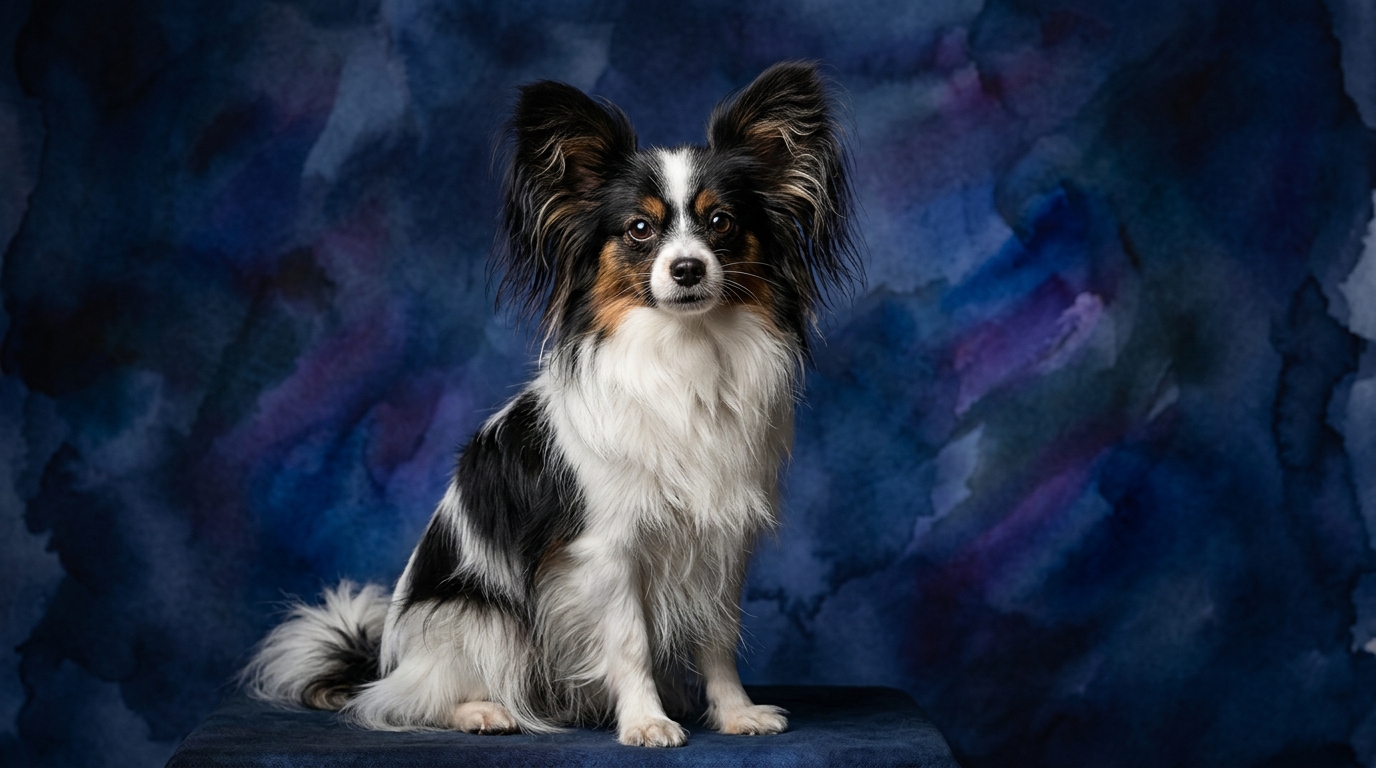
The Papillon, a breed often noted for its sharp wit and active demeanor, presents an impressive cognitive profile:
Problem Solving (5/5): This breed exhibits exceptional capacity for navigating complex situations, figuring out puzzles, and adapting strategies. They are adept at understanding cause-and-effect, often learning through observation and applying that knowledge to new scenarios quickly. Training Speed (5/5): Papillons grasp new commands and routines with remarkable swiftness, often requiring very few repetitions. Their eagerness to learn and focus makes them highly responsive to positive reinforcement methods, leading to rapid skill acquisition. Social Intelligence (4/5): Highly perceptive, Papillons are attuned to human emotions and social cues, often anticipating their owner's moods and intentions. They thrive on interaction and can form deep, communicative bonds, making them highly responsive companions. Instinctive Drive (3/5): While not primarily driven by strong hunting or herding instincts, Papillons possess a moderate natural curiosity and a desire to explore. This drive manifests as an interest in their surroundings and a willingness to engage in mentally stimulating activities. Memory (5/5): Their recall is outstanding; Papillons remember learned commands, routines, and even specific locations or people over extended periods. This strong memory contributes significantly to their training efficiency and ability to retain complex sequences.
In contrast, the English Toy Spaniel, a breed cherished for its gentle and affectionate nature, demonstrates a more moderate, yet equally endearing, cognitive makeup:
Problem Solving (3/5): English Toy Spaniels can solve practical problems, but they may take more time to process new information or find solutions compared to more cognitively agile breeds. They excel with consistent guidance rather than independent strategizing. Training Speed (3/5): They learn at a steady pace, requiring consistent and patient training. While not as quick to pick up new concepts as a Papillon, they are capable of mastering a wide range of commands with sufficient repetition and positive reinforcement. Social Intelligence (3/5): These spaniels are affectionate and enjoy companionship, responding well to familiar faces and routines. Their social intelligence allows them to form loving bonds, though they might not exhibit the same nuanced perception of human moods as some highly attuned breeds. Instinctive Drive (3/5): Similar to the Papillon, their instinctive drive is moderate. They possess a gentle curiosity and enjoy exploring their immediate environment, but typically do not display strong prey drive or independent working tendencies, making them content home companions. Memory (3/5): English Toy Spaniels have a functional memory, retaining learned behaviors and familiar routines. While they may not recall complex sequences with the same precision as a Papillon, they are perfectly capable of remembering essential commands and their place within the family structure.
Where the Papillon's Cognition Excels
The Papillon's cognitive profile showcases several distinct advantages that set it apart. Its perfect 5/5 score in Problem Solving means it can quickly assess novel situations, like figuring out how to open a child-proof gate or retrieve a toy from an inaccessible spot, often with minimal human intervention. This breed’s 5/5 Training Speed is unparalleled; a Papillon might master a new trick in just a handful of repetitions, making them star pupils in obedience or agility classes. Furthermore, their 5/5 Memory ensures that once a concept is learned, it is retained for the long term, reducing the need for constant refresher training. This remarkable cognitive synergy allows Papillons to excel in complex tasks, learn multi-step routines, and adapt to changing environments with impressive mental agility. Owners seeking a dog that can quickly grasp advanced concepts and engage in dynamic learning will find the Papillon particularly rewarding.
Unique Cognitive Strengths of the English Toy Spaniel
While the English Toy Spaniel might not boast the same top-tier scores as the Papillon, its cognitive strengths lie in a different realm, offering a unique appeal to certain owners. Their moderate 3/5 Problem Solving score means they are less likely to independently devise mischievous plans or challenge household rules, often preferring to follow established routines. This can translate to a more predictable and less cognitively demanding companion, reducing potential household challenges. Their 3/5 Instinctive Drive suggests a generally calmer disposition, less prone to intense bursts of energy or the need to constantly 'work' or explore beyond their immediate comfort zone. This makes them less likely to become bored and destructive due to unmet mental stimulation needs, and more content with a relaxed home life. The English Toy Spaniel's cognitive makeup fosters a gentle, amiable temperament that values comfort and companionship over constant mental challenges, making them ideal for those who appreciate a more tranquil presence.
Trainability: Papillon vs. English Toy Spaniel
Without question, the Papillon is significantly easier to train due to its exceptional cognitive attributes. With a 5/5 in Training Speed and Problem Solving, a Papillon rapidly connects actions with consequences, requiring fewer repetitions to solidify a command. For instance, teaching 'stay' might take only a few short sessions, as they quickly grasp the concept and remember it due to their 5/5 Memory. Their keen Social Intelligence (4/5) also plays a role, as they are highly motivated by human interaction and praise, making them eager participants in training sessions. This breed thrives on varied training methods and can quickly progress to advanced obedience or trick training with minimal effort from the owner.
Conversely, the English Toy Spaniel, with 3/5 scores in both Training Speed and Problem Solving, requires more patience and consistent effort. While perfectly trainable and capable of learning a wide array of commands, they will need more repetitions to master behaviors and might take longer to generalize learned actions to new environments. Their training success relies heavily on the owner's consistency, gentle handling, and positive reinforcement, making the journey more gradual but equally rewarding. Owners must be prepared for a slower learning curve and understand that progress, while steady, may not be as rapid as with a Papillon.
Matching Canine Cognition to Owner Lifestyles
The cognitive profiles of these two breeds naturally align with different owner lifestyles. Papillons, with their high Problem Solving, Training Speed, and Memory scores, thrive with active owners who enjoy engaging in mental and physical activities. They excel in dog sports like agility, obedience, or even rally, and benefit from puzzle toys, interactive games, and learning new tricks regularly to keep their minds occupied. An owner who enjoys daily walks, training sessions, and stimulating outings will find a Papillon a joyful and responsive partner, eager to participate and constantly learn. Their need for consistent mental engagement means they are not content to simply be couch potatoes; they need a 'job' or regular intellectual challenges.
In contrast, the English Toy Spaniel, with its moderate cognitive drive, is an ideal fit for relaxed owners seeking a calm, affectionate companion. While they still enjoy gentle walks and playtime, their need for intense mental stimulation is lower. They are content with a comfortable routine, snuggles on the couch, and quiet companionship, making them perfect for individuals or families who prefer a more tranquil pace of life. Their moderate instinctive drive means they are generally less prone to independent exploration or demanding constant attention, fitting seamlessly into a serene home environment. They flourish with consistent affection and a predictable schedule, appreciating comfort and gentle interaction over rigorous mental exercises.
The Verdict
Choose the Papillon if you are an active owner eager to engage in consistent training, dog sports, and provide ample mental stimulation for a highly responsive and quick-witted companion.
Opt for the English Toy Spaniel if you seek a gentle, affectionate, and more predictable companion who is content with a relaxed home environment and moderate activity.
🧠 Find Your Pet's IQ Score
Our Pet IQ Lab assessment covers 25+ tests across 5 cognitive dimensions — personalized to your breed.
Take the Full IQ Test →Frequently Asked Questions
Are Papillons good for first-time dog owners?
Yes, Papillons can be suitable for first-time owners due to their high trainability and eagerness to please, provided the owner is committed to consistent positive reinforcement and mental engagement. Their rapid learning curve makes the training process rewarding, but their need for stimulation should be met.
Do English Toy Spaniels need a lot of exercise?
English Toy Spaniels have moderate exercise needs; daily gentle walks and short play sessions are usually sufficient to keep them happy and healthy. They prefer comfort and companionship over strenuous activity, making them ideal for less active households.
What are the main differences in temperament due to their IQs?
The Papillon's higher IQ often translates to a more alert, curious, and sometimes more demanding temperament for mental engagement, requiring consistent interaction to prevent boredom. In contrast, the English Toy Spaniel's more moderate IQ tends to result in a calmer, more placid, and less independently driven personality, content with a gentler pace of life.